
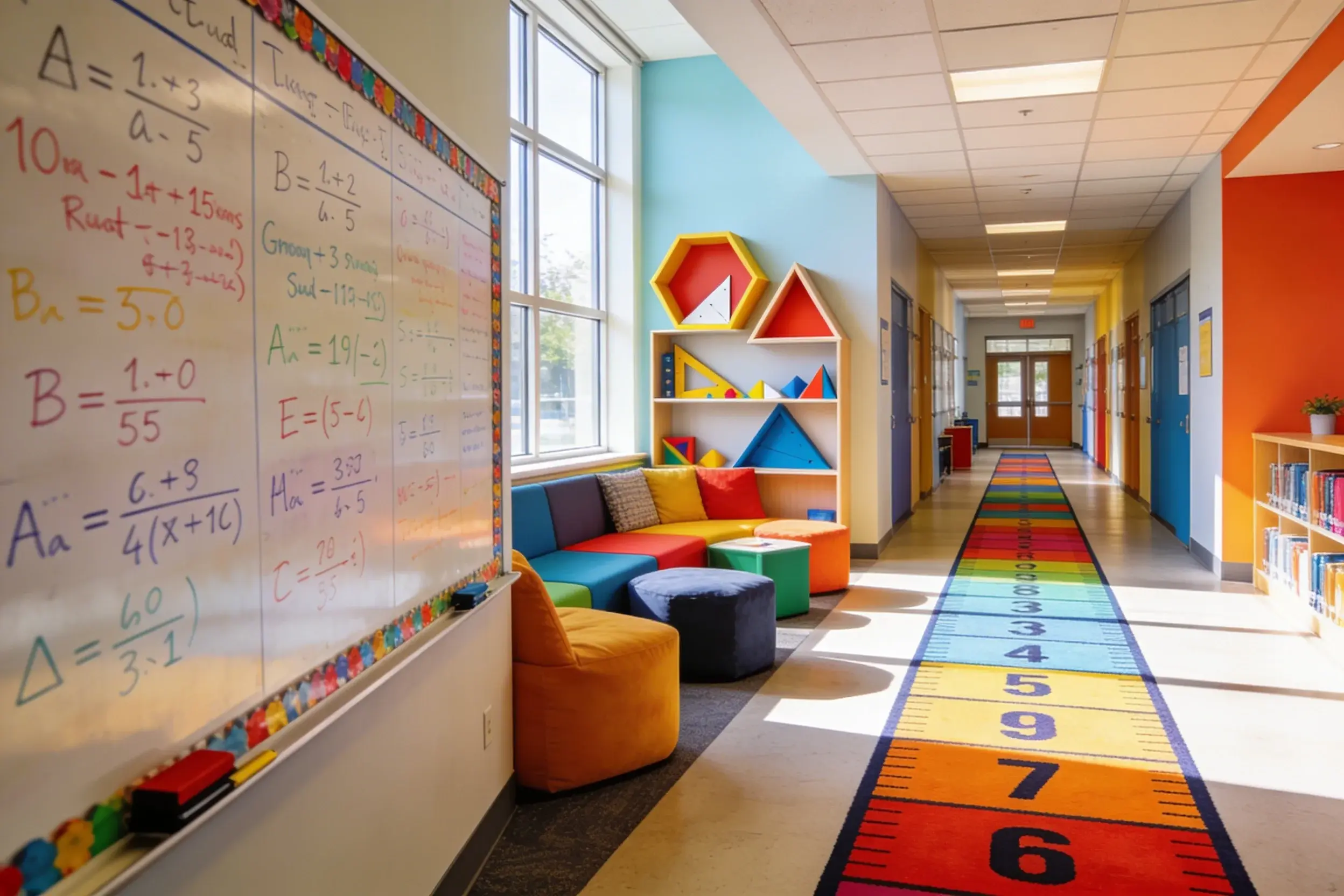
Thinking about turning your math corner into a playground? These ideas blend vibes and pedagogy to make numbers feel alive. FYI, you’ll see engagement soar when decor does the heavy lifting.
1. Equation Wall That Tells a Story
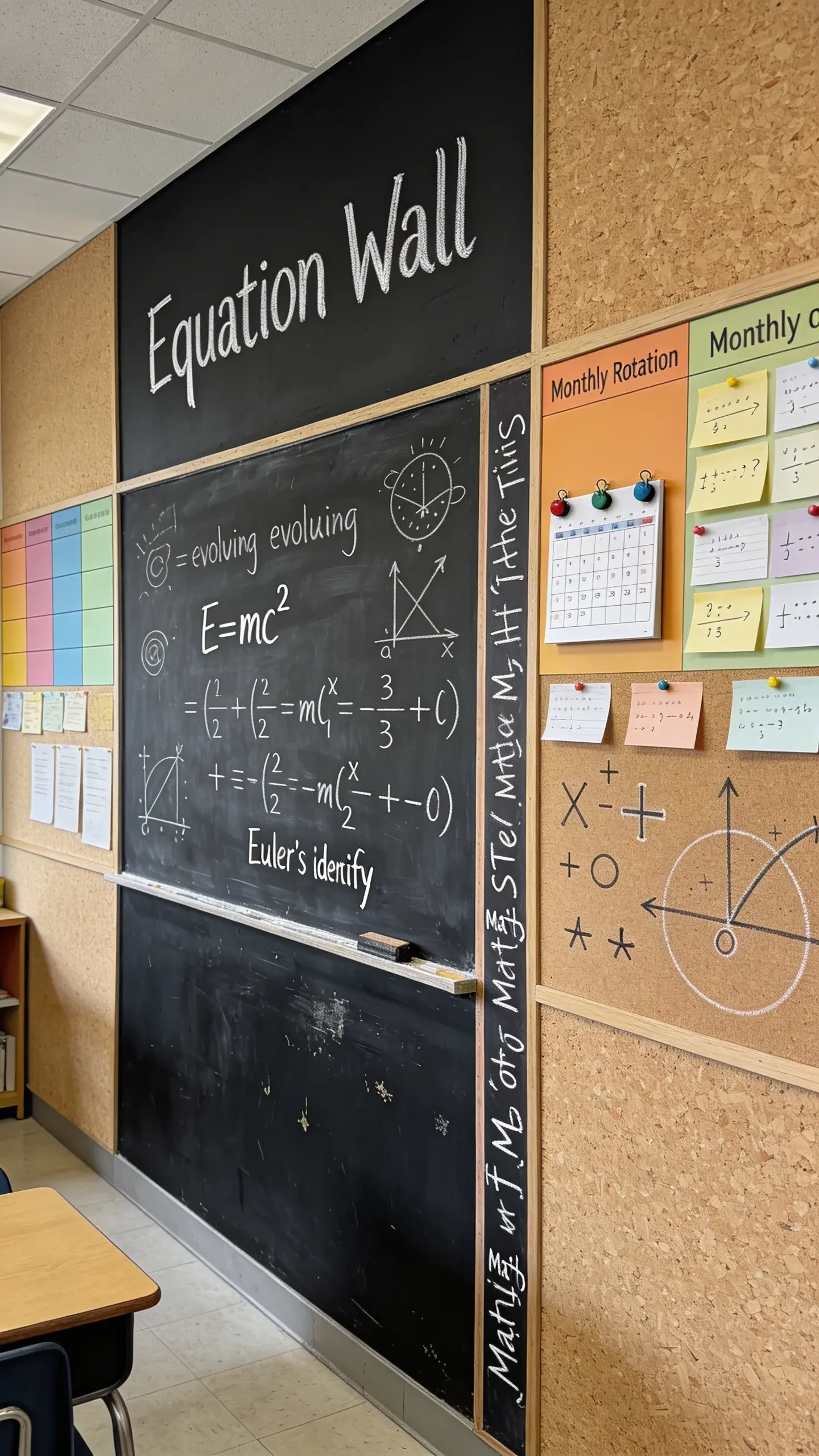
Turn a blank wall into a living math tale. An evolving equation wall invites students to contribute as they learn, making math feel personal and relevant. Seriously, it’s the conversation starter you didn’t know you needed.
Key Points
- Use a chalkboard paint section or corkboard for easy updates
- Include famous equations and student-created problems
- Rotate contributions monthly to keep it fresh
Benefits: fosters collaboration, frequent revisits, and a sense of ownership over learning.
2. Geometry Garden: Shapes as Decor
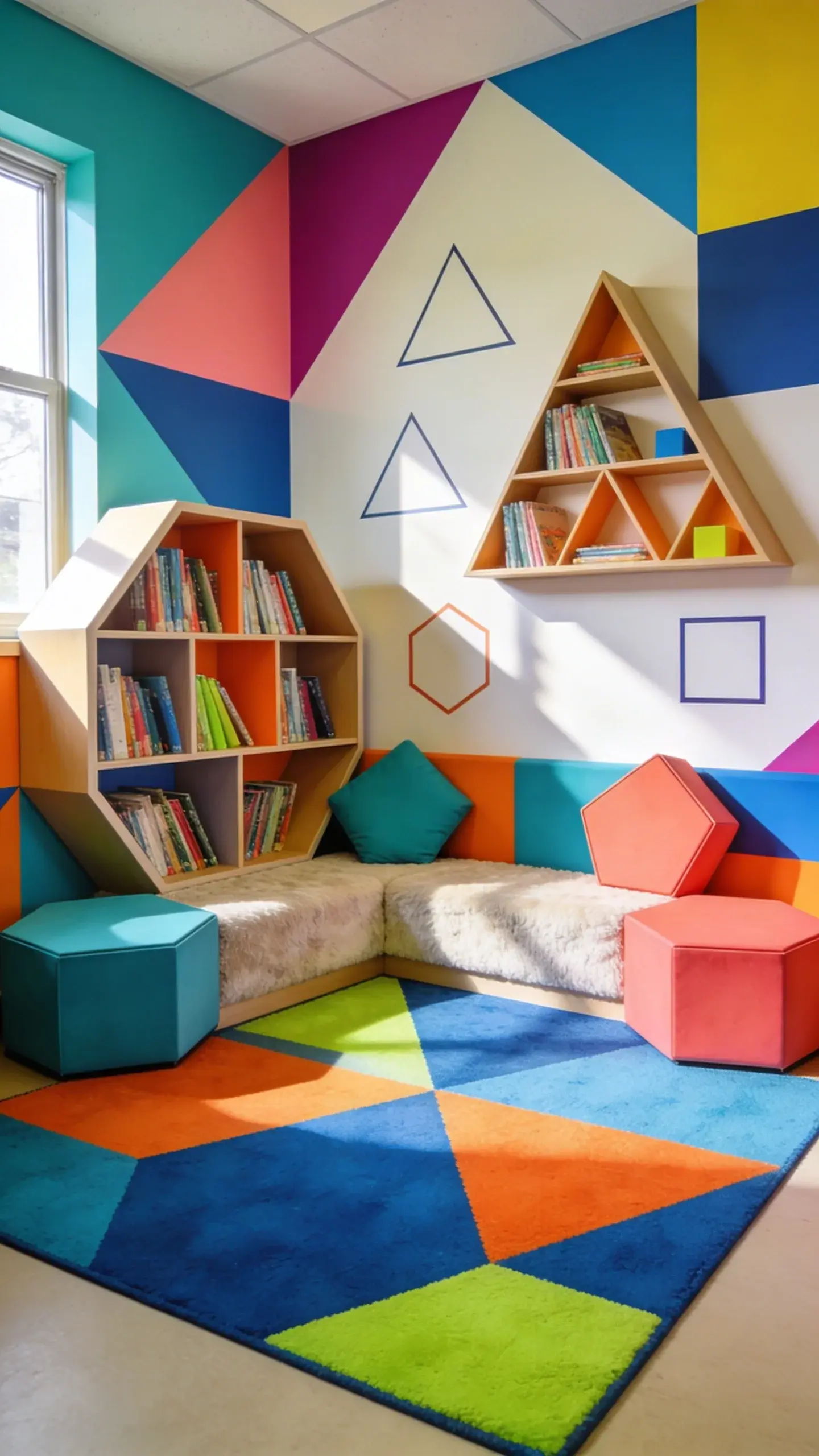
Bring geometry to life with a furniture-and-fabric approach that celebrates shapes. Cushions, rugs, and wall stickers showcase polygons in practical, cozy ways. Trust me, students will start spotting shapes in the real world everywhere they go.
Tips
- Decorate corners with hexagon shelves or triangular shelves
- Label shapes on wall decals to reinforce vocabulary
Notes: use bold colors to emphasize angles and symmetry for quick recall.
3. Number Line Corridor Carpet
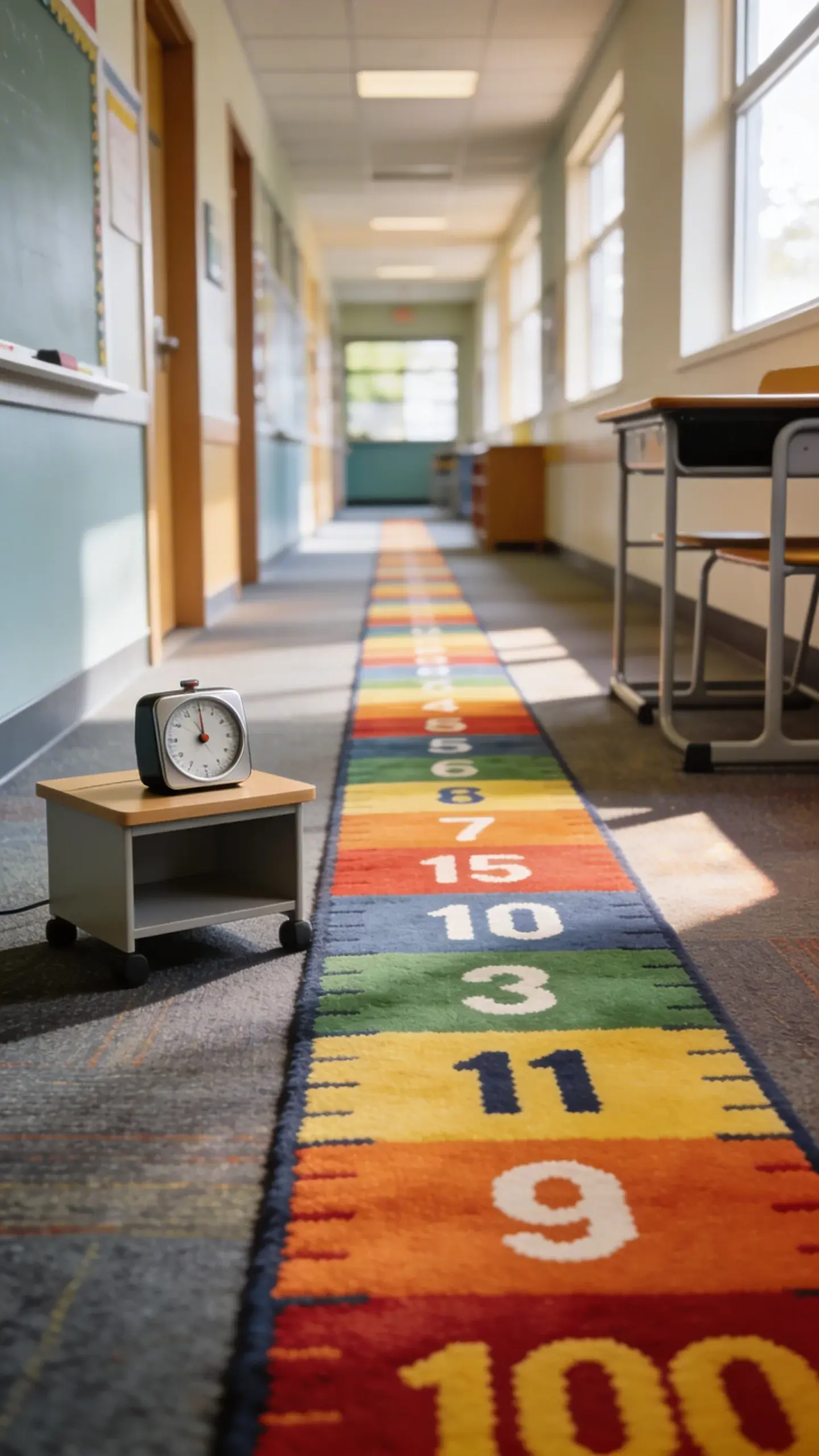
A long, colorful number line carpet guides transitions and quick checks. Students can measure distance in real-time and supercharge mental math during transitions. IMO, it doubles as a fantastic focal point for quick warmups.
Materials
- Vinyl or fabric long line from 0 to 100
- Distinct colors for even/odd numbers
Application: pair with a timer for rapid-fire practice during bell work.
4. Data Corner: Chart Stand and Mini-Graphs
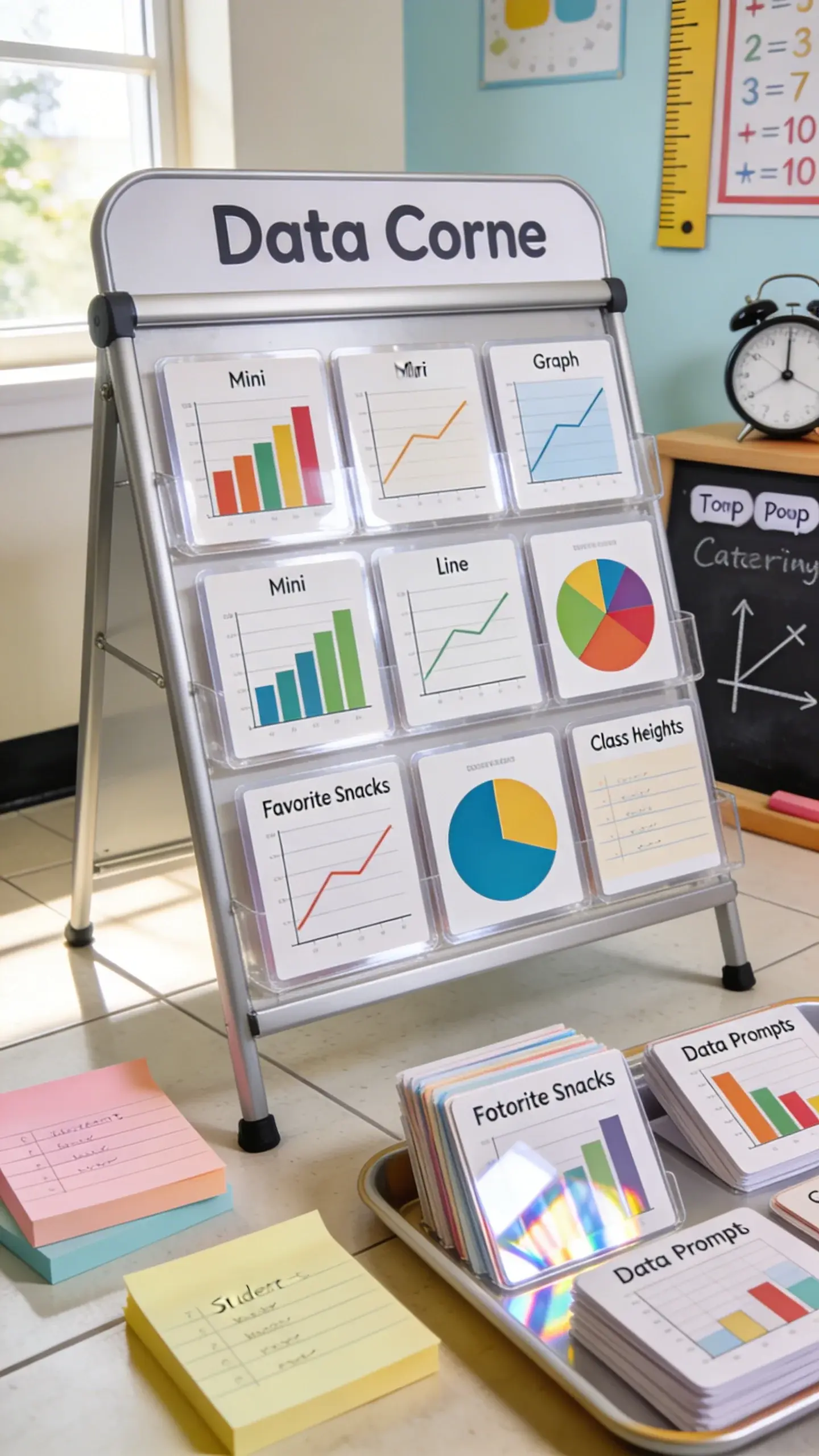
Create a mini-data lab where students collect, chart, and interpret. A simple stand with printable graphs makes data literacy tangible. Seriously, seeing a bar chart come to life beats a worksheet any day.
Key Elements
- Printable graph cards (bar, line, pie)
- Sticky notes for student data entries
- Rotating data prompts (favorite snacks, class heights, etc.)
Why it works: kids practice data skills in context, not just theory.
5. Math-Themed Gallery: Student Work as Art
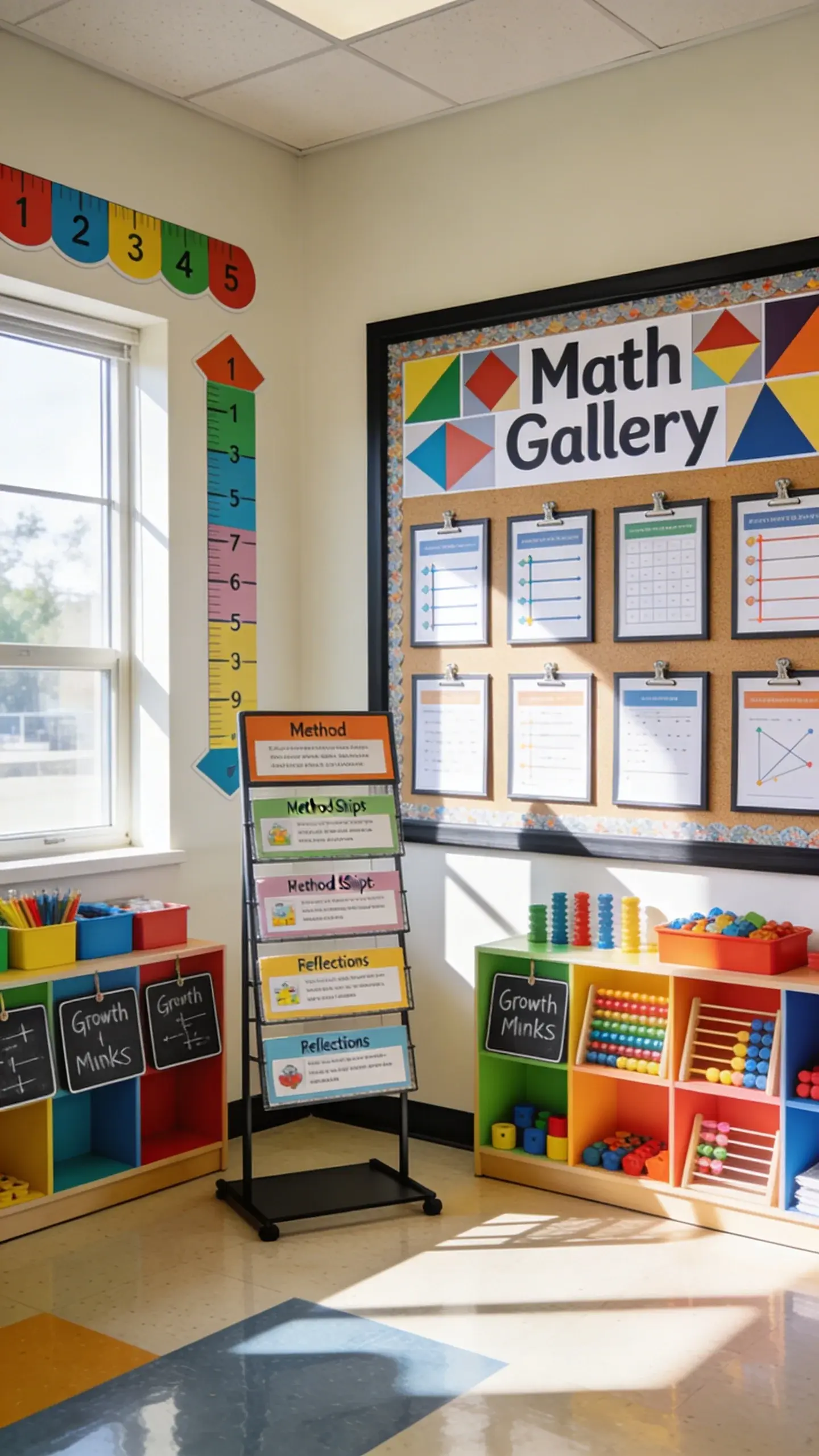
Decorate with student projects that celebrate problem-solving. This gallery evolves with each unit, giving students pride in their reasoning. Trust me, when their work is on display, they bring more energy to each problem.
How to Display
- Frame or clip boundary-friendly pieces
- Add captions with method snippets and reflection prompts
Takeaway: a visible reward system that reinforces growth mindset.
6. Mystery Number Door Panels
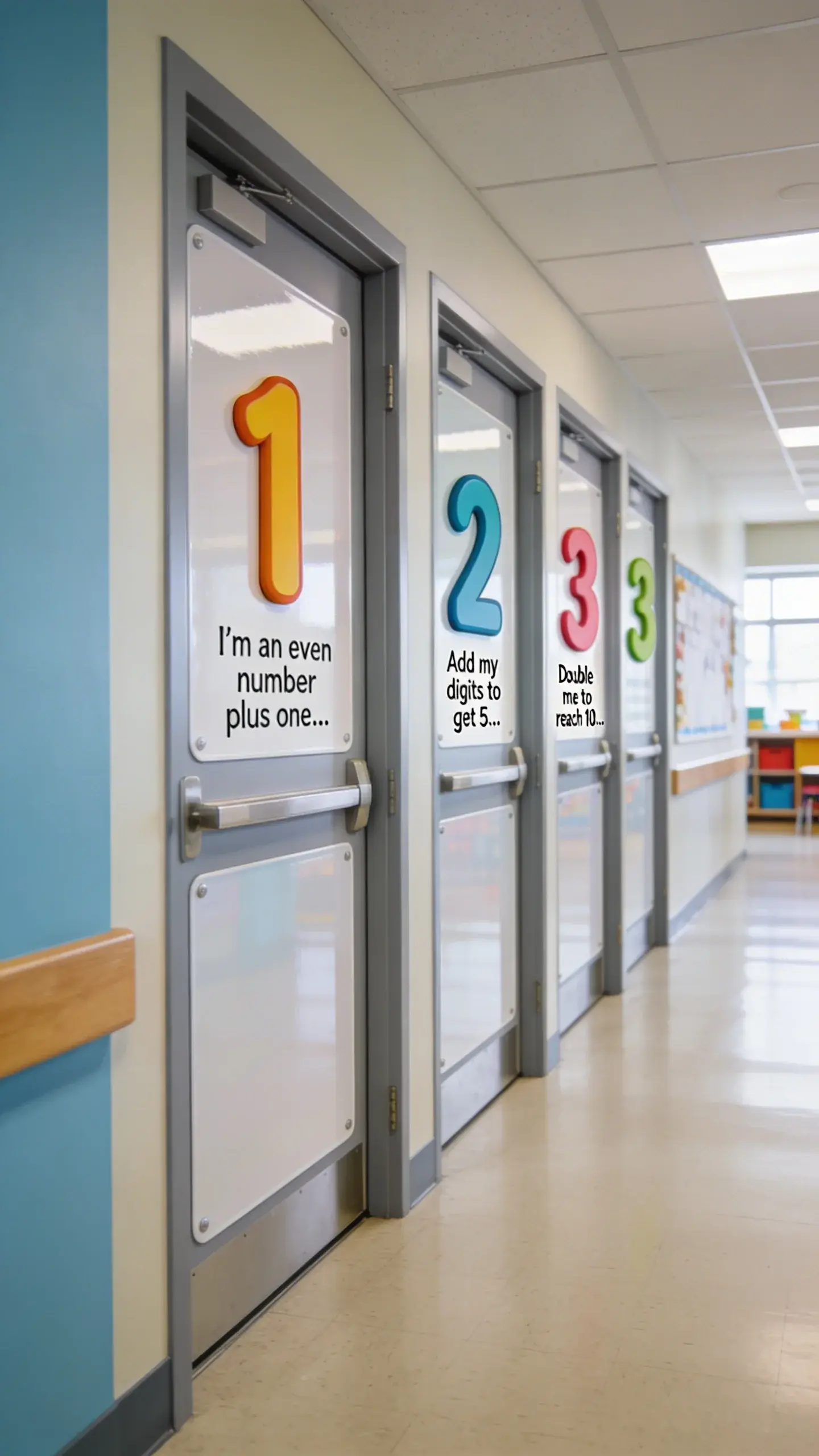
Turn doors into interactive math prompts. Mystery numbers, clues, or quick riddles entice students to peek in and engage as they move through the room. FYI, doors become talking points, not just passageways.
Quick Setup
- Laminate panels with numbers and clues
- Change panels weekly to keep curiosity high
Benefit: encourages short, purposeful exploration during transitions.
7. Wave of Fractions: Shimmering Fraction Wall
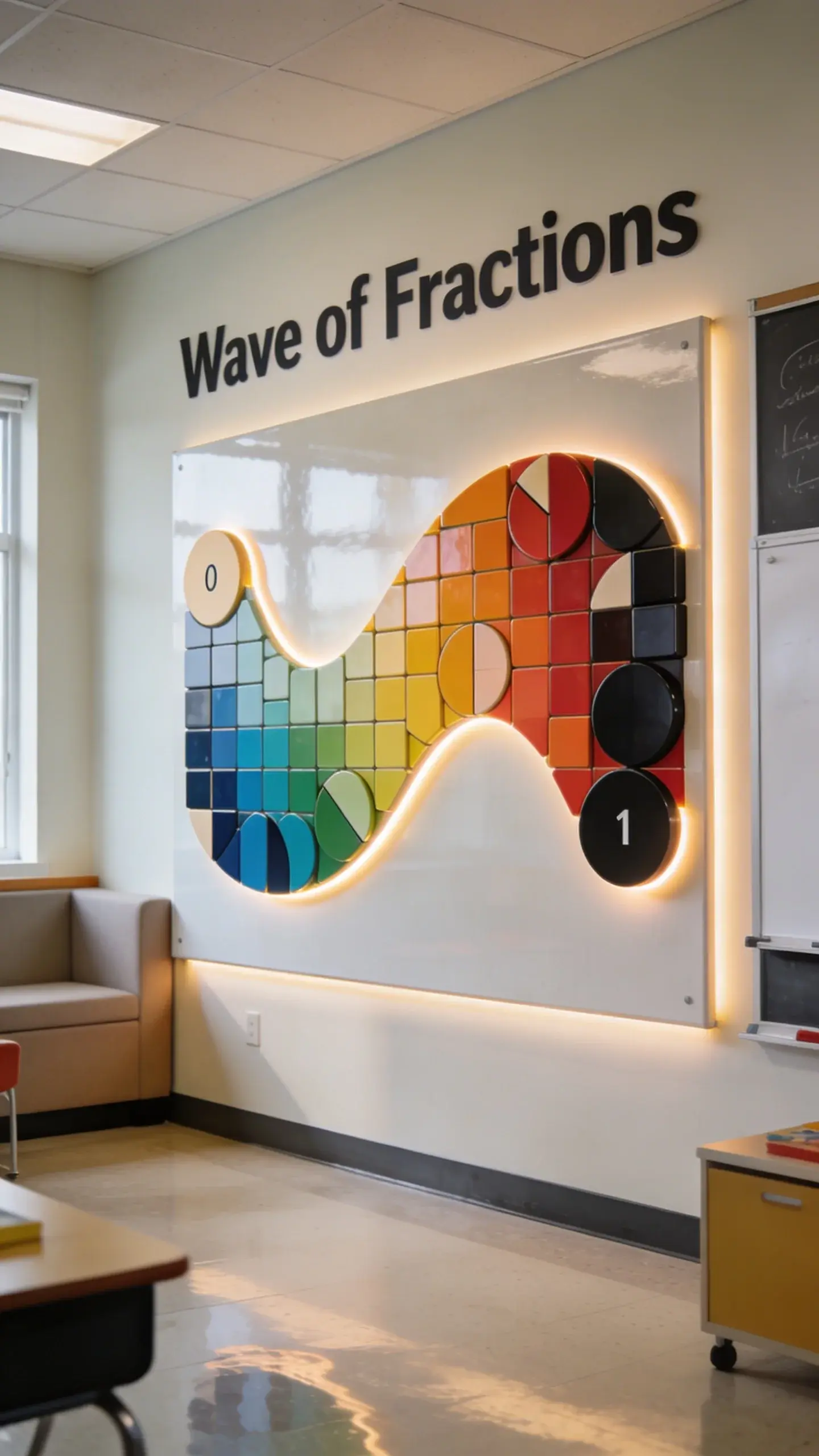
Give fractions a glow with a shimmering wall that visually demonstrates part-to-whole relationships. Use color-coded segments so students can compare fractions at a glance. Seriously, the aha moment is real when they see halves and quarters aligned on one canvas.
What to Include
- Fraction circles or modular shapes
- Color scale from 0 to 1
Impact: improves proportion sense and suggests real-world applications like recipes or planning.
8. Algebra Alley: Symbols as Street Signs
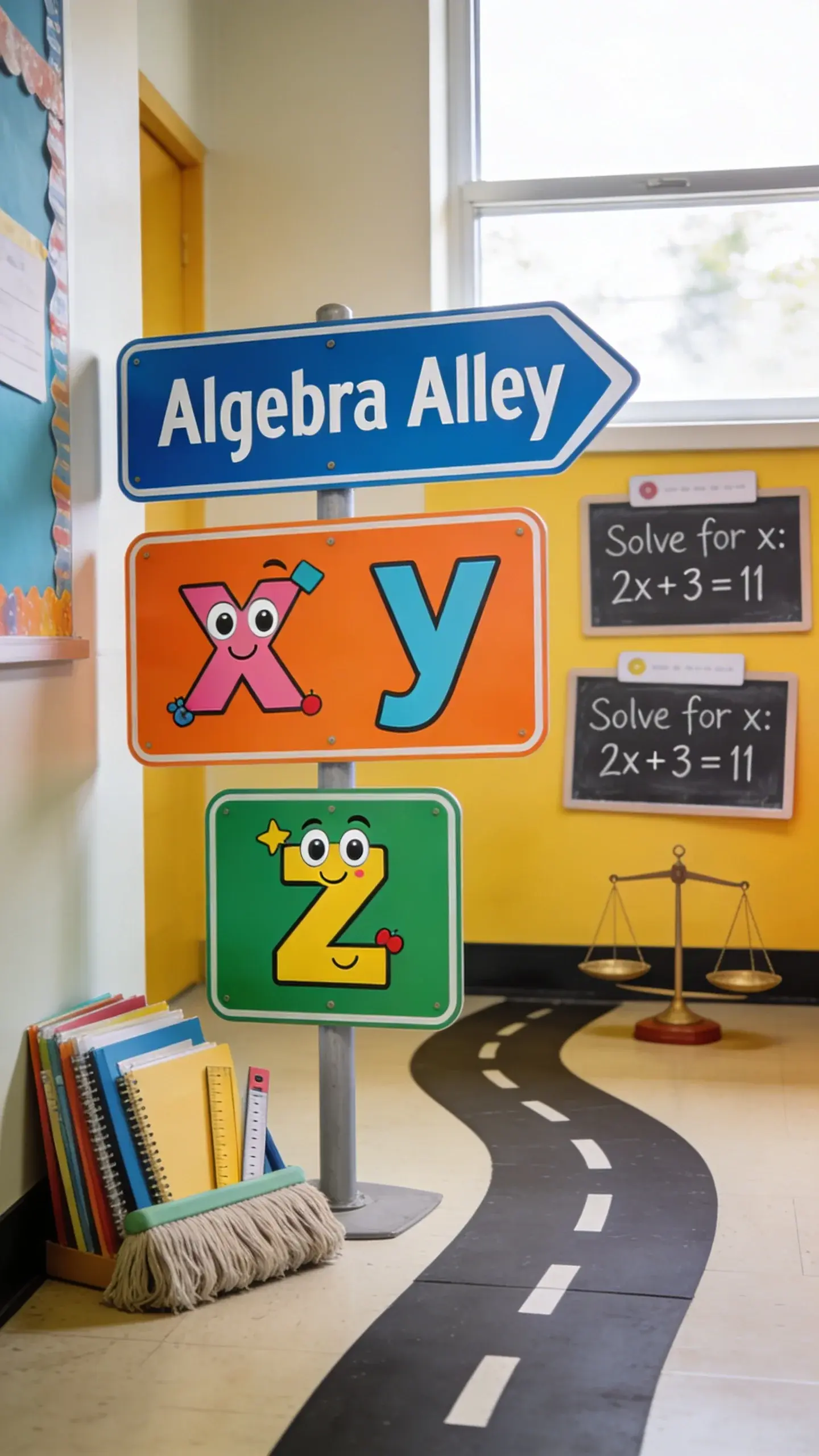
Give letters a personality by turning algebraic symbols into playful signage along a learning path. This makes abstract ideas feel navigable, not scary. IMO, it reduces anxiety around solving for x.
Ideas
- Use cutouts with letters in bold colors
- Place simple prompts near the signs (e.g., “Solve for x: 2x + 3 = 11”)
Result: a gentle invitation to engage with algebra daily.
9. Probability Playground: Spinner and Deck
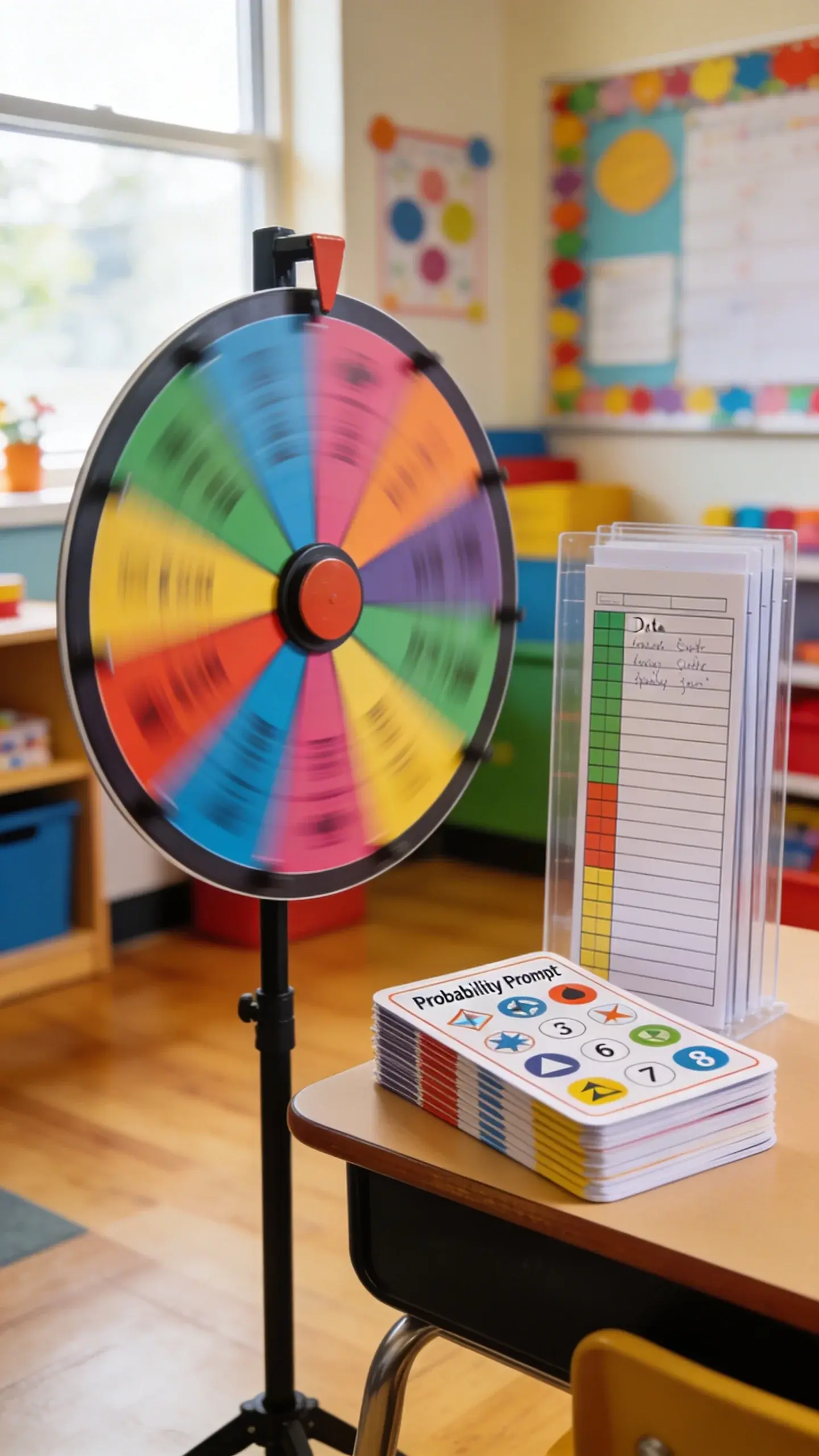
Probability comes alive when students can spin, flip, and tally outcomes. A dedicated corner with a spinner, cards, and tally charts invites hands-on experiments. Seriously, hands-on beats lectures for this topic.
What You’ll Include
- Colorful spinner with various outcomes
- Deck of probability prompts
- Tally sheets for quick data collection
End note: students develop intuition about likelihood and data interpretation.
10. Calculation Café: Math Break Station
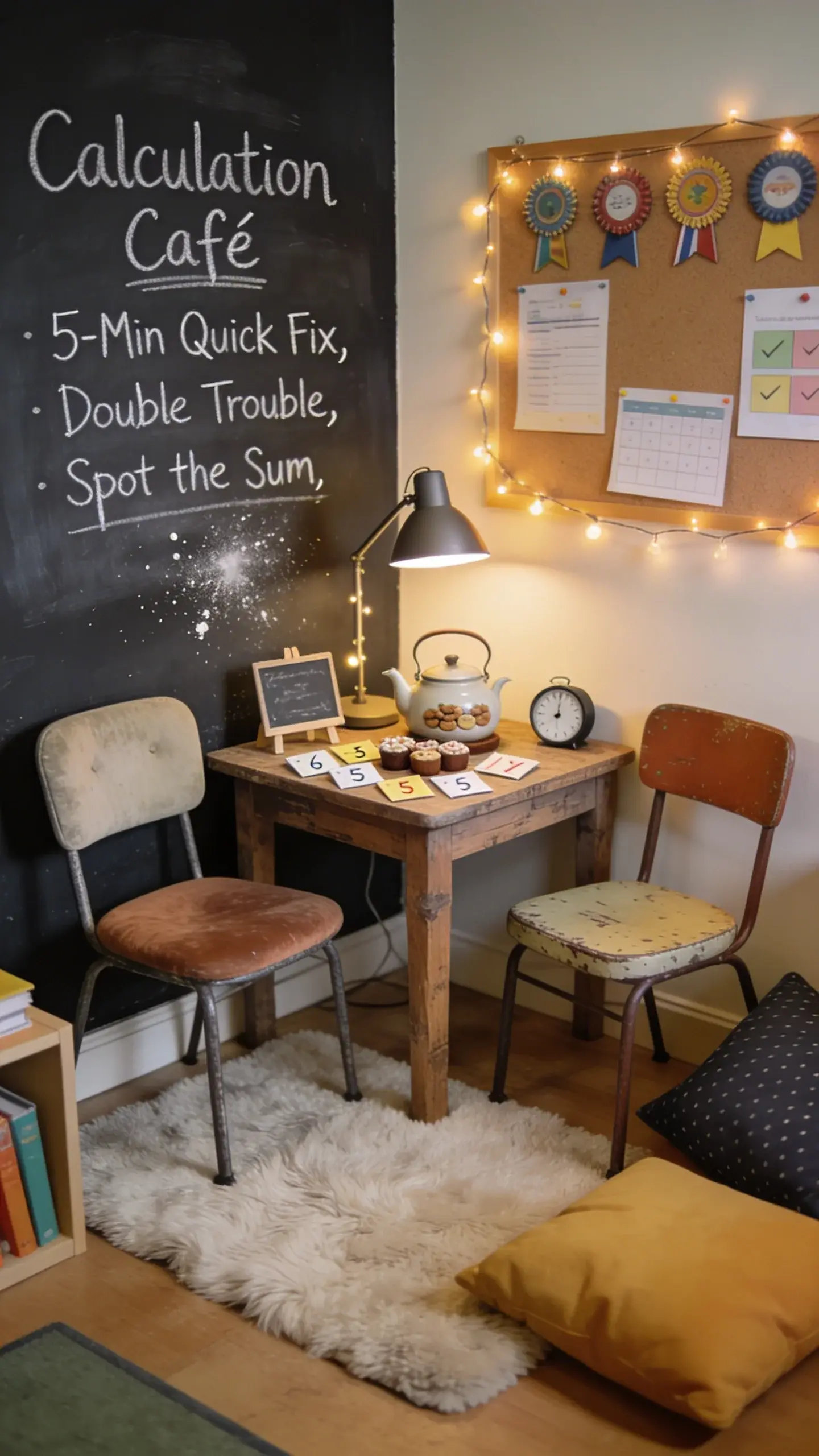
Set up a cozy corner that feels like a tiny café, where quick calculations happen between bites of learning. A small table, comfy chairs, and a chalkboard menu make practice feel social and fun. FYI, collaboration spikes when the vibe is welcoming.
Tips
- Offer 5-minute challenges at the start of class
- Allow students to choose the challenge level
Perks: lowers intimidation, increases participation, and creates routine.
11. Triangles and Textures: Math Texture Wall
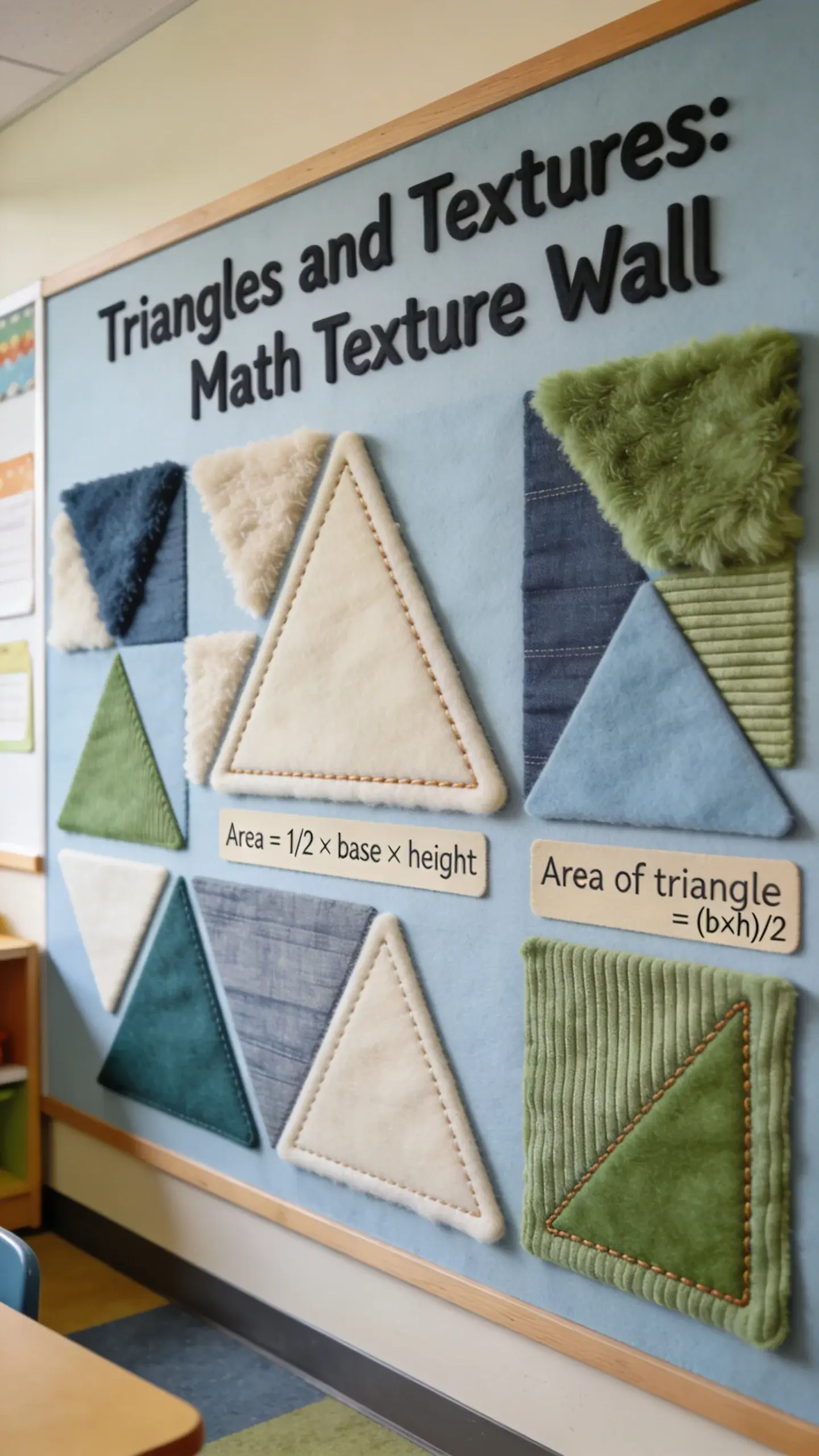
Texture meets triangles in a tactile wall that doubles as a study aid. Fabric patches, felt shapes, and embossed patterns help visual and tactile learners connect with concepts. Trust me, it’s surprisingly soothing.
Materials
- Felt shapes in assorted sizes
- Patches labeled with area formulas
Outcome: deeper understanding through multi-sensory engagement.
12. Calendar of Constants: Temperature, Time, and Beyond
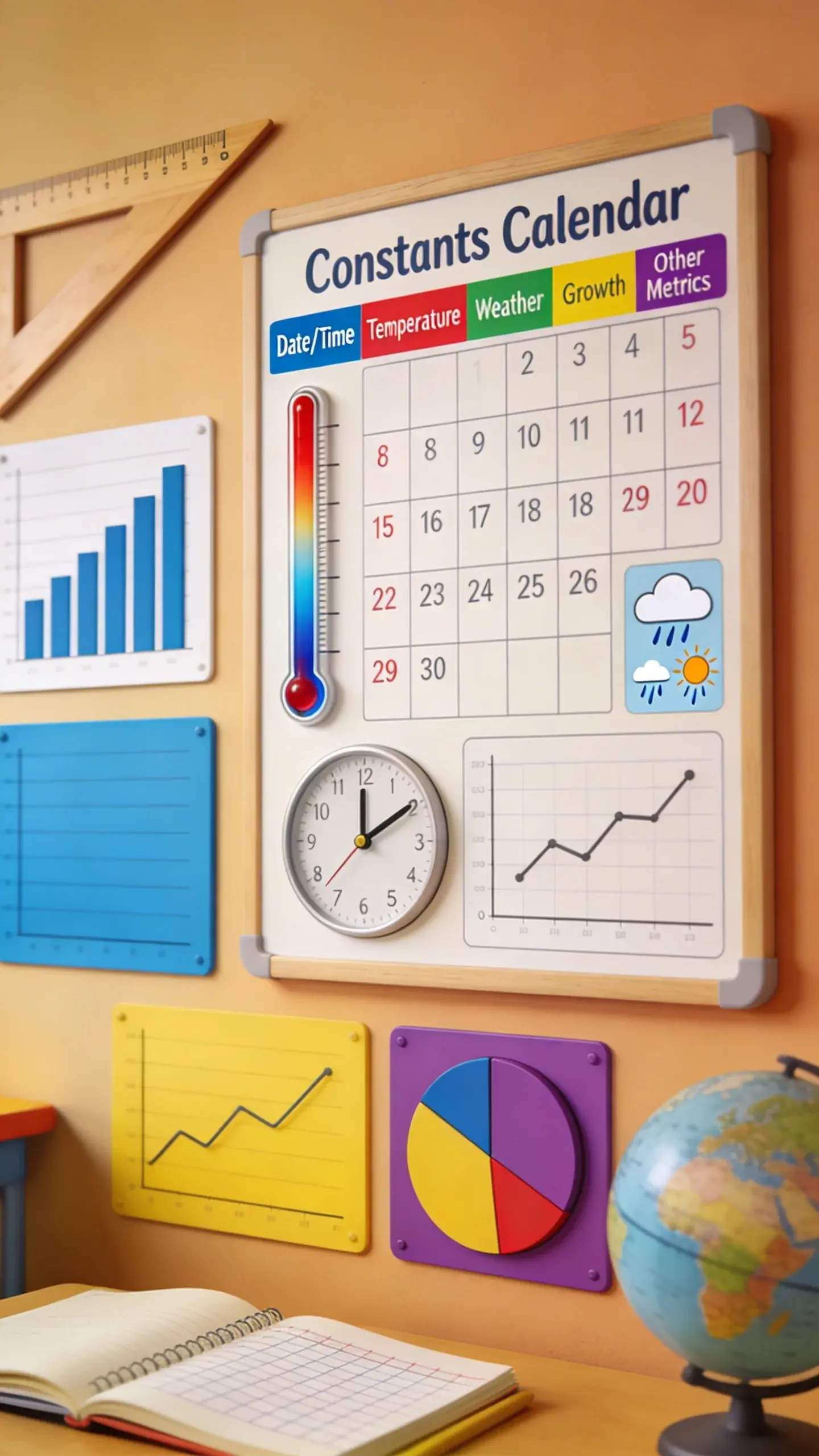
A calendar wall that tracks constants and real-world metrics makes math relevant every day. Incorporate weather data, time intervals, or growth charts to illustrate math in action. Seriously, you’ll start hearing “Why is this important?” less often.
Key Elements
- Daily numeric prompts
- Color-coded sections for different data types
Bottom line: students see math as a tool, not a topic.
13. Mobius Strip Mobility: Flexible Seating Labels
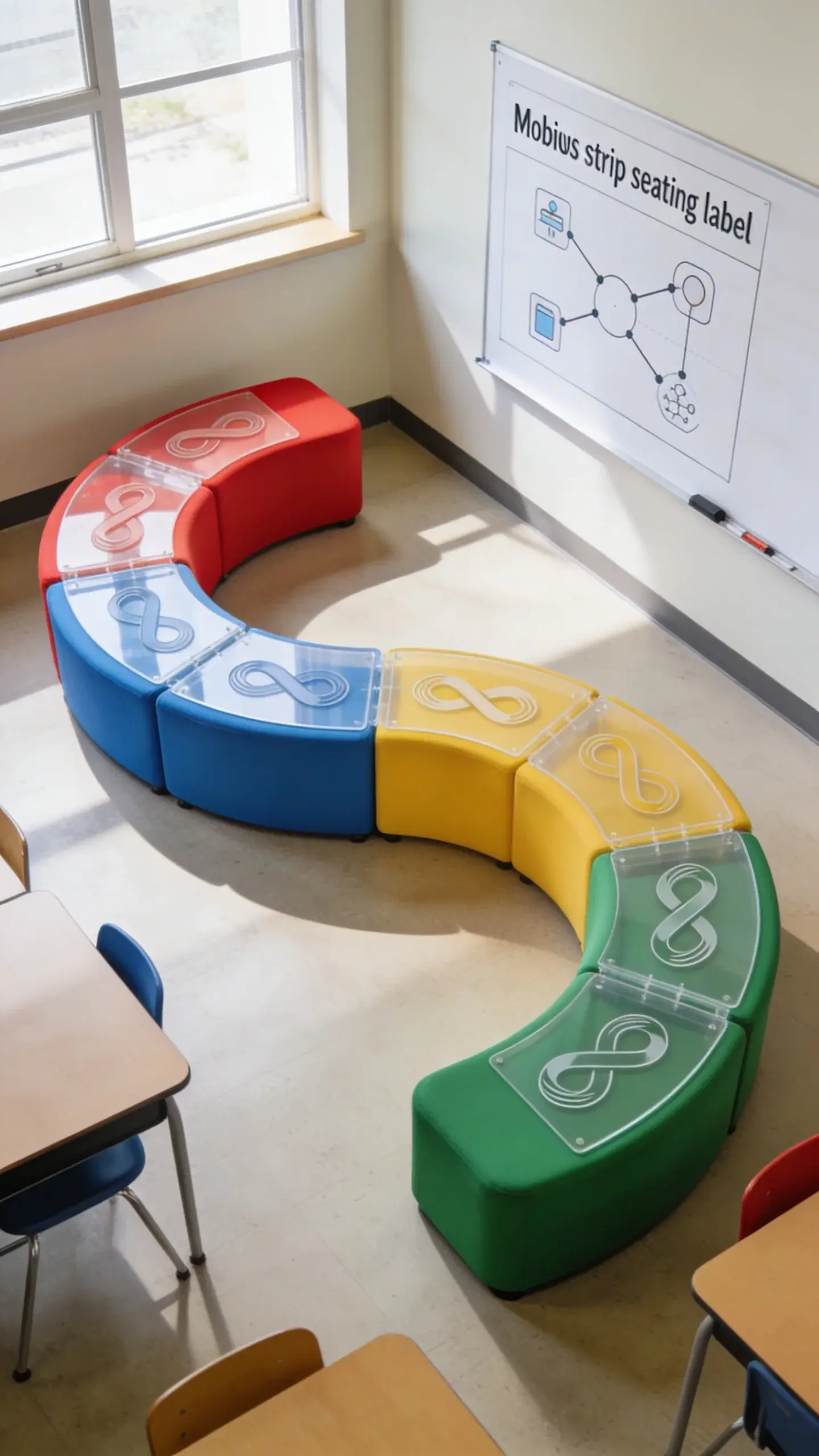
Label flexible seating with math motifs that hint at balance, symmetry, and flow. A simple mobius-strip graphic or label helps students see connections between seating arrangements and problem-solving strategies. IMO, it’s a tiny change with big impact.
Ideas
- Color-coded zones for collaborative groups
- Simple rules displayed on the boards
Benefit: fosters autonomy and smoother transitions between tasks.
14. Positive Prime Pathway: Road to Mastery
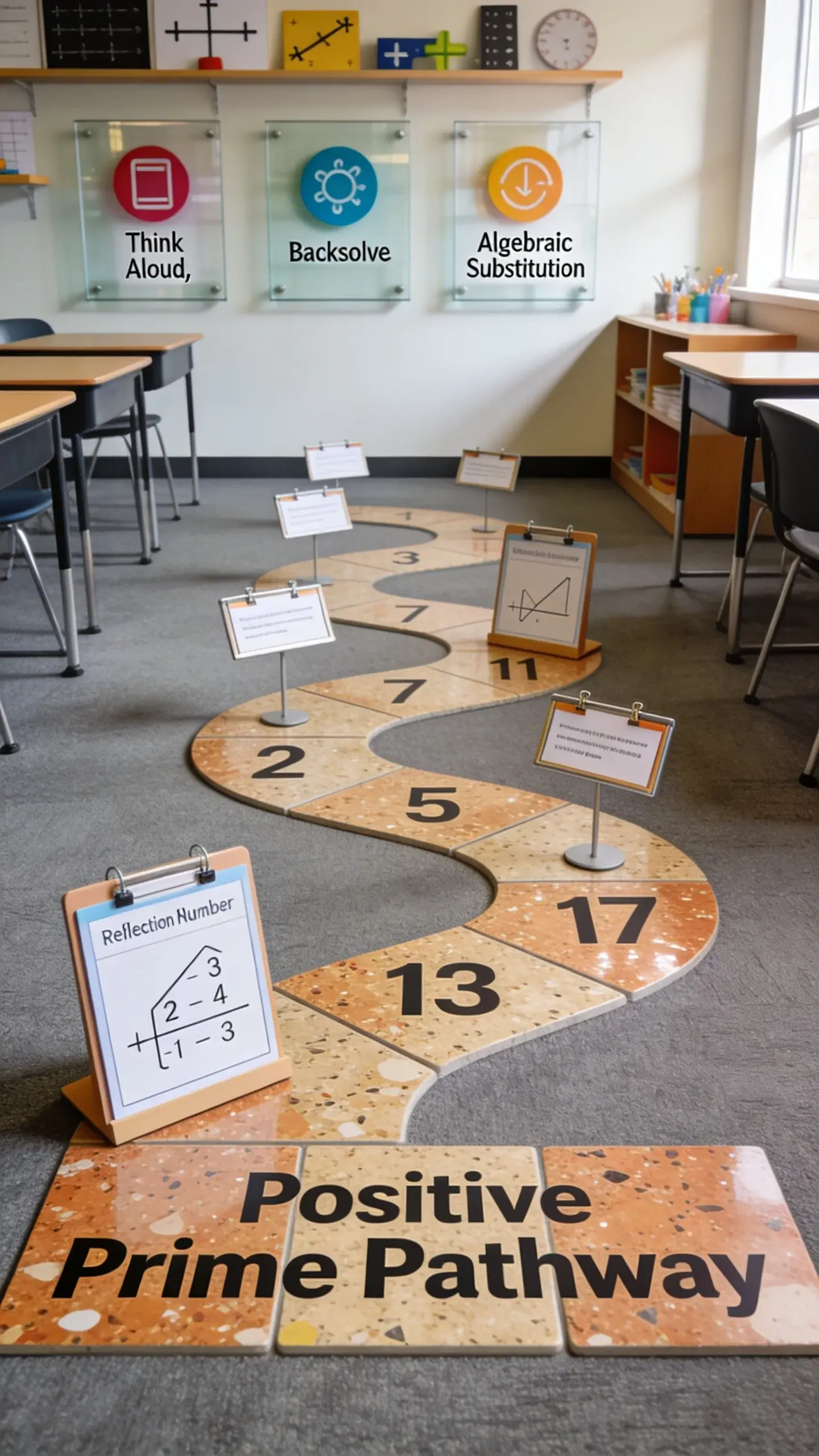
Design a path through the room that celebrates small wins with prime-number markers. Each marker can hold a quick problem or a reflection. This gives students a micro-goal to chase as they move around.
What to Put On Markers
- Mini challenges (solve 2x + 3)
- Reflection prompts (what strategy helped you here?)
Result: steady momentum and a clear sense of progress.
15. Spatial Reasoning Studio: 3D Display Hub
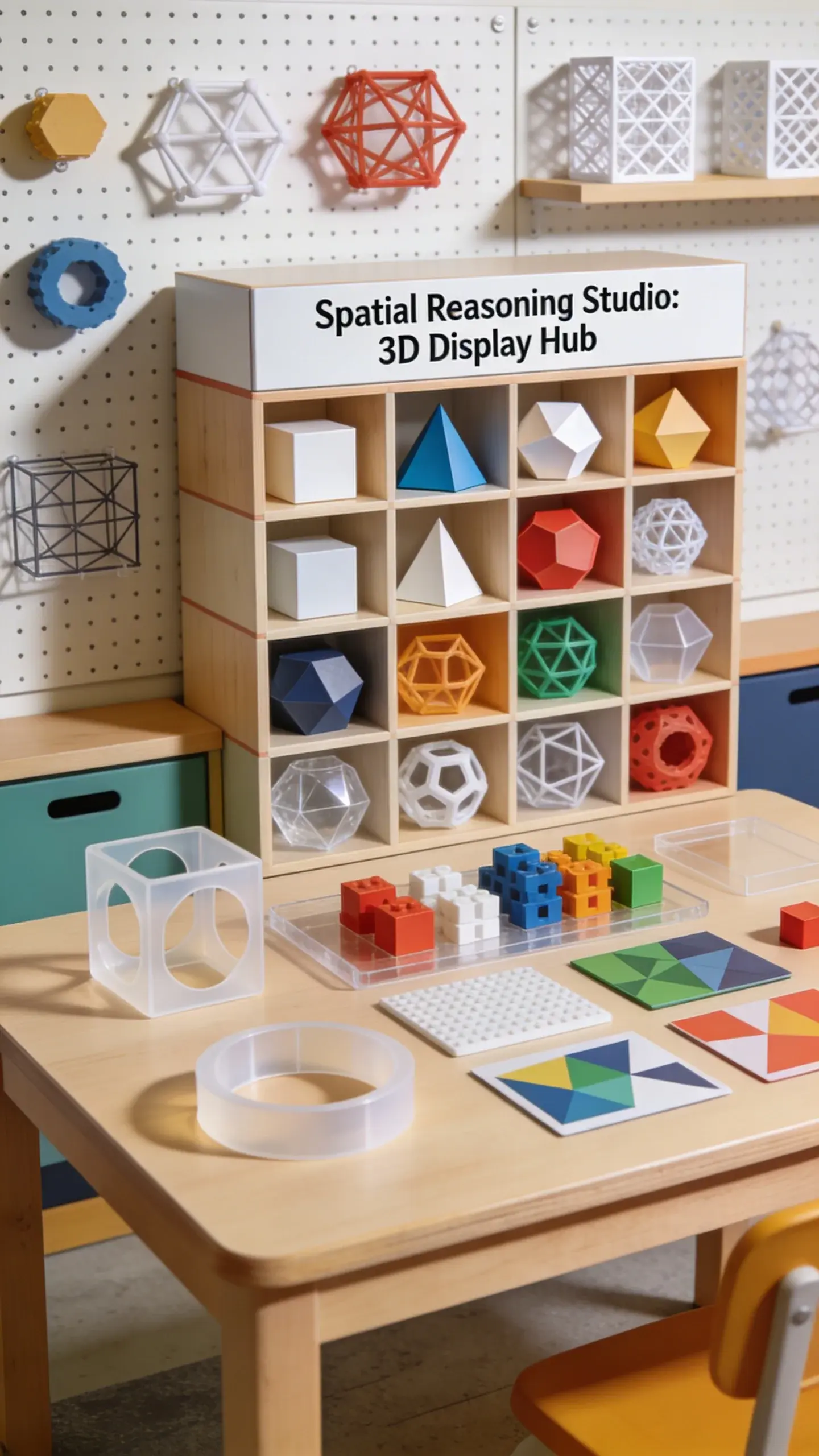
Build a mini hub for 3D shapes and spatial reasoning. Use modular blocks, polyhedrons, and even 3D-printed models to spark curiosity. Seriously, hands-on geometric exploration pays off big time.
Suggestions
- Interactive model shelves
- Labelled attributes (faces, edges, vertices)
Takeaway: students visualize math in three dimensions, not just on a page.
16. Reflect and Reset Corner: Exit Ticket Wall
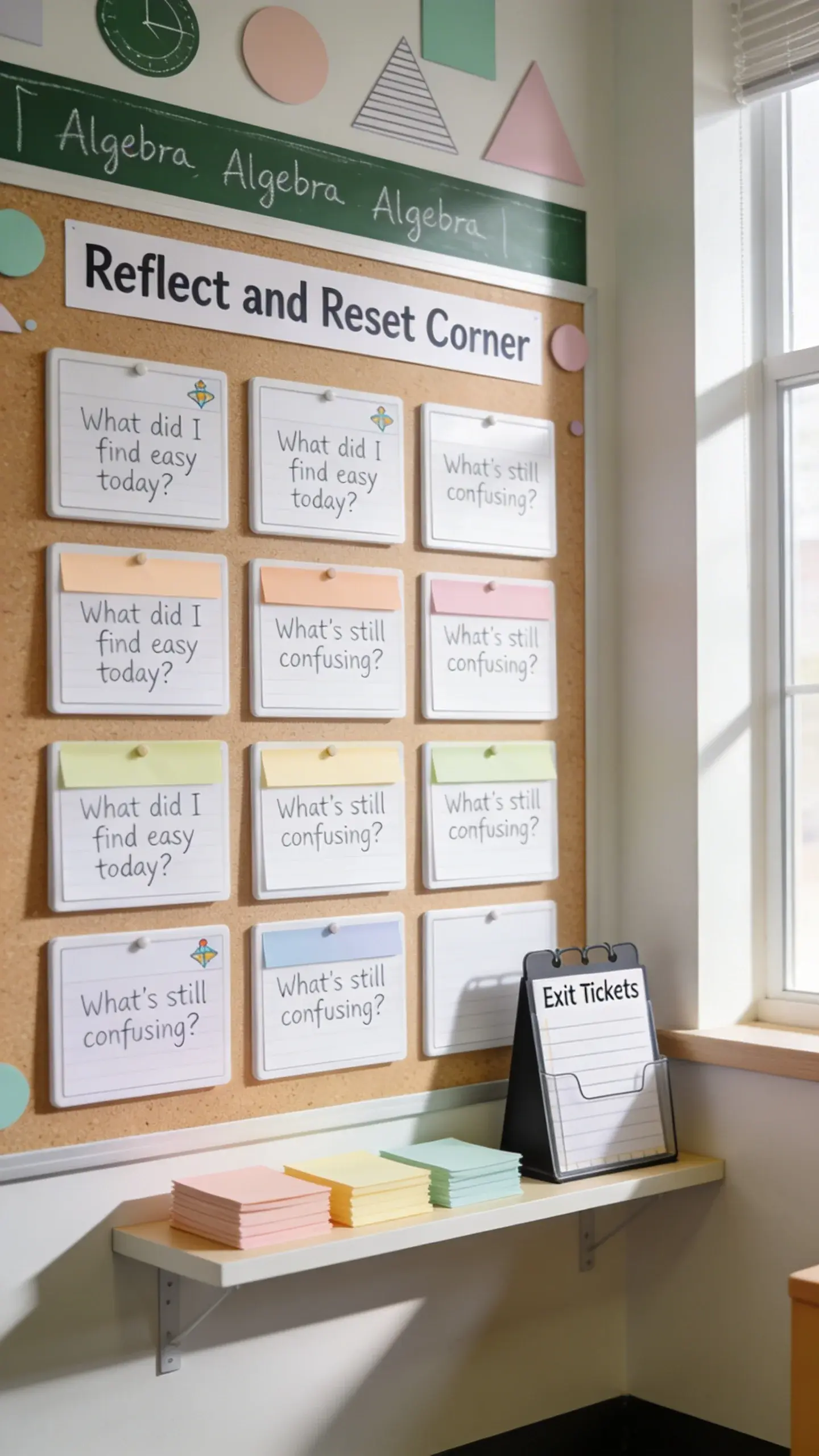
End a lesson with a tiny, powerful reflection nook. A wall where students post exit tickets or quick reflections reinforces learning and gives you quick feedback. FYI, it helps you tailor the next class to what actually happened.
What to Include
- Mini whiteboards or sticky-note prompts
- Prompts like “What did I find easy today?” or “What’s still confusing?”
Benefit: closes the loop, boosts retention, and guides future lessons.
Ready to transform your classroom into a math-loving haven? Pick a few ideas that fit your space and vibe, then layer in over time. You’ll notice more spontaneous math talk, more student buy-in, and fewer whole-class mutinies over worksheets. Seriously, you’ve got this.