
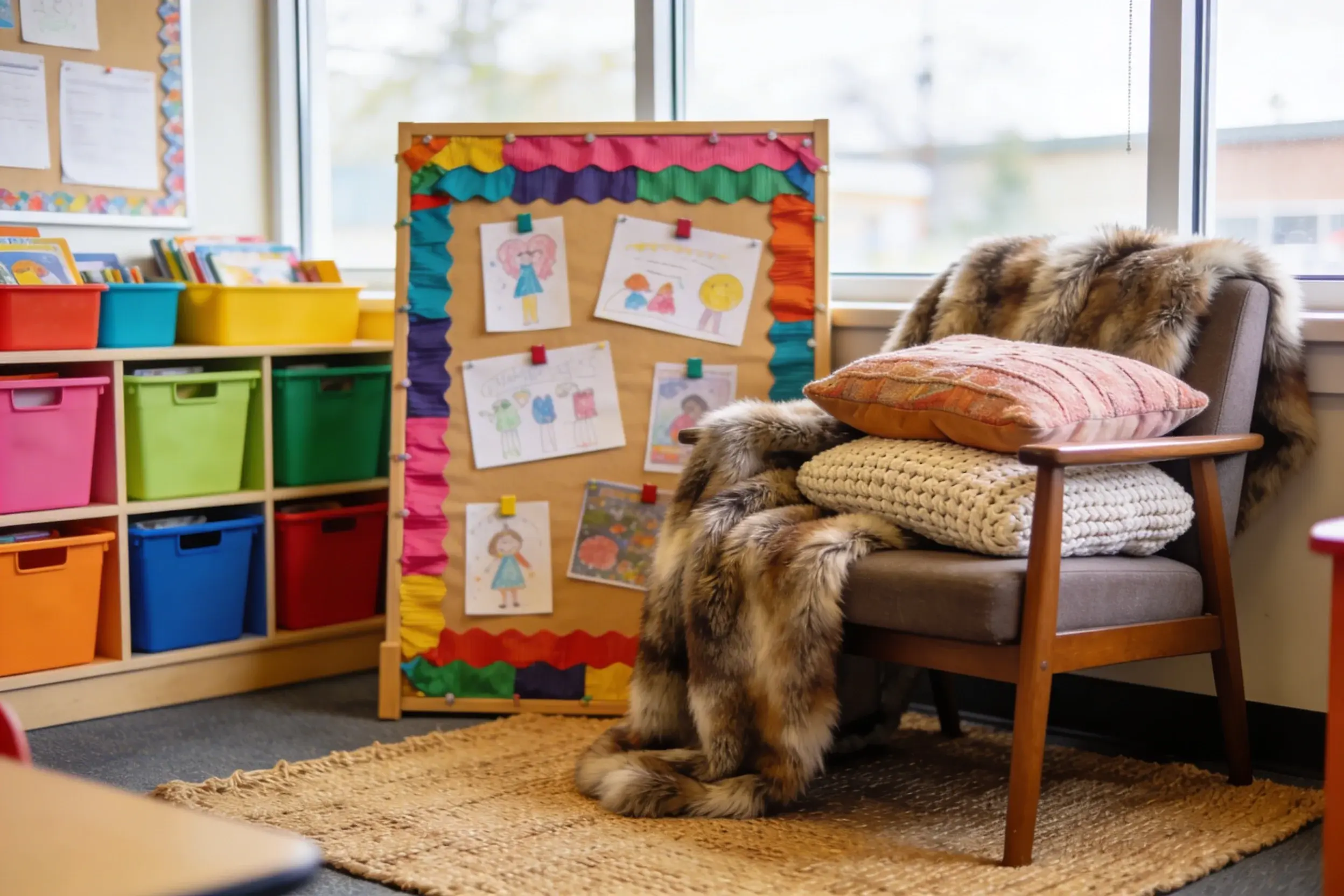
Budget-friendly, kid-friendly, and totally shareable—these ideas prove you don’t need a big budget to transform a classroom into a space students actually love. Ready to steal some seriously smart hacks?
1. Layer Texture Like a Pro
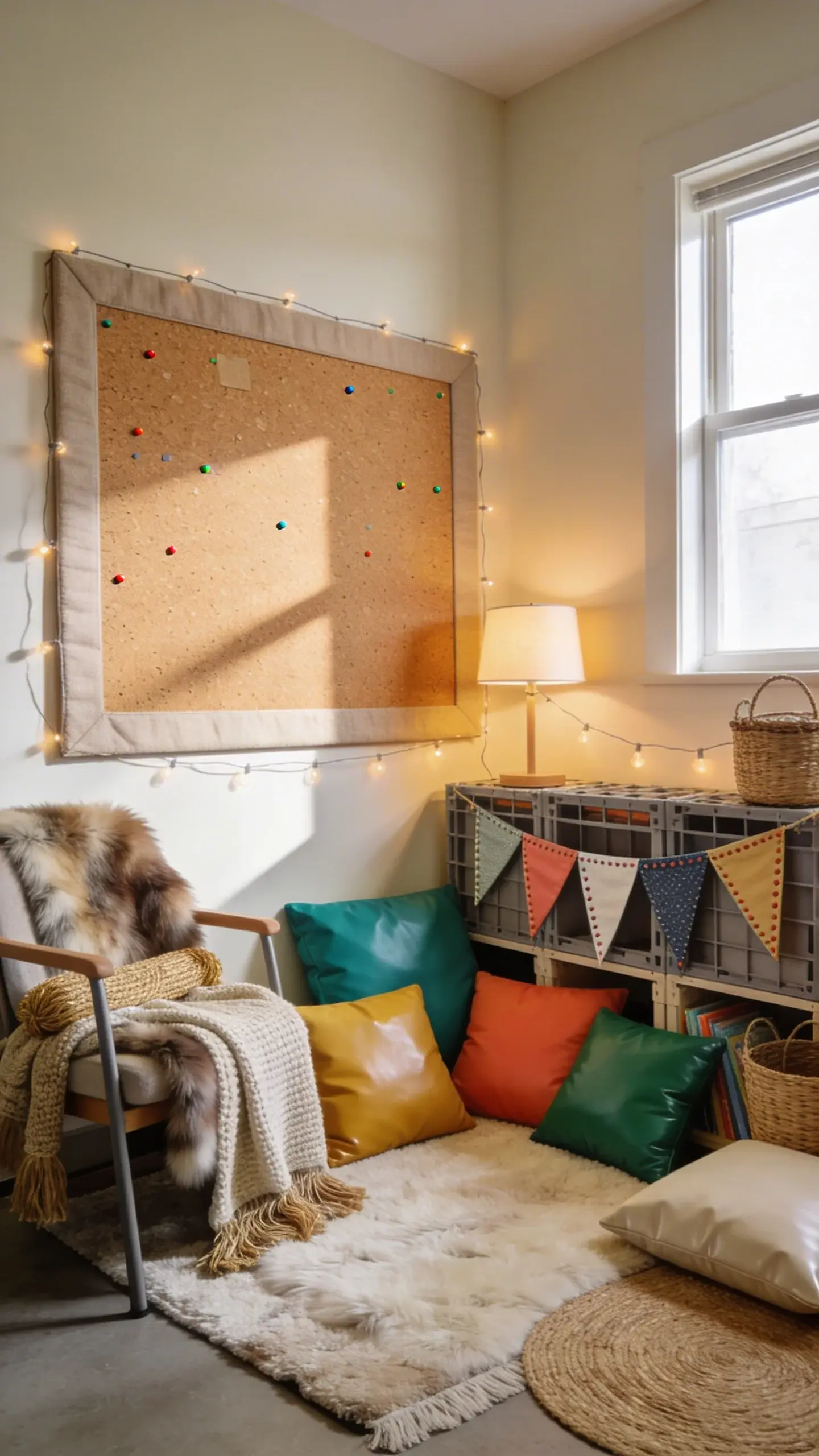
Textured surfaces instantly make a room feel more inviting. You don’t need pricey pieces—just clever combos of fabrics, cork, and handmade accents.
Key Elements:
- Textured bulletin boards
- Throw pillow covers in bold colors
- Rugs or floor mats that define reading corners
Mix faux fur, knit, and jute to add depth without blowing the budget. Your students will notice the cozy vibes the moment they walk in.
2. DIY Statement Bulletin Boards
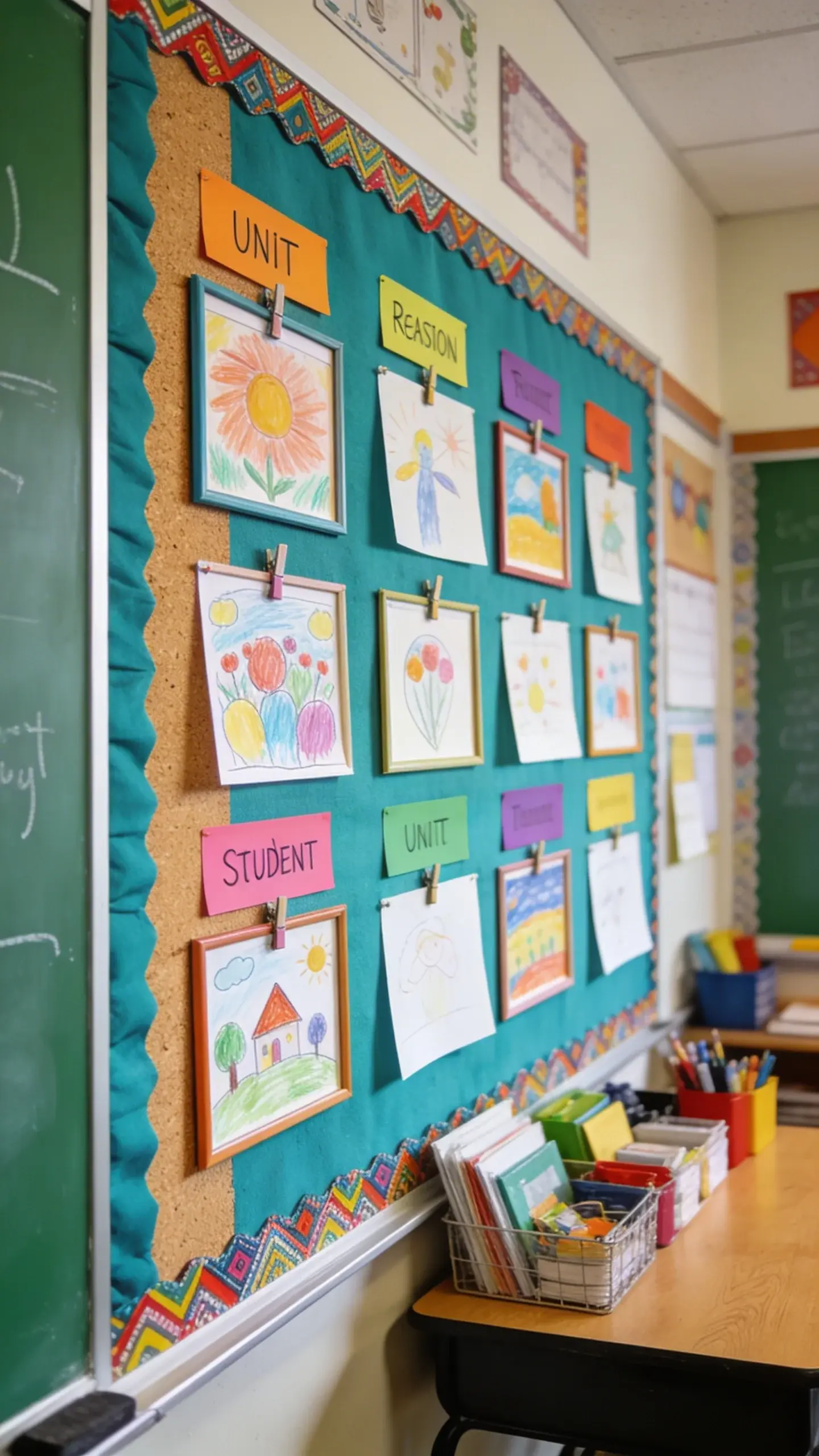
A great bulletin board earns its keep by being both decorative and functional. Create themes that rotate with units or seasons.
Tips:
- Use cork boards wrapped in vibrant fabric for a fresh look
- Label sections clearly so students know where to post work
- Incorporate student artwork to foster ownership
Benefits: quick motivation boosts, easy updates, and a sense of pride for students.
3. Color-Coded Learning Corners
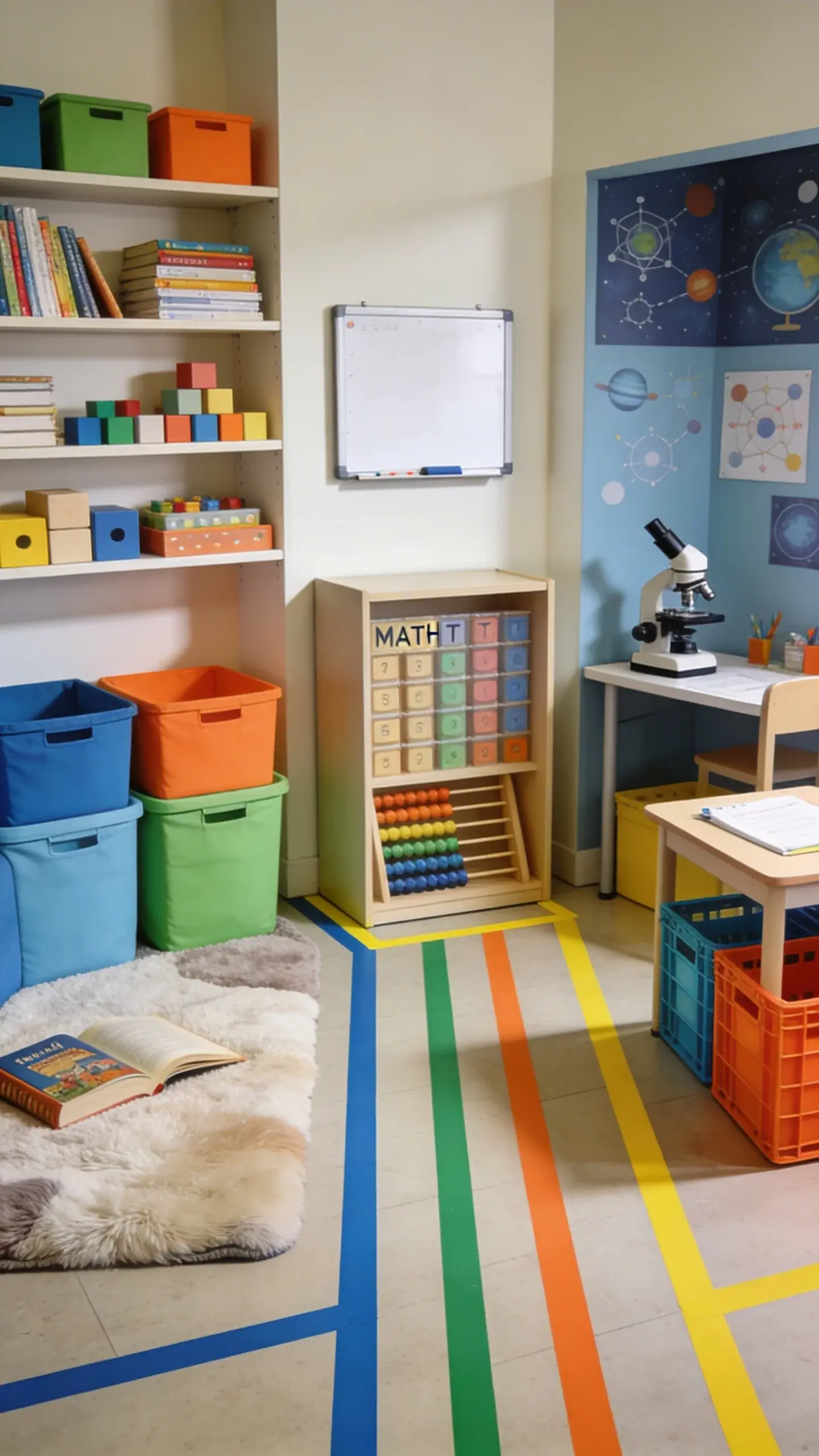
Color coding helps students quickly navigate the room. Pick 3–4 core colors and stick with them for a cohesive vibe.
What to Do:
- Color blocks for reading, math, science, and writing
- Matching bins and labels
- Colored tape to map zones on the floor
Note: Consistency matters—students will naturally gravitate to the right area.
4. Upcycled Library Nook
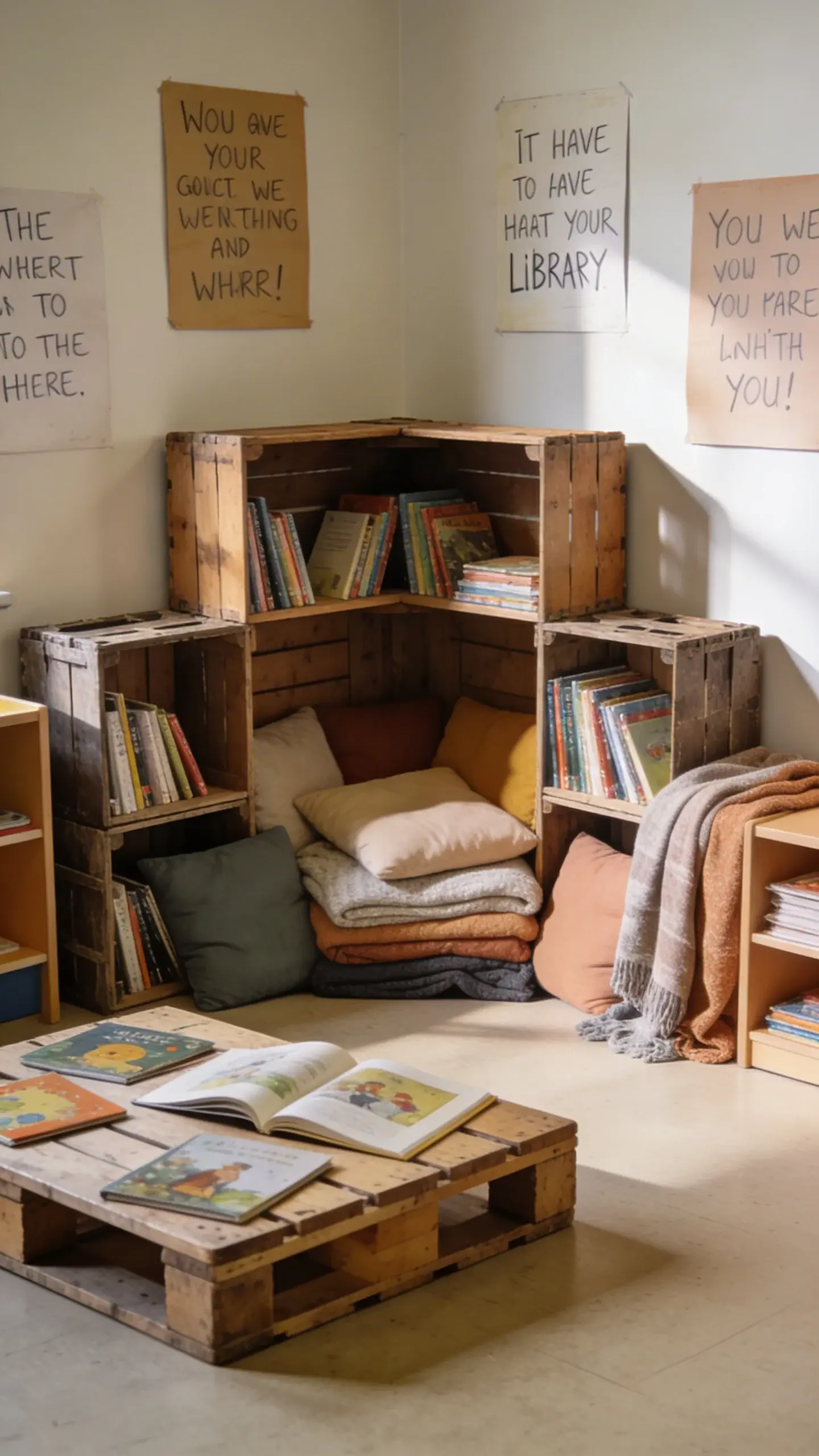
Turn an unused corner into a cozy library corner with thrifty finds and DIY touches. It becomes the heart of daily independent reading.
Materials:
- Secondhand shelves or crates
- Affordable cushions and blankets
- Posters with favorite book quotes
Benefit: students actually want to pick up a book, which is everything you want as a teacher.
5. Chalkboard Wall 2.0
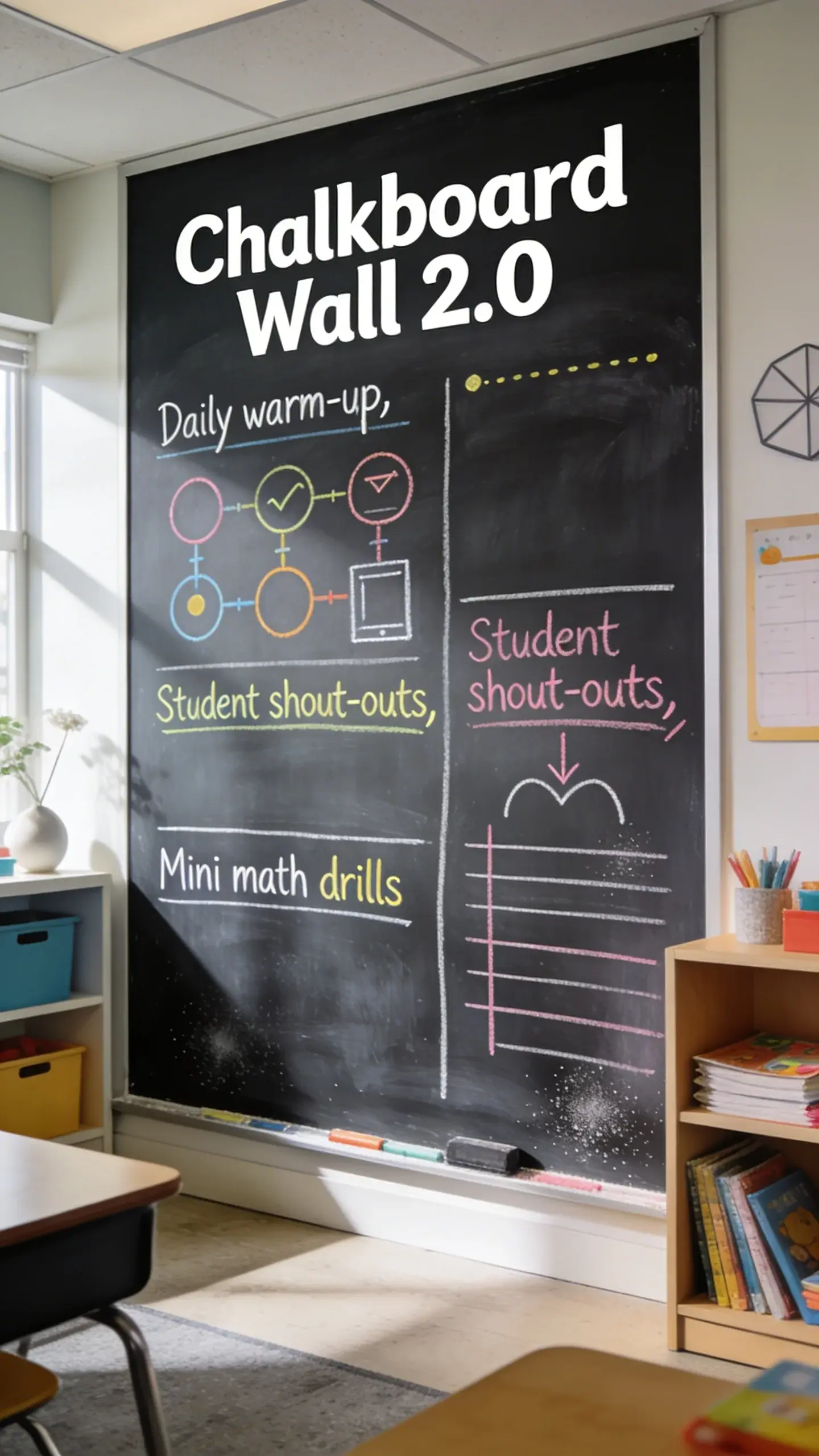
A chalkboard surface can be a playground for ideas. It’s practical, re-writable, and incredibly engaging for quick lessons.
Ideas:
- Daily warm-up prompts
- Student shout-outs for good work
- Mini math drills or vocabulary of the day
FYI: Use liquid chalk markers for cleaner lines and less dust. Trust me, it’s a game changer for margins.
6. Calm-Down Corner on a Budget
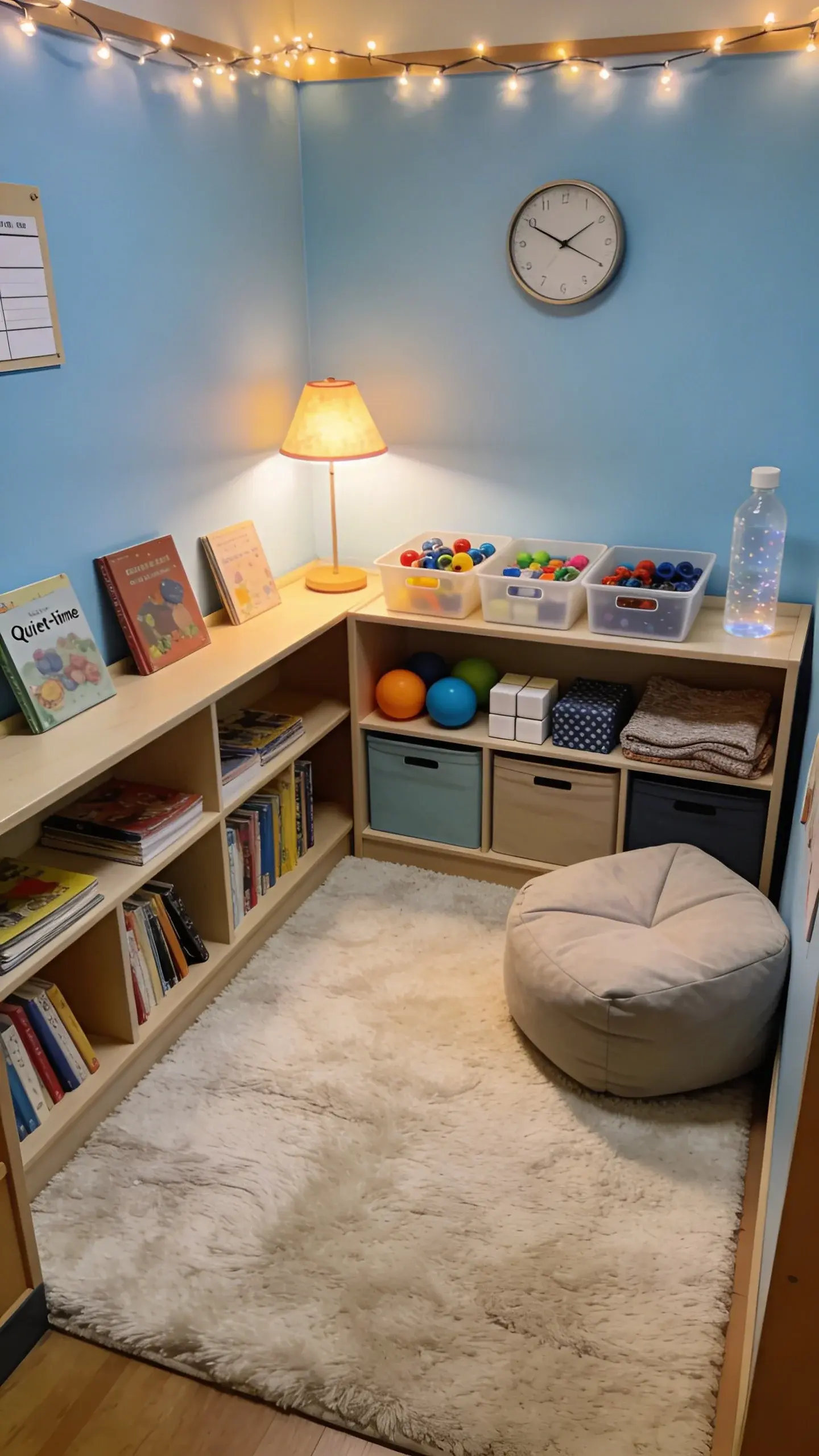
Create a tiny sanctuary where students decompress. A restful space helps with focus and behavior.
What to Include:
- Soft lighting (string lights or a small lamp)
- Fidget-friendly tools and a sensory bottle
- Low shelves with quiet-time books
Benefits: students reset quickly, making class time more productive for everyone.
7. Inspirational Door Decor
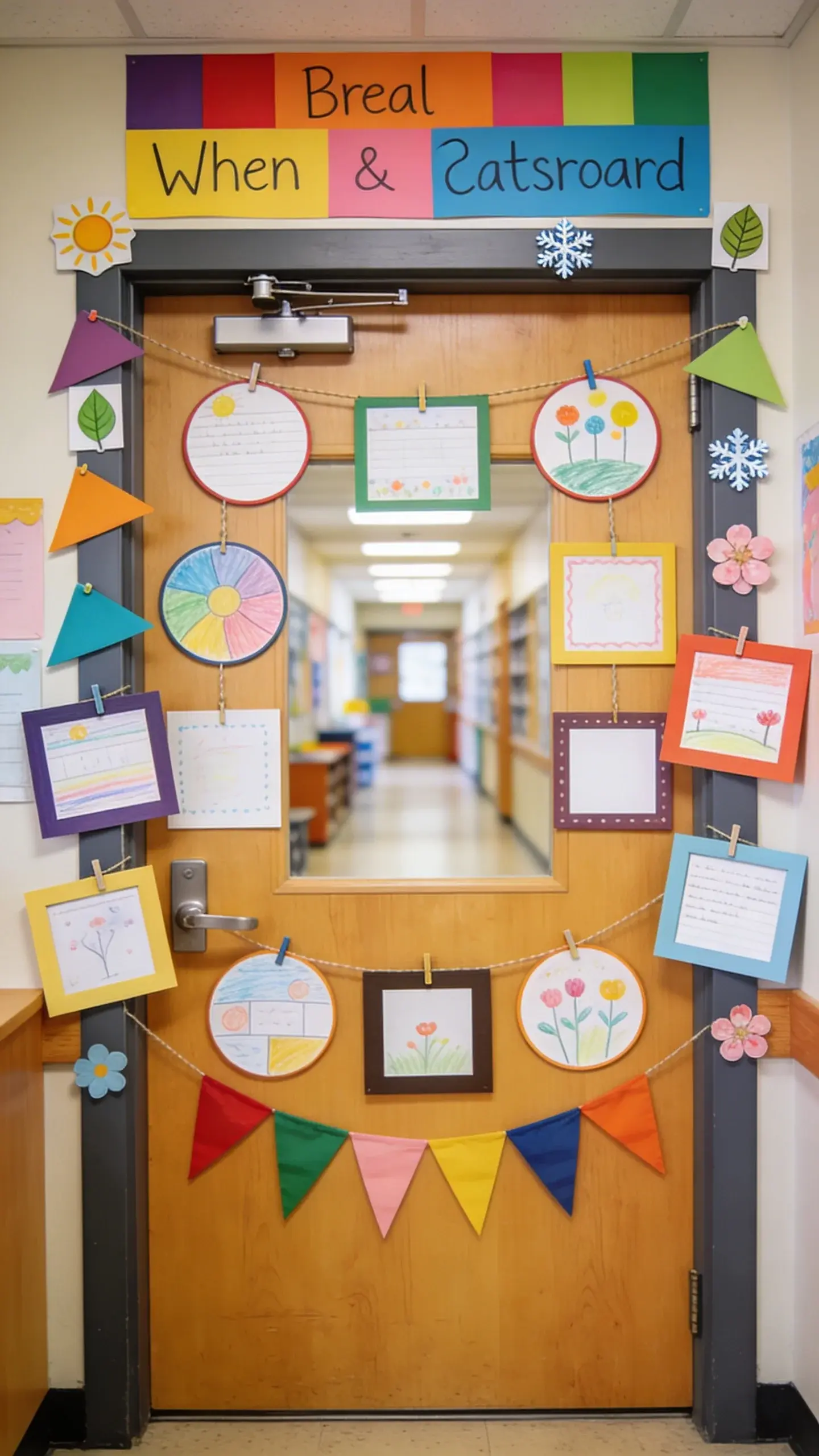
Make your door a daily source of motivation and curiosity. It’s the first thing students see every day.
Key Elements:
- Bold title banner
- Student projects framed or clipped on a string
- Seasonal updates to keep it fresh
Impact: a welcoming entrance sets a positive tone before the bell even rings.
8. DIY Desk Organizers from Everyday Items
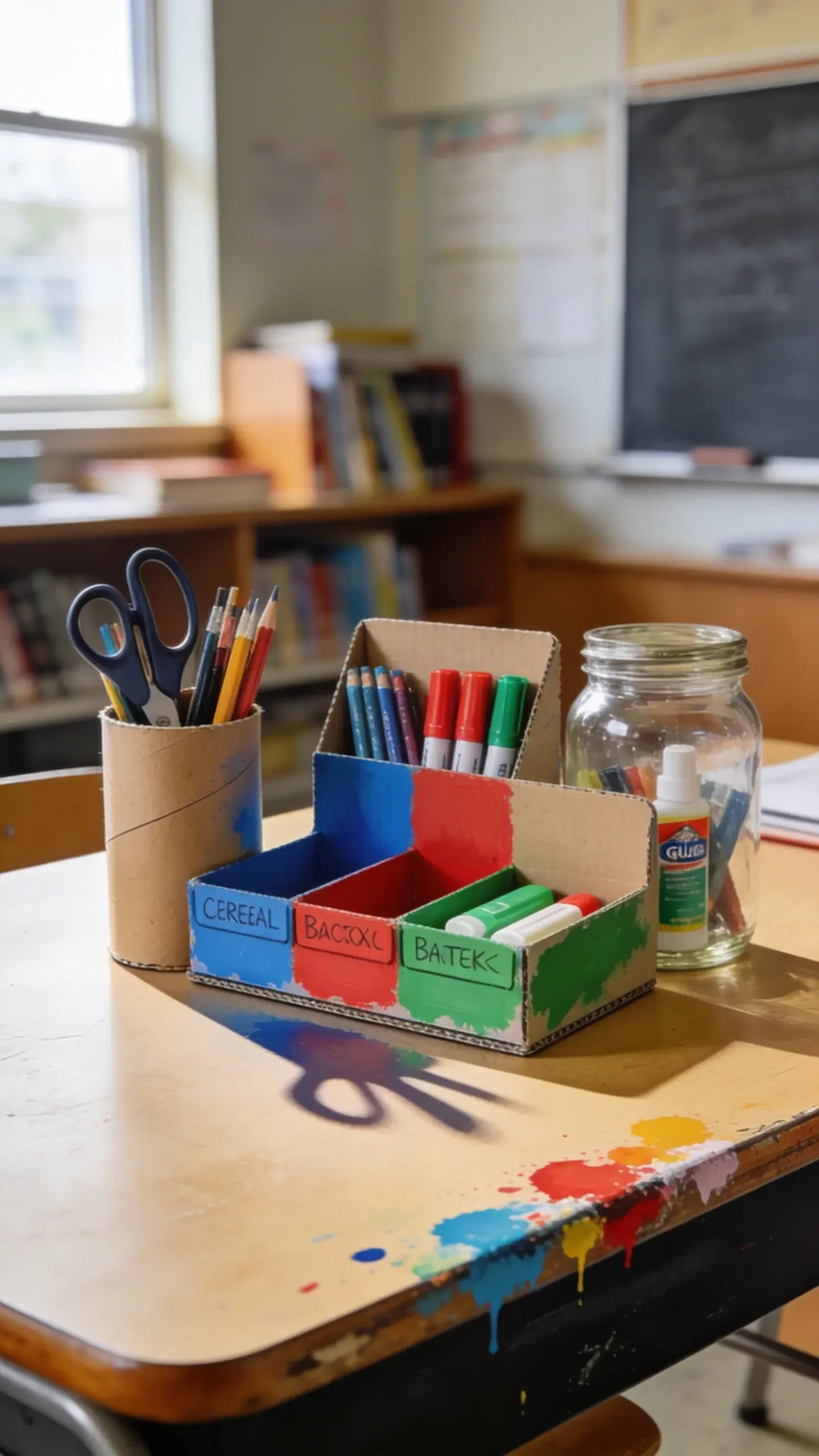
Organized desks = focused brains. Build simple organizers from cardboard, jars, and paint.
Materials:
- Cardboard tubes, cereal boxes
- Spray paint or acrylic paint
- Labels for supplies
End result: cleaner desks, fewer lost supplies, and more time for teaching.
9. Instructional Posters You Update Monthly
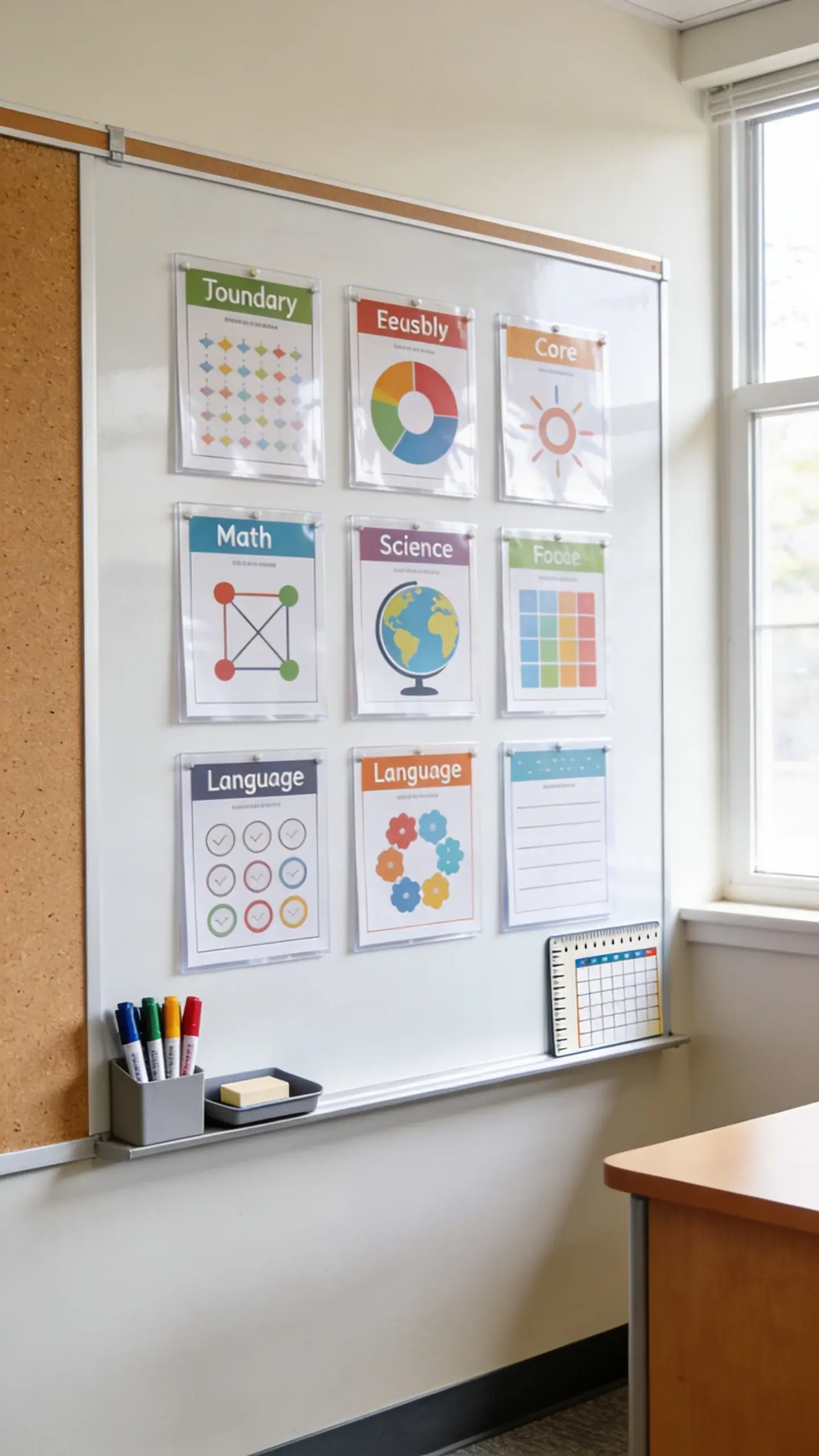
Posters shouldn’t be static. Create washable, reusable posters with core concepts your students refer to weekly.
Tips:
- Laminate and reuse with dry-erase markers
- Involve students in creating ideas for the posters
Benefit: quick reference that reinforces learning without extra worksheets.
10. Flexible Seating to Match Your Day
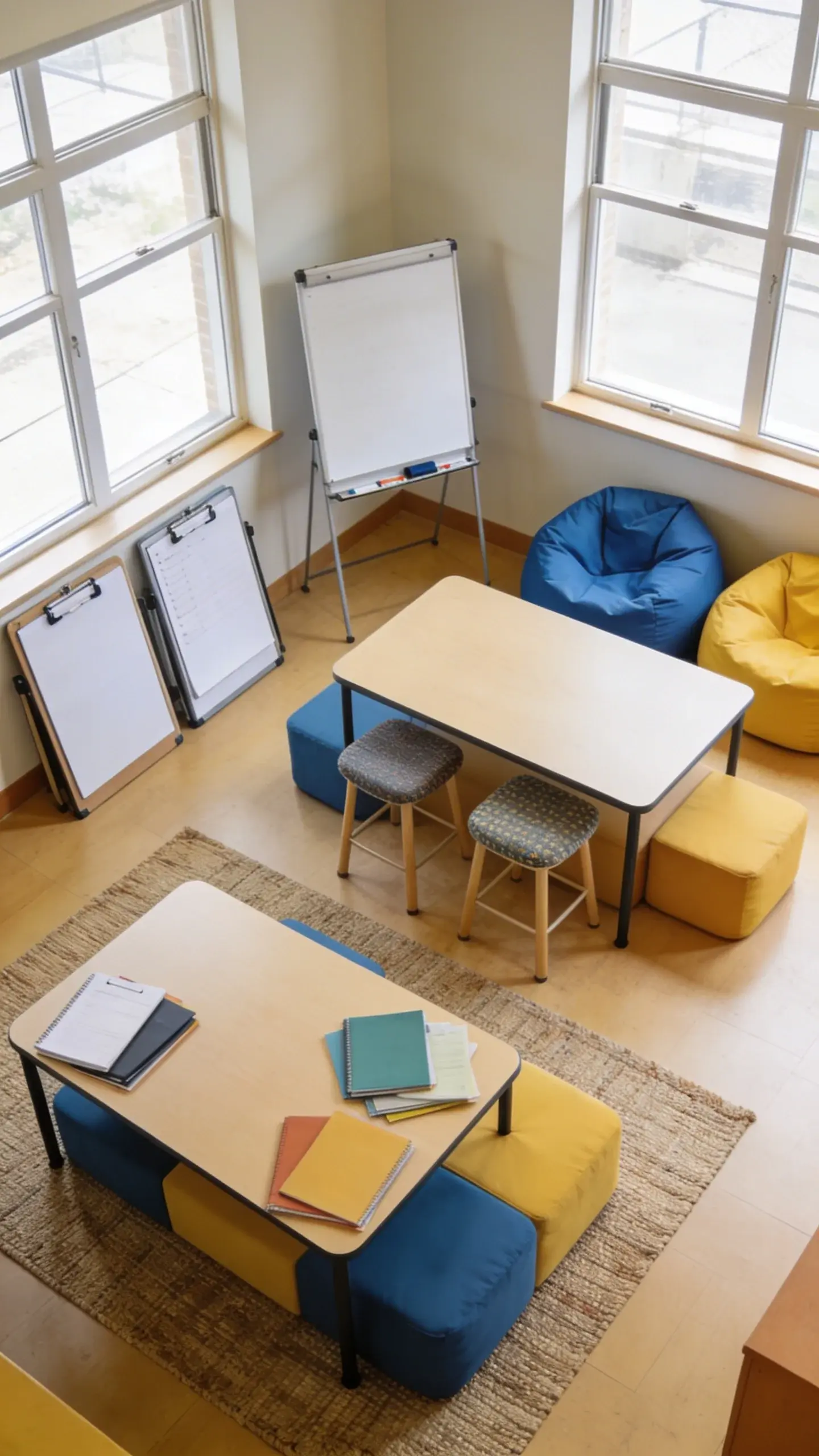
Flexibility changes how students engage. A few budget-friendly options can honestly transform participation.
Options:
- Stools, cushions, or bean bags
- Low tables for collaboration
- Moveable whiteboards or clipboards for feedback
Tip: start small—one flexible option per week to test how it lands with your class.
11. Wall-Mugged Word Walls
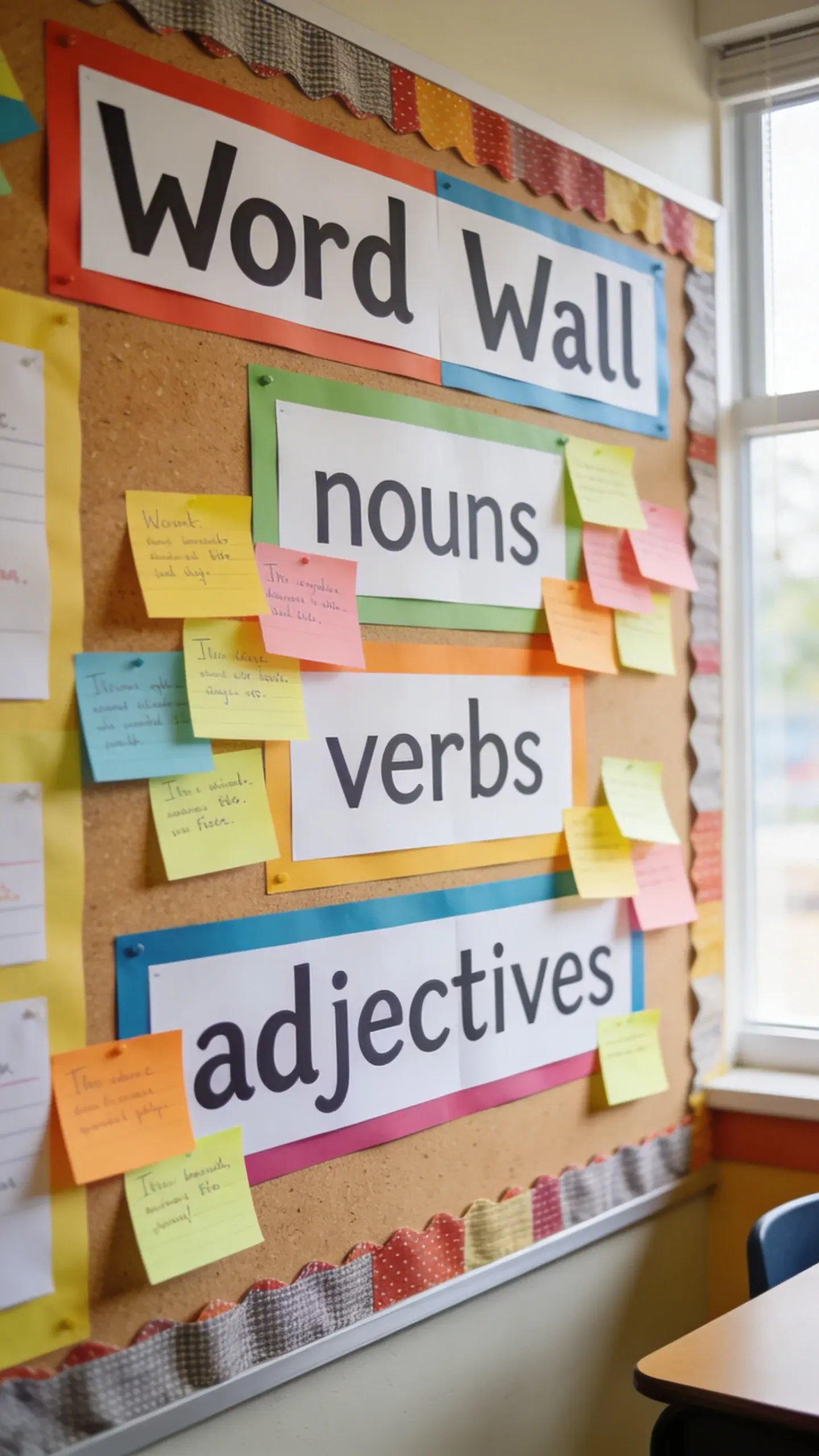
Turn vocabulary into art without spending a fortune. Word walls should be legible, colorful, and accessible.
How to Build:
- Printable word cards in large font
- Color-coded categories
- Student-created definitions on sticky notes
Why it works: daily exposure builds language confidence in a natural, subconscious way.
12. Seasonal Shelving Makeover
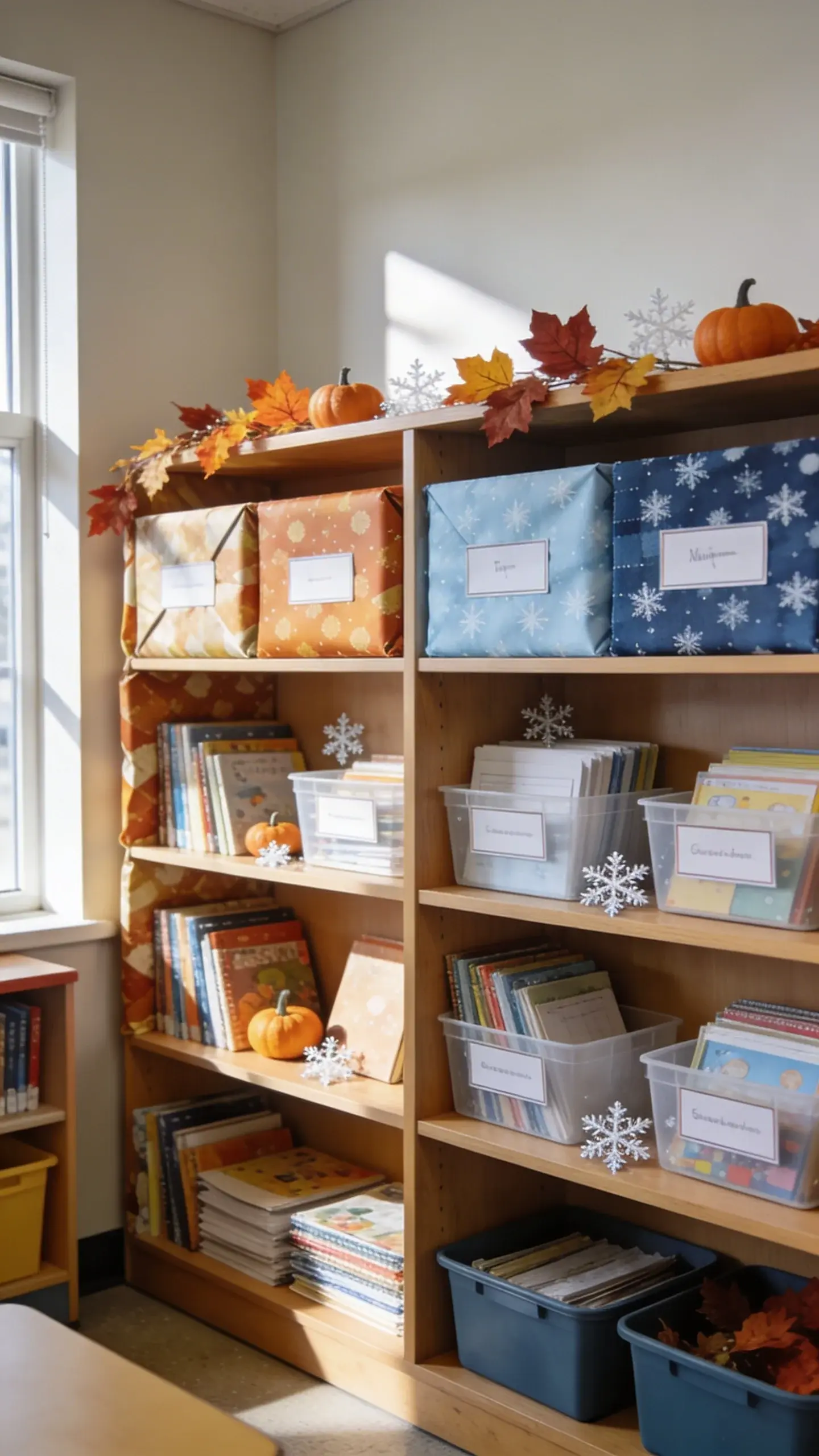
If you can’t buy new shelves, dresses up the ones you have and rotate them with the seasons.
What to Do:
- Wrap shelves with wrapping paper or fabric for a fresh look
- Label sections to signal new content
- Add a few seasonal props (fake leaves, pumpkins, snowflakes)
Perk: it feels like a brand-new classroom every few months without the cost.
13. Classroom Gallery Wall
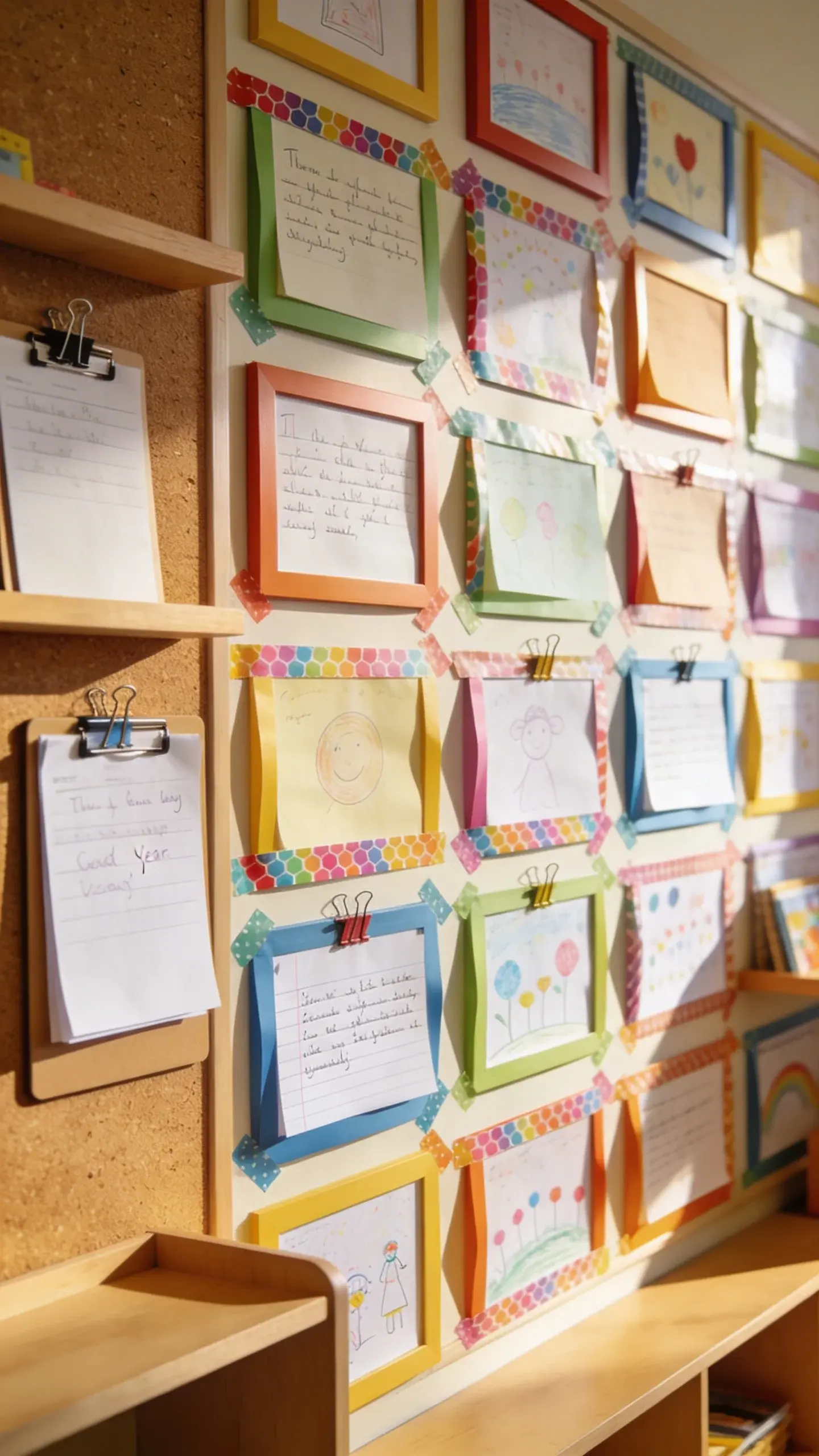
Celebrate student work with a colorful gallery wall. It’s motivational and makes kids feel seen.
Layout Tips:
- Rotate pieces weekly or biweekly
- Use washi tape frames for a playful vibe
- Involve students in curating the display
Bonus: it doubles as a visual record of growth over the year.
14. Reusable Decorative Garland
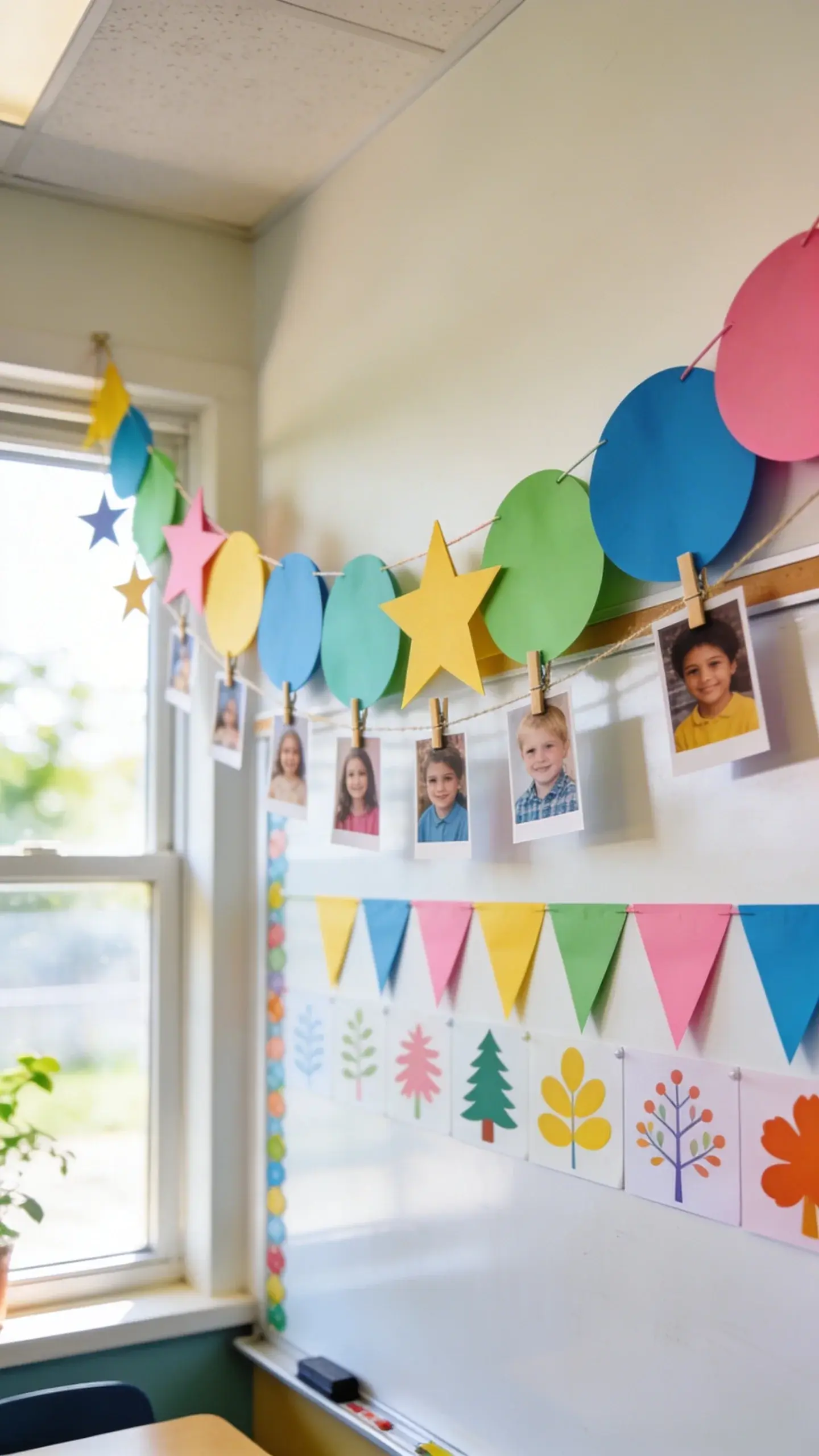
A simple garland goes a long way for color and movement in a classroom.
DIY Suggestions:
- String with paper shapes, quotes, or student photos
- Hang across whiteboards or windows
- Change themes with seasons or units
Smart, inexpensive charm that makes the room feel intentional and lively.
15. Creative Cardstock Focal Points
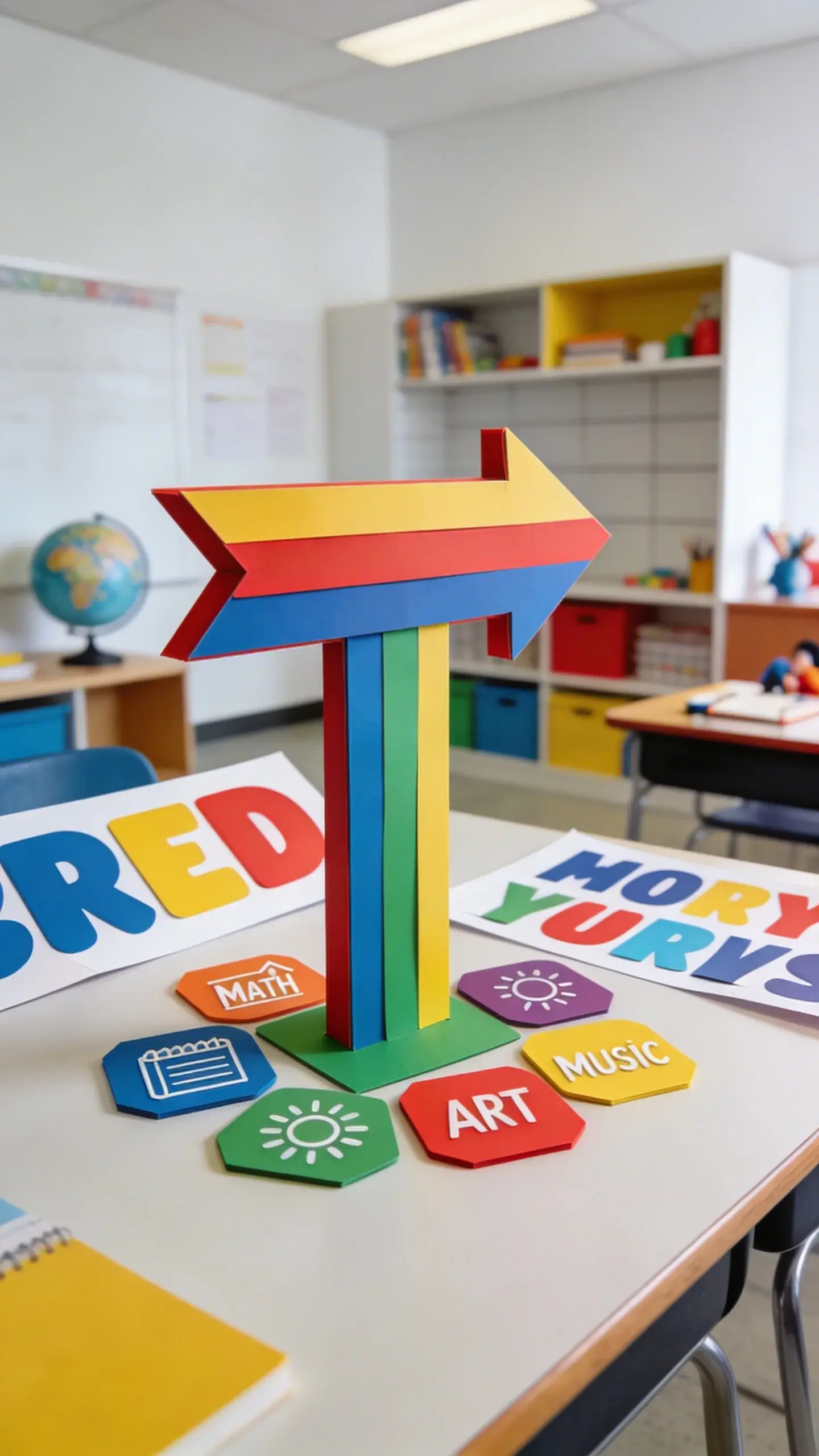
Bold focal points catch the eye and cue students where to look. Cardstock is cheap but surprisingly dramatic.
What to Create:
- Large, colorful arrows pointing to zones
- Icons for each subject area
- Motivational phrases in big letters
Impact: quick, high-contrast visuals that support learning without clutter.
16. Sensory-Friendly Lighting Tricks
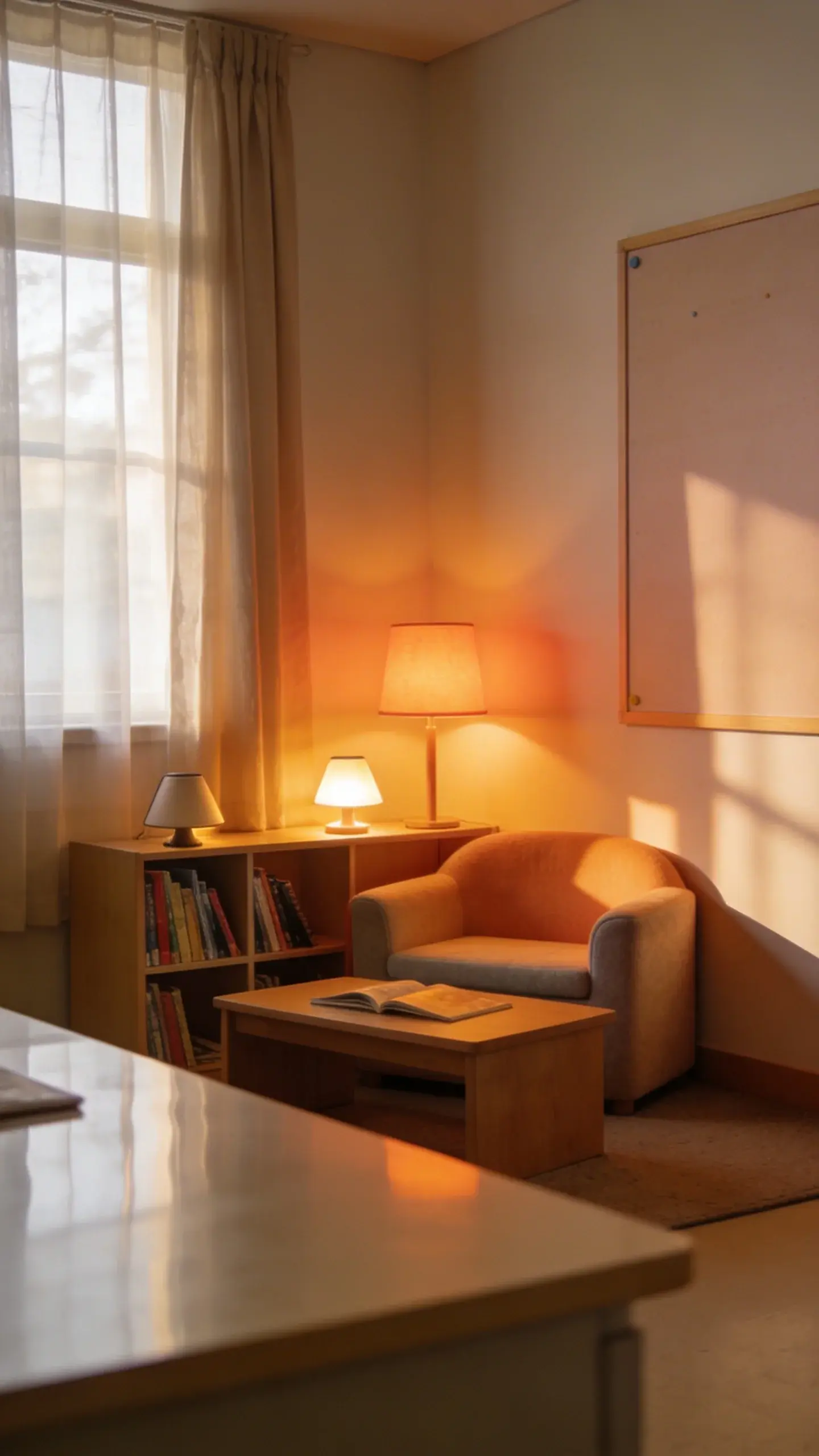
Lighting can change a mood in seconds. Cheap tweaks can reduce glare and boost focus.
What to Try:
- Dimmed lamps near reading corners
- Warm-toned bulbs for a cozy feel
- Natural light maximized with light, reflective surfaces
FYI: avoid harsh fluorescents—they zap energy and attention faster than you can blink.
17. Student-Driven Decor Boxes
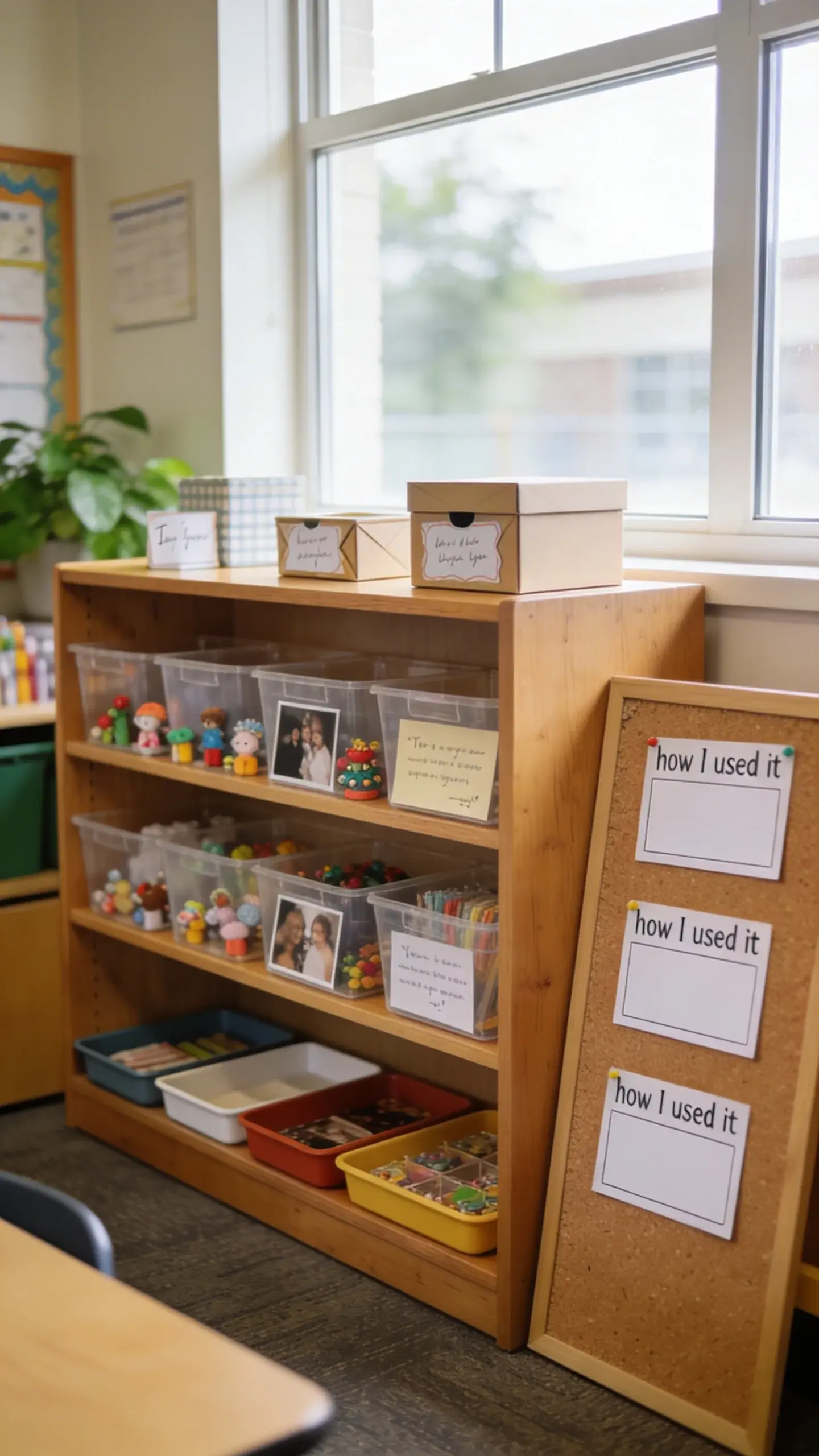
Give students ownership by letting them curate mini-decor boxes for weeks. It’s cute, cooperative, and incredibly empowering.
What’s Inside:
- Mini crafts, photos, quotes
- Labels and organizing trays
- A quick “how I used it” note from the student
Benefit: builds investment and pride in the classroom environment.
18. Rotating Classroom Micro-Experiments Wall
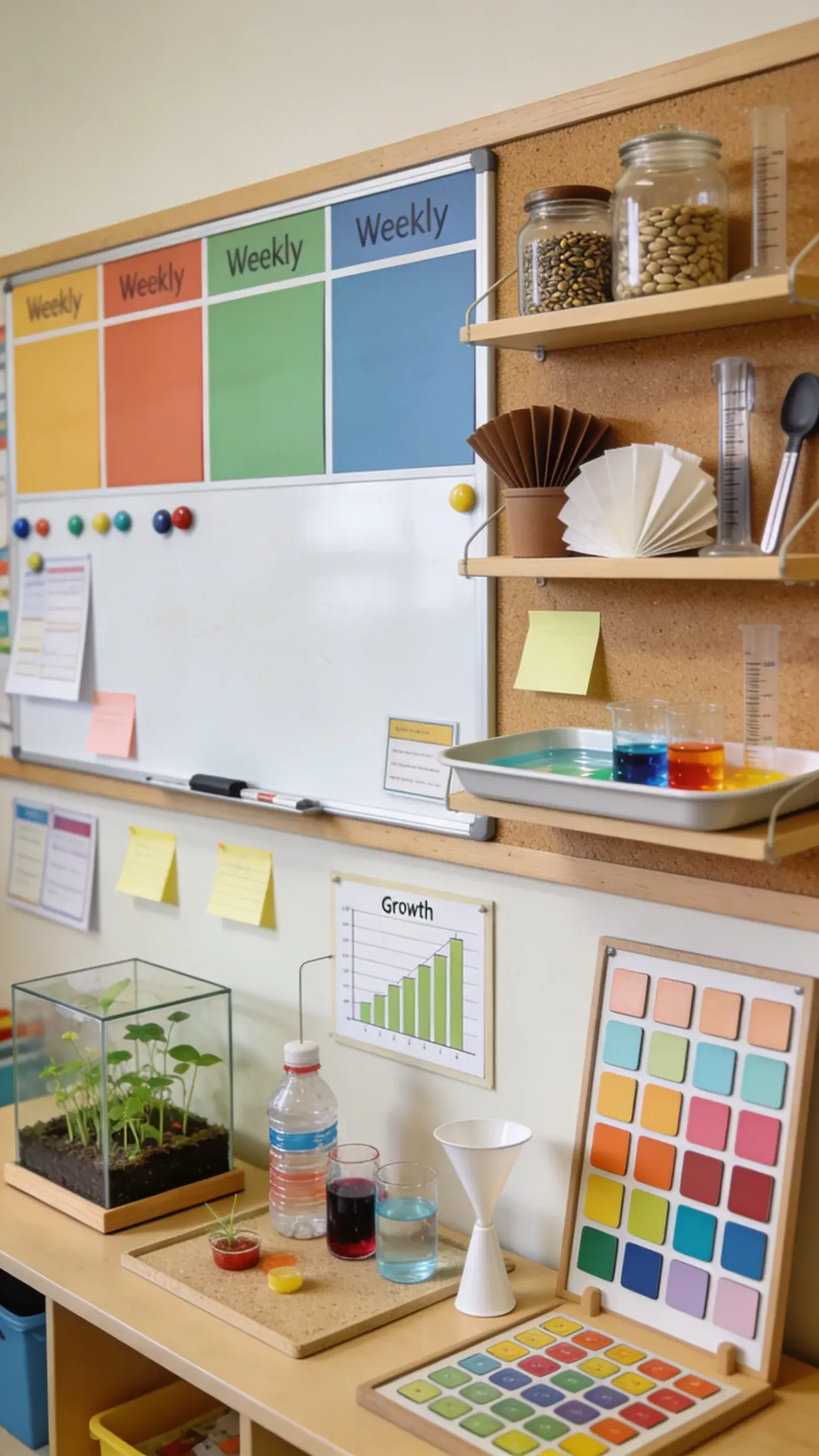
Turn a small wall into a micro-lab where you post quick experiments or demonstrations for the week.
Examples:
- Plant growth updates
- Science demos with simple, affordable supplies
- Math pattern challenges with color cards
Why it sticks: constant fresh content keeps curiosity high and weeks exciting. Seriously, students will beg to show the class what they learned.
In the end, you don’t need a big budget to create a big impact. Pick a handful of ideas, test them for a unit, and watch the classroom transform into a space that sparks joy and learning every day. Go ahead—trust me, your students will thank you with better engagement, better behavior, and more pride in their space.