
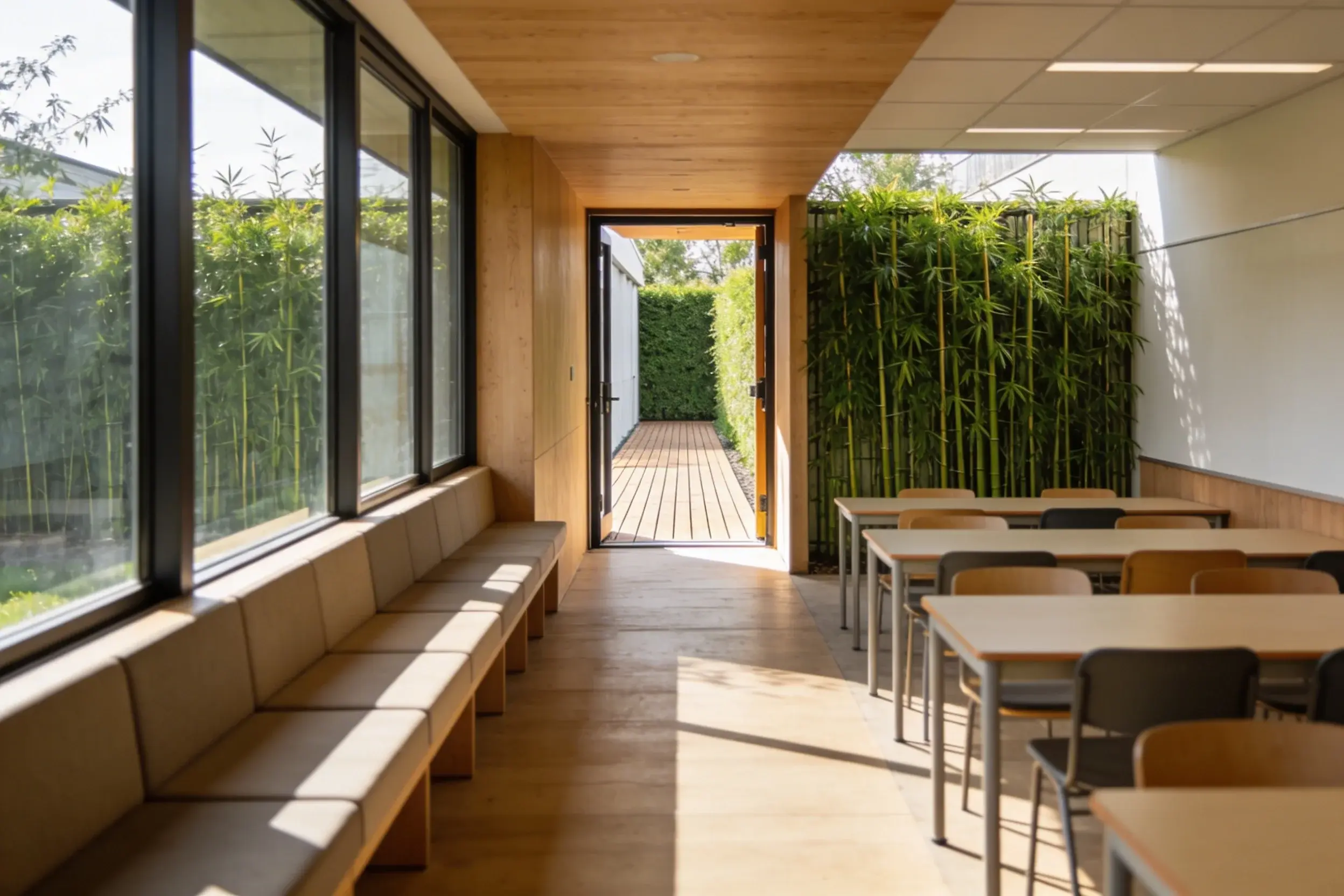
These layouts prove you don’t need big spaces to foster big ideas. Minimal, purposeful, and perfectly ready for fresh air and fresh thoughts.
1. Doorway-Connected Class Circles
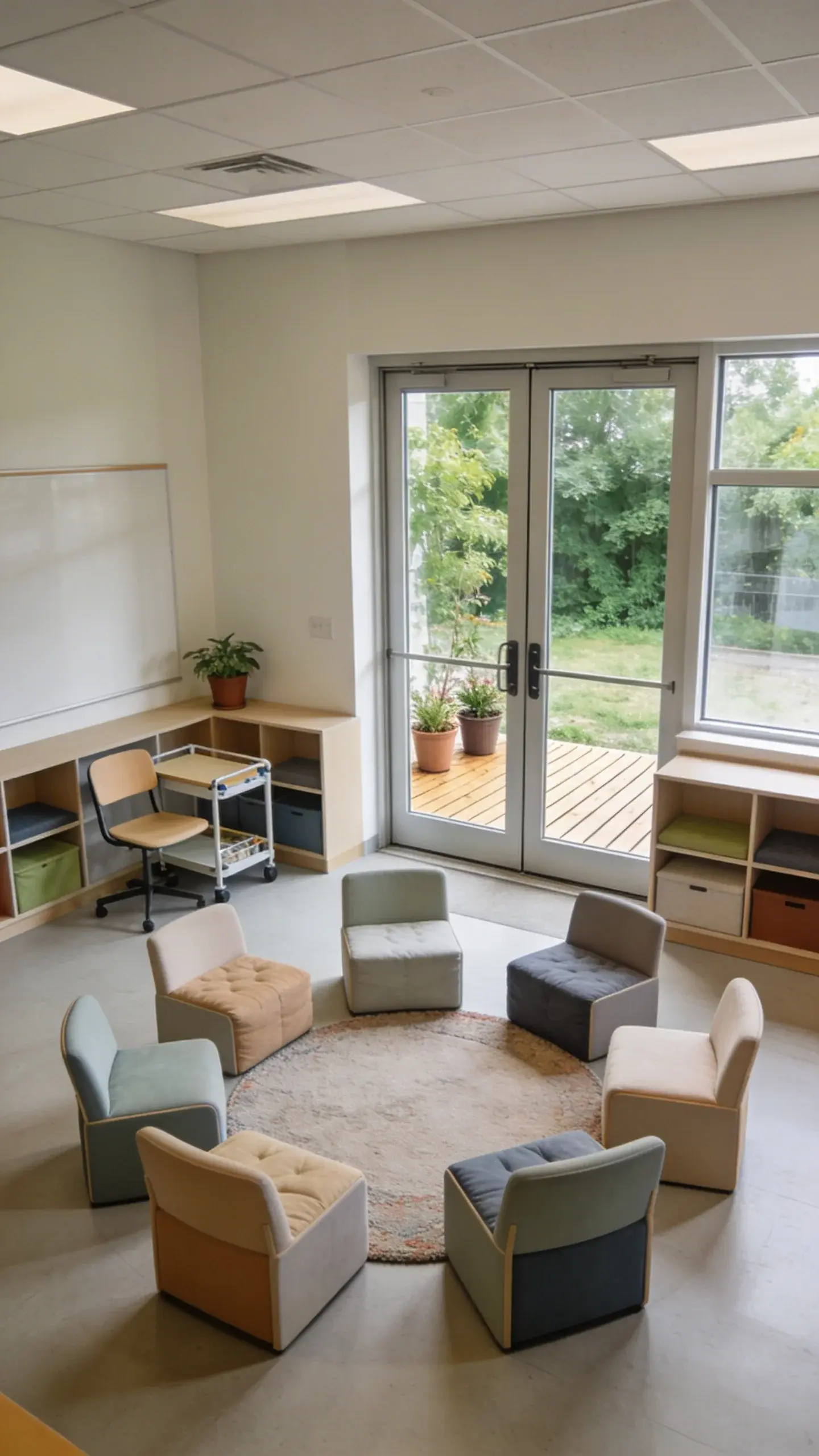
Imagine students forming a gentle circle that nudges the outdoors open. This setup honors collaboration without crowding the room.
Why it works
Circles promote eye contact and inclusive discussion, while a nearby doorway with a small deck or step invites quick nature breaks.
- Clear sightlines for teachers
- Easy access to the outdoors without hallway chaos
- Low-cost furniture that doubles as storage
End with a quick nature check-in—what did you notice outside? It ties the day’s learning to real world observation.
2. Minimal Nook Pods with Green Fencing
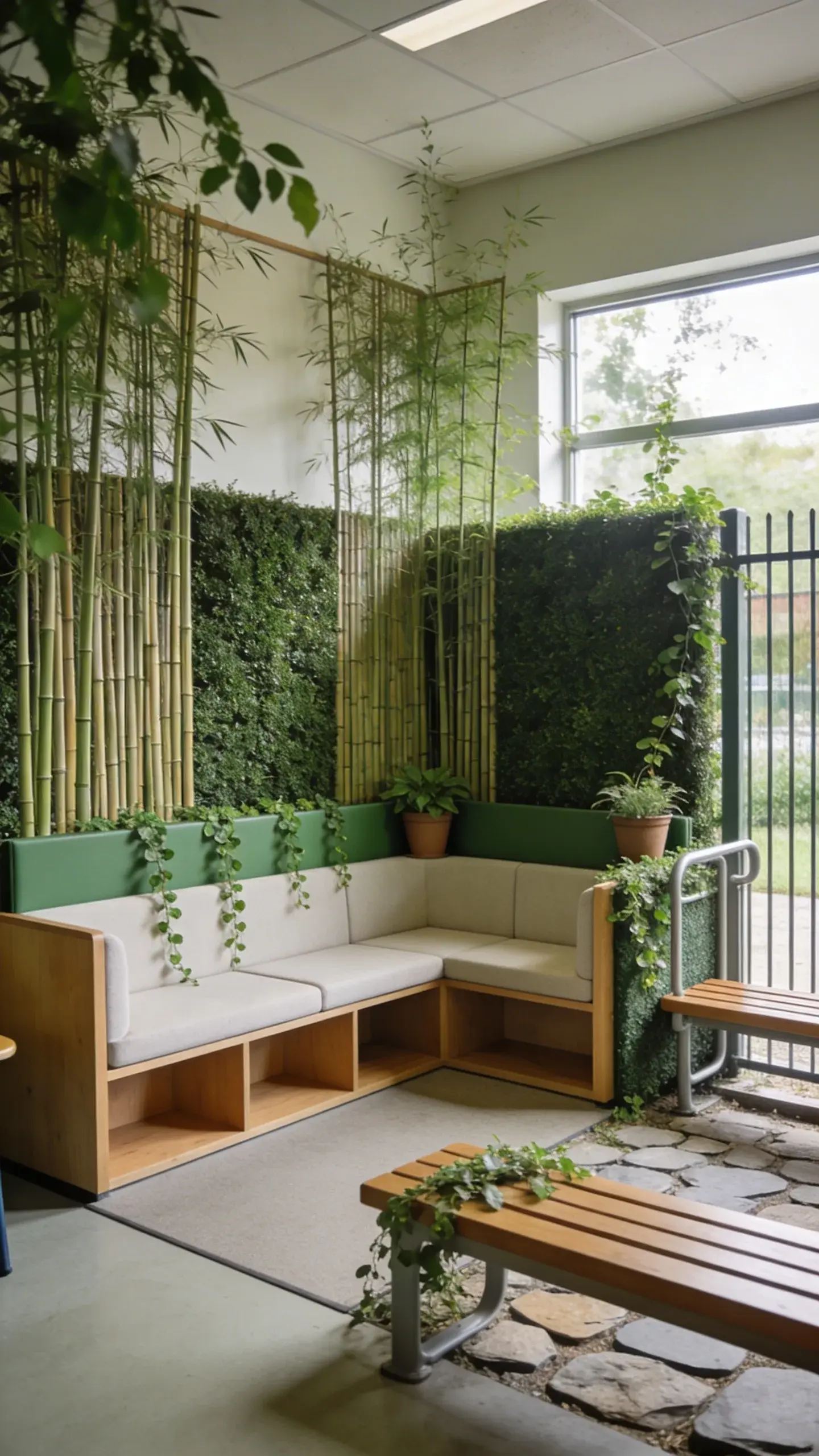
Think tiny, flexible zones that can morph from quiet reading to group experiments. A slim green buffer subtly defines space and brings outside vibes in.
Key Elements
- Low-profile modular seating
- Natural screens like bamboo or hedges
- Accessible outdoor seating near the fence
Benefits stack quickly: better focus, calmer transitions, and a ready-made outdoor extension when the weather plays nice.
3. Indoor-Outdoor Flex Hallway
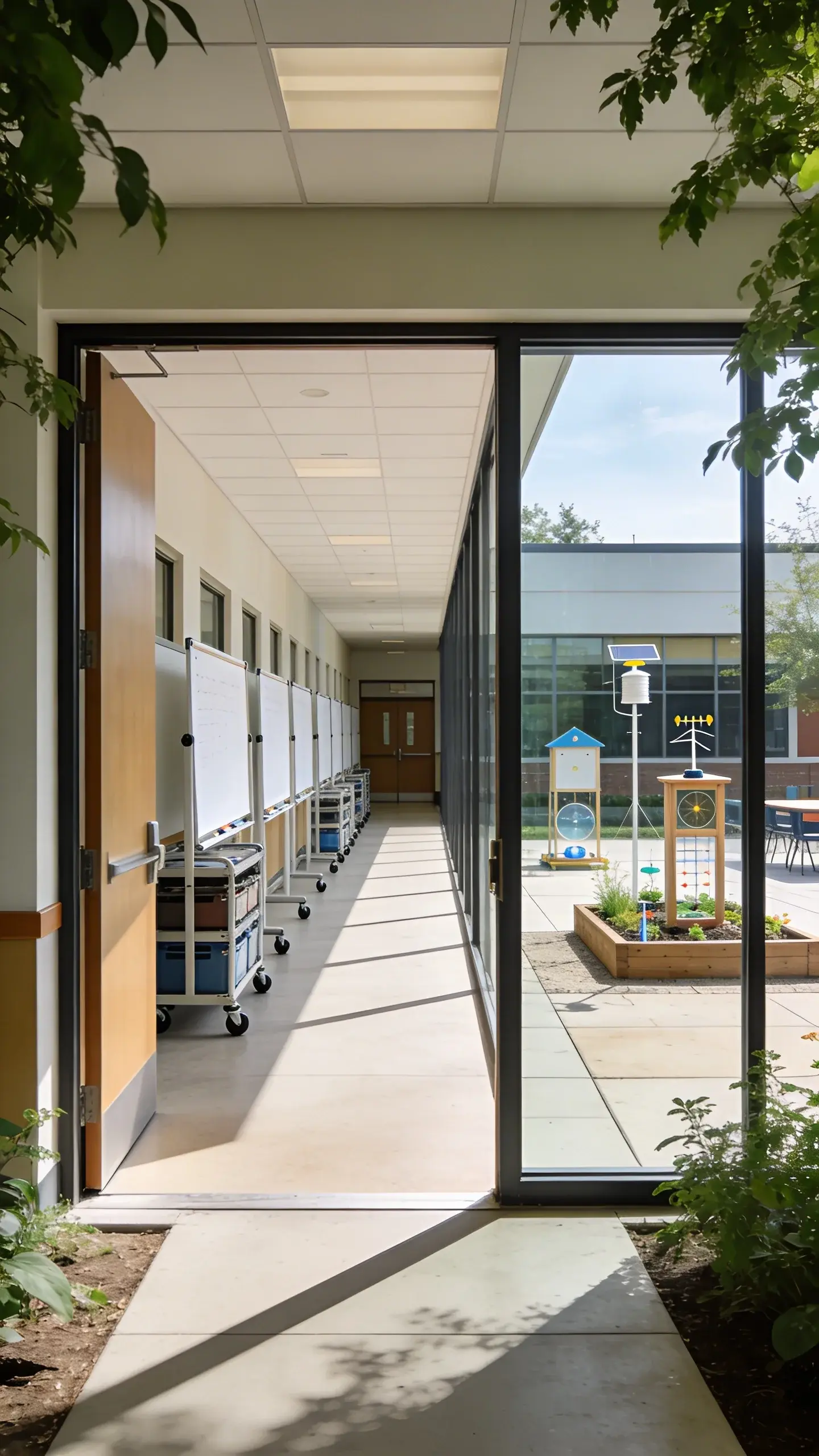
Convert a simple corridor into a living line that slides outdoors for quick experiments or observation stations. It’s minimal, but moves a mountain when used well.
Tips
- Line the hallway with movable whiteboards
- Create short, outdoor-stop stations each lesson
- Keep clutter out of sight in rolling carts
Use this layout for quick, respectful transitions—no long, bored hallway vibes, ever.
4. Courtyard Courting: Semi-Open Classrooms
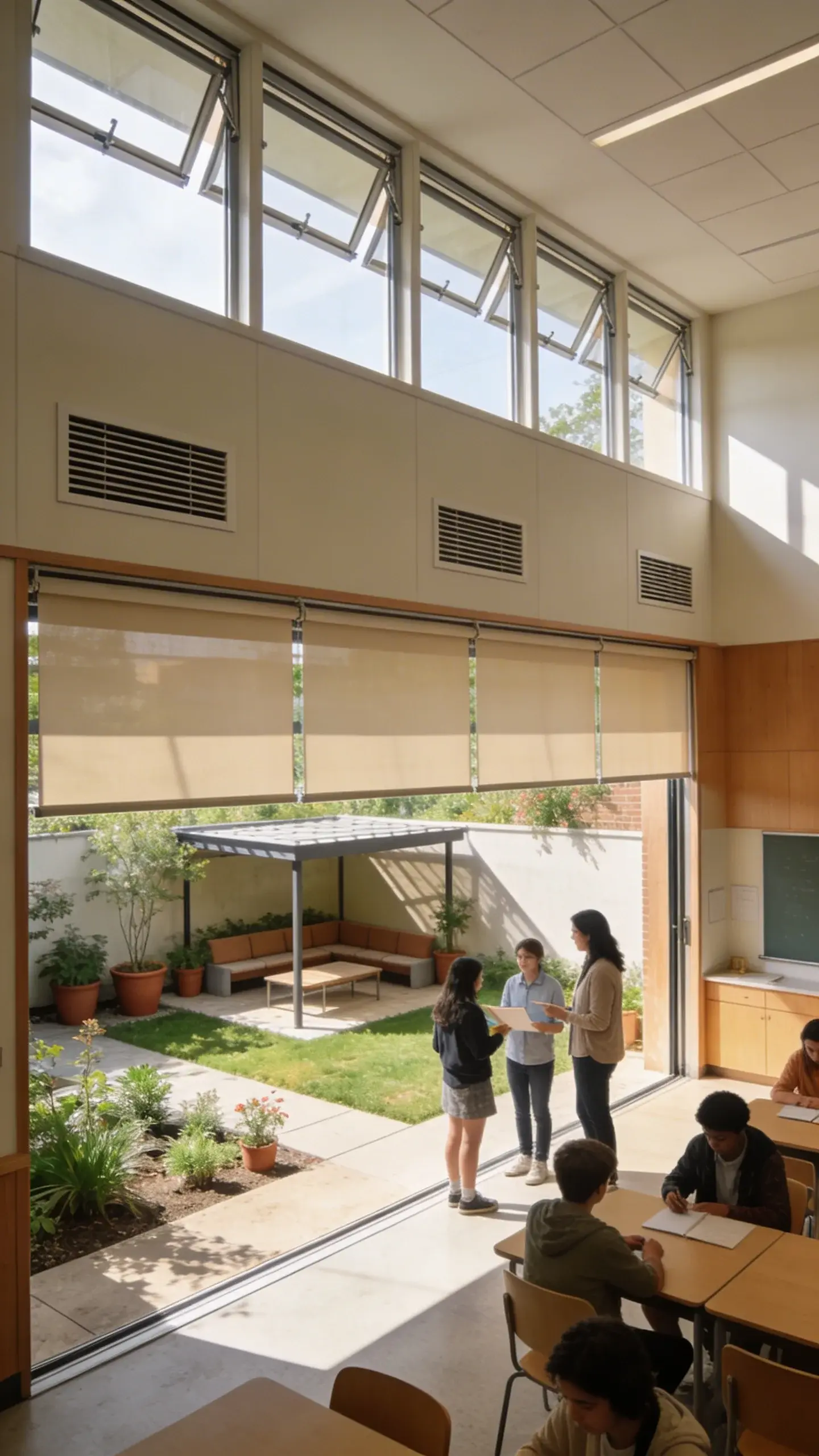
A classroom with a semi-open wall and a small courtyard offers the feel of a tiny campus. It’s the sweet spot between enclosed focus and outdoor energy.
What to include
- Operable windows or large vents
- A sheltered seating area just outside
- Pull-down screens for sun and wind control
Kids love the novelty of stepping out for a quick think-pair-share in fresh air. It’s research with a breeze.
5. Lofted Ceiling, Ground-Level Garden Access
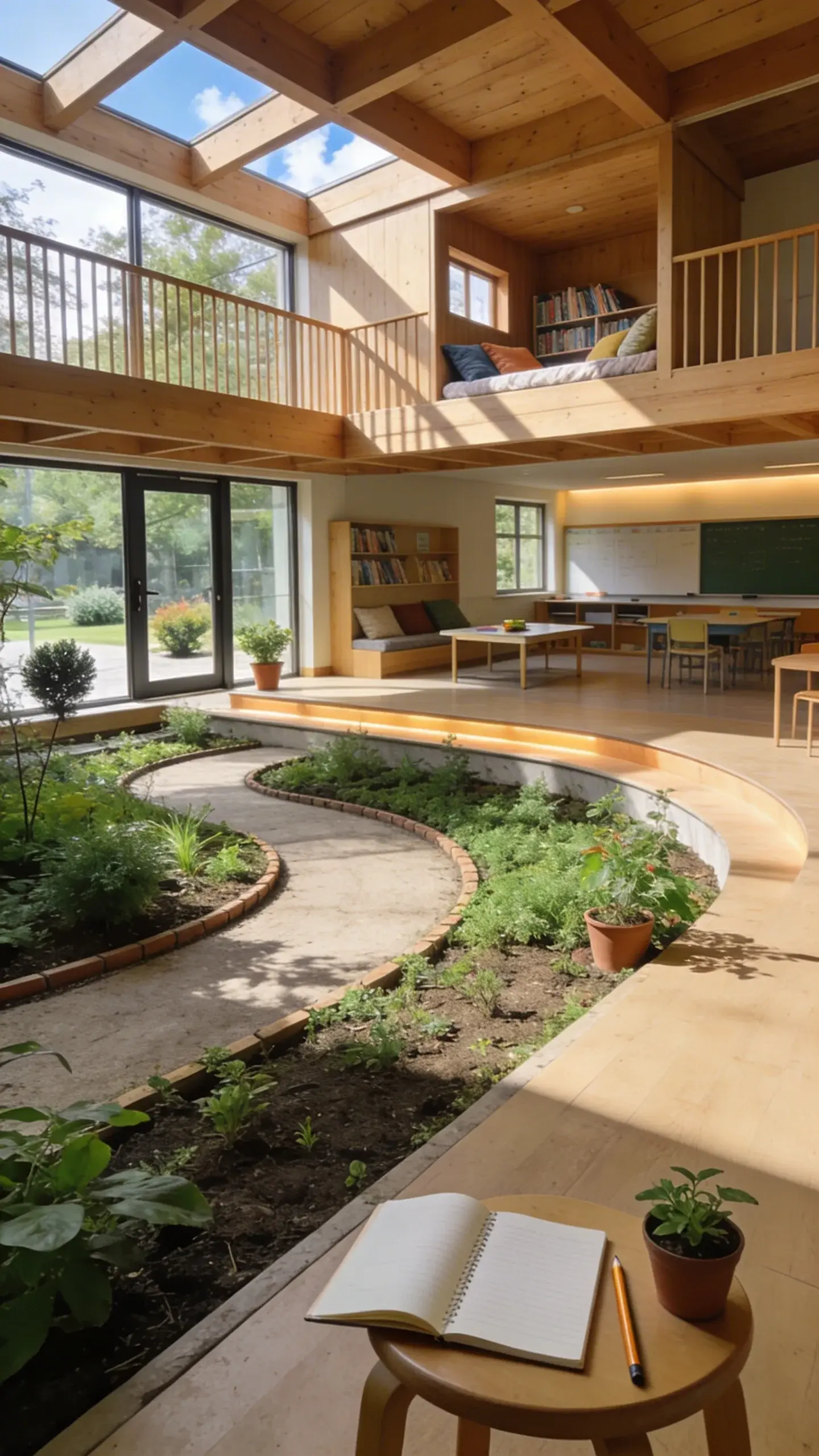
Vertical space meets earthiness. A simple loft or raised area overlooks a garden path, giving everyone a sense of perspective while staying close to outdoors.
Why lofts rock
- Raises energy in a calm, controlled way
- Clear separation of zones without walls
- Better natural light and air flow
End with a mini-garden journaling moment—what grew? What did you notice?
6. Sliding Pane Desk Islands
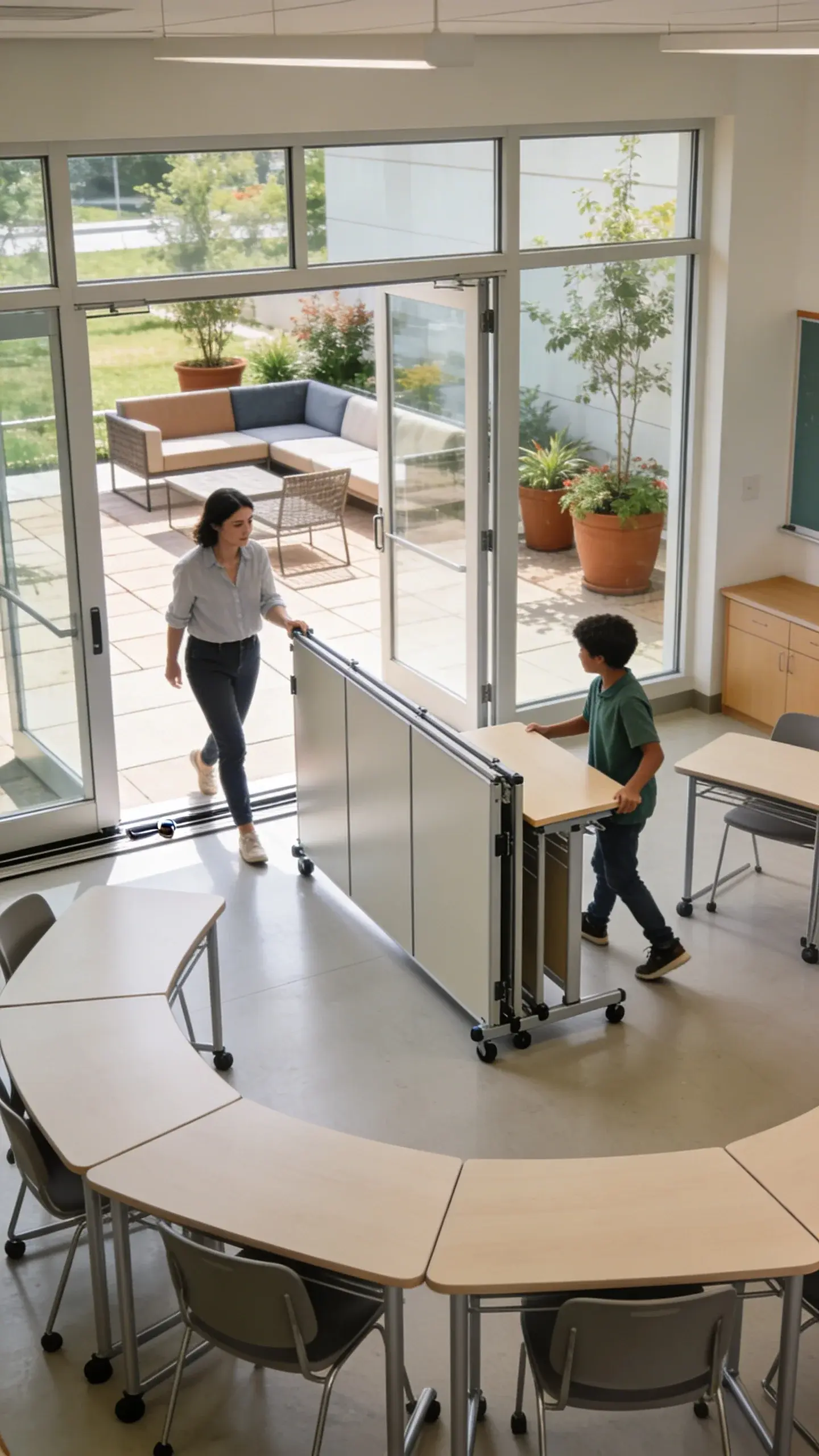
Desks that slide to the patio retract or expand the room in seconds. This is the quickest way to create indoor-outdoor flow without rearranging every chair.
Components
- Lightweight, mobile desks
- Track-free floor space for easy slides
- Outdoor-friendly seating on the patio
FYI: keep cords tucked and floors clear so the slide stays smooth and safe.
7. Minimalist Amphitheater with Ivy Lanes
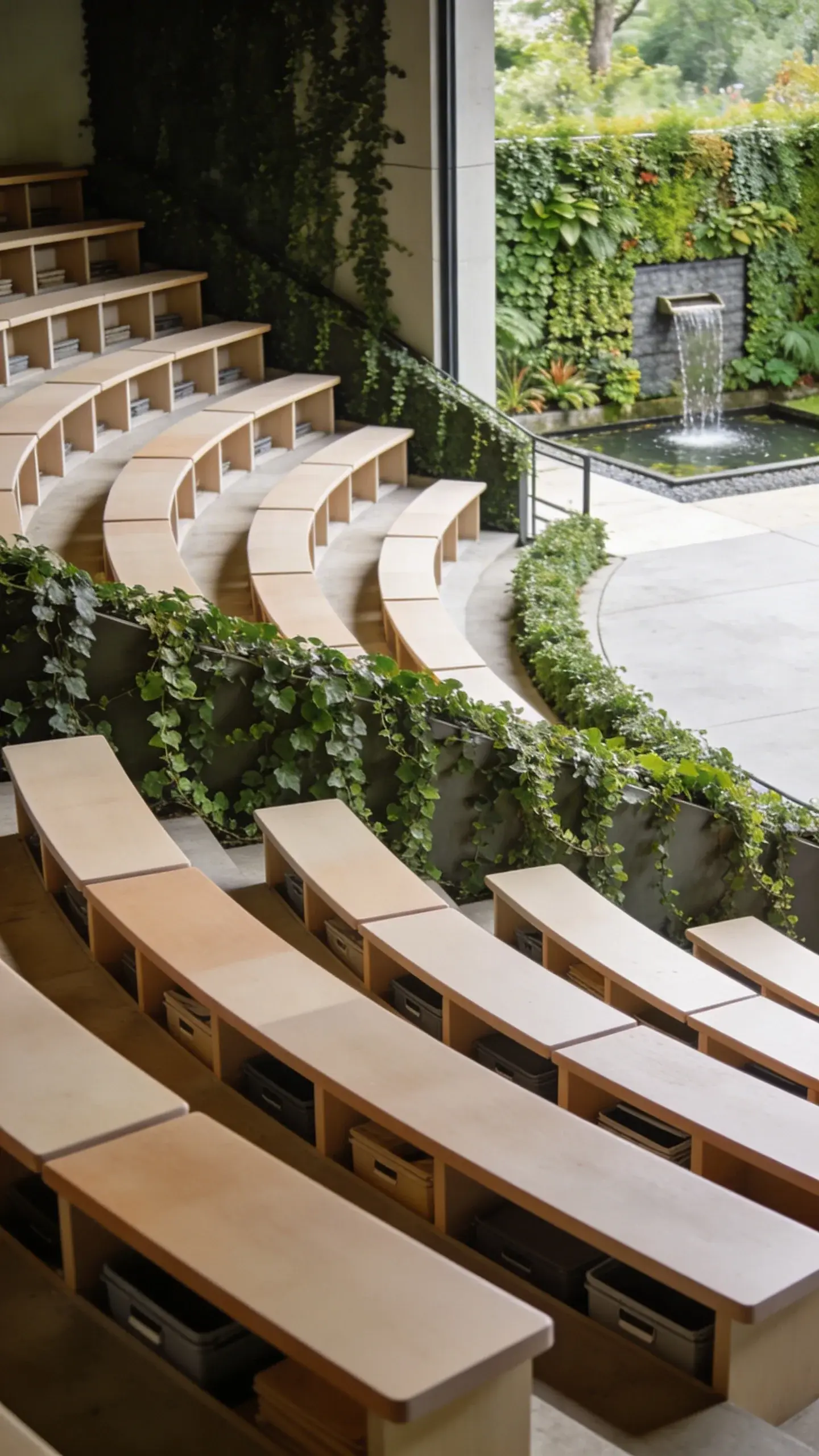
Think gentle tiers or staggered seating that faces an outdoor focus area—perfect for performances, demonstrations, or curious outdoor discoveries.
Key Points
- Soft, durable seating benches
- Ivy or greenery as natural dividers
- A small focal point outside, like a fountain or plant wall
Serious wow factor, but keep it practical—lightweight chairs, easy storage, and quick outdoor access after the show.
8. Quiet vs. Active Dual Zones
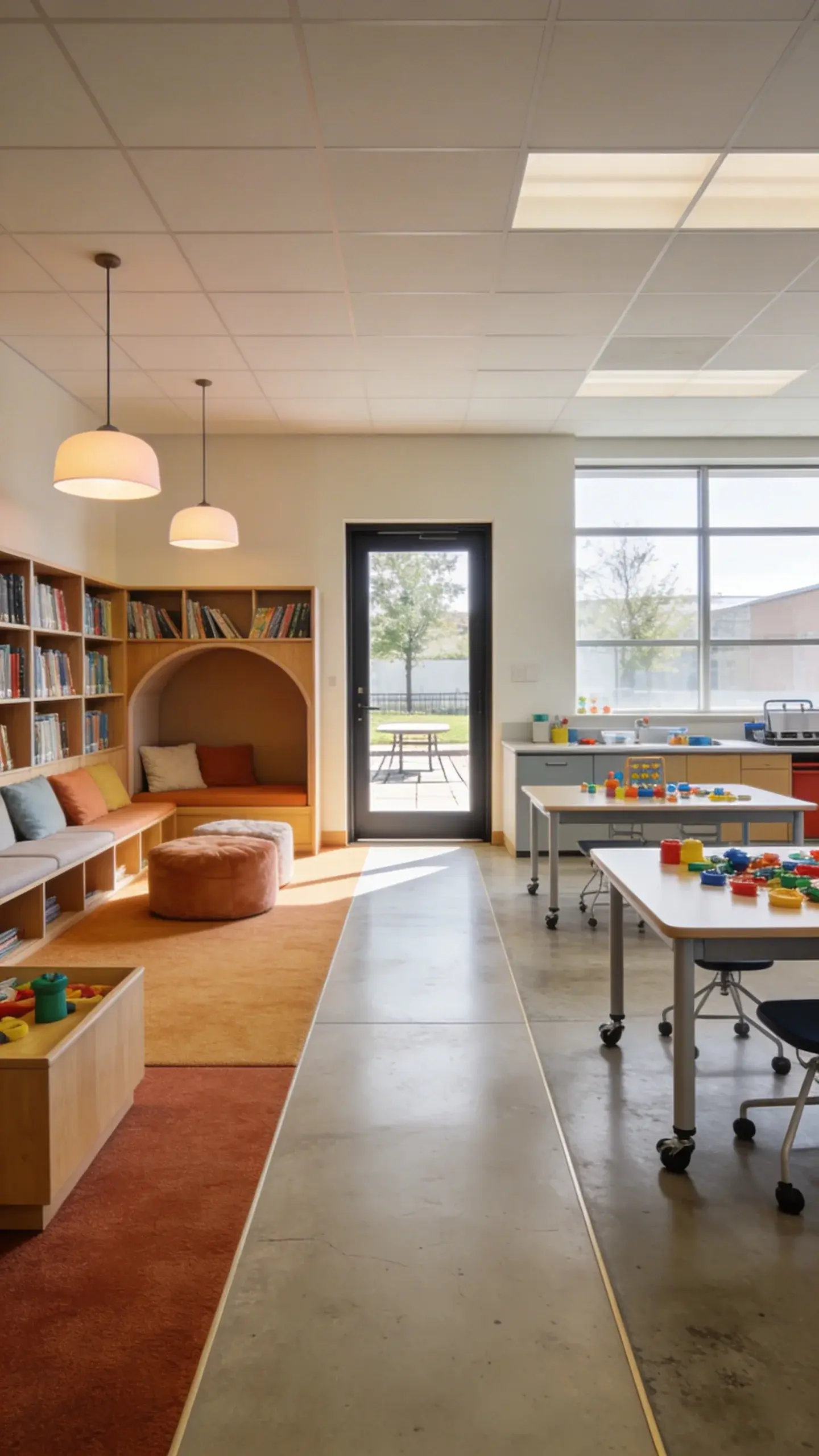
A balanced plan that clearly designates a quiet zone for reading and a nearby active zone for hands-on learning. Indoor-outdoor flow happens through a central doorway or hallway opening.
Structure
- Two distinct surfaces: soft carpet for quiet and smooth concrete for active
- One, simple outdoor extension (patio or deck)
- Visible, friendly signage to reduce confusion
Benefits: fewer interruptions, more autonomy for students, and a natural rhythm to the day.
9. Modular Study Courtyard Beds
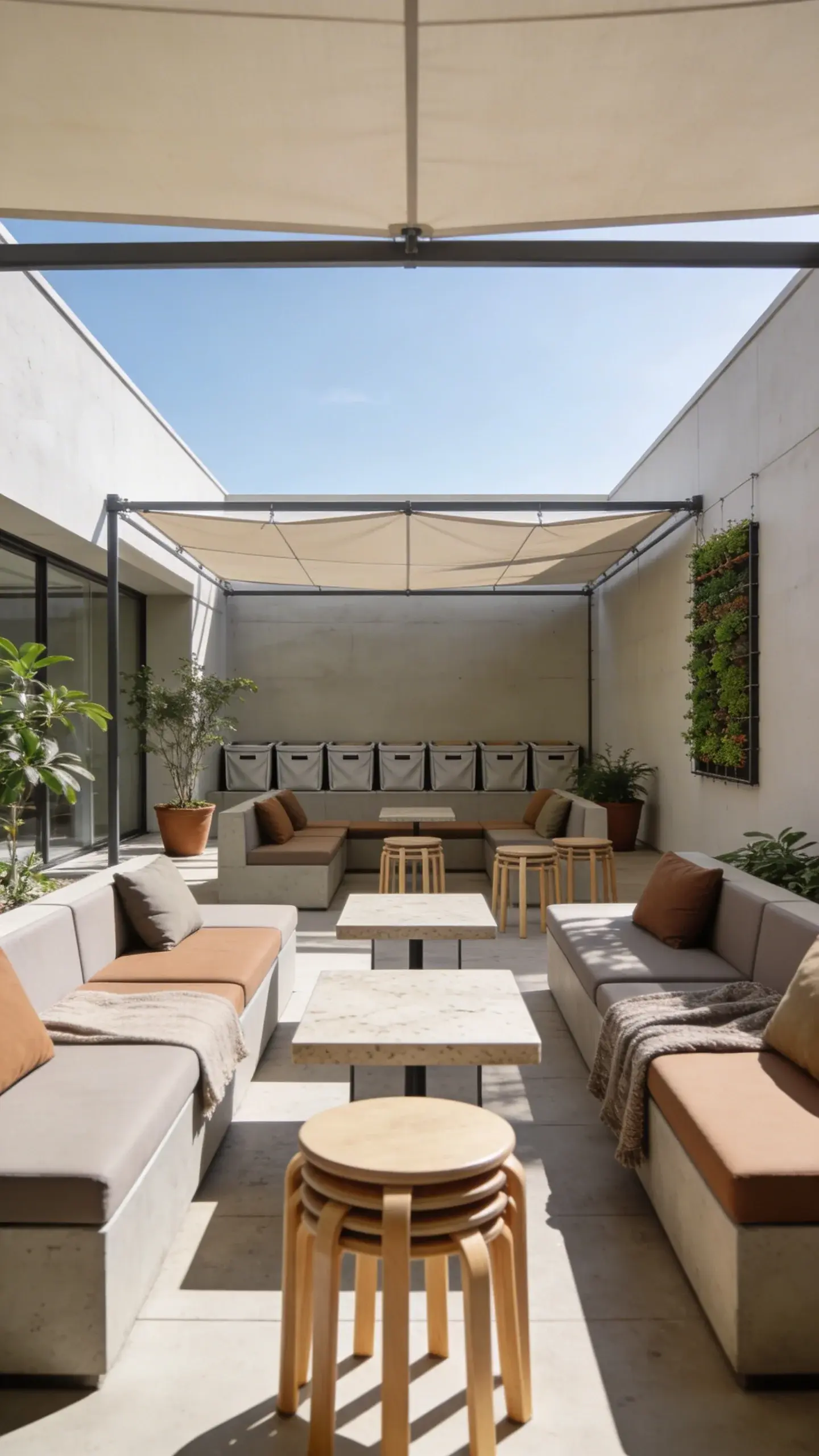
Low, modular seat-and-table setups that tuck into an outdoor patch like a mini courtyard. Students can rearrange to form groups or spread out for individual work.
Practical Details
- Stackable stools and lightweight tables
- Weather-resistant textiles and cushions
- A designated storm plan to move inside quickly
Why it shines: adaptability. You can switch between class-by-class setups with minimal effort, and outdoor air makes everything feel brighter.
Trust me, these nine layouts are not only chic but insanely practical. They cut clutter, encourage collaboration, and turn your classroom into a science experiment in living space. IMO, the best part is how easily they invite the outdoors in without turning the space into chaos.
Want to get started? Pick one layout as a pilot for two weeks, measure engagement, and iterate. FYI, small changes compound into big wins when you stay flexible and keep the vibe light. Seriously, your students will thank you with better focus and brighter days.
Conclusion: You’ve got the blueprint. Now grab a few modular pieces, a dash of greenery, and a doorway that actually invites the air inside. Your classroom will feel bigger, calmer, and totally ready for whatever the day brings.