
Some links in this post are affiliate links. If you buy through one, I may earn a small commission at no extra cost to you. As an Amazon Associate I earn from qualifying purchases.
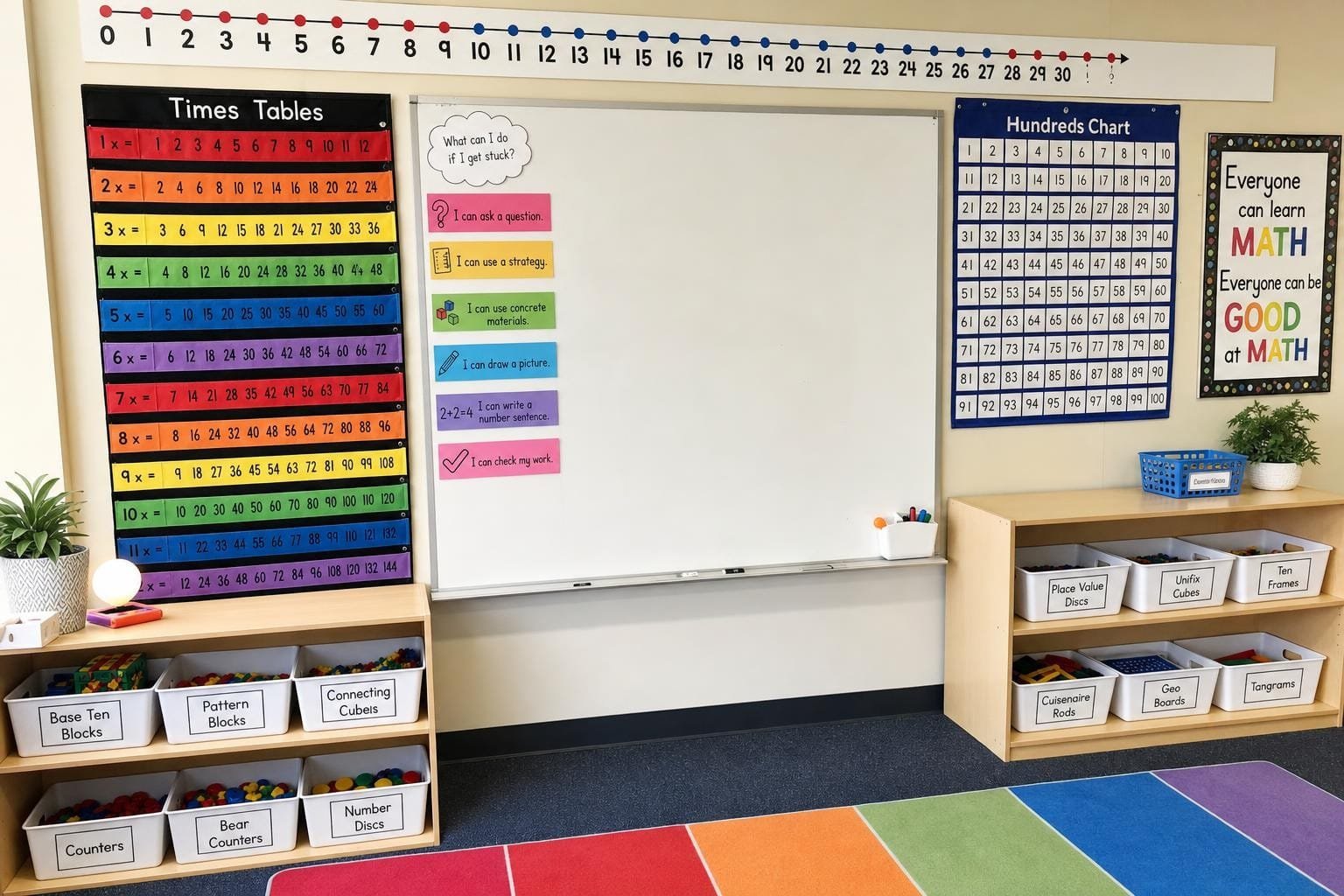
The best math classroom decorations are the ones children actually use during a lesson: a number line above the board, a word wall with pictures, a times table chart they can see themselves climbing, and labelled tools they can reach. Below are 16 math displays that teach while they decorate, with what you need and how to set each one up.
Free printable
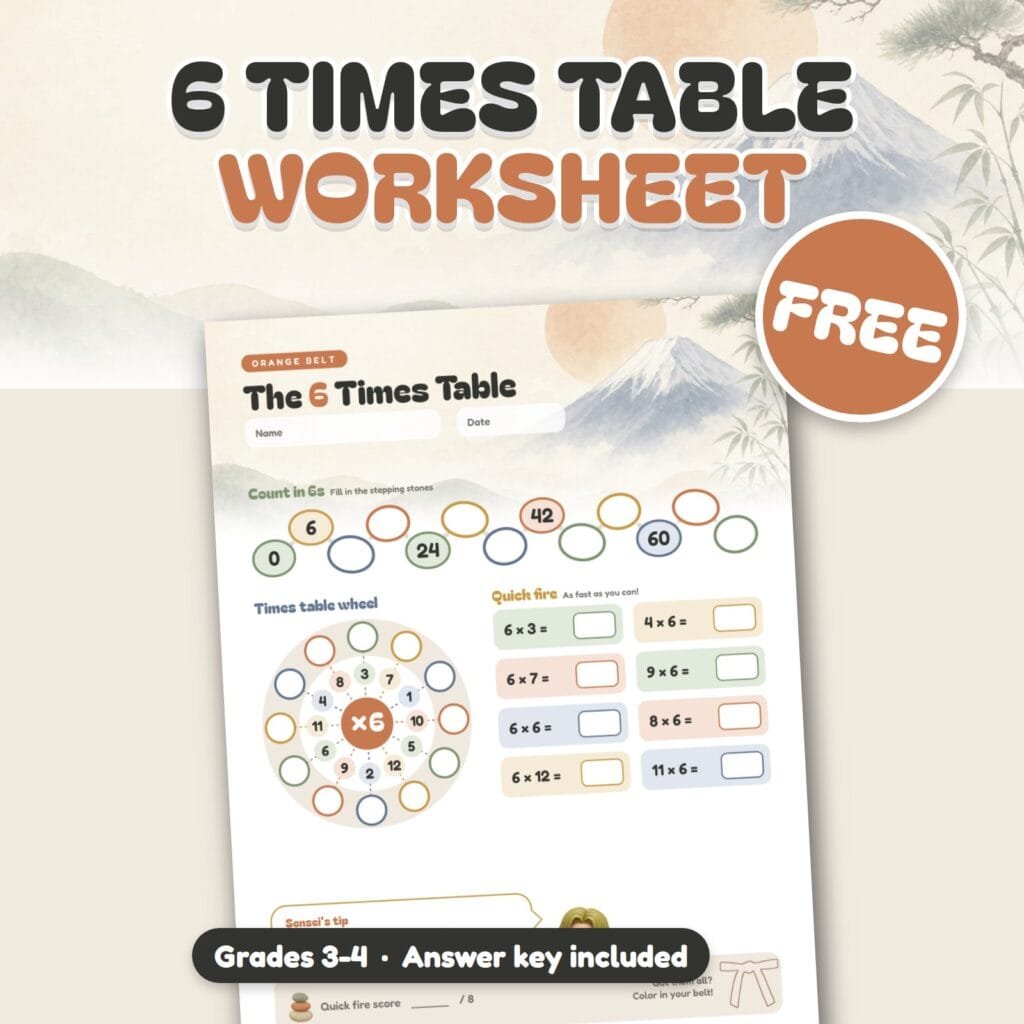
Free 6 Times Table Worksheet
One calm, colorful practice page: count in 6s, a times table wheel and a quick fire challenge, with an answer key. Grades 3 to 4.
Free download. You will also get a couple of follow-up emails with classroom ideas. Unsubscribe anytime.
Four things that make any math wall easier
Most of the ideas below come down to a border, somewhere to clip charts, and a way to change things quickly. These are worth having ready before you start.
- A bright bulletin board border to frame each display
- Heavy duty magnetic clips so charts go up and come down in seconds
- A class set of small dry erase boards for quick checks in front of any display
- Gold star stickers for every chart that tracks progress
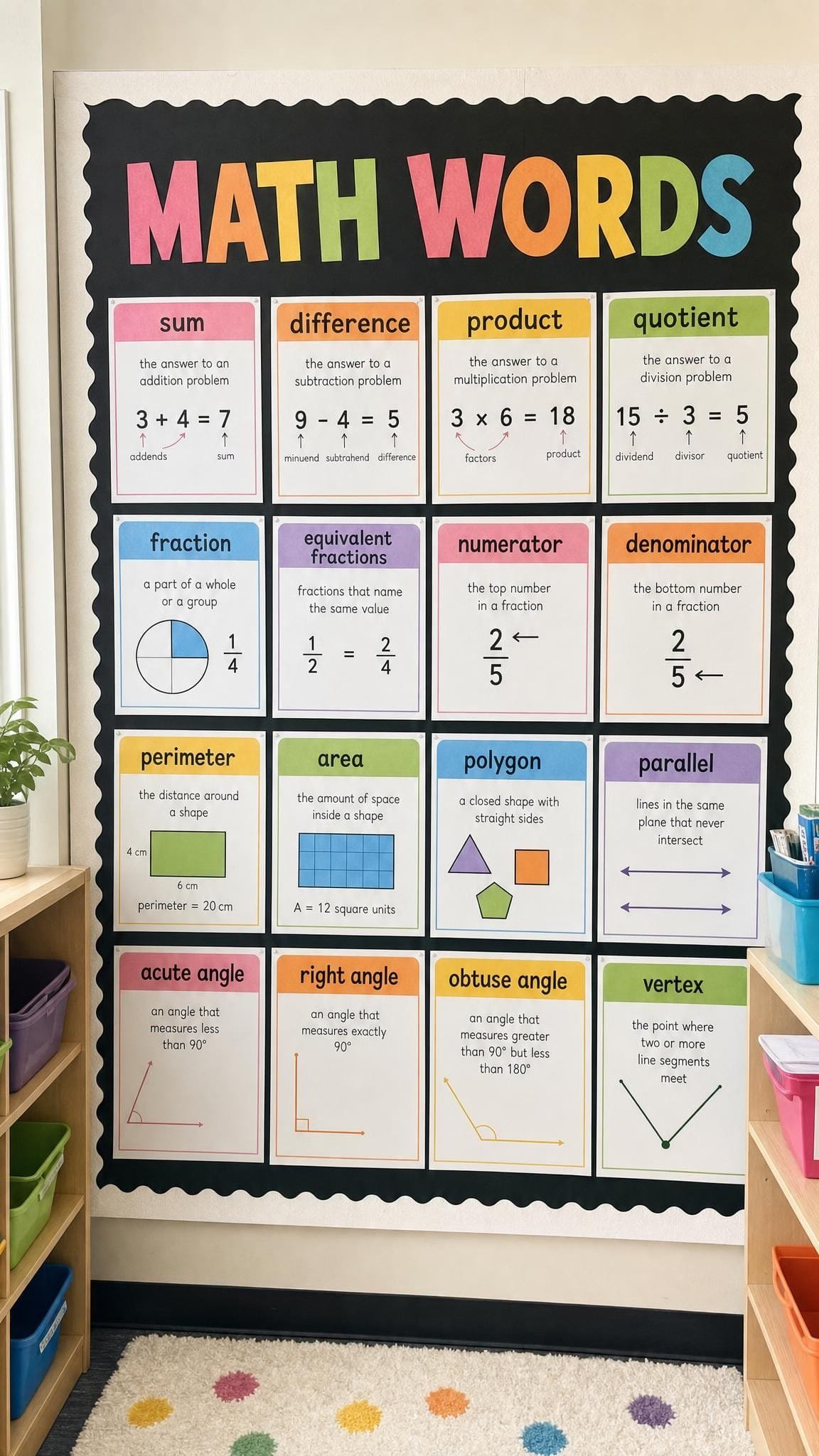
1. A Math Word Wall With Picture Cards
 Save
SaveChildren cannot use math vocabulary they cannot remember. A word wall with a small picture on every card means sum, product and perimeter are always in sight when they write their explanations.
What you need
- A set of math vocabulary posters
- A magnetic word pocket chart if your board is metal
- Card stock and markers for new words
How to set it up
- Start with the words for your current unit, not the whole year.
- Add a tiny diagram to each card, like an array next to “product”.
- Point to the wall during lessons so children learn to look there.
Teacher tip: Add words as you teach them. A wall that grows feels like progress.
2. A Number Line Above the Whiteboard
 Save
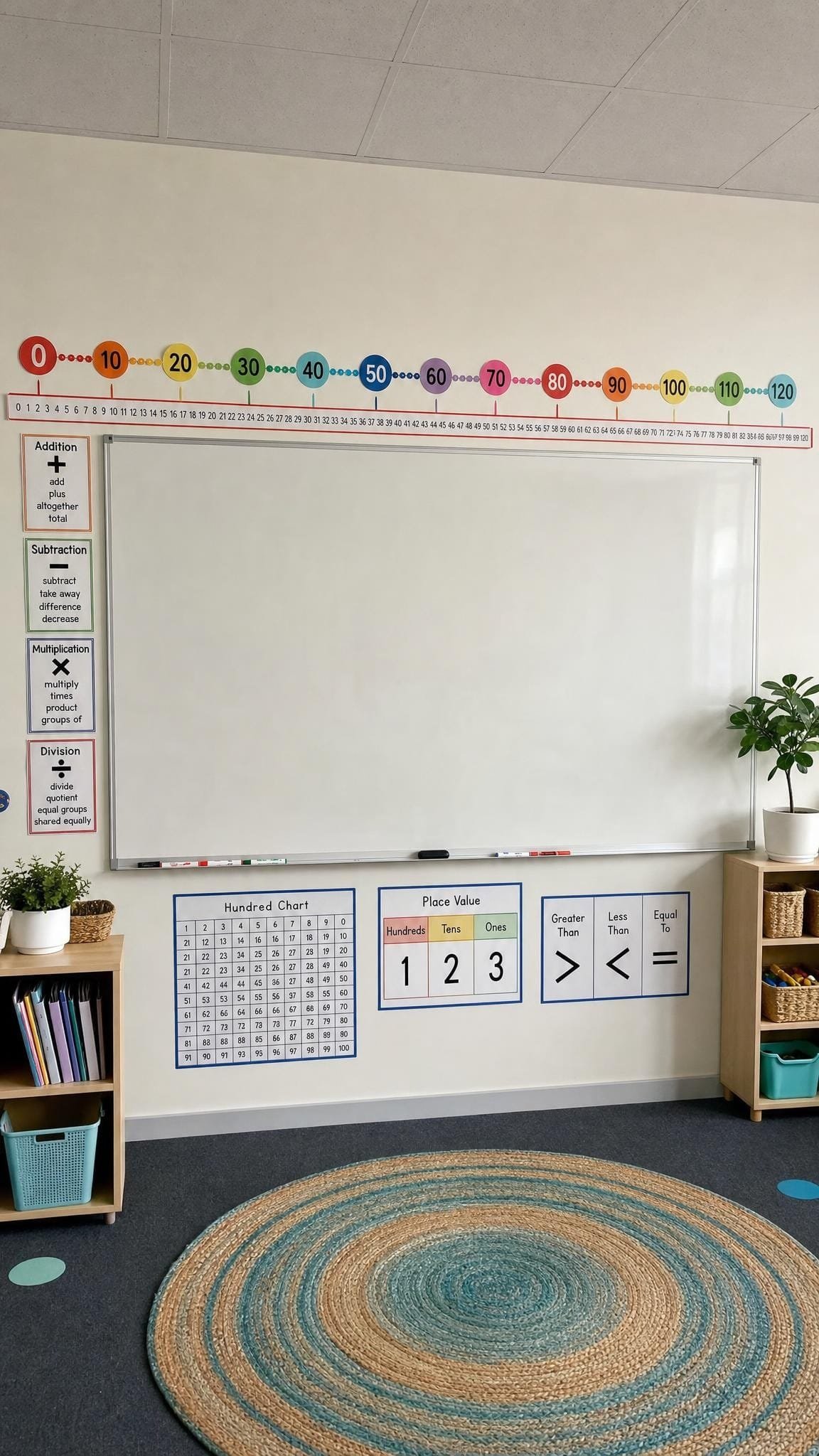
SaveThe most used math tool in any elementary classroom is a big number line where everyone can see it. Above the whiteboard is perfect: eyes are already there.
What you need
- A number line bulletin board set
- An integer number line from -20 to 100 for older grades
How to set it up
- Run it the full width of the board at child eye level if you can.
- Circle every tenth number so counting in tens jumps out.
- Use it daily for counting on, rounding and skip counting.
Teacher tip: Put a clothespin on the line and move it to “today’s number” each morning.
3. A Hundreds Chart Pocket Chart
 Save
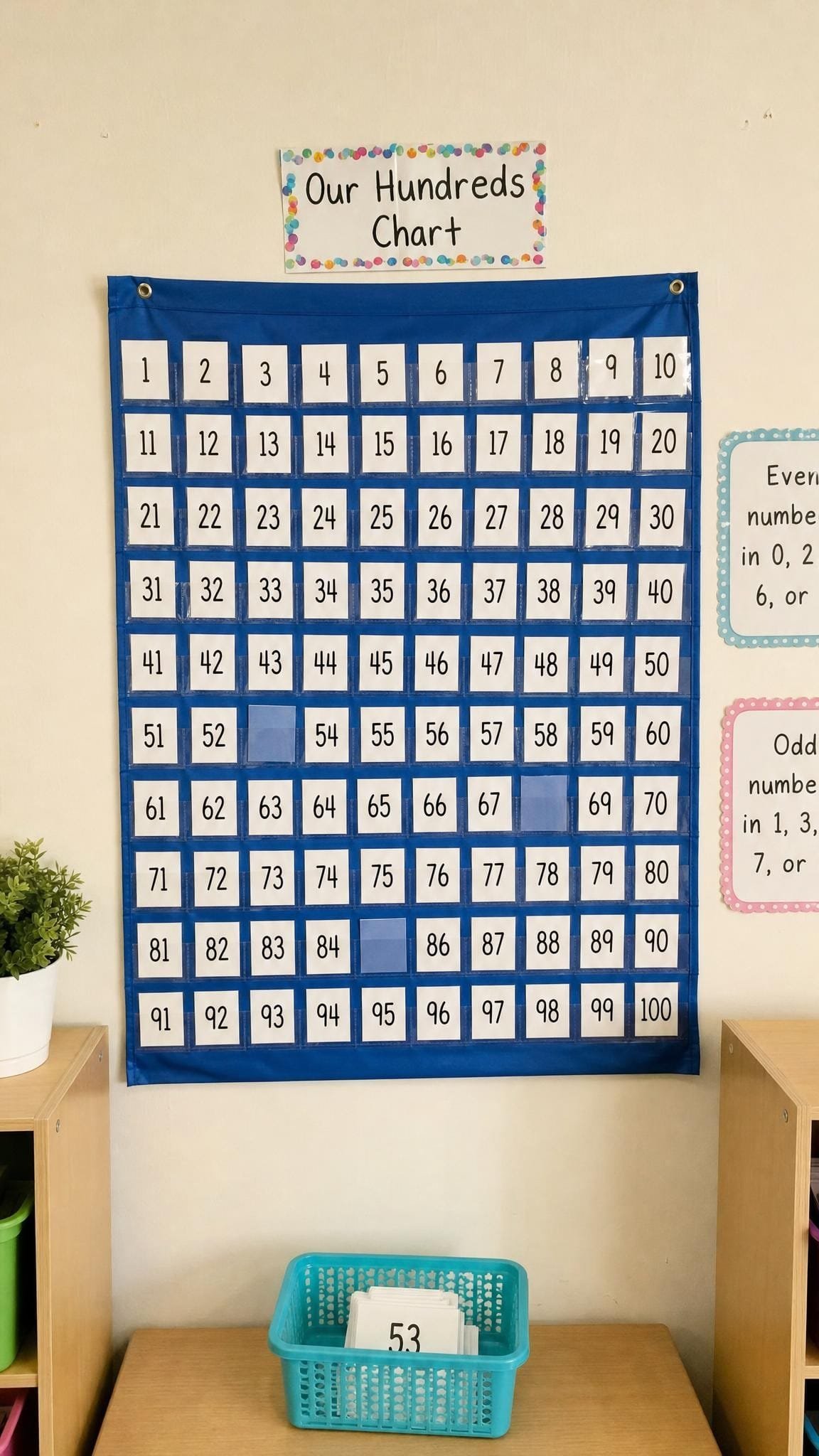
SaveA pocket chart hundreds chart becomes a daily game: flip a few cards and children work out the missing numbers from the patterns around them.
What you need
- A hundreds pocket chart
- A basket for the number cards
How to set it up
- Hang it low enough for children to reach.
- Each morning, turn three cards around before children arrive.
- Let a “number detective” find and fix them.
Teacher tip: Color the multiples of 5 or 10 to make skip counting patterns obvious.
Free for your classroom
 Save
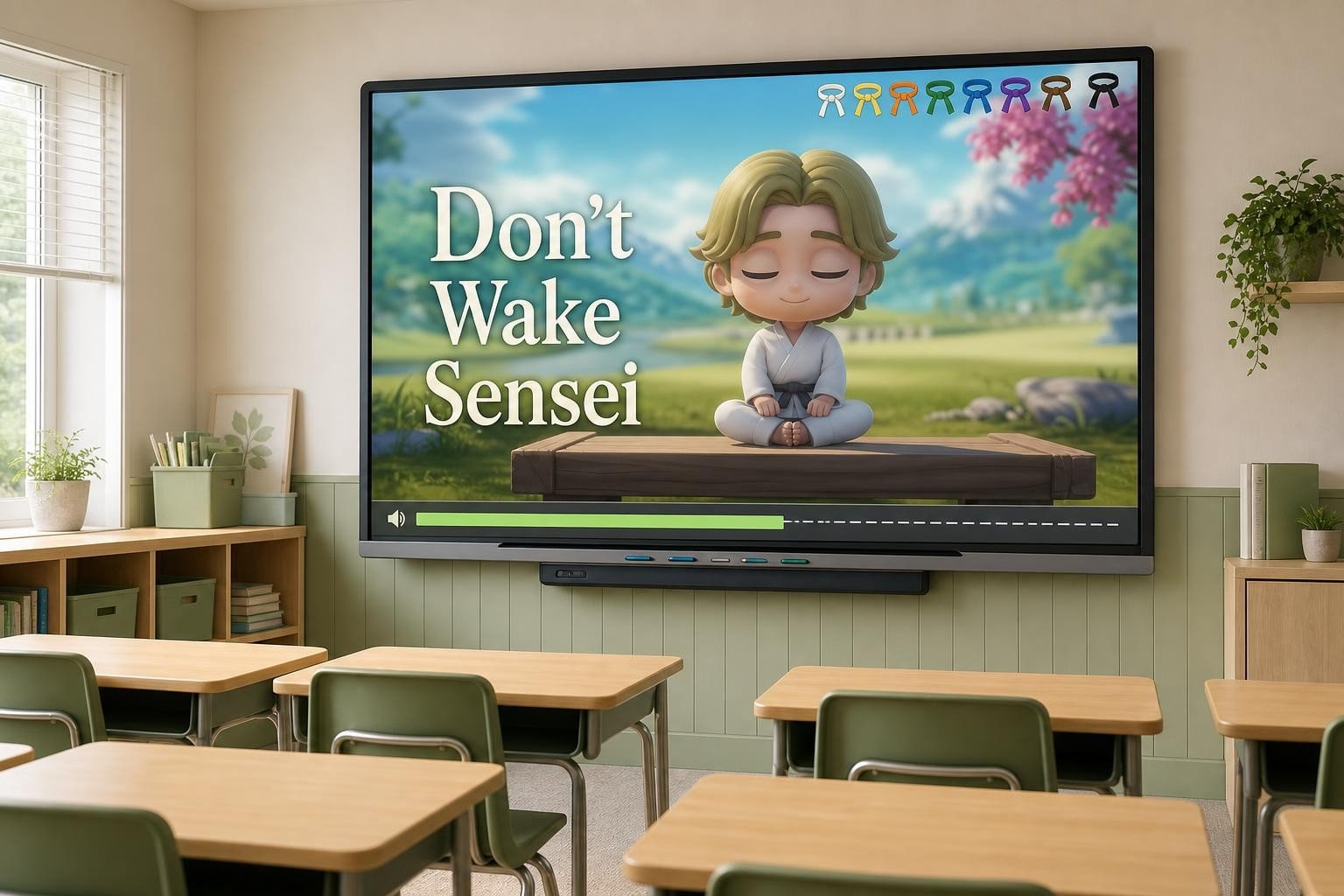
SaveDon’t Wake Sensei is a free classroom noise monitor that works like a game. Put it on your board, keep the room under the quiet line, and your class earns karate belts together while Sensei meditates. Nothing to install and nothing is recorded. Get Don’t Wake Sensei free.
Number lines and hundreds charts teachers love


4. A Times Table Belt Chart
 Save
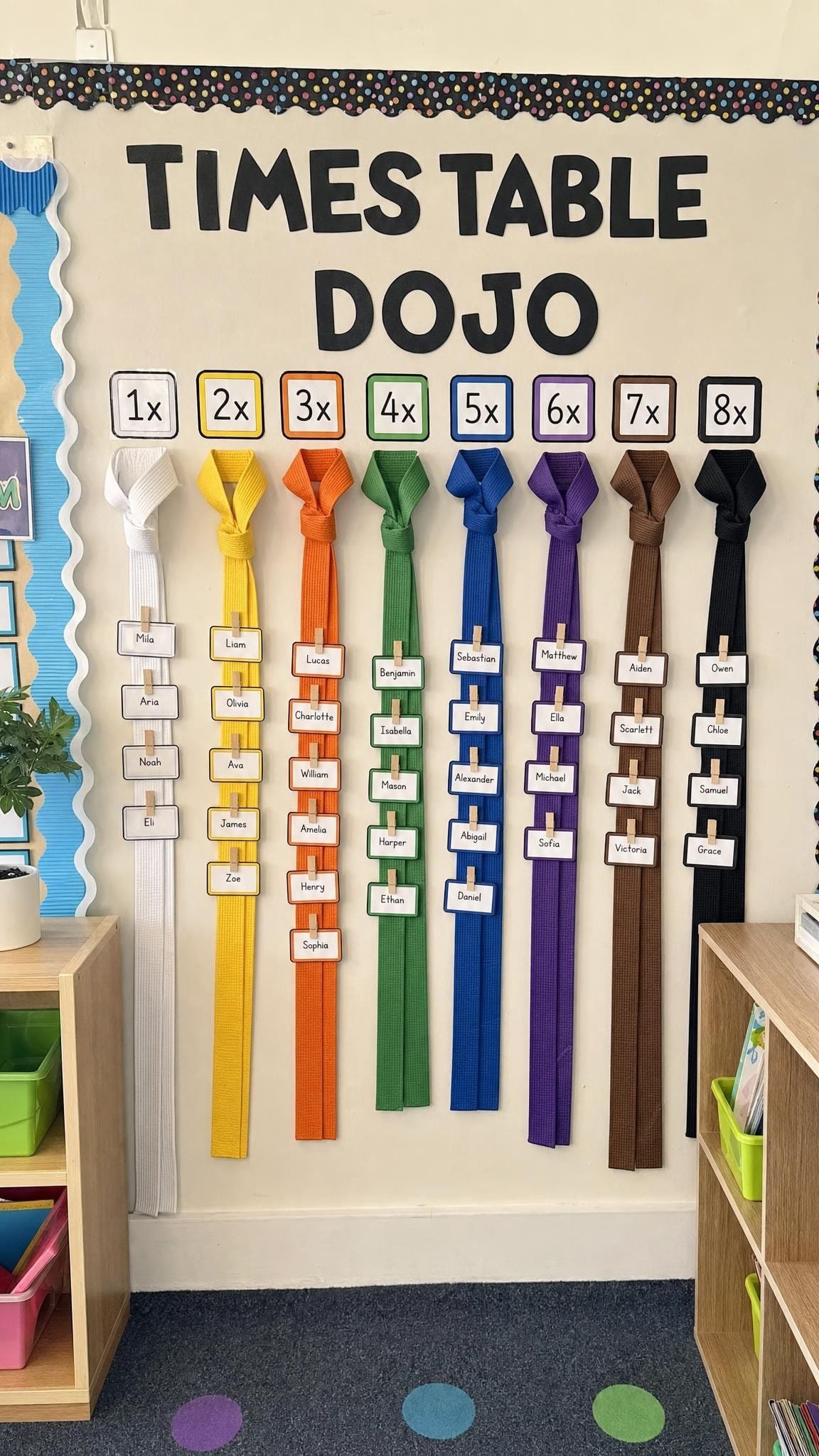
SaveTimes tables stick when children can see their progress. A belt chart borrows from karate: each times table is a belt color, and children move their name up as they master each one.
What you need
- A multiplication table poster for reference
- Colored paper strips for each belt
- Gold star stickers for each new belt
How to set it up
- Assign a belt color to each times table, easiest first.
- Give each child a name tag clip to move up the chart.
- Test one table at a time, then celebrate every new belt.
Teacher tip: My free 6 times table sheet is the orange belt from this exact system.
Free for your class
 Save
SaveStarting a times table belt chart? Grab my free Orange Belt 6 Times Table Worksheet: counting in 6s on stepping stones, a times table wheel and quick fire facts, with an answer key. Get the free worksheet
5. A Place Value Chart
 Save
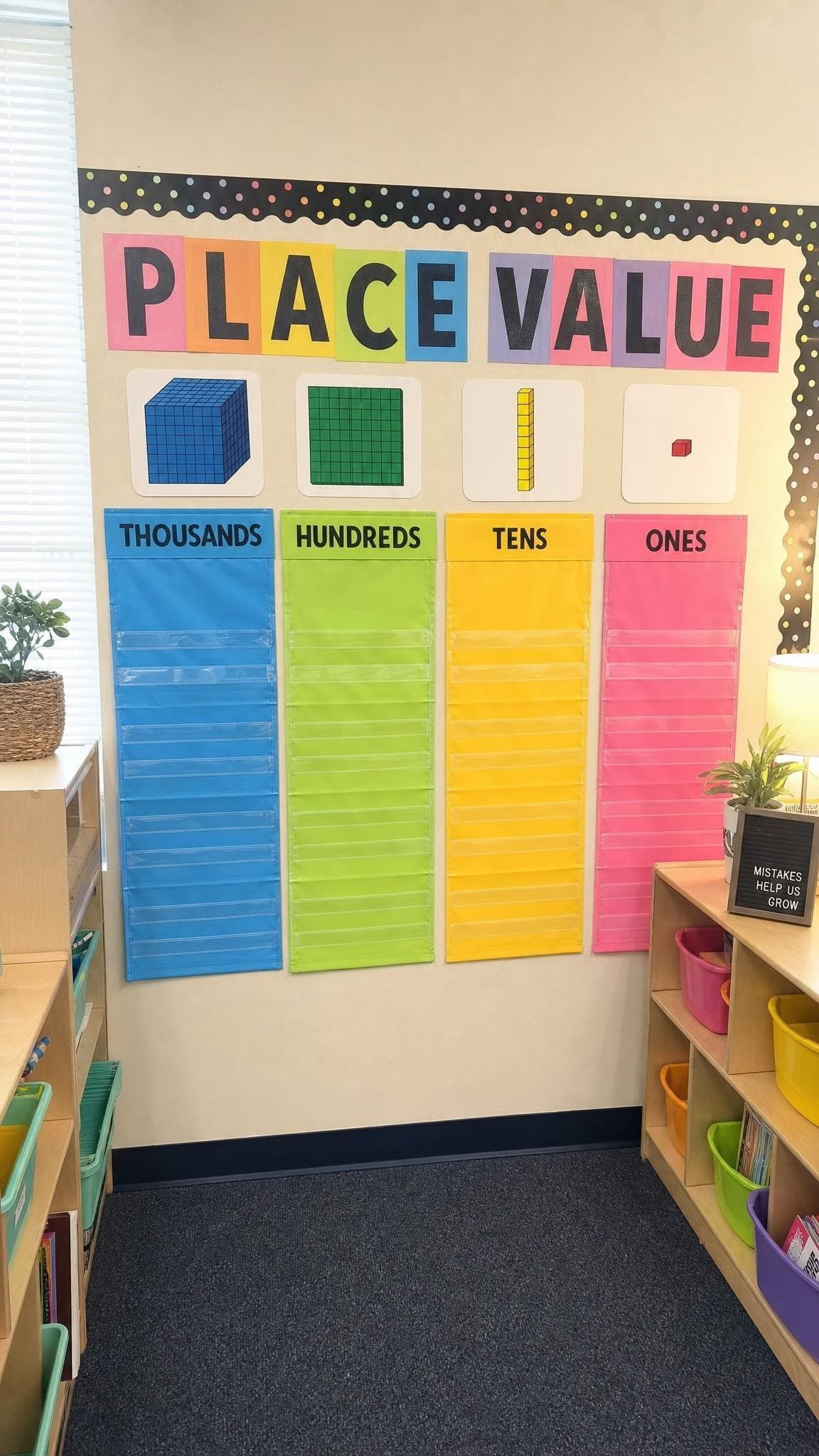
SavePlace value is the foundation of everything from rounding to long multiplication. A big chart on the wall gives children a mental picture they can borrow during independent work.
What you need
- A place value chart set
- Paper base ten block pictures for each column
How to set it up
- Label columns thousands, hundreds, tens and ones.
- Show the base ten block for each column above it.
- Build a new number with cards each day.
Teacher tip: Keep the ones column on the right and say “ones, tens, hundreds” right to left.
6. A Fraction Wall
 Save
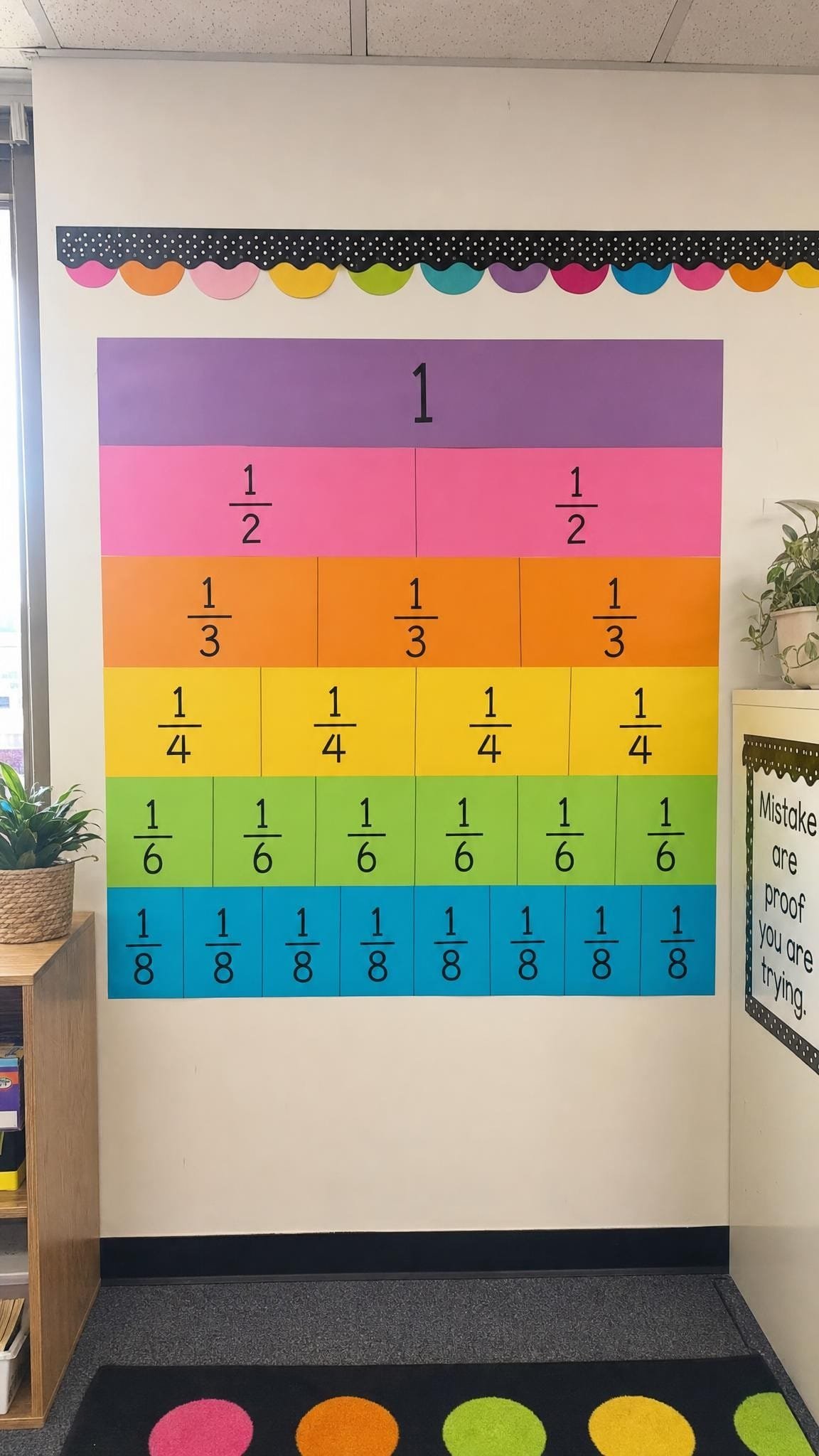
SaveA fraction wall makes “which is bigger, a third or a quarter?” obvious at a glance. It is one of the most useful displays for grades 3 to 5.
What you need
- A set of rainbow fraction tiles for hands-on work
- Colored paper strips, all exactly the same length
How to set it up
- Cut one whole strip, then halves, thirds, quarters, sixths and eighths.
- Stack them like bricks so equal lengths line up.
- Label every piece with its fraction.
Teacher tip: Let children build their own small version before you put up the big one.
7. An Anchor Chart Corner
 Save
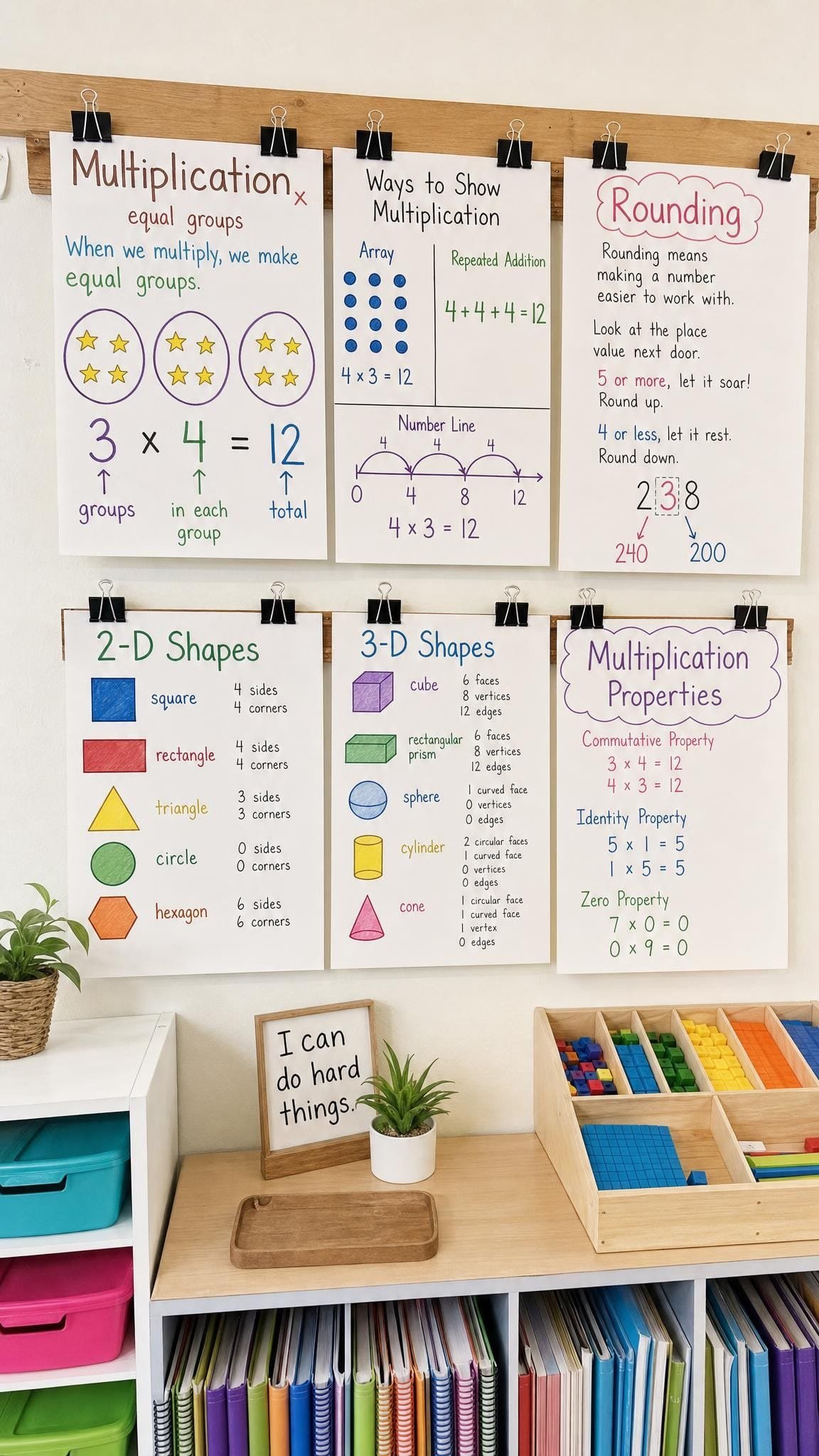
SaveAnchor charts disappear when they come down. A hanging rail with big clips lets you keep every chart from the unit visible and flip back to old ones.
What you need
- Heavy duty magnetic paper clips
- A wooden rail or curtain rod
- Chart paper and markers
How to set it up
- Hang the rail low enough for children to flip charts.
- Clip the newest chart at the front.
- Move older charts to the back rather than taking them down.
Teacher tip: Take a photo of each chart before it finally comes down and print a mini version for math notebooks.
8. A Telling Time Display
 Save
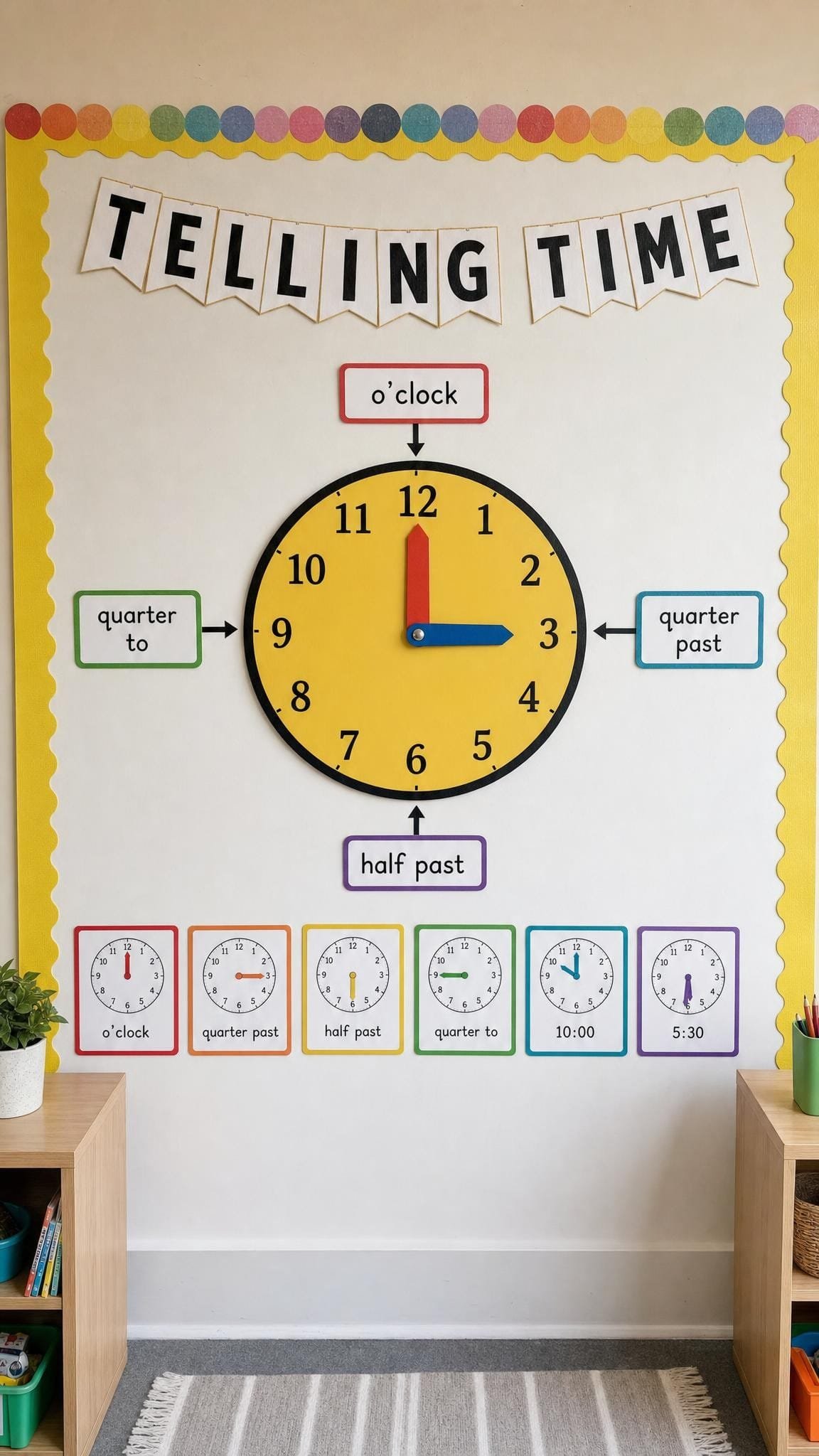
SaveTime is hard because the clock on the wall is too high and too small. A big demonstration clock at child height with labels around it changes that.
What you need
- A demonstration teaching clock
- A time activity set for small groups
How to set it up
- Hang the clock at child height near your carpet.
- Add labels: o’clock, quarter past, half past, quarter to.
- Set it to “the next thing we do” and let children read it.
Teacher tip: Ask “what time will it be in 15 minutes?” during transitions.
Math posters worth hanging


9. A 2D and 3D Shape Display
 Save
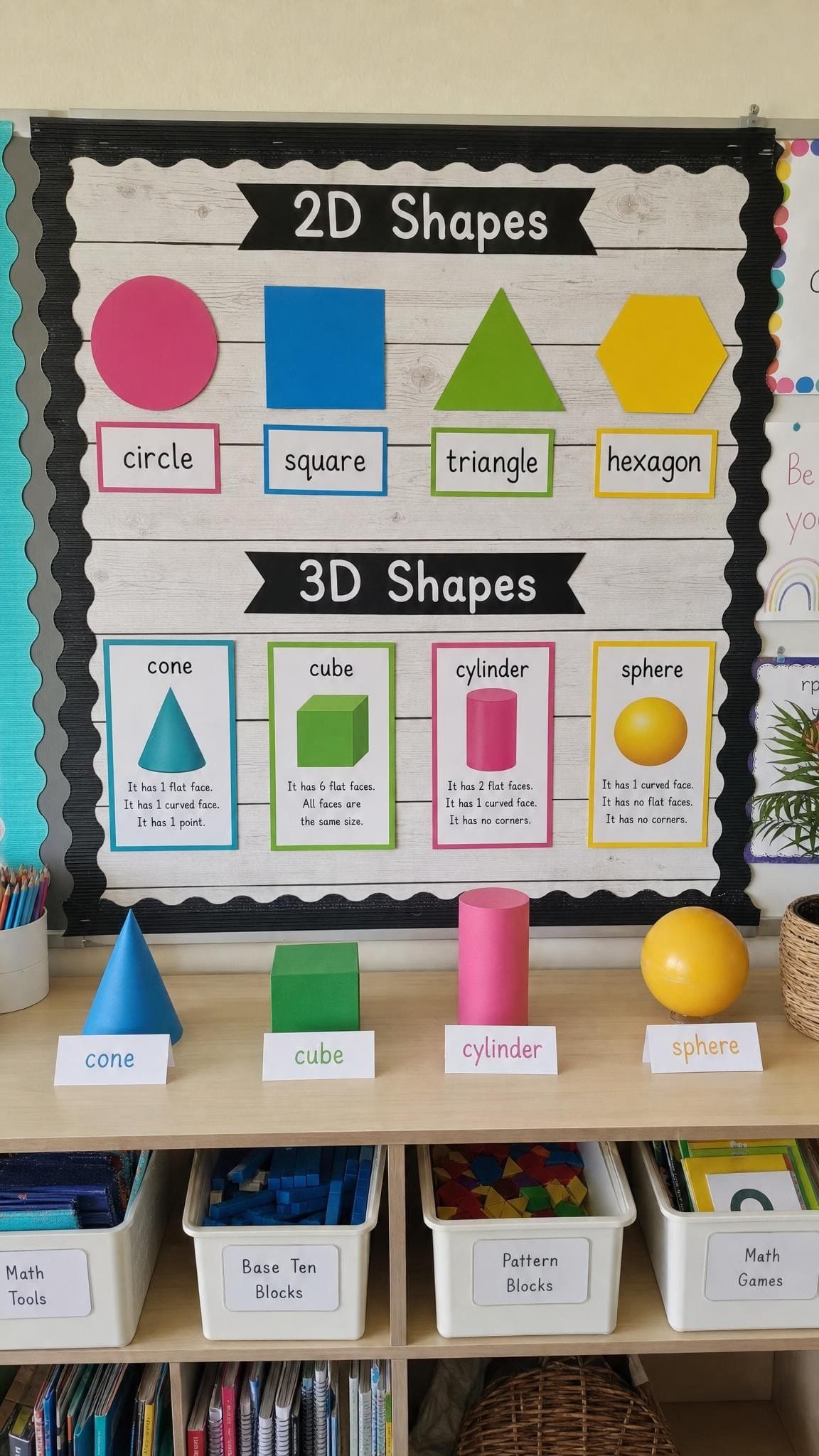
SaveShapes make more sense next to real objects. Pair each flat shape with something children recognise: a can for a cylinder, a dice for a cube.
What you need
- A 3D geometric shapes set
- Everyday objects from home
- Tent cards for labels
How to set it up
- Put 2D shapes on the wall with their names.
- Put matching 3D shapes and real objects on a shelf below.
- Run a weekly shape hunt around the room.
Teacher tip: Let children bring in shape objects from home to add to the shelf.
10. A Labelled Manipulatives Wall
 Save
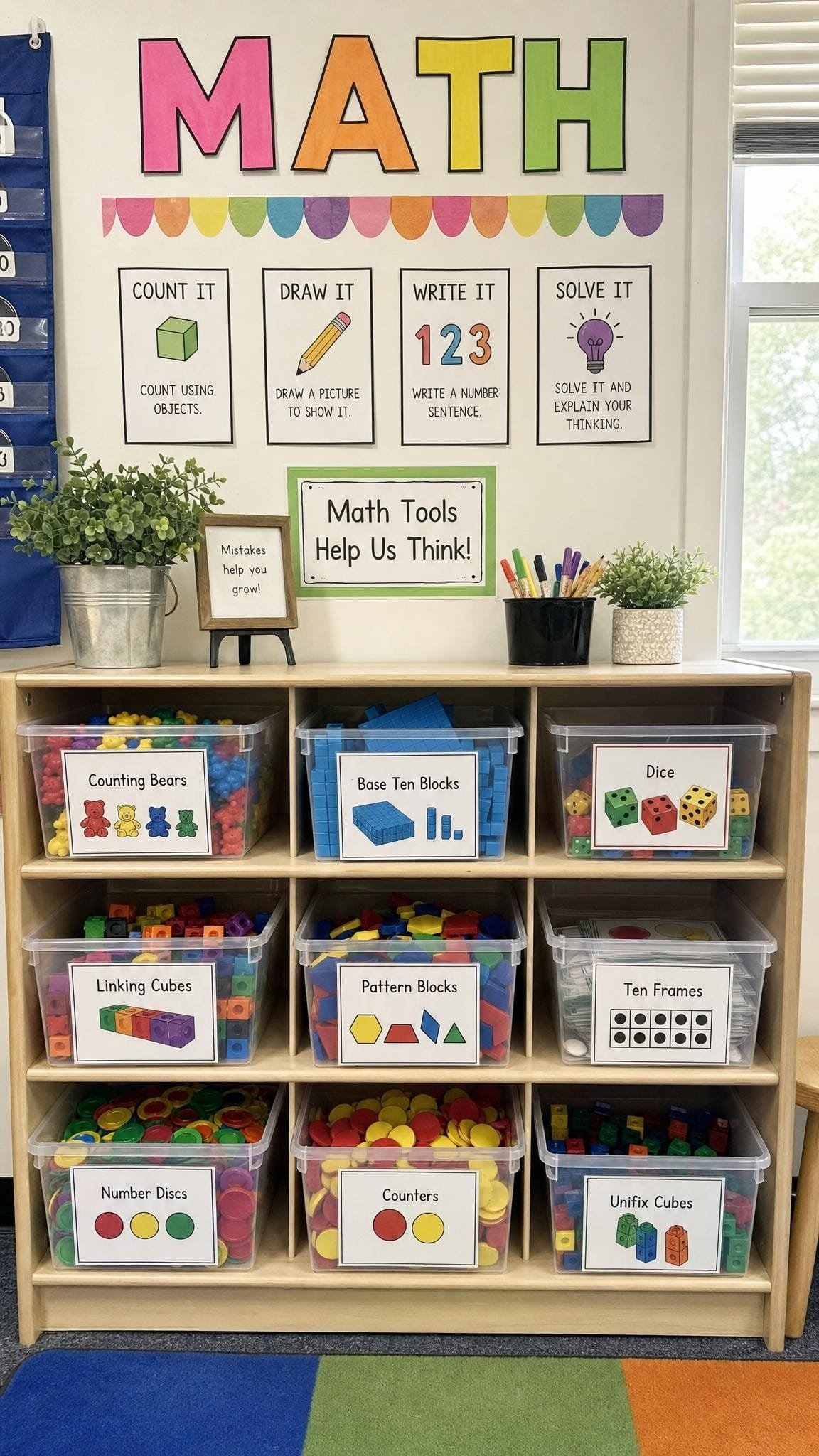
SaveManipulatives only get used when children can find them and put them back. Clear bins with picture labels make your math tools part of the decor.
What you need
- Clear label holders for bins
- Foam dice for quiet games
- Clear bins of the same size
How to set it up
- Give every tool its own bin and photo label.
- Store them at child height.
- Teach a two minute “tidy and check” routine at the end of math.
Teacher tip: Same size bins look calm and stack neatly, even when the contents are bright.
Calm math time
 Save
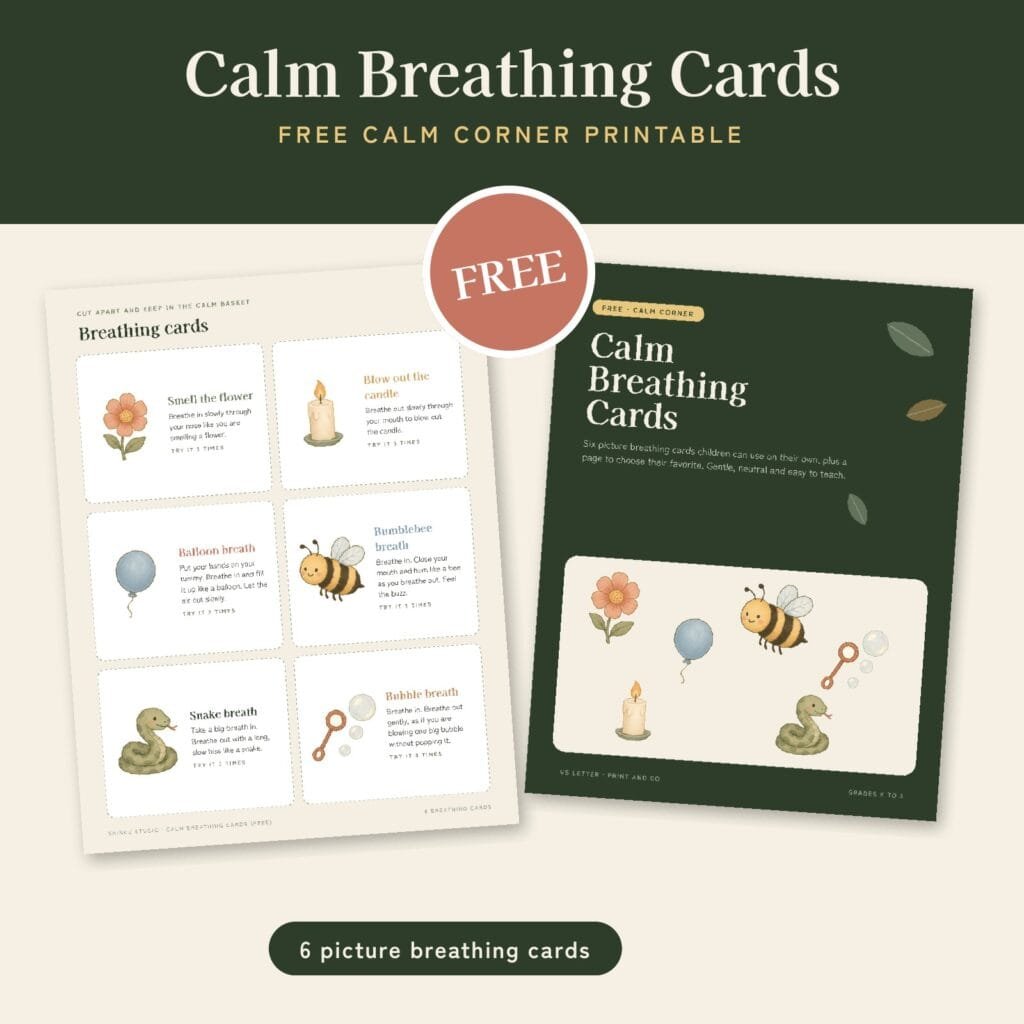
SaveMath anxiety in your room? A slow breath before a quiz makes a real difference. My free calm breathing cards are a quick way to start math time settled. Get the free cards
11. A Problem of the Day Board
 Save
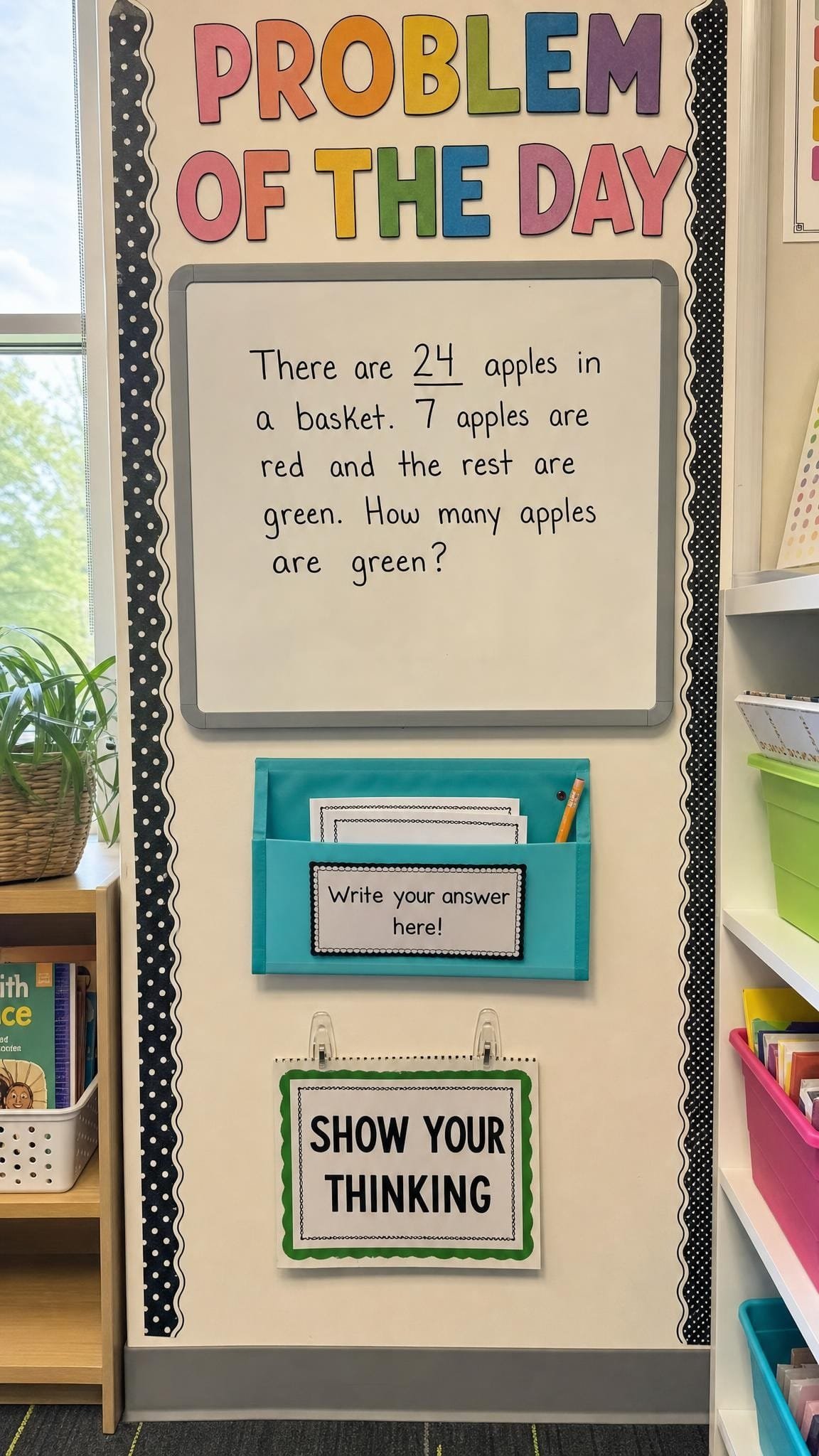
SaveA problem of the day board gives early arrivals something to think about and gives you an easy warm up. It works best when answers go into a pocket rather than being shouted out.
What you need
- A set of small dry erase boards
- A pocket or envelope for answer slips
How to set it up
- Write one word problem each morning.
- Children answer on a slip and post it in the pocket.
- Share two different strategies at the start of math.
Teacher tip: Ask for the strategy, not just the answer, by adding “show your thinking”.
12. A Fact Fluency Tracker
 Save
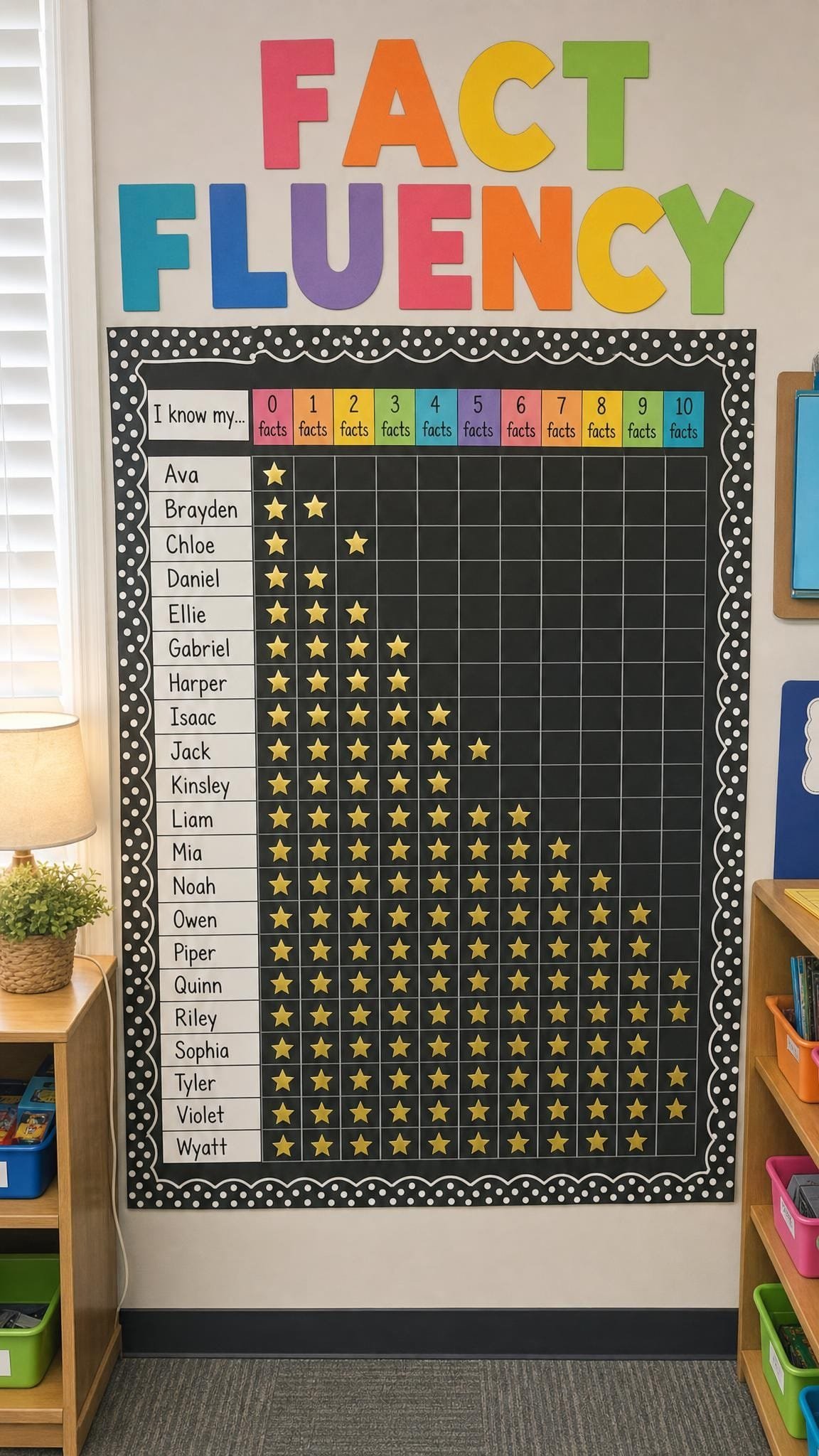
SaveA fluency tracker turns practice into something children can see. Every fact family mastered earns a star next to their name.
What you need
- Gold star stickers in bulk
- A large chart with names and fact families
How to set it up
- List fact families across the top.
- Check fluency with short, calm quizzes.
- Add a star for every family mastered.
Teacher tip: Keep it private with numbers instead of names if your class is sensitive about comparison.
Manipulatives that live on the wall


13. A Money Display and Shop
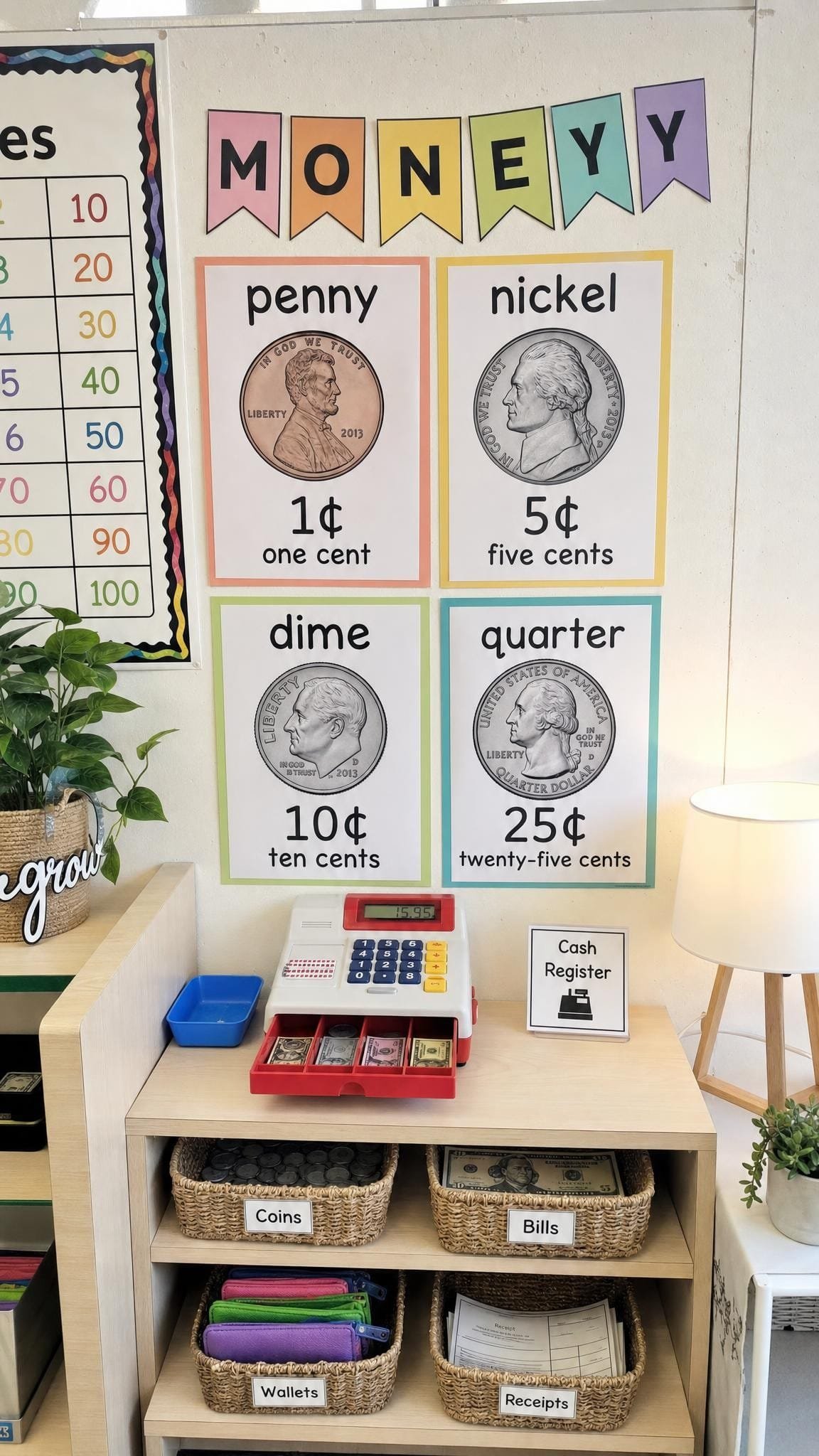 Save
SaveMoney is easier with real looking coins and a little shop. Big coin posters on the wall plus a pretend register on the shelf below make a math center children ask for.
What you need
- A pretend play money set
- Price tags and small classroom items to “sell”
How to set it up
- Put up a poster for each coin with its value.
- Set up a small shop with priced items.
- Rotate the shop job so everyone gets to be the cashier.
Teacher tip: Price everything in amounts that need two coins to make.
14. A Measurement Station
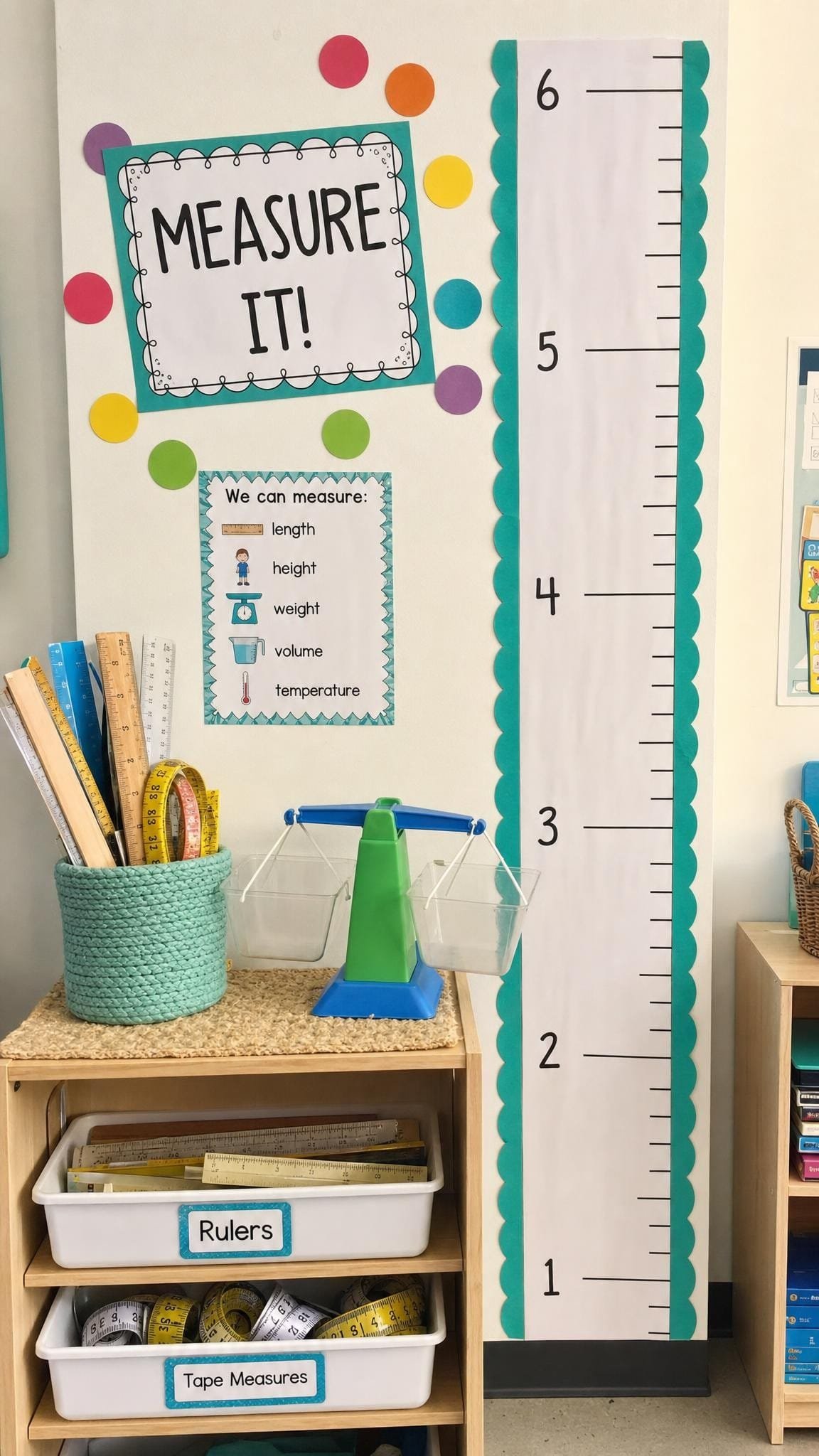 Save
SaveA measurement station turns the classroom itself into a math tool. Children measure the room, each other and anything they can carry.
What you need
- A wall height chart
- Rulers, tape measures and a small balance scale
How to set it up
- Hang a height chart near the door.
- Keep rulers and tapes in a labelled cup.
- Post a weekly “measure it” challenge card.
Teacher tip: Measure every child at the start and end of the year. They love seeing how much they have grown.
15. A Math Centers Rotation Board
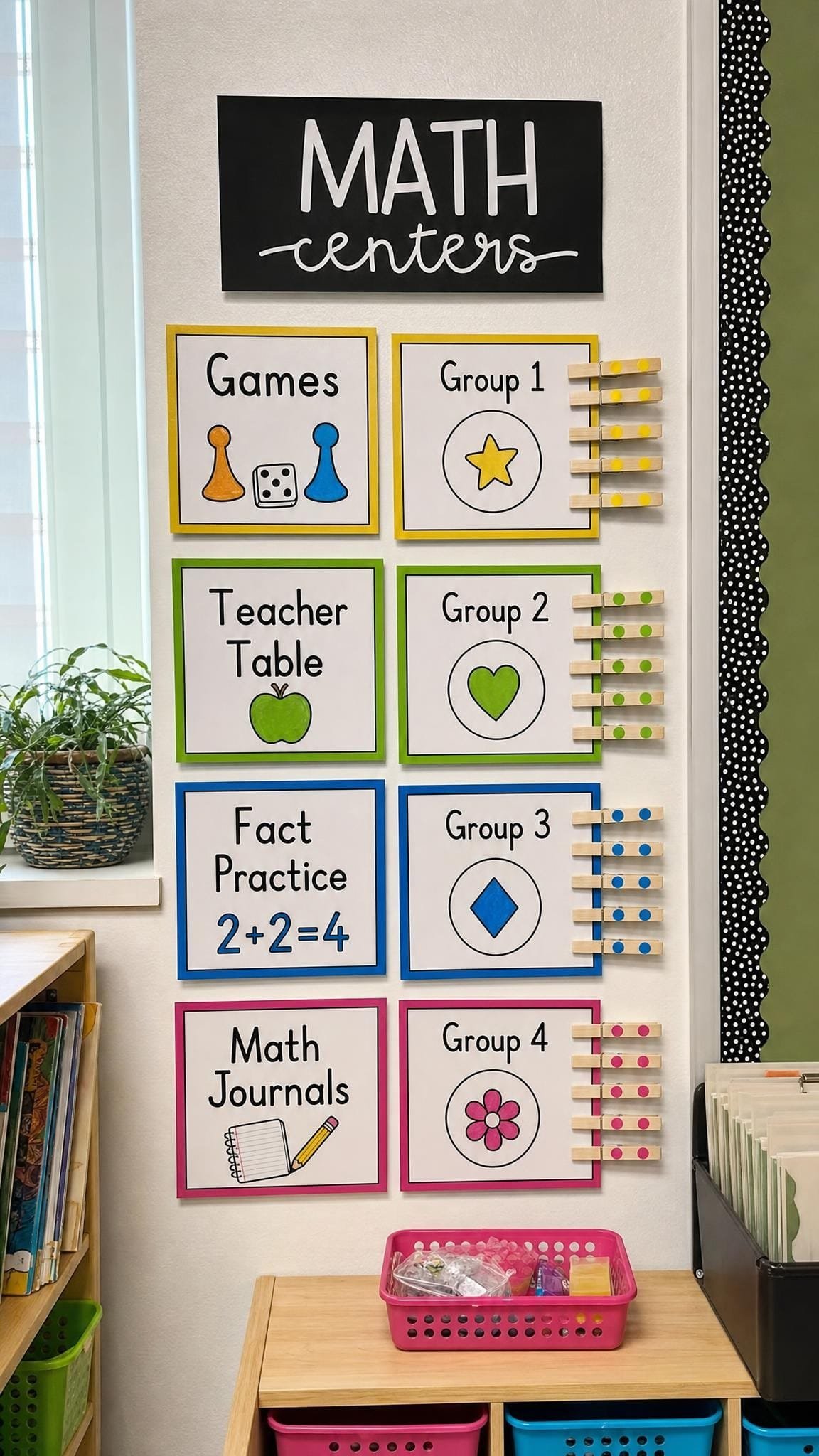 Save
SaveMath centers fall apart when children do not know where to go. A rotation board with icons answers that question before anyone asks you.
What you need
- Colored paper and clothespins
- A bulletin board border to frame it
How to set it up
- Make a card for each center with an icon.
- Write group names on clothespins.
- Move the pins each rotation so the board always shows who is where.
Teacher tip: Keep the same four centers for a month and only change what is inside them.
16. A Math Stars Work Display
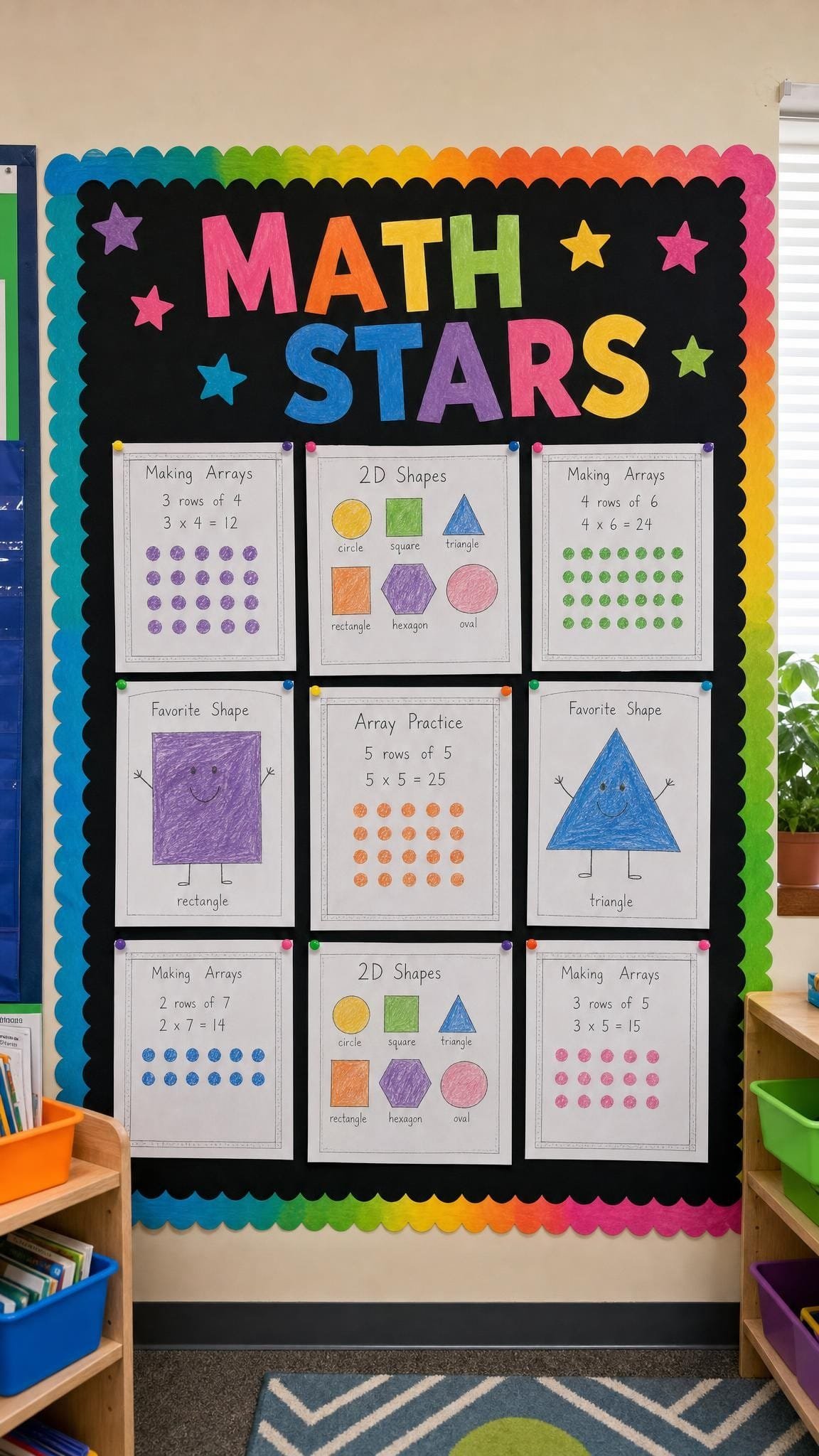 Save
SaveDisplaying math work tells children that their thinking matters, not just their reading or art. A simple Math Stars board fills itself all year.
What you need
- A bright bulletin board border
- Clips or pins for easy swapping
How to set it up
- Choose one piece of work per child each month.
- Ask them to circle the part they are proud of.
- Swap the whole board on the first Monday of the month.
Teacher tip: Pick work that shows a clever strategy, not just the neatest page.
Math classroom decor FAQs
What should be on a math wall in an elementary classroom?
Start with a number line, a math word wall with pictures and one chart for your current unit. Add a times table or fact fluency chart from grade 2 upward. Everything on the wall should be something you point to during lessons.
How do I decorate a math classroom on a budget?
Make the displays with the class. Paper strips, chart paper and a border cost very little, and children use displays more when they helped build them.
How high should math displays be?
Put anything children need to read or touch at their eye level, roughly between their shoulders and the top of their heads. Save the space above the board for the number line.
Do math word walls actually help?
Yes, when every word has a picture and you refer to it while teaching. A wall of words with no pictures is mostly decoration.
Pick two or three of these to start, put them where children can reach them, and point to them every single lesson. That is what turns math decor into math teaching.