
Some links in this post are affiliate links. If you buy through one, I may earn a small commission at no extra cost to you. As an Amazon Associate I earn from qualifying purchases.
The short answer: to quiet a noisy class without raising your voice, stop talking over the noise and use one consistent quiet signal (a chime, a rain stick or a call and response), wait silently until it works, then teach and post a voice level chart so children know exactly what volume each activity needs. Add a visual timer for transitions, praise the tables that get there first, and practice the signal like a fire drill. Getting louder only teaches the class to get louder too.
Every teacher knows the moment: the room creeps from busy to loud, you say “shhh” three times, and your voice gets higher each time. It is exhausting, and it rarely works for more than a minute. The good news is that the fix is a system, not a personality. These are the strategies I have seen work in real classrooms, from kindergarten to 5th grade.
 Save
Save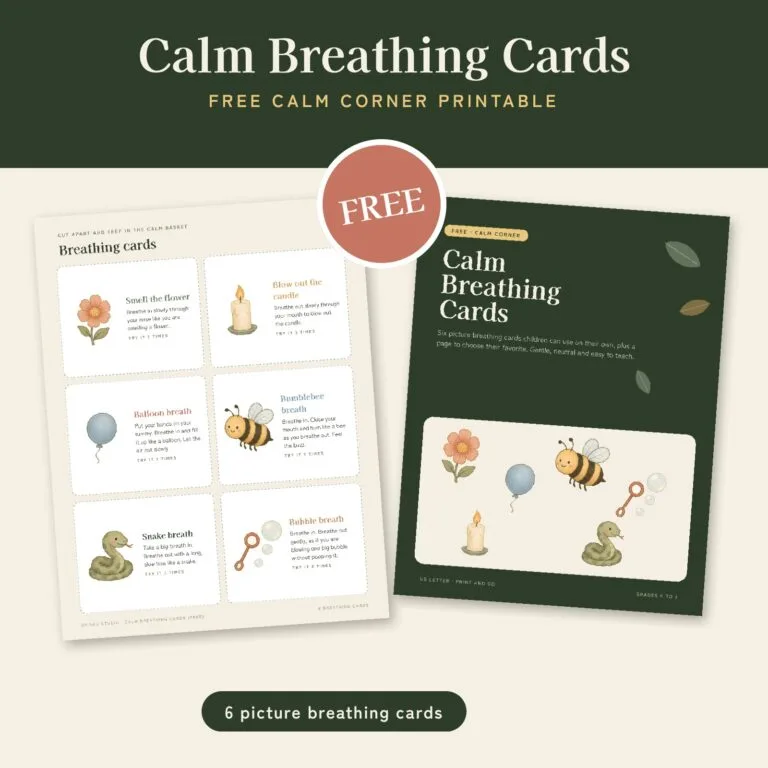 Save
SaveFree printable
Free Calm Breathing Cards
6 picture breathing cards (smell the flower, bumblebee breath, snake breath and more) for your calm corner. Teach one a day.
Free download. You will also get a couple of follow-up emails with classroom ideas. Unsubscribe anytime.
Why classrooms get noisy (and why shouting backfires)
- Children often do not know how loud is too loud for this activity, because nobody has shown them.
- Noise rises gradually, so nobody notices until it is already loud.
- Transitions have no clear end, so chatter fills the gap.
- When the teacher raises their voice, the room matches it. Your volume sets theirs.
1. Pick one quiet signal and never talk over the noise
 Save
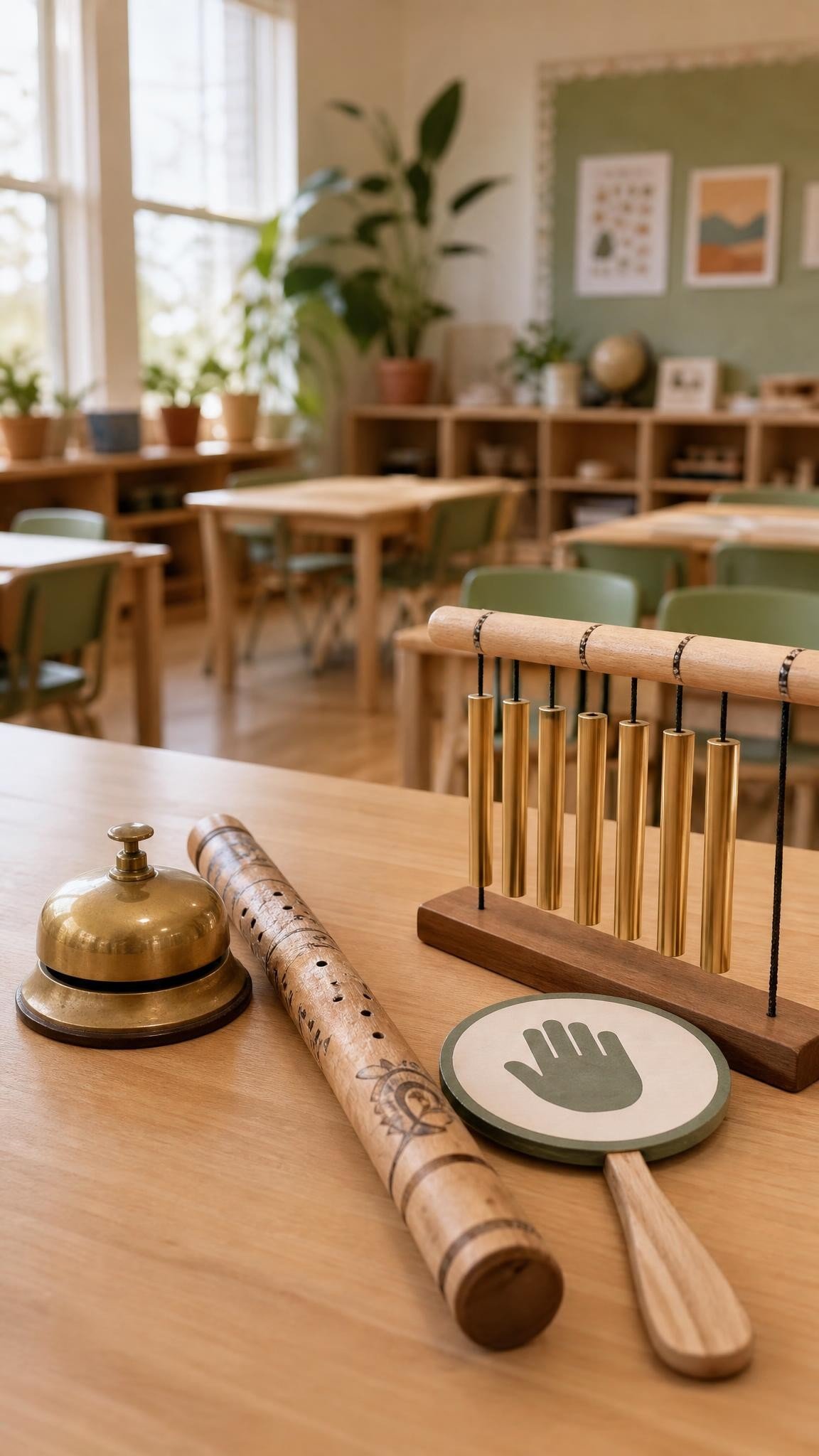
SaveChoose a single signal and use it every time. A sound works better than a voice because it cuts through chatter without adding to it. Ring it once, then stand still and wait in silence. The waiting is the strategy. If you start talking before the room is quiet, you teach them the signal is optional.
- A mini rain stick: the gentlest signal there is. Children quieten to hear it finish.
- A classic hand bell: one ring, never a string of rings.
- A call and response: “Class, class” and “Yes, yes”, or “Macaroni and cheese” and “Everybody freeze”. Free and surprisingly effective with younger grades.
2. Teach a voice level chart
 Save
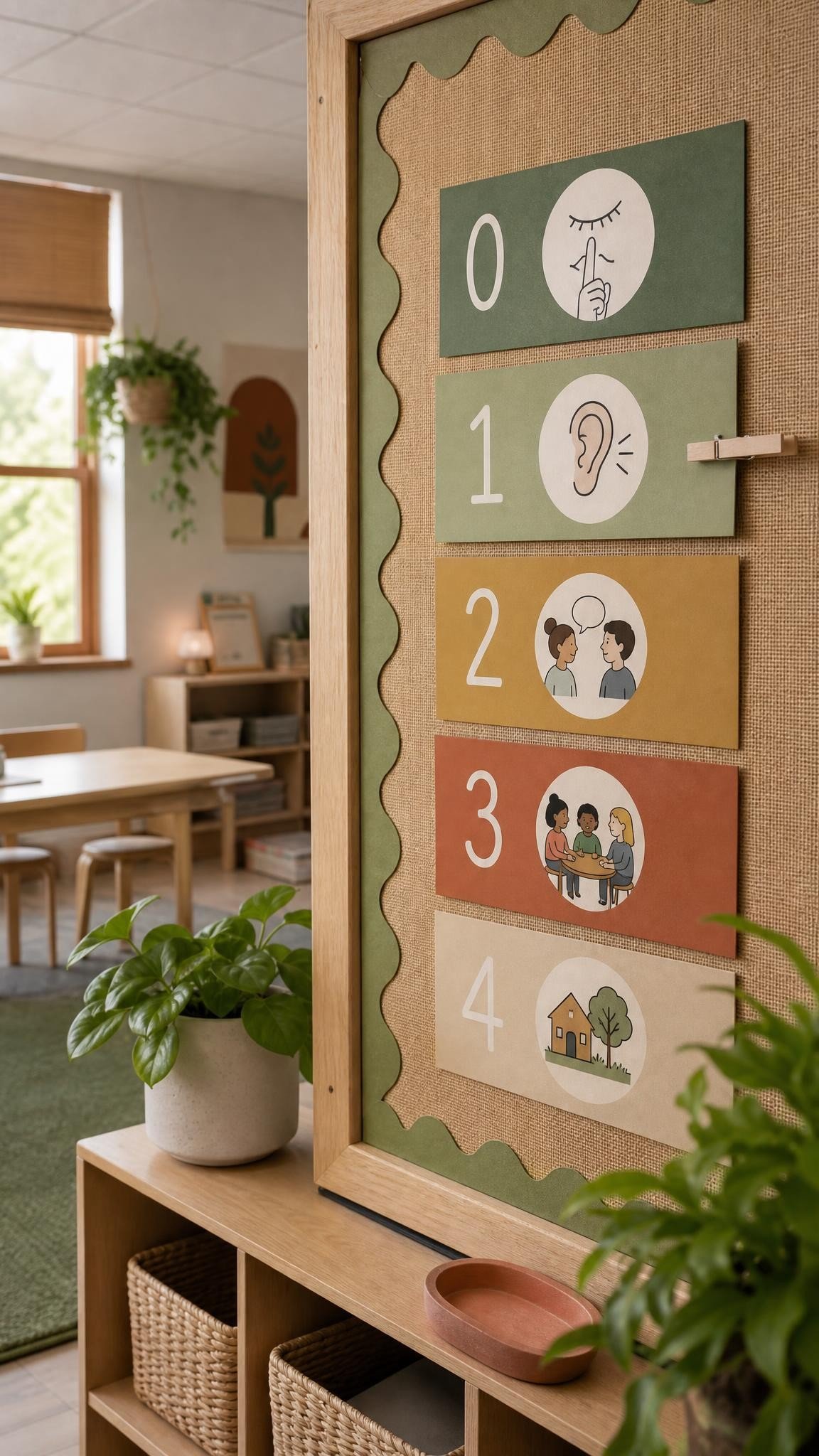
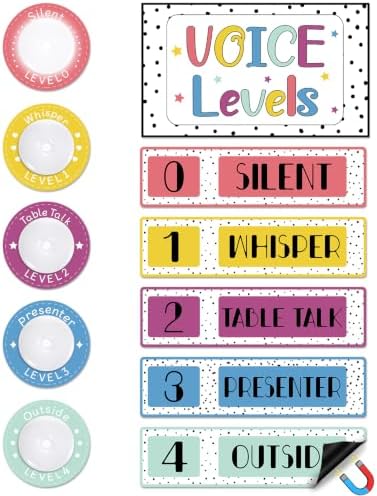
SaveA voice level chart turns “be quiet” into something children can actually do. Teach five levels with pictures, model each one, and practice them. Then tell the class the level before every activity and point to it, rather than telling them off afterwards.
- 0, Silent: tests, independent reading, the quiet signal.
- 1, Whisper: partner reading, library time.
- 2, Table talk: group work, voices only your group can hear.
- 3, Presenter: sharing with the whole class.
- 4, Outside: recess and PE only.
Clip a clothespin to the current level so the expectation stays visible all lesson.
3. Make noise visible with a timer or meter
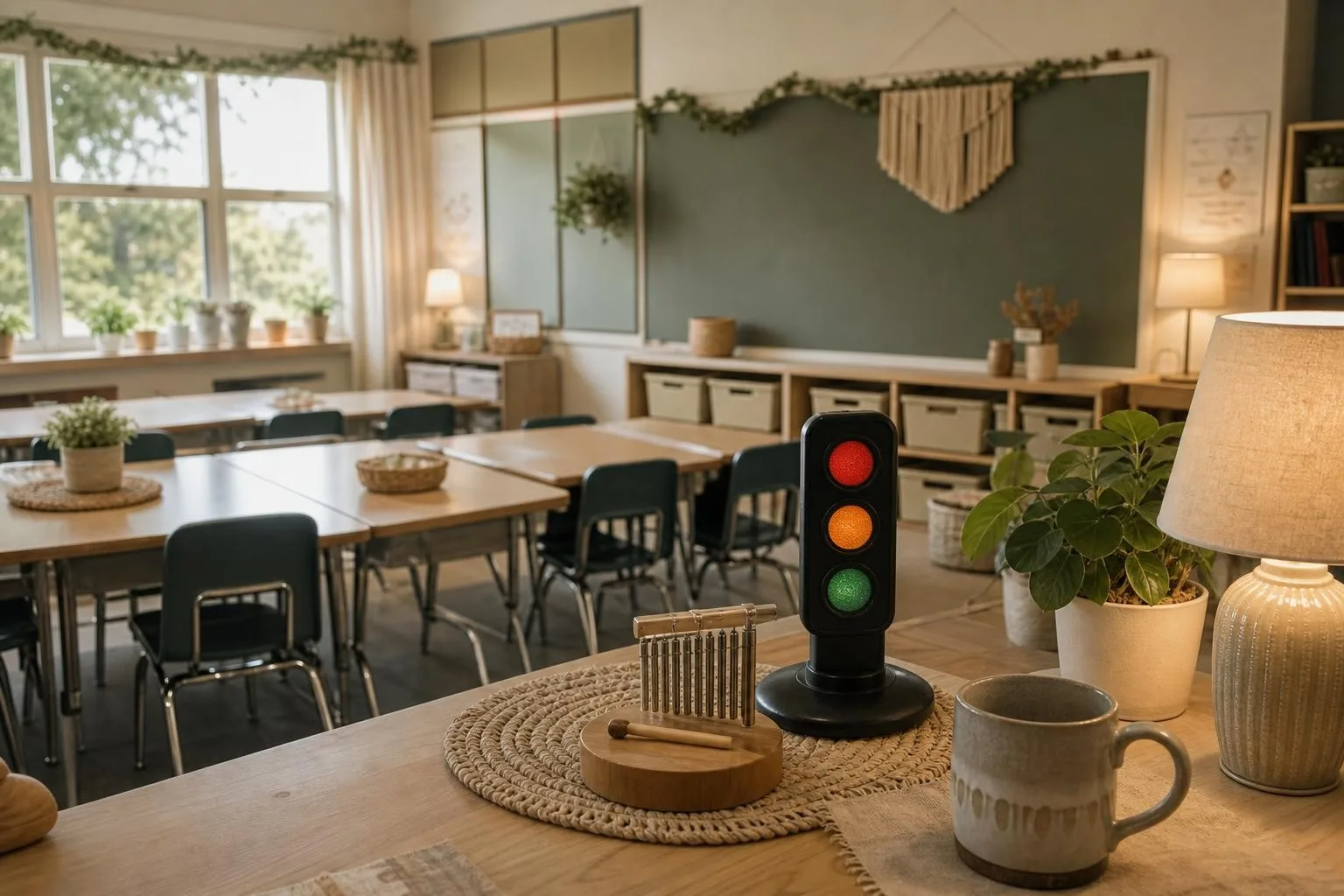
Children find it hard to judge volume, so show them. A Time Timer visual timer makes transitions finite: “Tidy up before the red disappears.” A traffic light visual timer works brilliantly with younger grades. For older children, a decibel meter on the board turns quiet into a challenge they want to beat.
Visual timers teachers swear by


4. Turn quiet into a game
Children will work much harder for a game than for a warning. Try a mystery quiet table, a marble jar that fills when the room stays at the right level, or a class goal with a small reward like five extra minutes of read aloud.
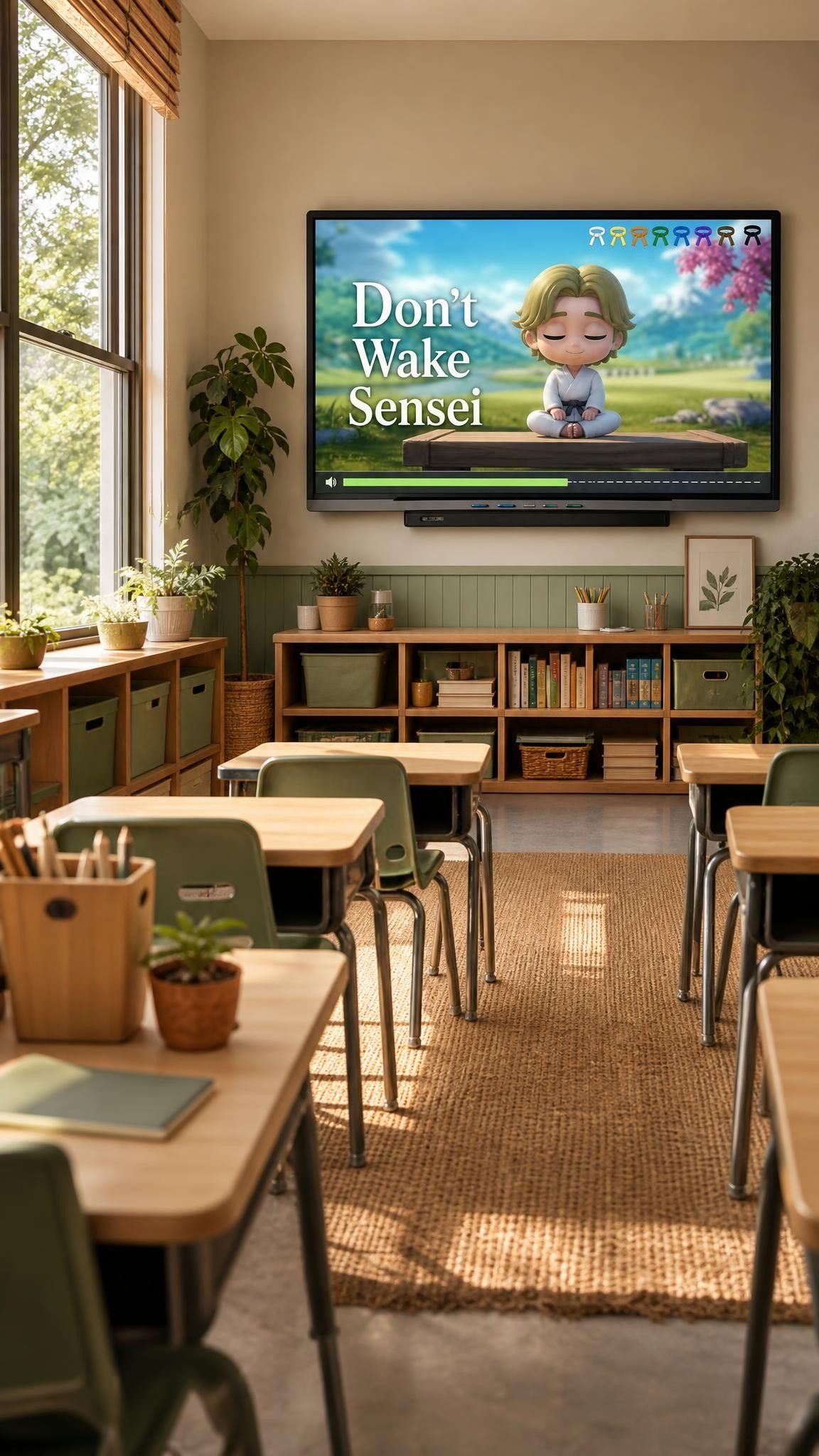
If your class is chatty, try Don’t Wake Sensei, the free quiet classroom game I built for my own room. Put it up on the board and the class keeps the noise under the line to earn the next karate belt while Sensei naps. Get it free here.
5. Lower your own voice
It sounds backwards, but speaking more quietly when the room is loud makes children lean in to listen. Some teachers whisper instructions on purpose. If you have a big room or a tired voice, a small voice amplifier lets you speak softly and still be heard at the back, which protects your voice through flu season too.
6. Script your transitions
Most noise happens between activities. Give every transition a clear start, a time limit and an end signal: “When the music stops, you are on the carpet.” Calm background music on a small bluetooth speaker doubles as a timer and keeps voices down at the same time.
7. Give sound sensitive children a calm reset
 Save
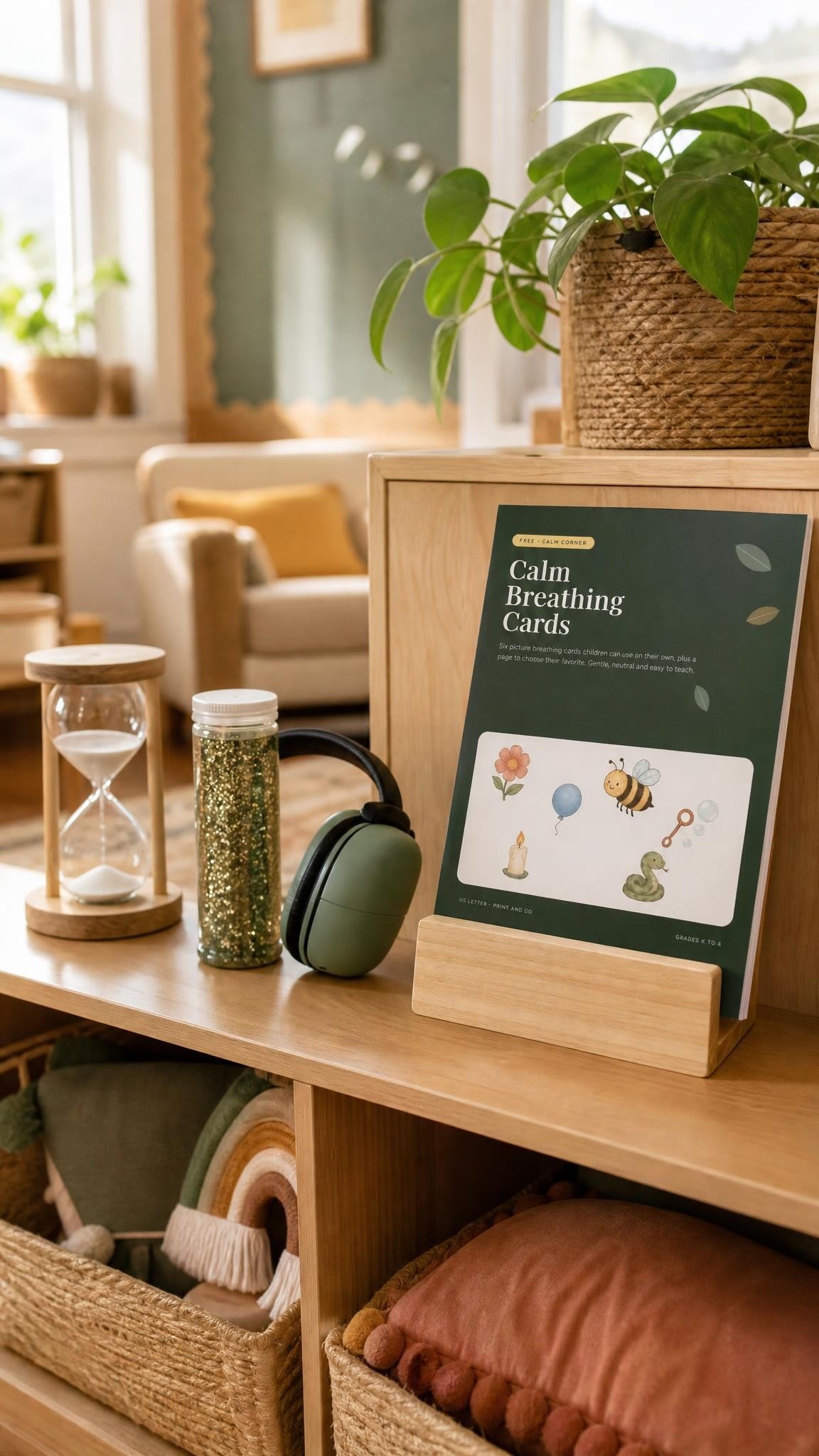
SaveSome children struggle with noise more than others, and they are often the ones who get loudest when overwhelmed. A small calm reset spot with kids noise cancelling earmuffs, a sand timer and a few breathing cards gives them a way to settle without leaving the room. Whisper phones are another quiet win for reading aloud without adding to the volume.
Calm the room for good
 Save
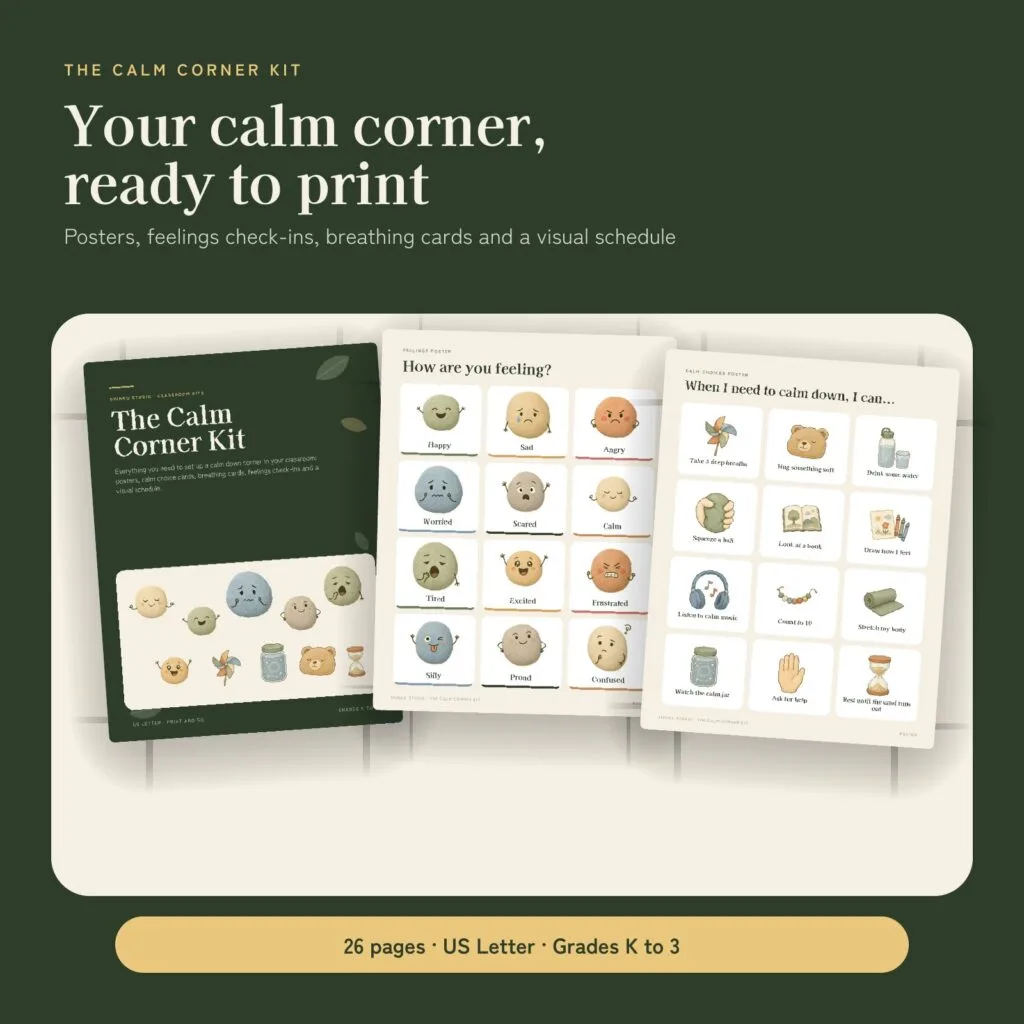
SaveThe Calm Corner Kit gives you a ready made reset spot: a calm corner sign, 4 step routine poster, breathing posters, a feelings chart and 12 calm choice cards in soft natural colors. See the Calm Corner Kit.
Quick fixes for the last week before a break
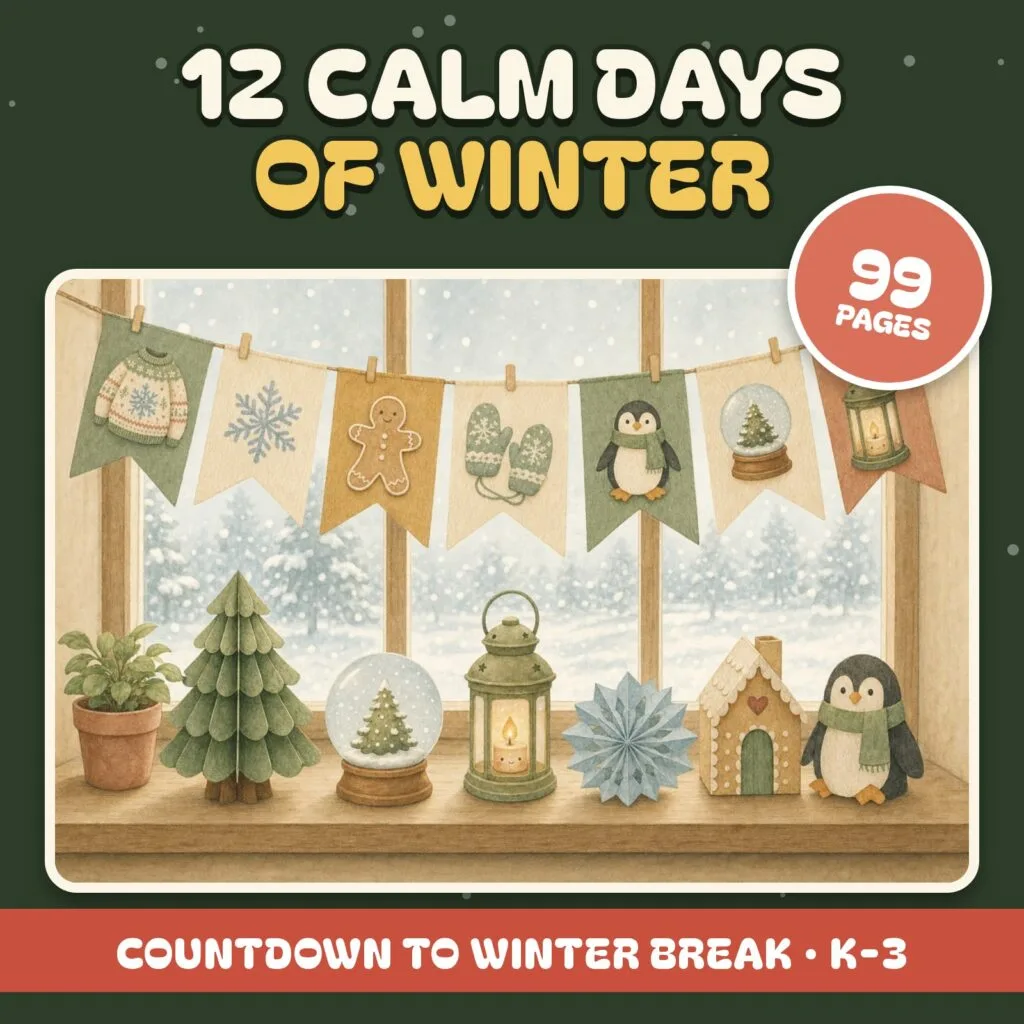
Noise peaks before every holiday. Shorter tasks, more movement breaks and a short calm moment at the start of each day make a real difference. 12 Calm Days of Winter was built for exactly this: a two minute calm moment for each of the last 12 school days before winter break.
Calm countdown
 Save
SaveTwelve numbered pennants, a calm moment card and a keepsake craft for each day, so the busiest weeks of the year feel steady instead of wild. See 12 Calm Days of Winter.
Classroom management favorites


Noisy classroom FAQ
How do I get my class quiet without yelling?
Use one consistent quiet signal like a chime or call and response, then wait silently until everyone is ready. Never talk over the noise, and teach a voice level chart so children know the expected volume before each activity.
What is a voice level chart?
A visual scale, usually 0 to 4, that shows how loud voices should be for each activity, from silent to outside voice. Pointing to the level before an activity prevents most noise problems before they start.
What is the best attention getter for a noisy classroom?
The best one is the one you use consistently. Soft sounds like a rain stick or chime work well because they cut through chatter without adding to it, and call and response phrases are free and fun for younger grades.
Why is my class so loud after lunch?
Children come back from recess with energy to burn. Start the afternoon with two minutes of calm breathing or a quiet read aloud before asking for focused work.
Start tomorrow with just two things: choose your quiet signal and teach the voice levels. Practice both when the class is calm. Within a week you will notice you are saying “shhh” a lot less.