
Some links in this post are affiliate links. If you buy through one, I may earn a small commission at no extra cost to you. As an Amazon Associate I earn from qualifying purchases.
A Japandi living room is what happens when Japanese restraint meets Scandinavian coziness: low furniture, pale wood, soft linen, a few handmade objects and a lot of breathing room. It looks expensive in photos, but the look is really about editing, not spending.
Below are fourteen Japandi living room ideas, from bright maple rooms to moody walnut ones, plus a small apartment version and a calm way to handle the TV. Each one comes with the handful of pieces that actually make it work, so you can copy a whole room or just steal one detail.
If you only change four things, make it these: a rice paper floor lamp for warm, low light, sheer linen curtains so daylight comes in soft, a set of matte ceramic vases for the shelves, and a chunky knit throw in oatmeal or cream. Those four pieces do most of the heavy lifting in every room below.
What Makes a Living Room Japandi?
Three things, mostly. Low, simple furniture with rounded edges and visible wood. A tight palette of warm whites, sand, oak, stone and one deep accent like charcoal or moss. And fewer, better objects: one branch in a vase instead of a shelf of trinkets. If a room has those three, it reads as Japandi even with a sofa you already own.
1. Soft Sand Sanctuary
 Save
SaveThis one feels like a slow exhale. The palette is soft sand, oat and warm white with a hint of stone gray. The furniture is rounded and low: a linen slipcovered sofa with a gently curved back, an oval ash coffee table with a matte finish and a woven side chair that keeps the corner light.
A plush cream area rug anchors everything without shouting, and a paper lantern overhead gives the whole room that diffused, lamp-lit glow.
- Walls: pale greige limewash for subtle texture
- Lighting: a paper lantern overhead plus a paper floor lamp by the sofa
- Decor: unglazed clay vases, a single branch, a stack of linen covered books
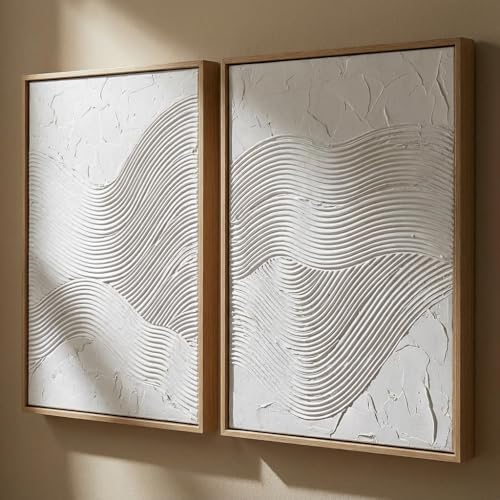
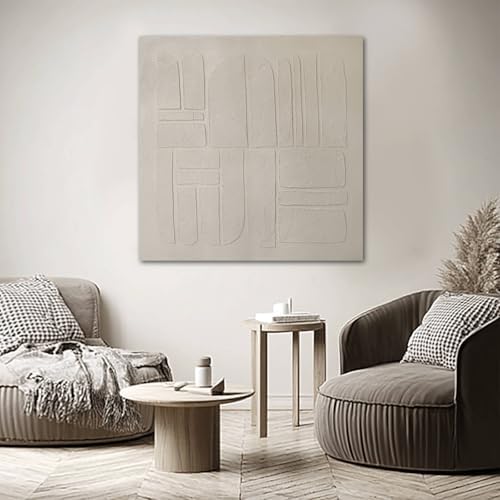
Keep the art minimal, one oversized abstract in beige tones is plenty, and skip heavy curtains. Sheer flax linen panels soften sunlight without blocking it.
2. Charcoal Calm With Wood Accents
 Save
SaveIf you love moodier spaces, start with a charcoal feature wall behind a clean-lined, low sofa in pebble gray. Blackened oak for the media console and shelving keeps it grounded, and texture does the rest: a salt and pepper wool rug, a slatted wood coffee table and linen cushions in slate and taupe.
- Palette: charcoal, graphite, smoked oak, soft gray
- Planter: a matte black ceramic vase or planter with one sculptural branch
- Art: minimal ink wash prints in black frames, hung in a single row
Finish with a stoneware tea set on a big tray and a single wool throw. It is moody but still airy, which is the Japandi sweet spot.


3. Wabi-Sabi Natural Layers
 Save
SaveThis look leans into imperfect beauty: raw textures, sun-faded colors and pieces that feel collected over time. Start with a wood-frame, futon-style sofa with ecru cotton cushions, then add a live-edge coffee table and a low weathered oak bench for extra seating.
The rug is a chunky flatweave jute-look rug with an uneven, natural tone. Walls are a soft putty white, slightly warm.
- Textiles: nubby linen pillow covers and a hand-loomed throw with a fringed edge
- Objects: vintage wood bowls, raku pottery, framed pressed leaves
- Centerpiece: one branch in a smoky glass vase, and that is it
4. Light Maple Minimalism
 Save
SaveClean, bright and quietly joyful. Base the room in light maple: the floor, floating wood shelves and a slim media ledge that runs wall to wall. Choose a cream modular sofa with low arms and add a maple and cane accent chair.
A round stone coffee table and a pale side table give you height contrast, and a cloudlike paper pendant floats above the seating area as the one statement piece.
- Palette: cream, maple, pale mushroom, soft bone
- Storage: a slatted bench with woven baskets hidden underneath
- Green: a small bonsai or a ZZ plant on the ledge
5. Tatami-Inspired Floor Lounge
 Save
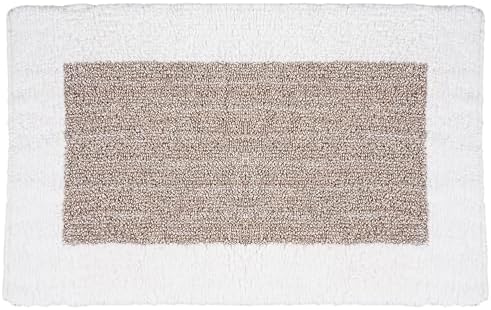
SaveIf you like to sit low, this is the coziest take. Layer tatami-style mats under a tight-weave neutral rug, then swap the bulky sofa for floor cushions, a quilted daybed and a platform coffee table with rounded corners.
Woven screens or sliding panels zone the room without closing it off, and a slim bench against the wall becomes a quiet vignette for a stone bowl and a single ikebana arrangement.
- Seating: flat zabuton floor cushions in oatmeal or moss
- Lighting: low lantern lamps and dimmable strip lighting under the bench
- Colors: wheat, moss, natural black, rice paper white
6. Stone, Steam and Spa-Level Serenity
 Save
SaveThis one channels a modern ryokan. Anchor the room with a stone-look coffee table and a low oatmeal sofa, then bring in a latte-toned plaster fireplace or mantel shelf for warmth. Ribbed wood paneling on one wall adds rhythm, and a thick wool rug softens it all.
Use brushed brass in tiny doses, a slim picture light or a small tray, so the calm stays intact. A large fern or peace lily finishes the spa feel.
7. Floor Seating Around a Low Tea Table
 Save
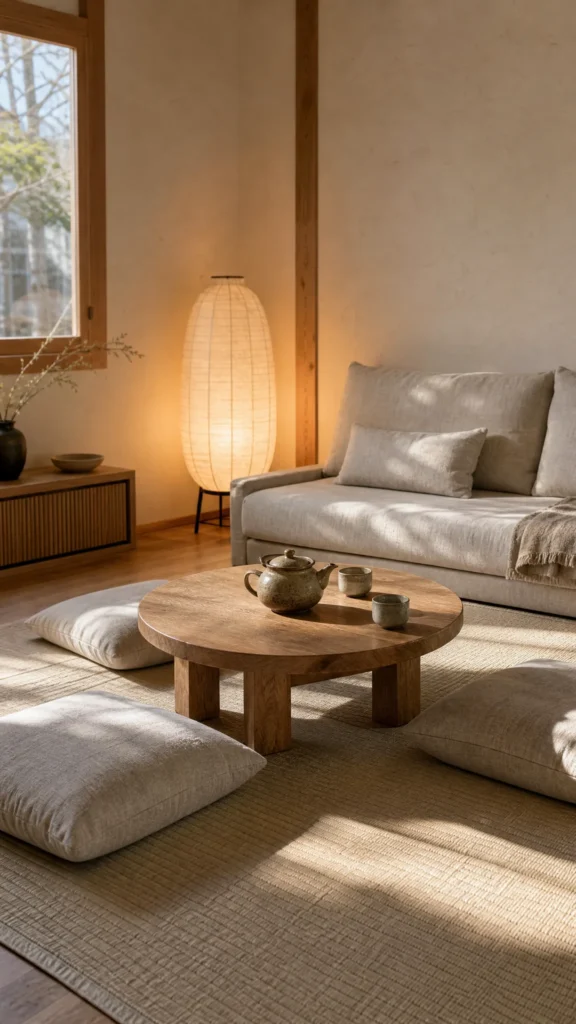
SaveNot everyone wants to give up the sofa, and you do not have to. Keep it against the wall and put a low round tea table in the middle of the floor with four flat cushions around it. It becomes the spot for tea, board games and lazy Sunday mornings, and it makes the room feel twice as relaxed.
- Zabuton floor cushions in oatmeal linen, flat rather than puffy
- A low round wood coffee table so everyone can reach
- A stoneware tea set that stays out on the table as decor
8. A Slatted Oak Accent Wall
 Save
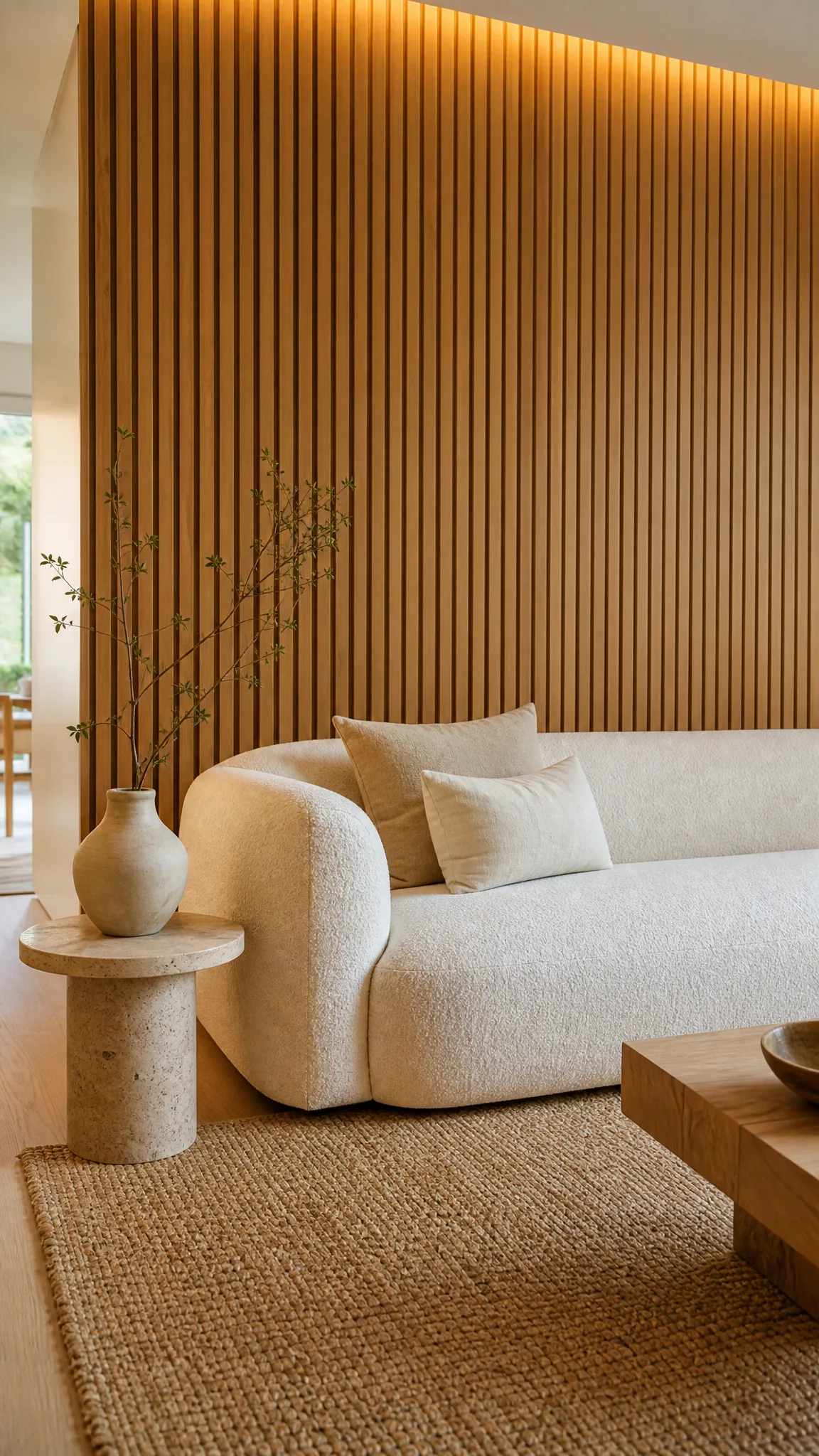
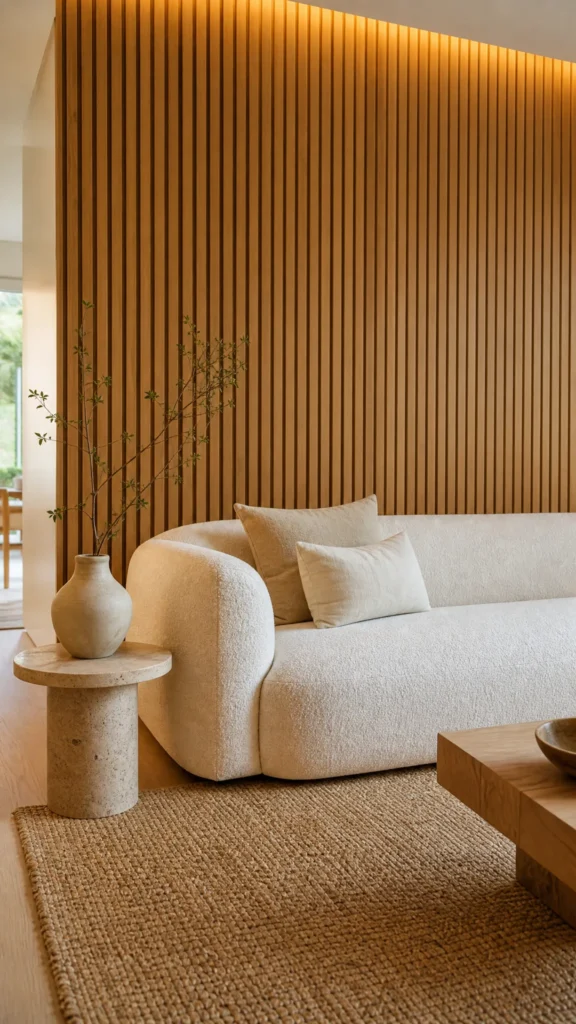
SaveOne wall of vertical wood slats is the fastest way to make a plain living room feel architectural. It adds warmth, it hides a lot of wall imperfections and it quietly softens echo in a room with hard floors. Light oak keeps it airy, and a soft LED wash from above makes it glow at night.
- Acoustic wood slat wall panels that go up with screws or adhesive
- A small round side table in wood or stone beside the sofa
- One ceramic vase with a single branch on top, nothing more
9. The Japandi TV Wall
 Save
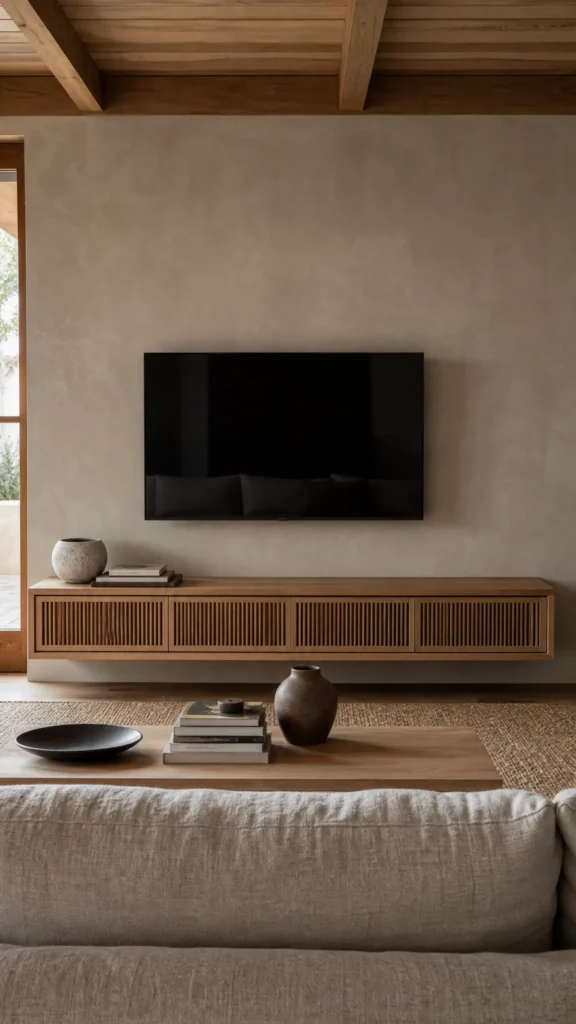
SaveThe TV is usually what breaks the calm, so give it a proper home. Mount it on a warm limewash or plaster-colored wall, run a long, low media console underneath with closed doors, and hide every cable inside the wall or behind the console. The fewer things on that console, the better: a stack of books and one sculptural vase is plenty.
- A long, low media console with closed slatted doors so the clutter disappears
- Floating oak shelves to one side for books instead of a wall of cabinets
- A handwoven jute rug to warm up the floor in front of the sofa


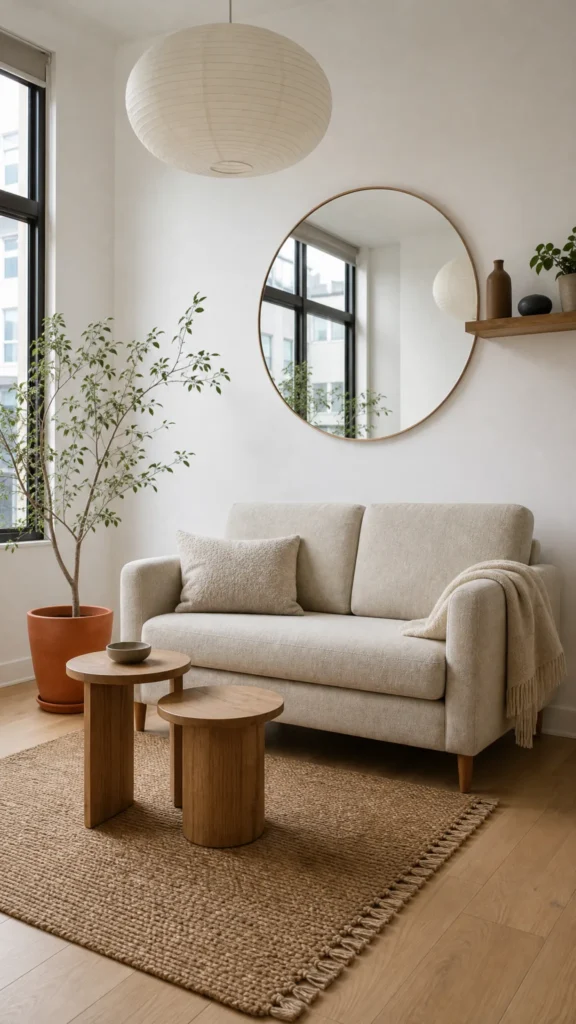
10. A Small Japandi Living Room
 Save
SaveJapandi is made for small living rooms, because the whole style is about owning less. Pick a compact loveseat instead of a sectional, hang a large round mirror above it to bounce the window light around, and use nesting side tables that tuck away when you need the floor.
- A large round wall mirror above the sofa to double the light
- Nesting side tables in a wood finish instead of a big coffee table
- One floating shelf, three objects, and a plant in a clay pot
Keep the floor as clear as you can. In a small room, visible floor is what makes the space feel bigger, so baskets and cushions should live on shelves or under the sofa.
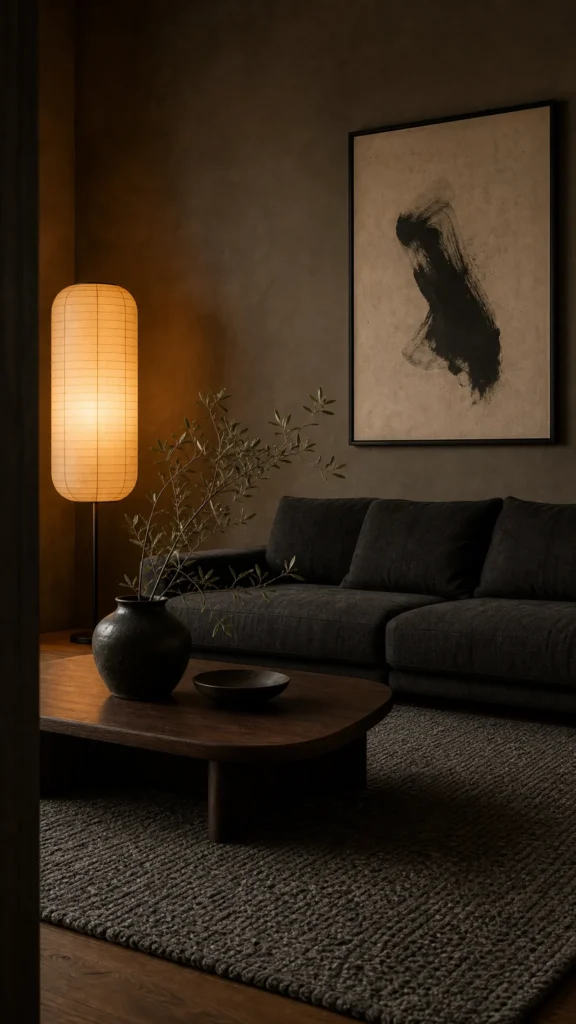
11. Dark Japandi With Walnut and Black
 Save
SaveDark Japandi is having a moment, and it is the most cozy version of the style. Warm charcoal walls, a low black linen sofa and a dark walnut coffee table with rounded corners set the mood, and a glowing paper lamp keeps it from feeling heavy.
- A rice paper floor lamp as the main light source in the evening
- A black ceramic vase with an olive branch or dried grasses
- One piece of ink wash wall art, hung low over the sofa
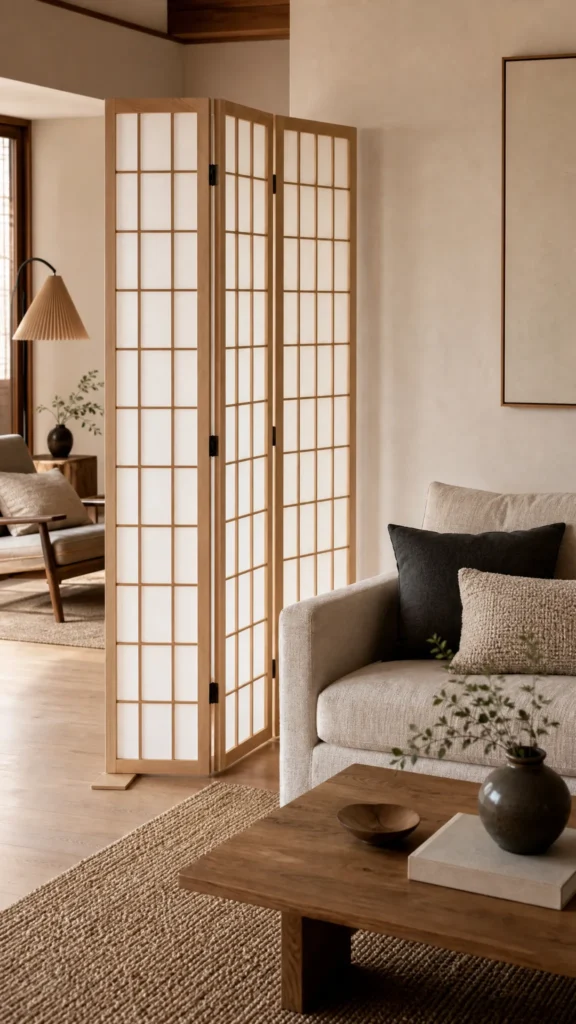
12. Zone the Room With a Shoji-Style Screen
 Save
SaveIn an open-plan space, a folding screen is the gentlest way to carve out a reading corner or hide a desk without building a wall. Paper or woven panels let light through, so the room still feels open, and you can fold it away when friends come over.
- A natural folding room divider screen in bamboo or light wood
- A low lounge chair and a floor lamp behind it for reading
- A woven basket for blankets and books
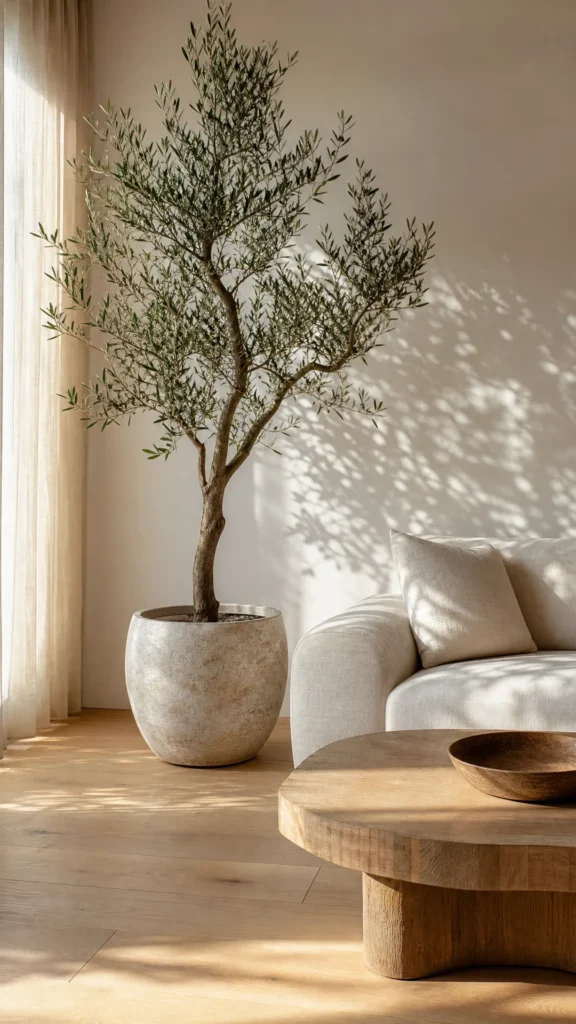
13. One Sculptural Tree as the Focal Point
 Save
SaveInstead of a gallery wall, let one tall, sculptural plant do the talking. An olive tree in a big textured planter beside the sofa adds height, movement and soft leaf shadows on bare walls. If you do not have the light for a real one, a good faux tree is honestly hard to tell apart.
- A faux olive tree with a natural wood trunk, six feet tall
- A large, textured stone-colored or clay planter to drop it into
- Bare walls around it so it has room to breathe
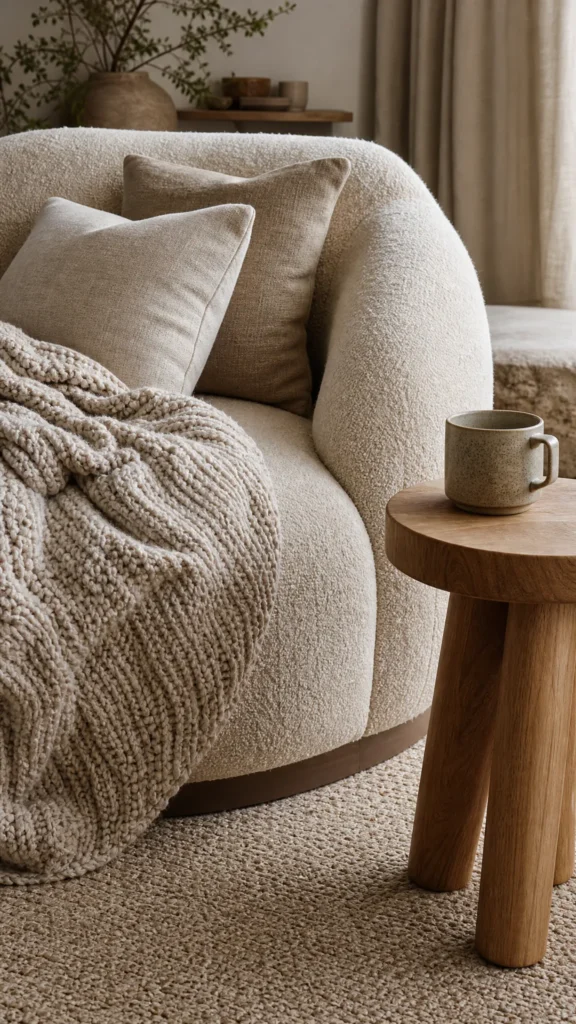
14. Texture Over Color: Linen, Boucle and Wool
 Save
SaveWhen the palette is this quiet, texture is what keeps a Japandi room from feeling flat. Pick one warm neutral family, say cream to sand, and then vary the surfaces: nubby boucle, crumpled linen, chunky knit and a soft wool rug. The room stays calm, but it never looks boring.
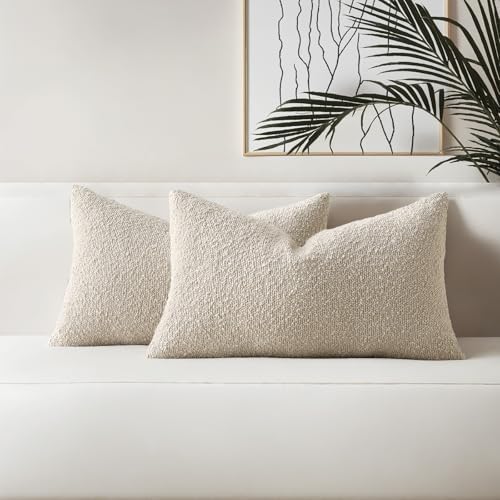
- Linen throw pillow covers in two or three shades of sand
- A chunky knit throw folded over the arm of the sofa
- A plush cream rug to finish the layers underfoot


How to Make Your Living Room Japandi on a Budget
Start by taking things away. Clear every surface, then put back only what you love or use daily. Swap cool white bulbs for warm ones, change busy cushion covers for plain linen, and add one natural material you do not have yet, usually wood, jute or paper. That alone gets you most of the way there before you buy any furniture.
Japandi Living Room FAQ
What colors are used in a Japandi living room?
Warm whites, cream, sand, greige and light oak are the base. Charcoal, black, moss green and deep walnut are the accents. Most Japandi rooms use one or two accents at most and keep everything else in the warm neutral family.
What is the difference between Japandi and Scandinavian style?
Scandinavian rooms tend to be brighter and cooler, with white walls and pale birch. Japandi keeps the simplicity but warms it up with darker woods, earthier colors, lower furniture and more handmade, imperfect objects borrowed from Japanese design.
Can a small living room be Japandi?
Yes, and it is one of the best styles for a small room. Choose a compact low sofa, a mirror to bounce light, nesting tables instead of a big coffee table and keep the floor as clear as possible.
More calm room ideas
- Japandi bedroom ideas to match your living room
- 5 Japandi reading nook ideas that feel calm and cozy
- More Japandi living room ideas for a calm, modern home
- 15 moody home library ideas you can build in a weekend
All designs featured here are imaginative visual concepts. Every image is original and thoughtfully created by Shinku Studio.