
Some links in this post are affiliate links. If you buy through one, I may earn a small commission at no extra cost to you. As an Amazon Associate I earn from qualifying purchases.
The short answer: give every pair a number, wrap the cord neatly around the headband before it goes away, and keep all of them in one place children can reach, like a basket on a low shelf or a row of numbered hooks. Pick one system, teach it in the first week, and make putting headphones away part of the routine, not a job you do after school.
Updated November 2026. Written by a teacher, for teachers.
Headphones are one of those classroom things that look fine on day one and turn into a knot of cords by October. I teach in a real classroom and use headphones most days, so this list starts with the simple system that works for us, then covers 13 more classroom headphone storage ideas for every kind of room, from kindergarten to a fifth grade computer corner.
What I Use in My Own Classroom
1. Wrap the Cord, Then Basket Them
 Save
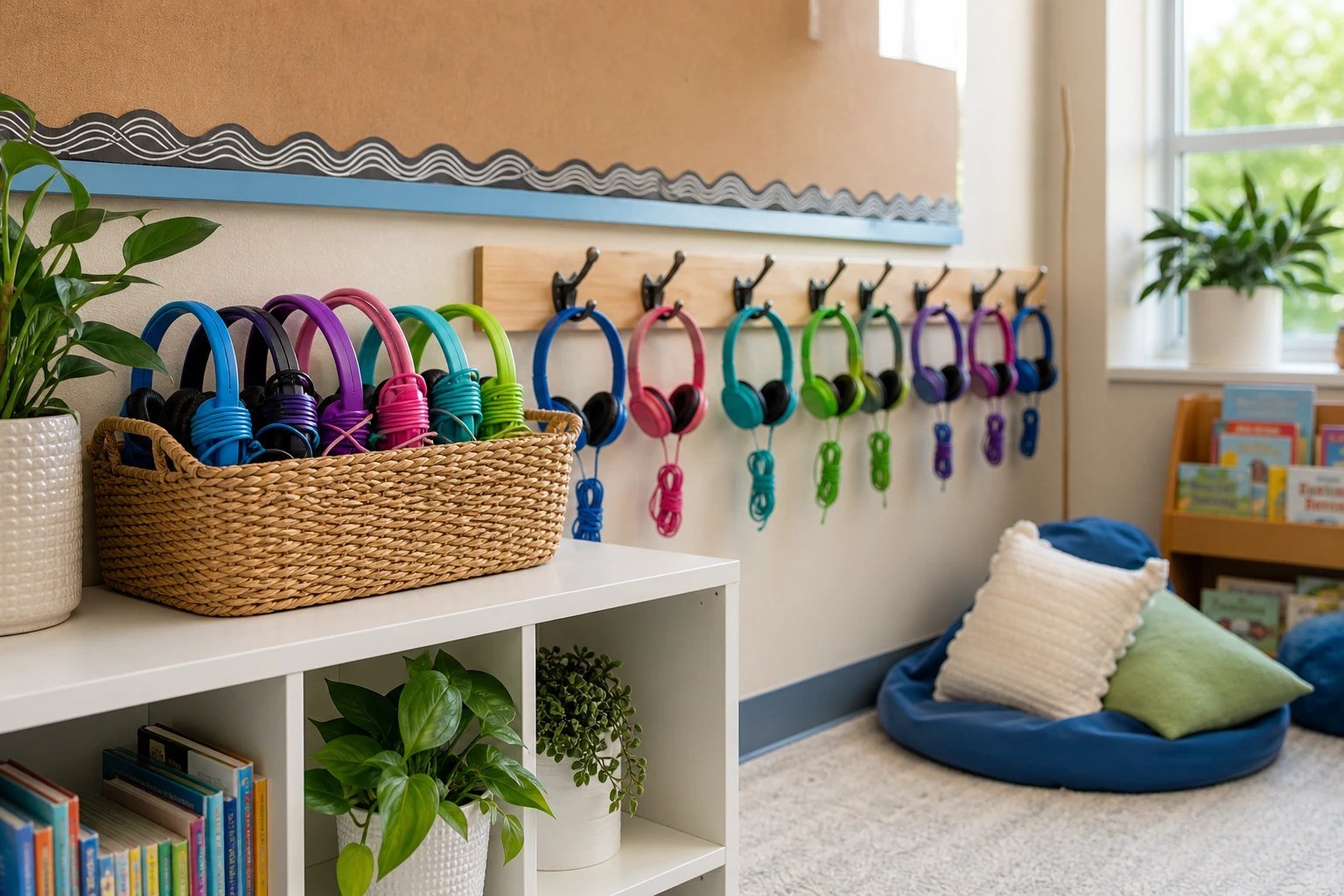
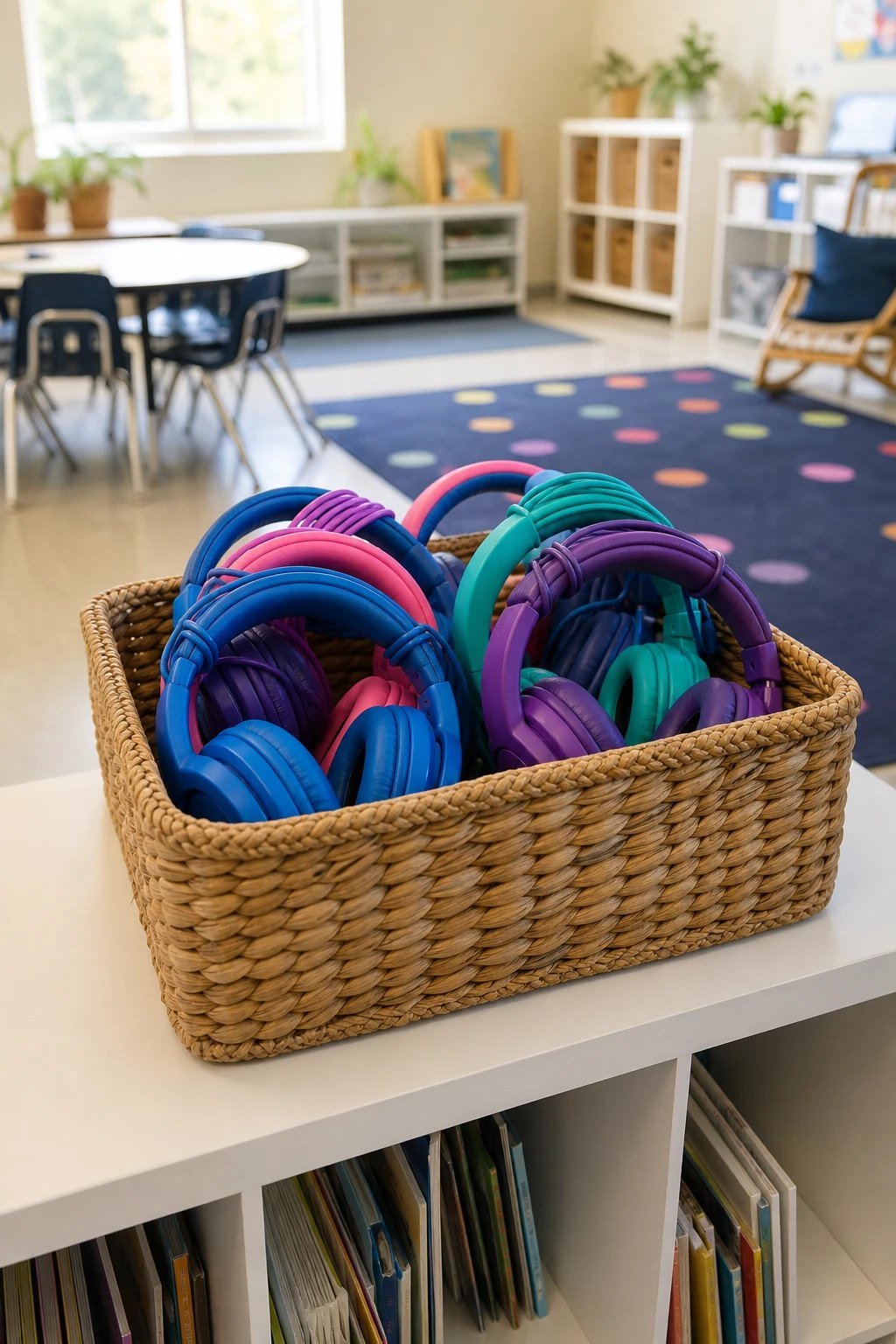
This is what we do in my classroom and it is the simplest system I have tried. Before headphones go away, each child wraps the cord neatly around the headband and tucks the plug in. Then every pair goes into one wicker storage basket that lives on a shelf. Wrapped headphones stack flat instead of knotting together, so the next person can lift one pair out without pulling out five.
The trick is teaching the wrap. Show it once on the carpet, practice it as a class, and then check the basket for a week. After that it runs itself, and the shelf looks tidy because the basket hides the cords.
Hooks and Wall Storage
2. Numbered Adhesive Hooks in a Row
 Save
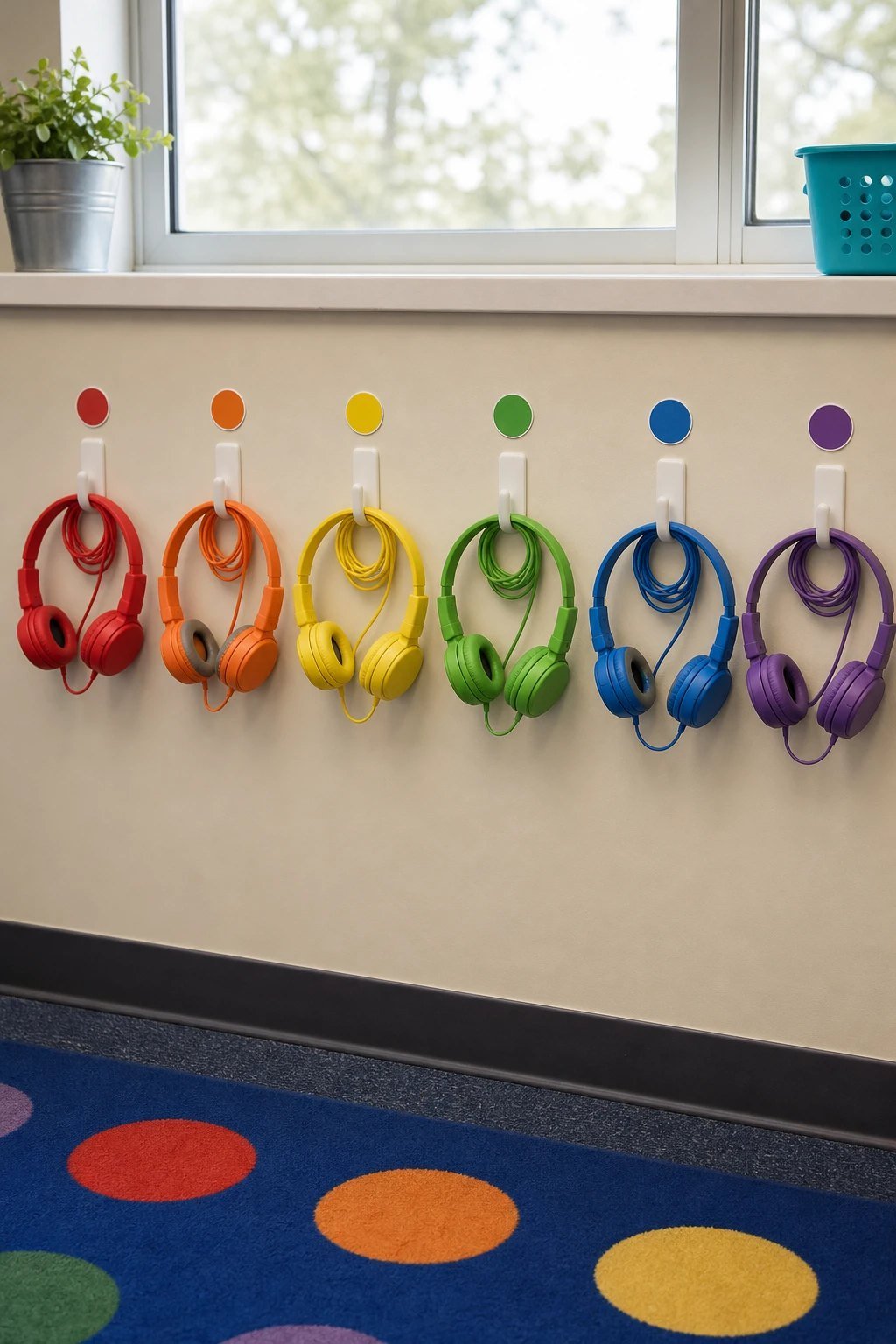
A line of small adhesive hooks along a wall, under a whiteboard ledge or on the side of a bookcase gives every pair its own spot. Add a number above each hook and it’s easy to see at a glance which pair is missing.
Put the hooks at child height and leave a hand’s width between them so cords don’t tangle with the next pair.
3. A Pegboard Headphone Station
 Save
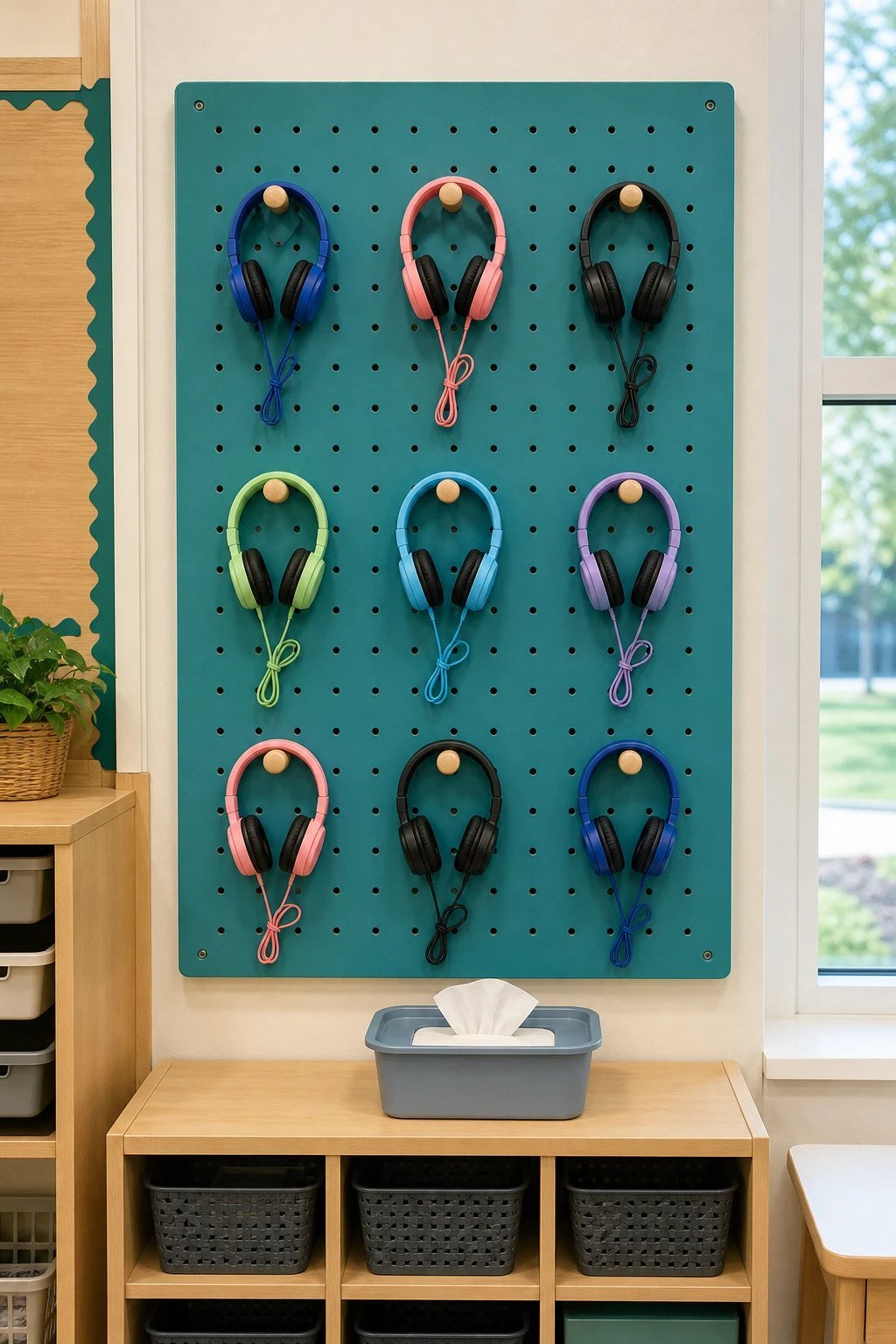
A pegboard panel with peg hooks turns a bare wall into a headphone station you can change as your class grows. Add a small bin at the bottom for spare ear covers and a cleaning wipe container.
Paint the pegboard in your room’s accent color and it looks like part of the decor, not a storage fix.


4. Hooks Inside Cabinet Doors
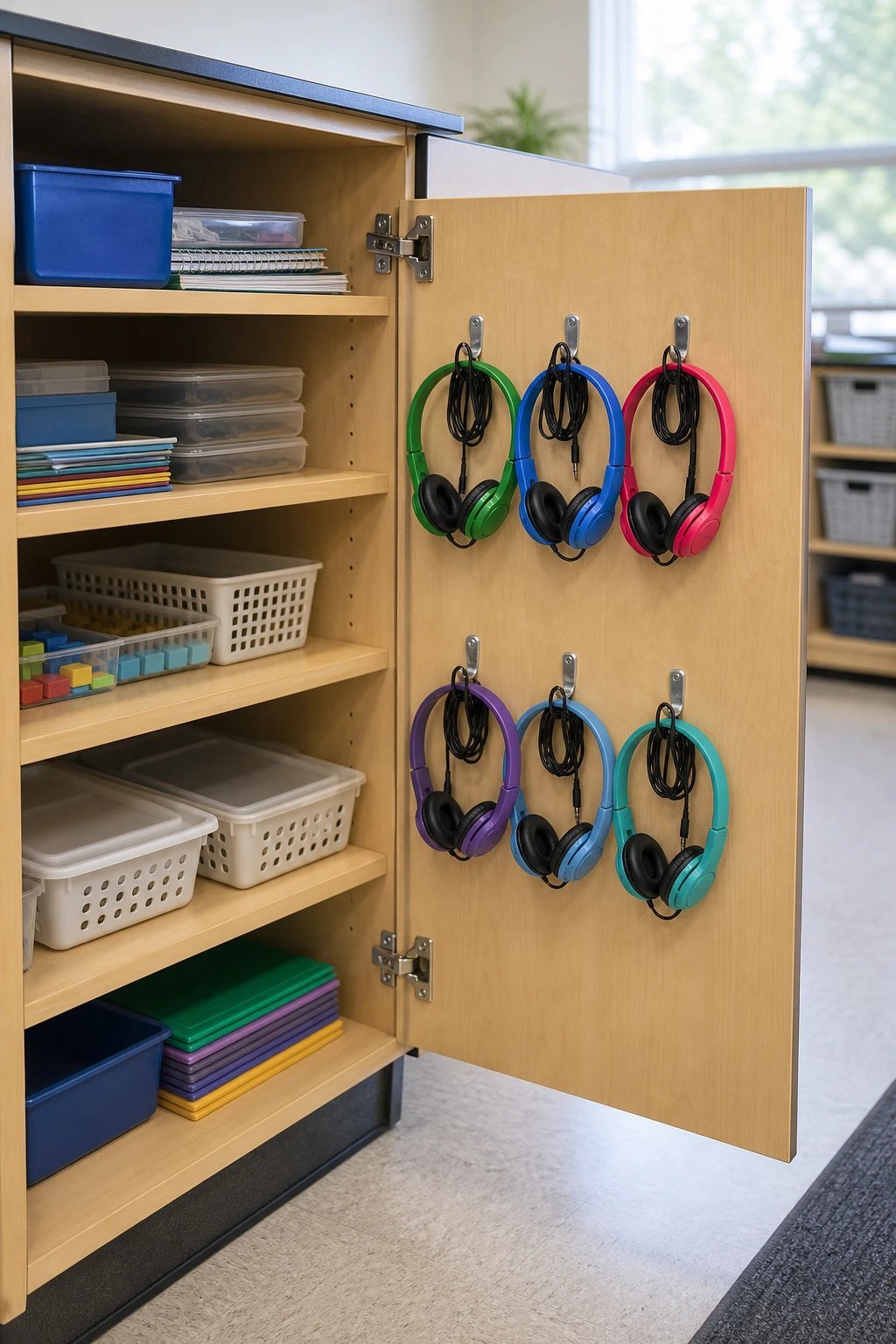 Save
If you’d rather not see headphones at all, put a row of hooks on the inside of a cupboard door. Open the door and every pair is there, close it and the room looks calm.
This works well in shared rooms where wall space is limited or you aren’t allowed to stick things on the walls.
5. Desk or Chair Hooks for One-to-One Rooms
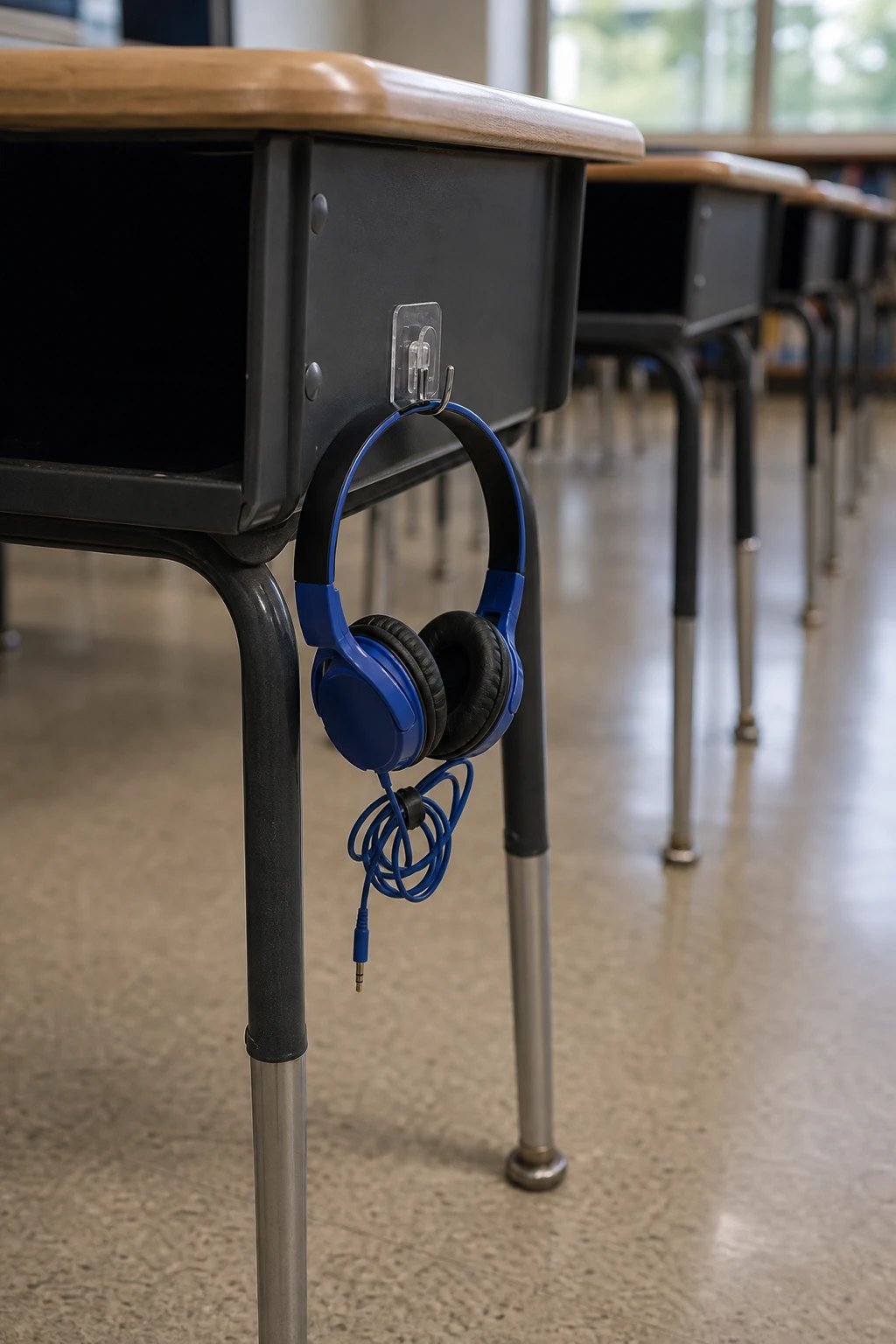 Save
If every child has their own device, a small hook on the side of each desk keeps headphones at their seat. No lining up, no swapping, and they go straight into the bag at the end of the day if they come from home.
Use clear hooks so they blend in, and check they don’t stick out into walkways.
Bins, Pouches and Pockets
6. Numbered Pouches or Zip Bags
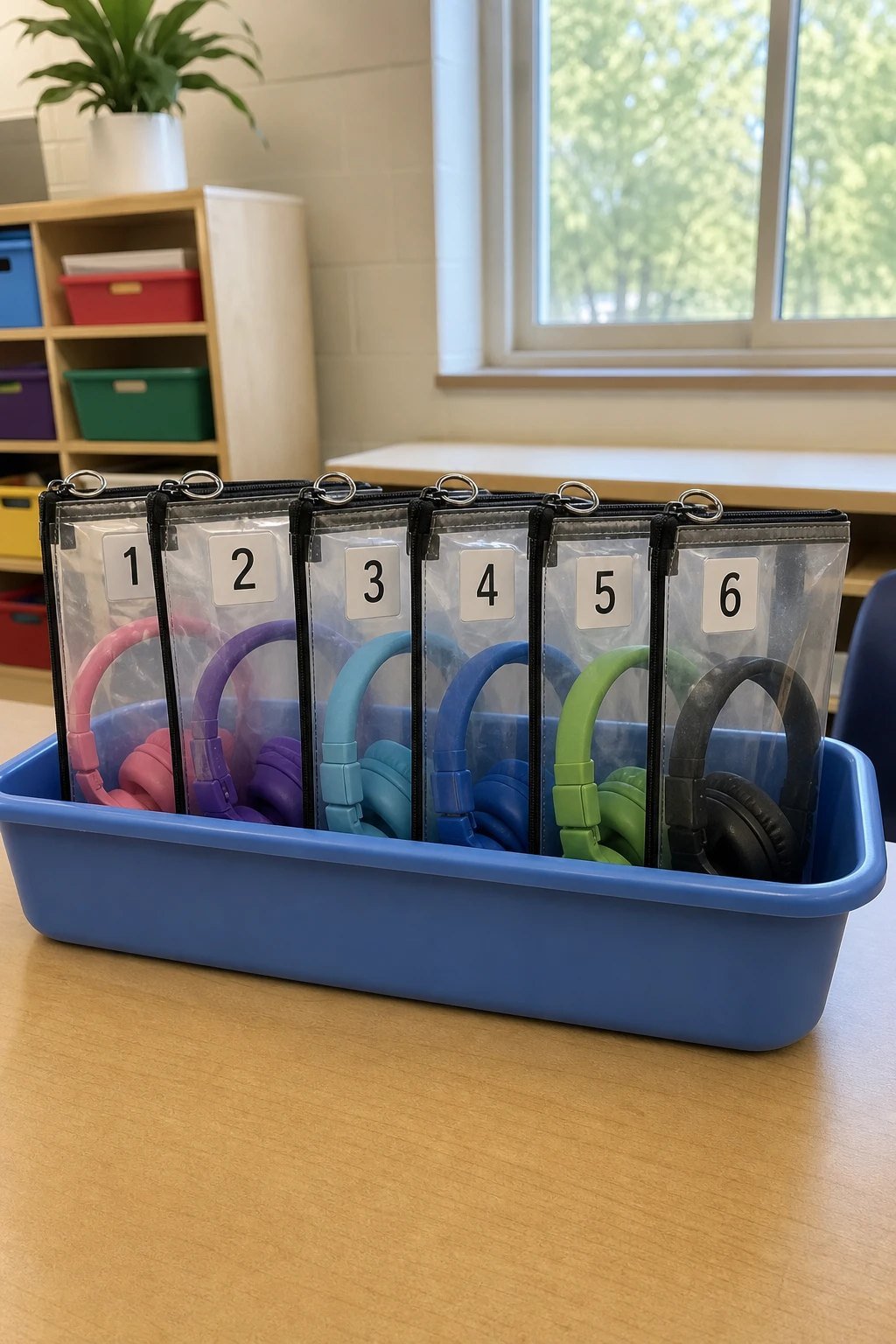 Save
Giving every child their own pouch is the most hygienic option. Number the pouches, keep them standing up in a bin, and the headphones never touch each other. It also stops the “that’s my pair” arguments.
Pencil pouches with a clear window are easiest, because children can see the number from the top of the bin.
7. An Over the Door Hook Rack
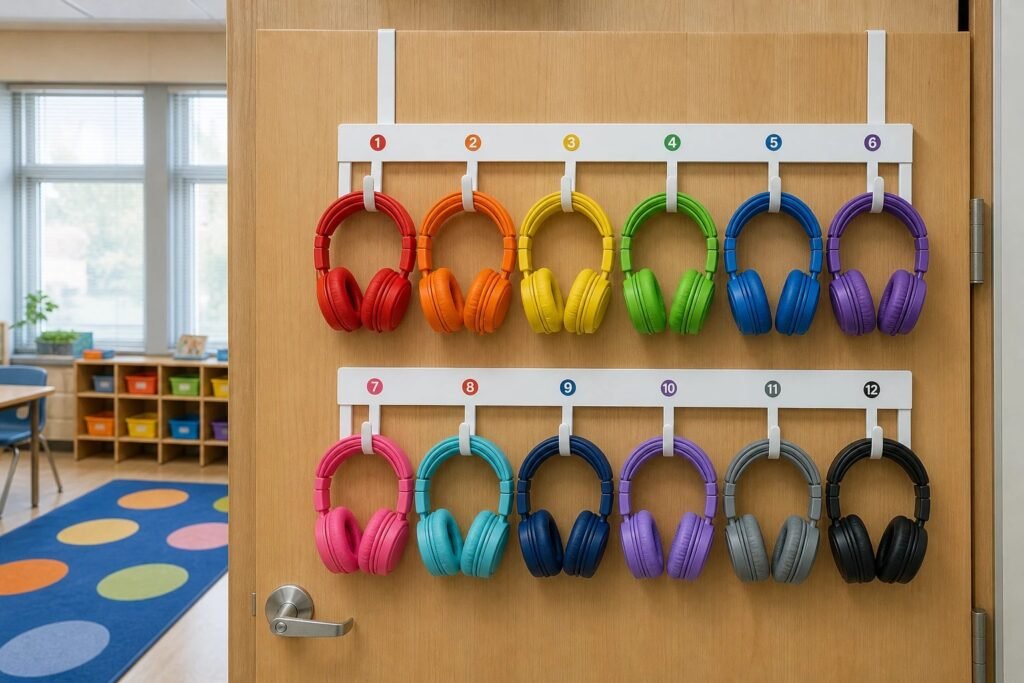 Save
An over the door hook rack gives you two rows of hooks without using any wall space. Hang one pair on each hook, put a number above it, and the back of the door becomes your headphone station.
Pick a rack with deep hooks so full size headphones hang without slipping off. If your class uses earbuds instead, a clear over the door pocket organizer works well, because earbuds fit the small pockets.


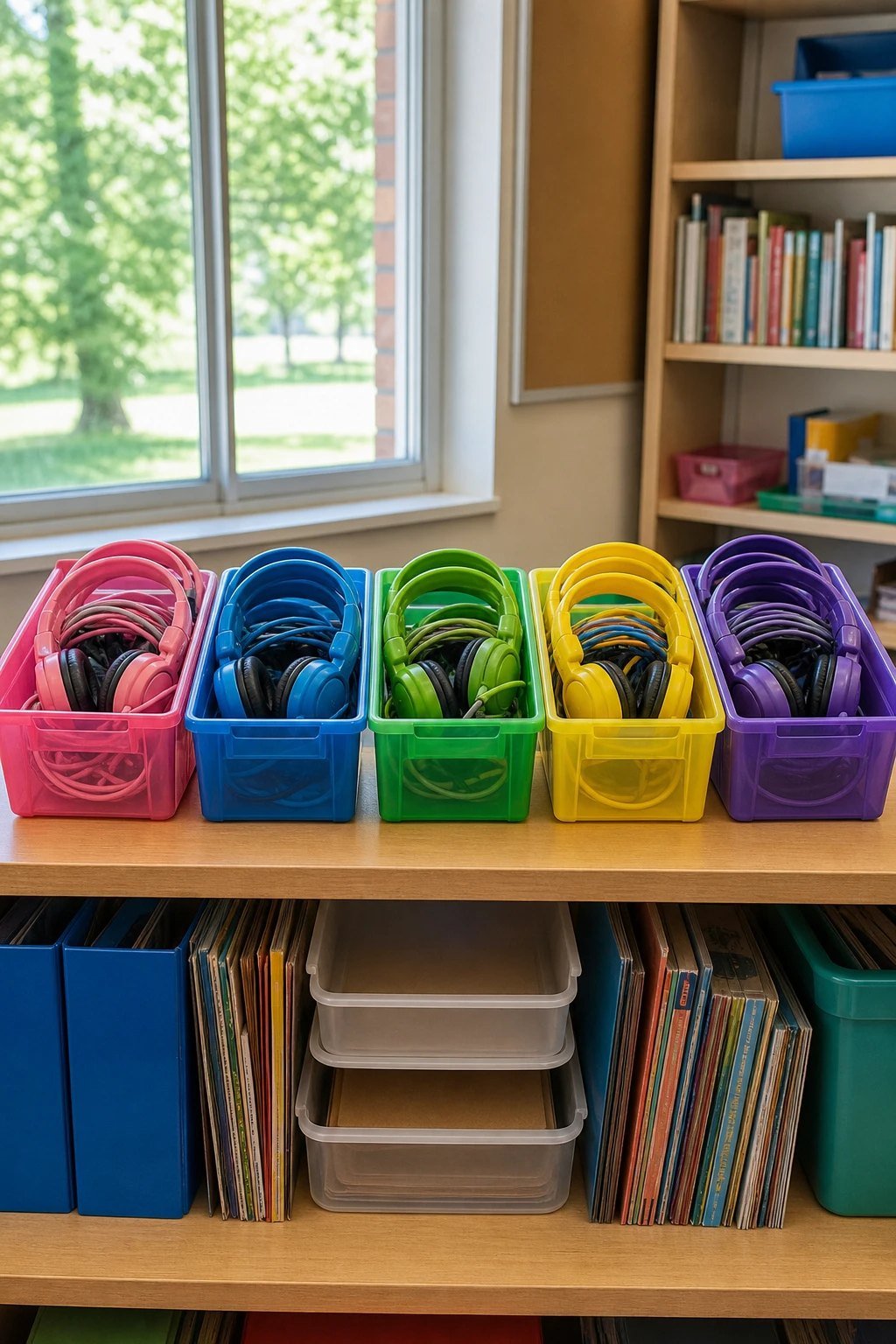
8. One Bin per Table Group
 Save
If your class works in table groups, give each table a labeled shoebox bin with that table’s headphones. The table captain gets the bin out and puts it back, and you only have five or six bins to check, not 25 pairs.
Match the bin color to your table group colors so younger children can find theirs without reading.
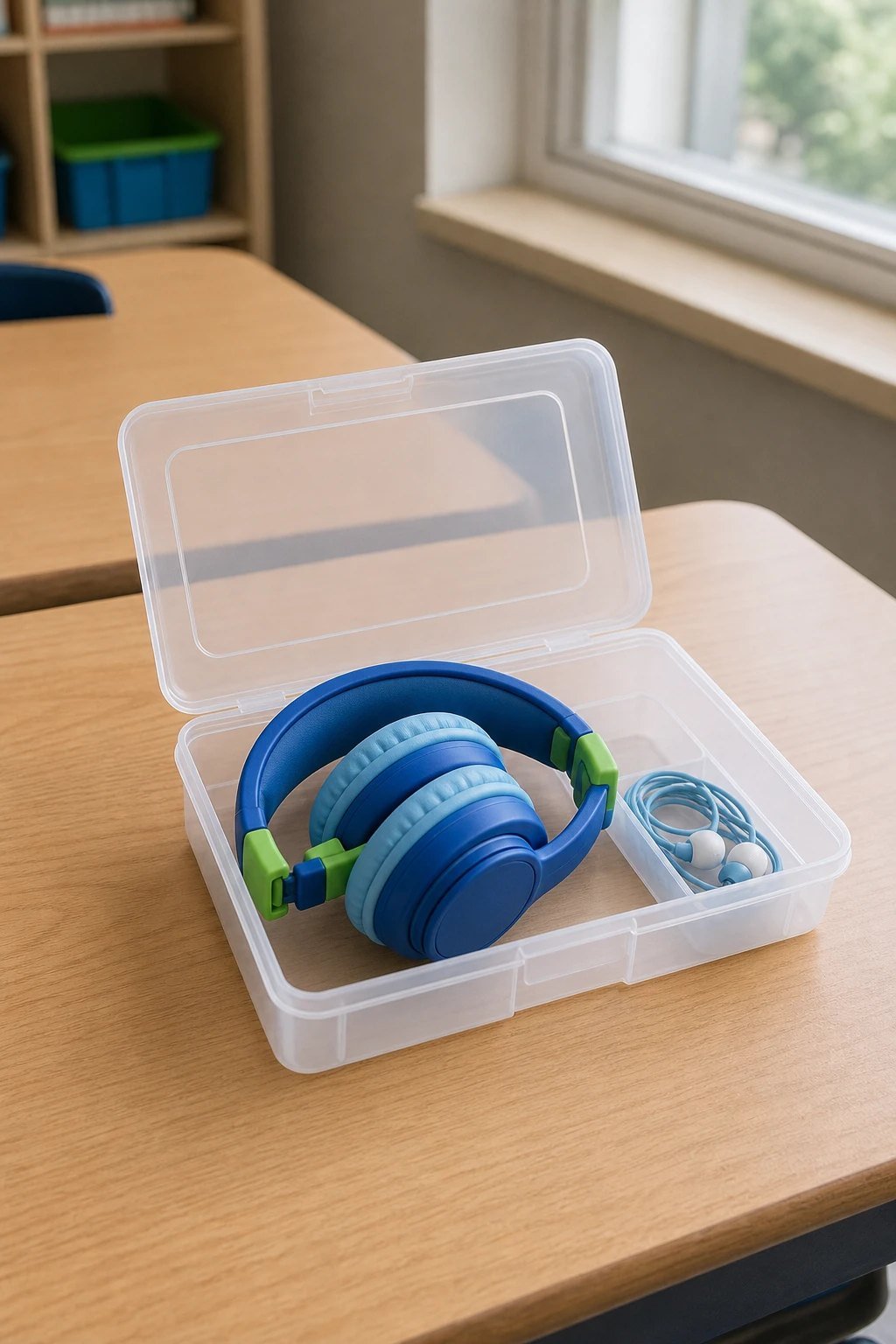
9. A Pencil Box per Child
 Save
Earbuds and small folding headphones fit in a pencil box. Children keep the box in their desk or cubby, which makes it a good fit for older grades and for headphones that come from home.
Ask families to label the box and the headphones with the same name or number.
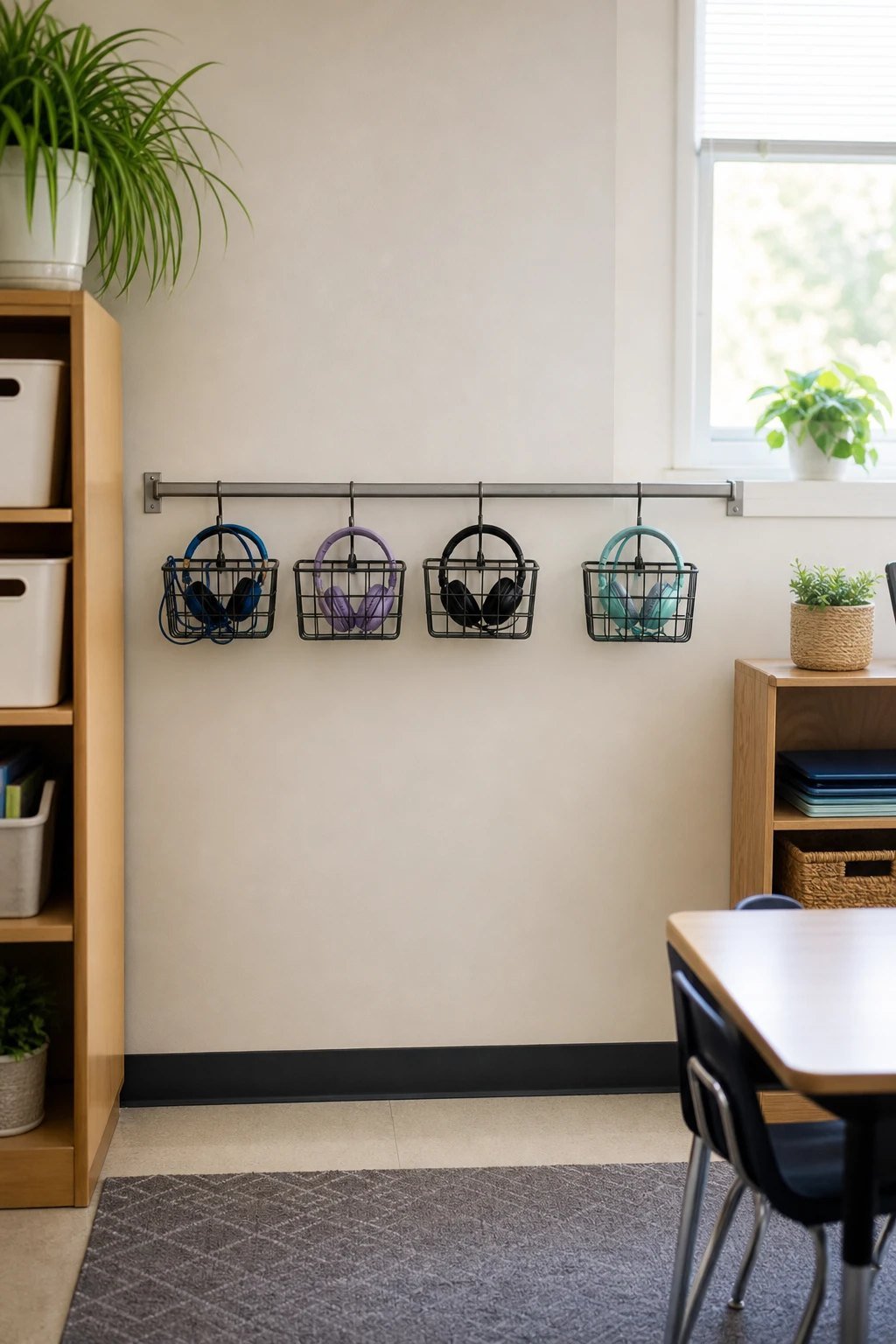
10. Hanging Baskets on a Rail
 Save
A wall rail with small hanging baskets keeps headphones up off surfaces. Each basket holds a few pairs, so you can split them by table or by number range.
Pick baskets with an open weave so you can see what is inside without taking them down.
Tech Corners and Charging
11. A Labeled Charging Station
 Save
Wireless headphones need charging, and a charging station with numbered slots solves storage and charging in one go. Children put their pair in its slot, plug it in, and you can see which ones are missing or still flat.
Keep a laminated card next to it with the steps in pictures: wrap, slot, plug in.
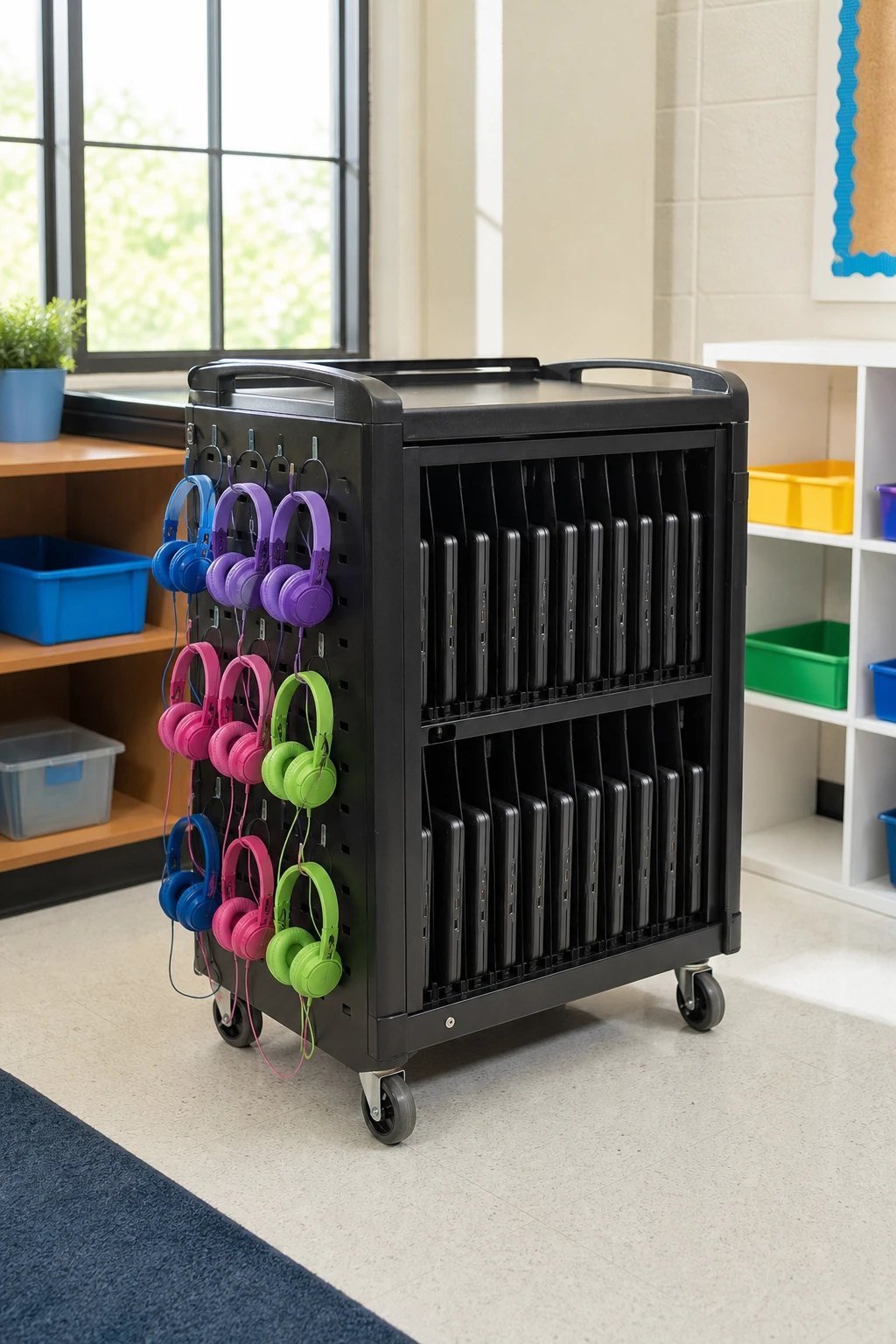
12. A Rolling Cart for Shared Devices
 Save
If headphones travel with laptops or tablets, keep them on the same rolling cart. Hang a pair on hooks along the side of the cart for each device number so they always go out together.
Number the device and the headphones the same, and nothing gets mixed up between classes.


13. An Upright File Sorter
 Save
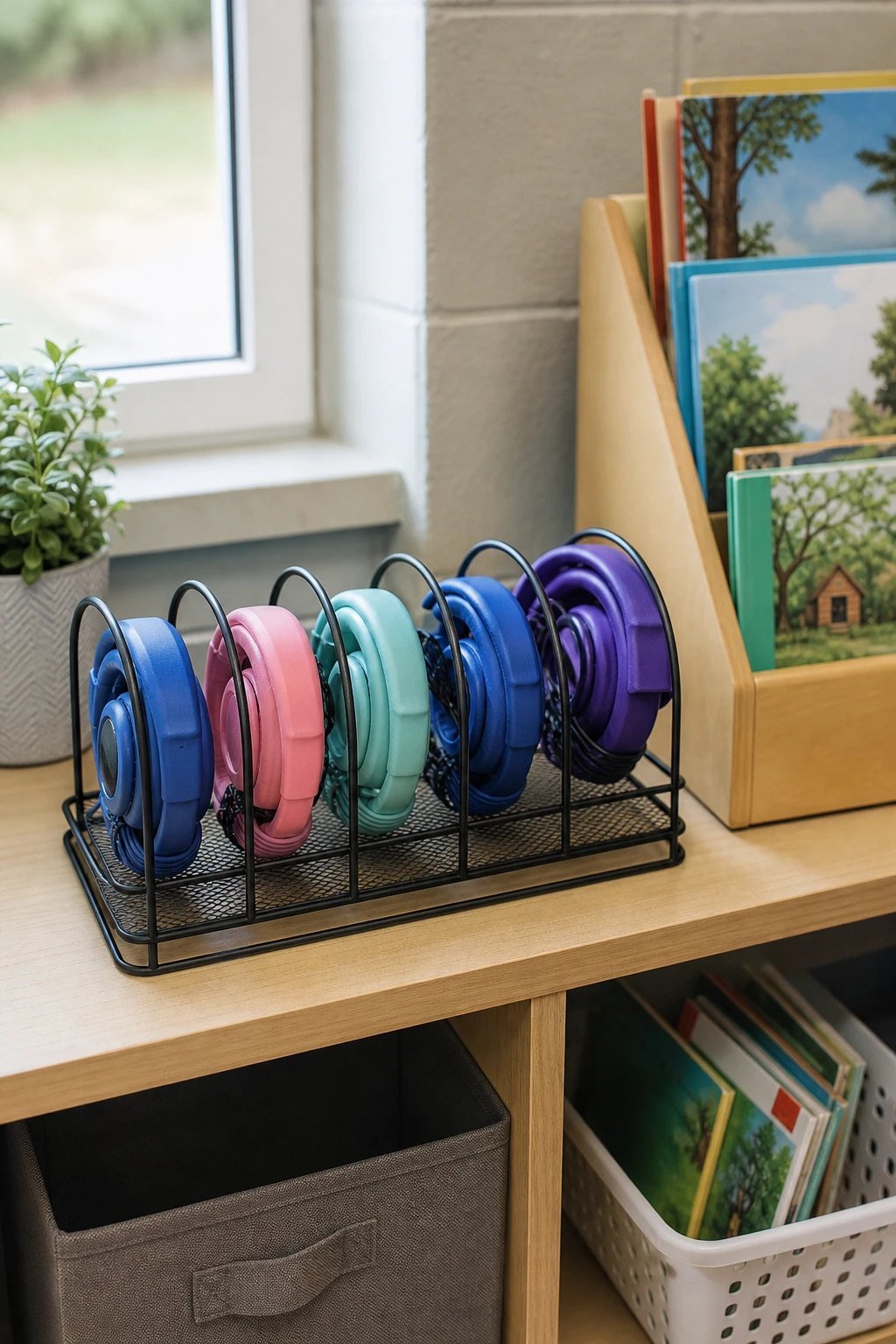
A metal desktop file sorter holds folded headphones upright, one per slot. It’s cheap, it takes up almost no space on a shelf, and it works well in a small listening center.
Put a strip of tape with numbers along the front edge of each slot.
14. Velcro Cable Ties on Every Cord
 Save
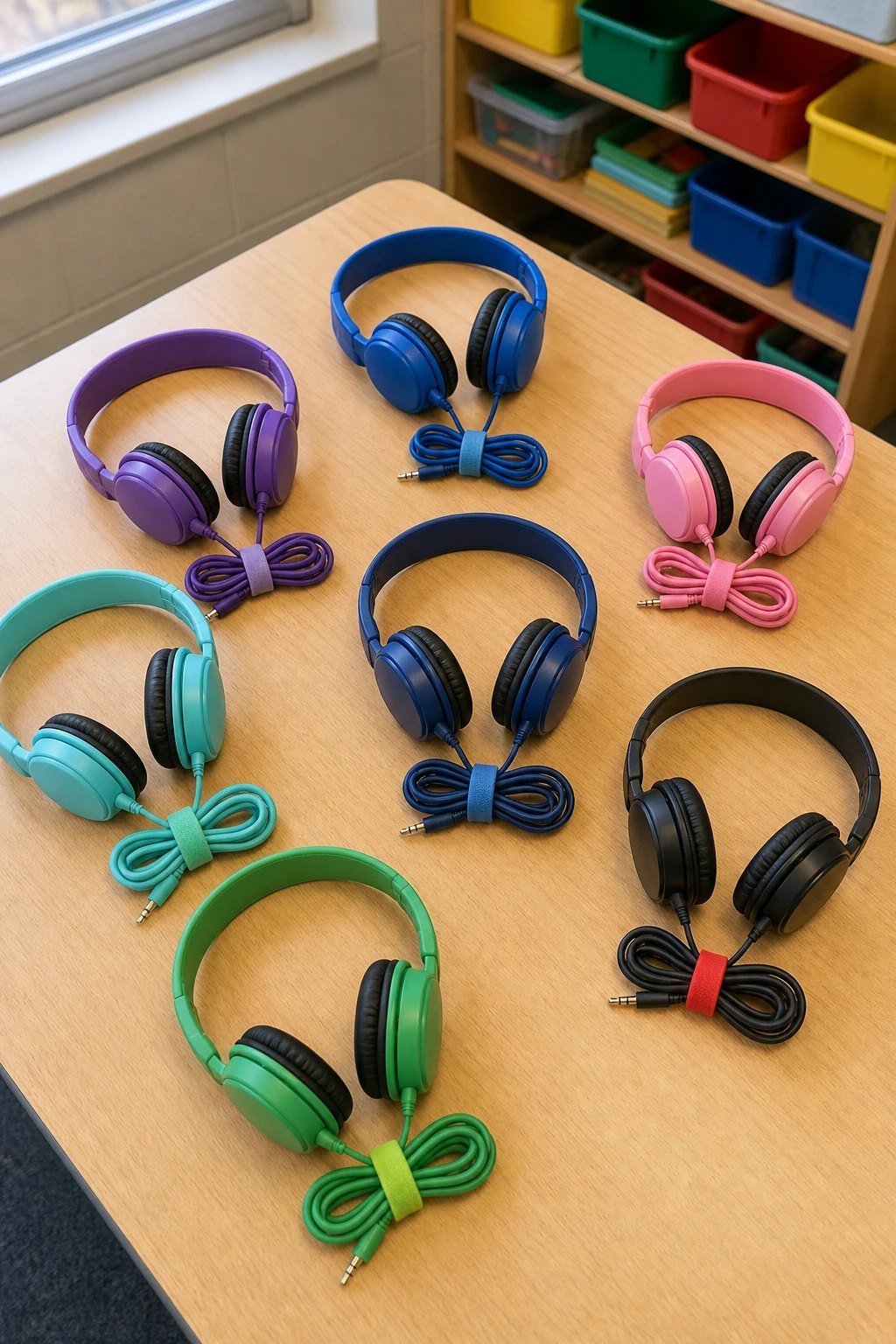
Even the best storage fails if cords flop around. A small reusable cable tie on each cord means children wrap the cord, close the tie, and the pair stays neat wherever it is stored.
Give each pair a different colored tie and you have a second way to match pairs to children.
How to Keep Classroom Headphones Clean
- One pair per child where you can. Shared headphones spread colds and nits faster than anything else in the room.
- Disposable ear covers slip over the ear cushions and can be changed every week or every term.
- Wipe them on a schedule. A quick wipe with a cleaning wipe every Friday is enough for most rooms. Follow your school’s guidance on which wipes to use.
- Keep a spare pair or two for days when a pair breaks or someone forgets theirs.
Teach the Routine, Not Just the Storage
- Model the wrap on the carpet in the first week and practice it like any other routine.
- Make it a class job. A headphone helper checks the basket, hooks or bin at the end of the day.
- Use the same words every time, like “wrap, tuck, basket”, so it becomes automatic.
- Check for a week, then only spot check. Once it’s a habit, it takes care of itself.
Ready-to-print charts and calm corner kits for your classroom, made by a teacher.
Browse the Shinku shop on EtsyKeep reading
- Classroom water bottle storage ideas
- 12 classroom storage ideas that don’t look messy
- 9 multi-use storage solutions teachers swear by
- Classroom library organization ideas
- Classroom job chart ideas that run themselves
- Classroom must-haves
Frequently asked questions
Give every pair a number, wrap the cord around the headband, and store them in one place children can reach, like a basket on a shelf, numbered hooks or numbered pouches in a bin. Teach the routine in the first week so children put them away the same way every time.
Wrap the cord around the headband before storing, or close it with a small reusable cable tie. Store each pair separately on a hook, in a pouch or stacked flat in a basket so the cords never get loose together.
It’s best if each child has their own pair. If you have to share, use disposable ear covers, wipe them regularly, and number the pairs so the same child uses the same pair each time.
Somewhere near where they are used, at child height, and away from the sink. Next to your computers, listening center or device cart works best, so children aren’t walking across the room with cords trailing.
Images in this post were created with AI to show each idea. This post contains affiliate links, so we may earn a small commission at no extra cost to you.