
Some links in this post are affiliate links. If you buy through one, I may earn a small commission at no extra cost to you. As an Amazon Associate I earn from qualifying purchases.
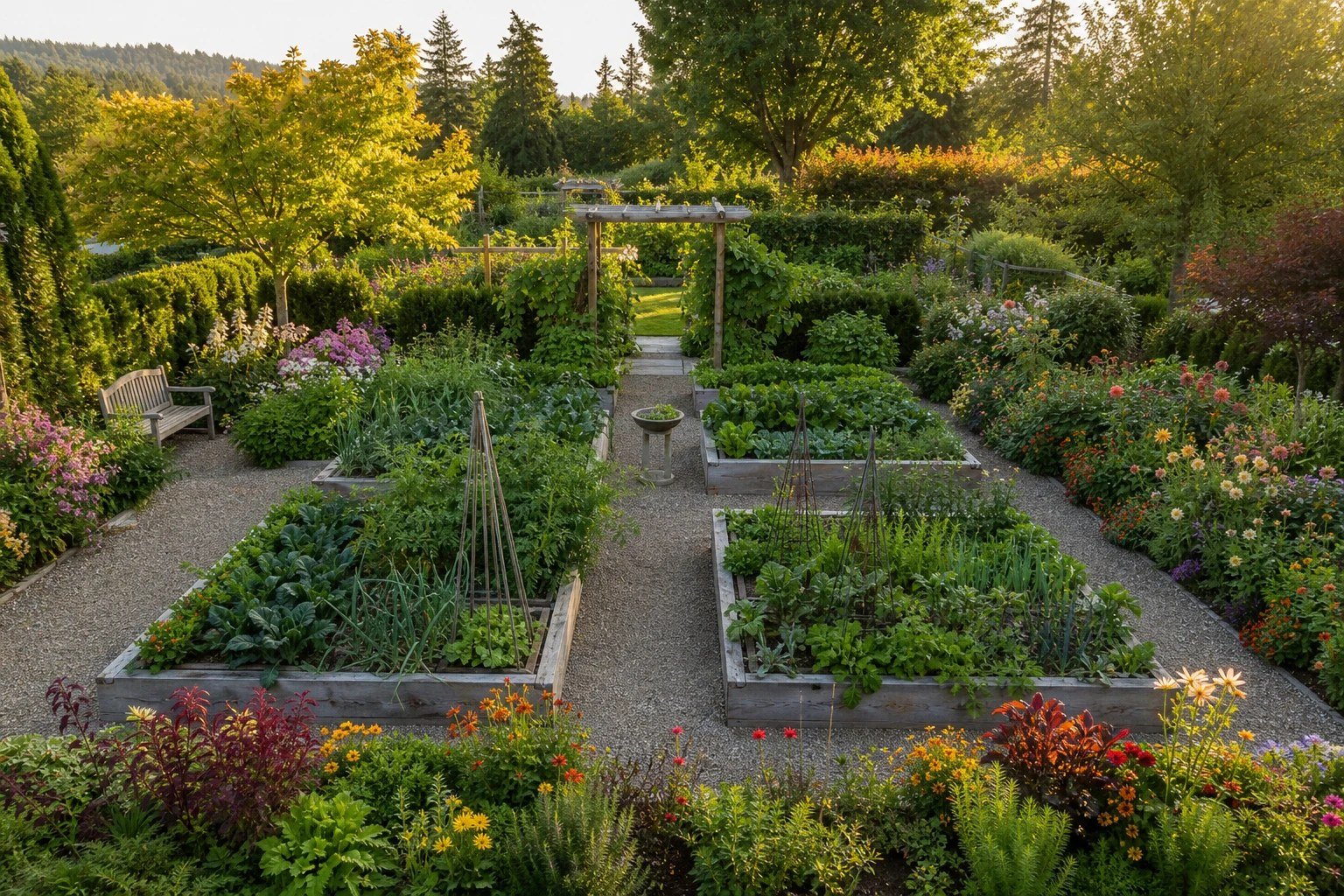
The short answer: start with the sunniest spot you have (6 to 8 hours of sun for vegetables), keep beds 4 feet wide or less so you can reach the middle, and leave paths at least 2 feet wide. Run vegetable rows north to south so plants don’t shade each other, put tall crops on the north side, and keep herbs and salad closest to the kitchen door, because the garden you walk past every day is the one you look after.
Updated November 2026.
A good garden layout makes everything easier: watering, weeding, harvesting and even just enjoying the view. Below are 18 garden layout ideas, from classic four-square vegetable gardens and square foot plans to cut flower rows, cottage borders and shade gardens, plus the simple planning steps that help you sketch your own layout before spring.
Vegetable Garden Layouts
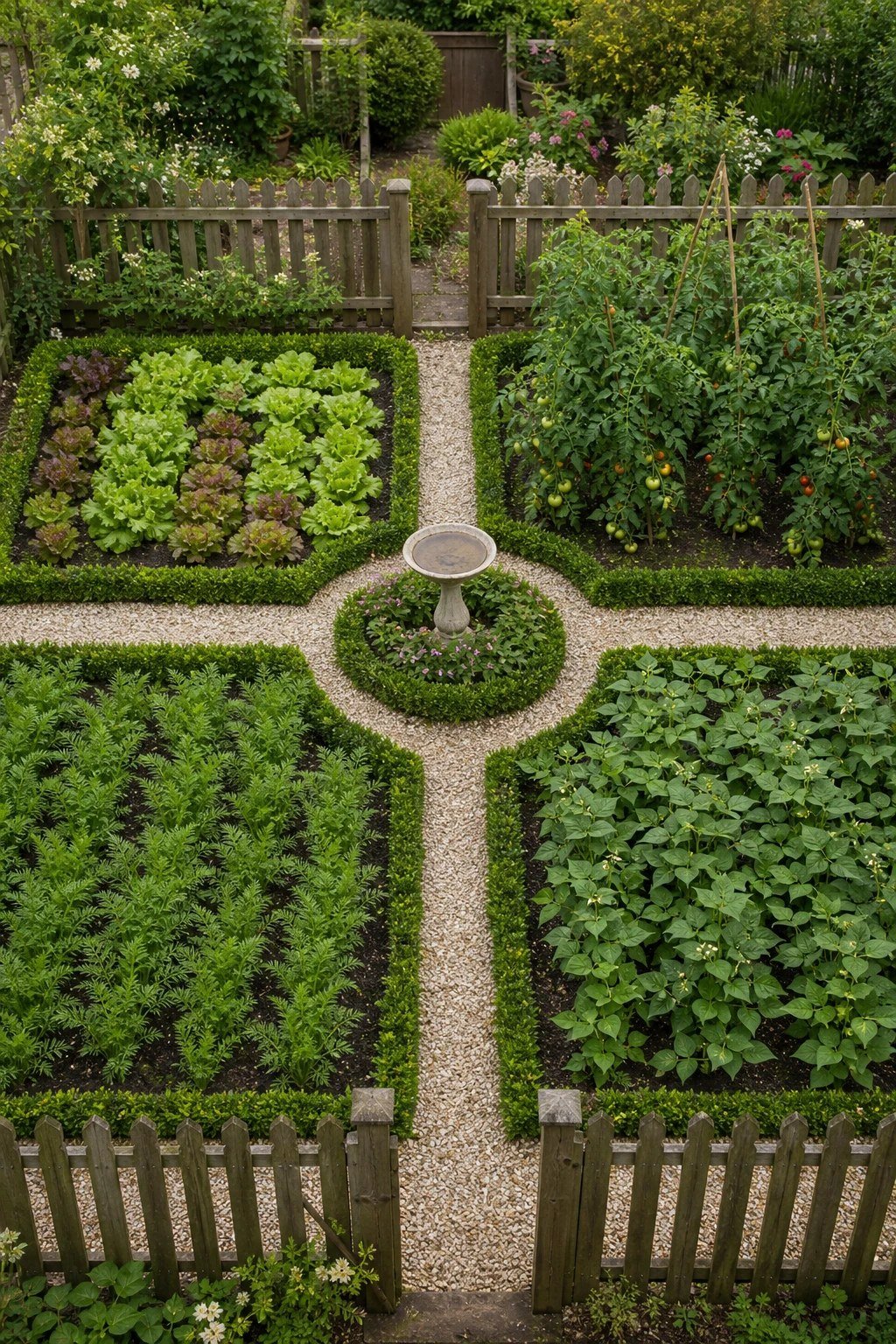
1. A Classic Four-Square Vegetable Garden
 Save
Four equal beds around a cross of paths is the oldest kitchen garden layout there is, and it still works. It makes crop rotation simple: tomatoes, roots, leafy greens and beans each get a square, and everything moves one square over next year.
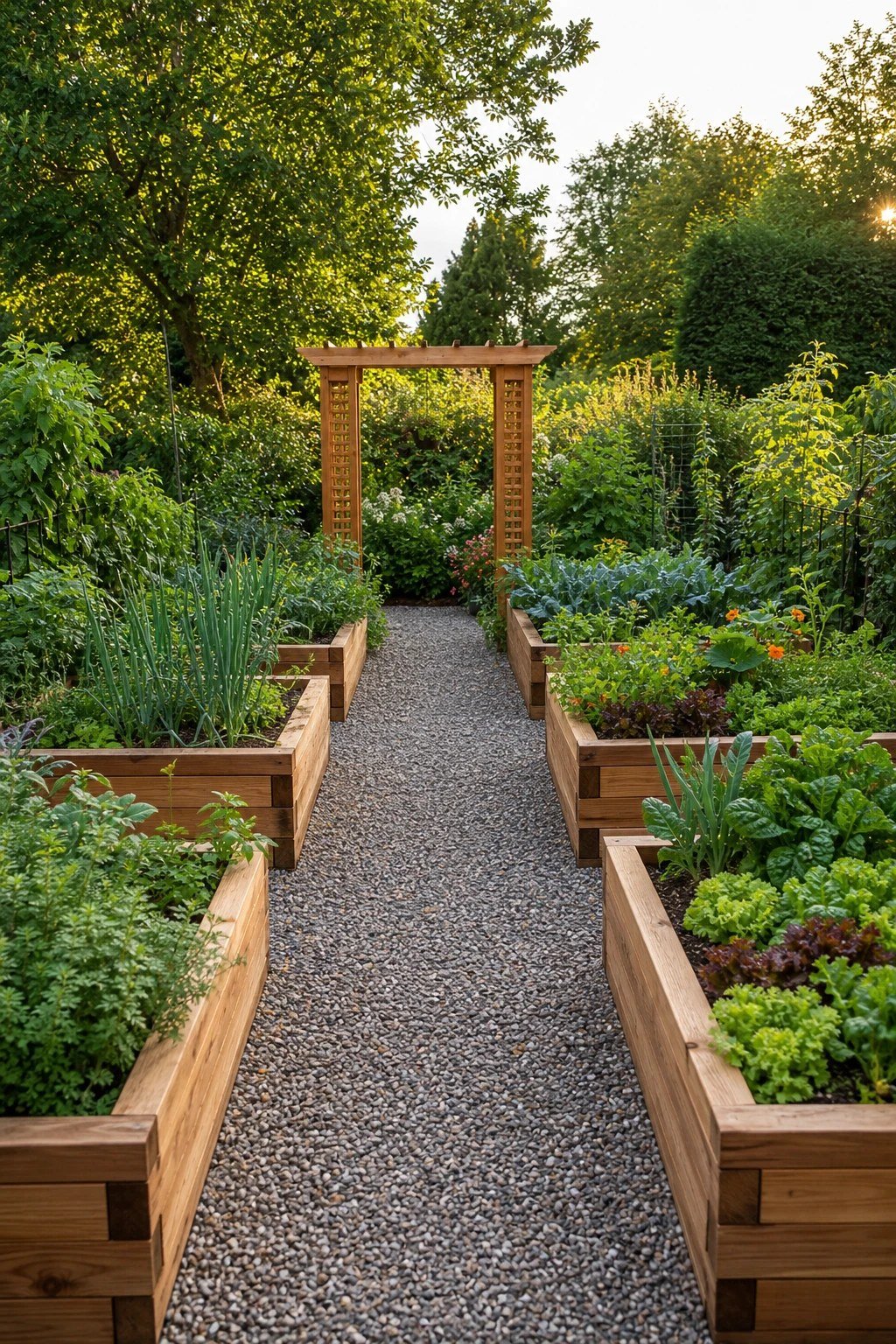
2. A Raised Bed Grid With One Wide Center Path
 Save
Line raised beds up on either side of one wide central path, about 3 feet across so a wheelbarrow fits. Every bed is reachable from the path, and the straight line pulls your eye down the garden so even a small yard feels planned.
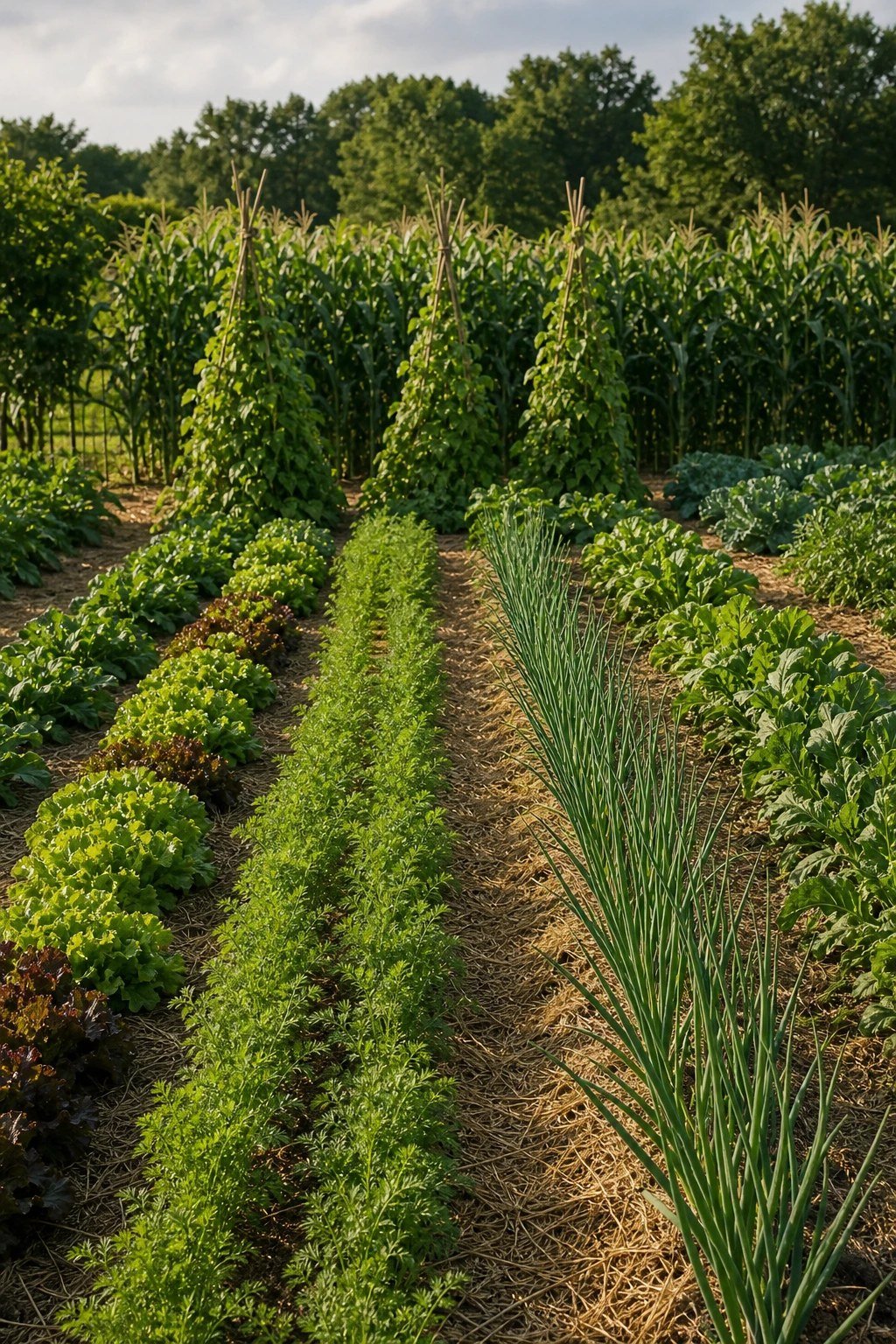
3. Rows Running North to South
 Save
For an in-ground vegetable garden, run your rows north to south. Both sides of every row get sun during the day, and plants don’t shade each other. Put tall crops like corn, pole beans and tomatoes at the north end so they never block the short ones.
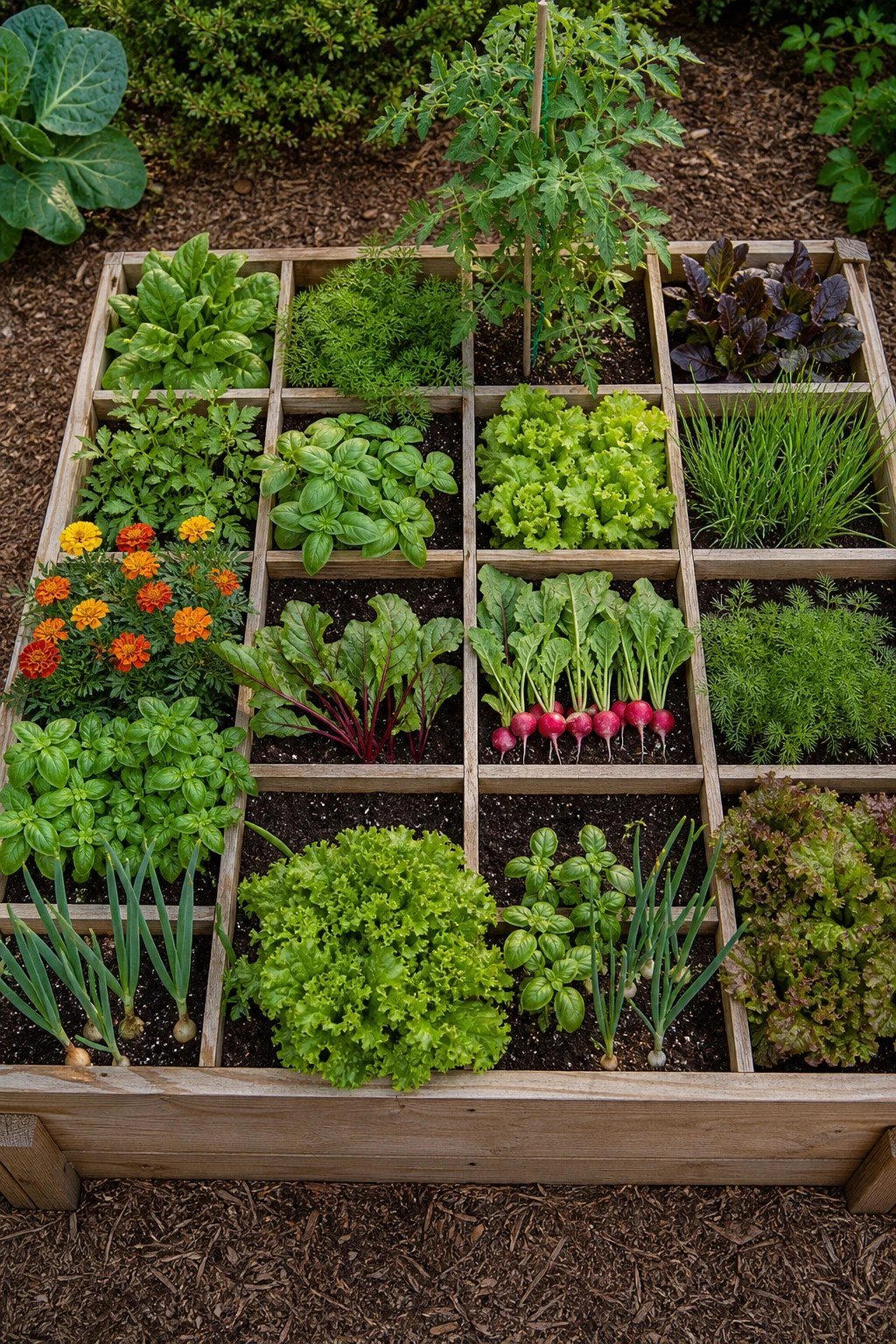
4. A Square Foot Garden Plan
 Save
Square foot gardening divides a 4 by 4 foot bed into 16 one-foot squares with a simple grid of string or thin slats. Each square holds one tomato, four lettuces, nine bush beans or sixteen carrots, so you grow a lot of food in a small space with almost no wasted soil.


5. A Formal Potager With Brick Paths
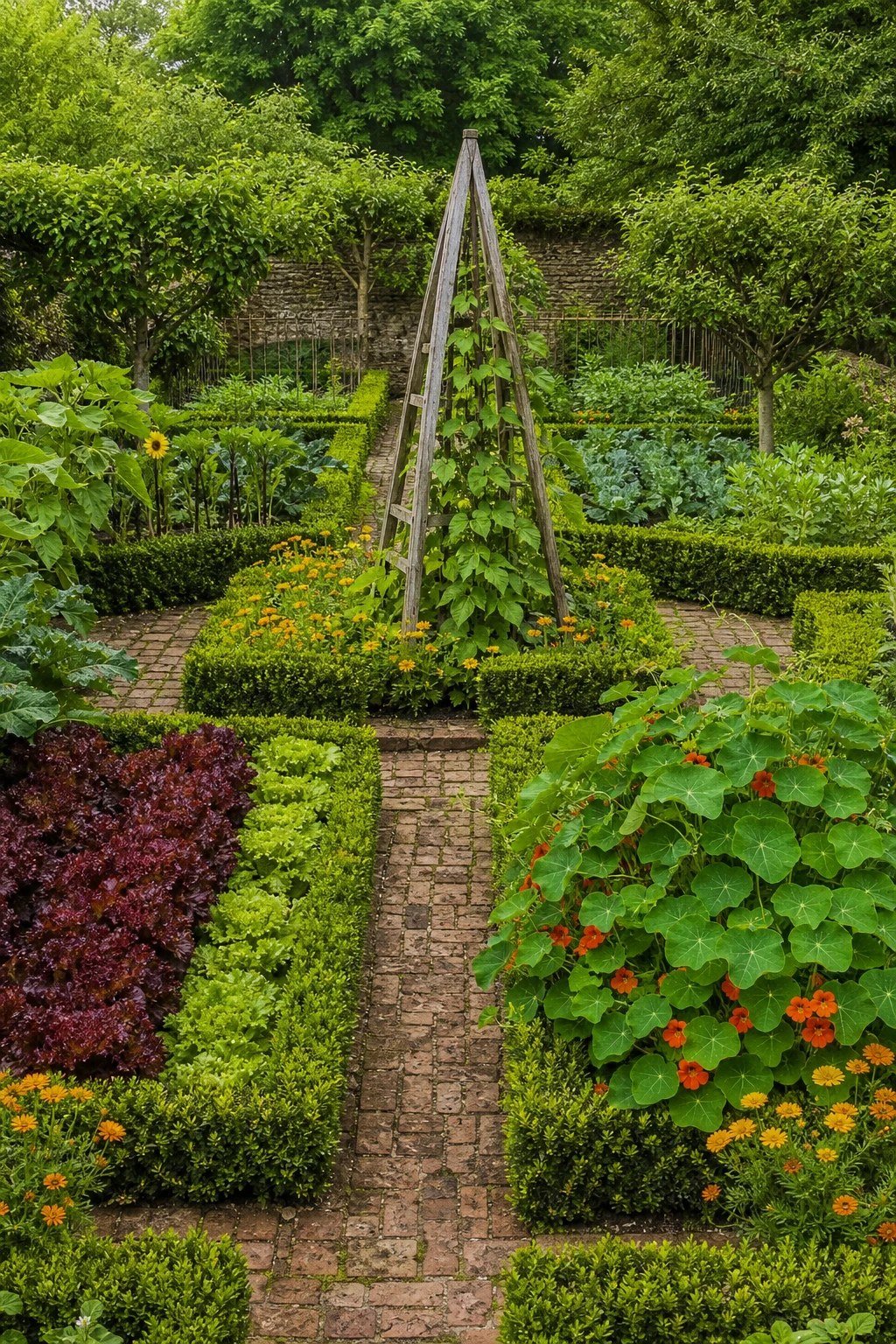 Save
A potager mixes vegetables, herbs and flowers in neat, patterned beds edged with brick paths. Plant lettuces in rows of alternating colors, tuck nasturtiums and calendula into the corners, and finish with a small obelisk or arch for climbing beans.
Small Garden and Backyard Layouts
6. A Long Narrow Garden Split Into Rooms
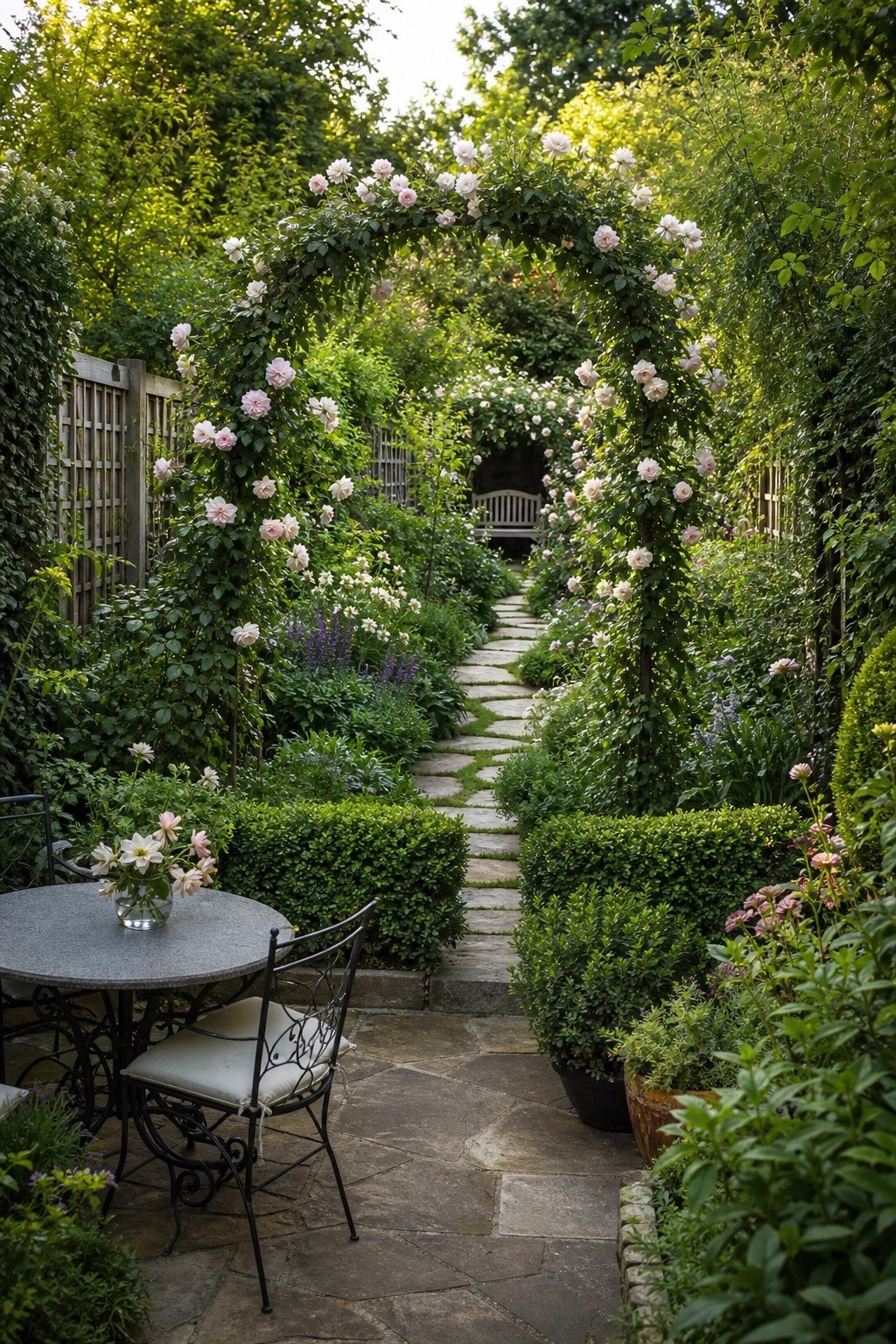 Save
A long, thin backyard feels bigger when you split it into two or three garden rooms. Use a low hedge, an arch or a change of path material to break it up, so there is a patio at the house, a planting area in the middle and a hidden seat at the end.
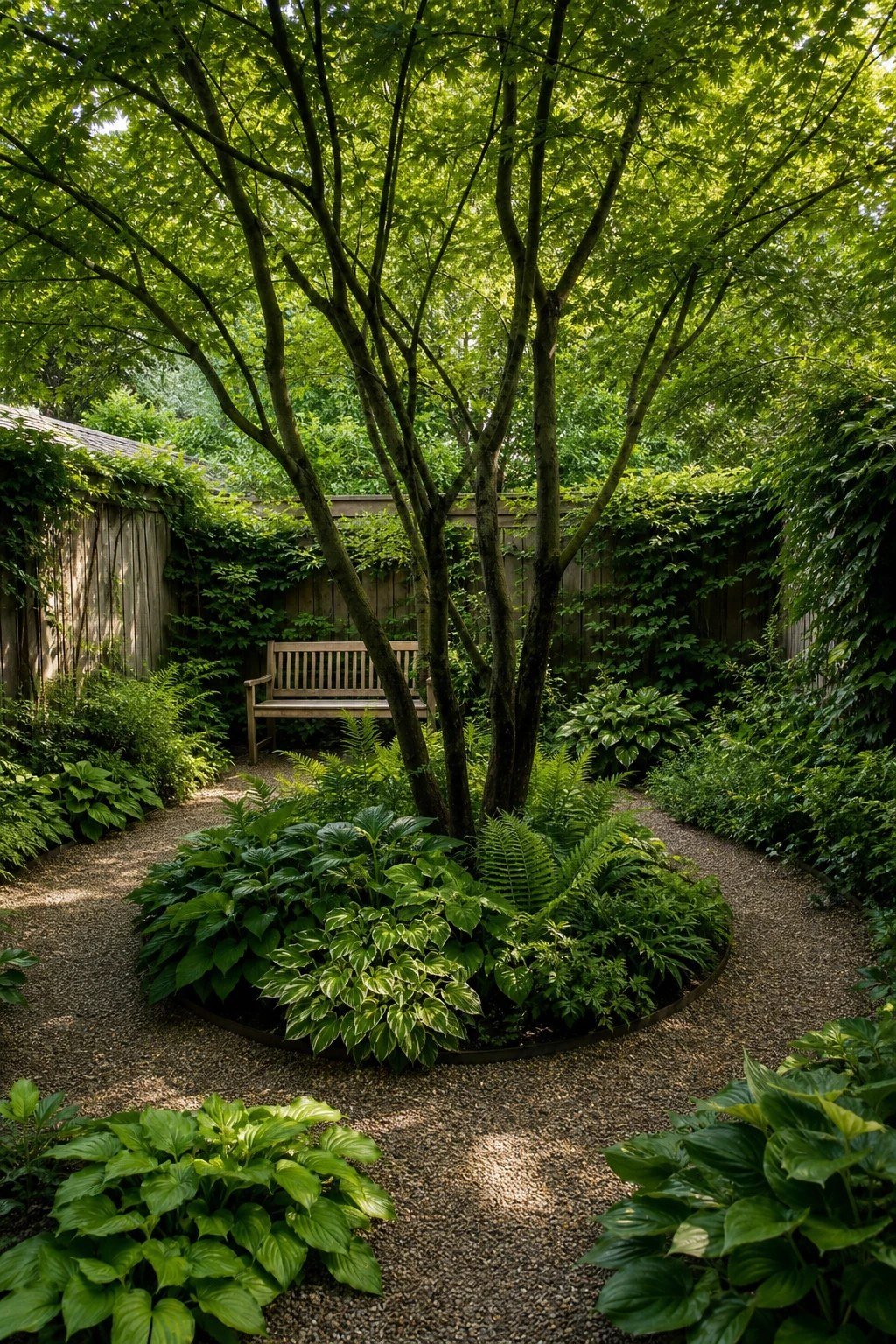
7. A Small Backyard Garden Around One Tree
 Save
In a small yard, make one tree the center of the whole layout. A round bed of shade-loving plants under it, a curved path around it and a bench facing it gives the garden a focal point and makes the space feel designed rather than leftover.
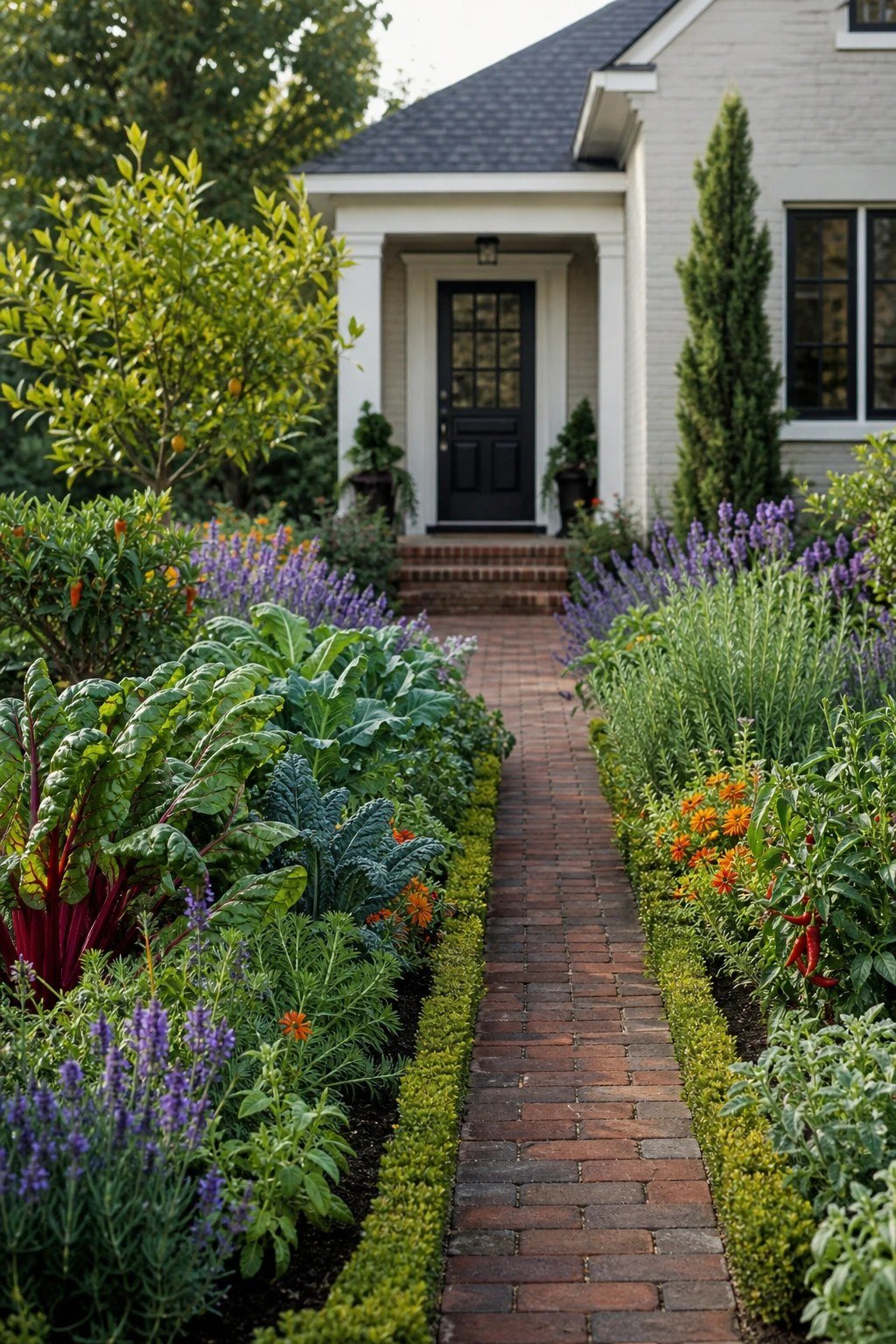
8. A Front Yard Edible Garden
 Save
A front yard garden can look as neat as any flower bed. Use low, tidy edging, mix vegetables with flowers and herbs, and keep the design symmetrical along the front path. Kale, chard, peppers and herbs look as good as ornamental plants.
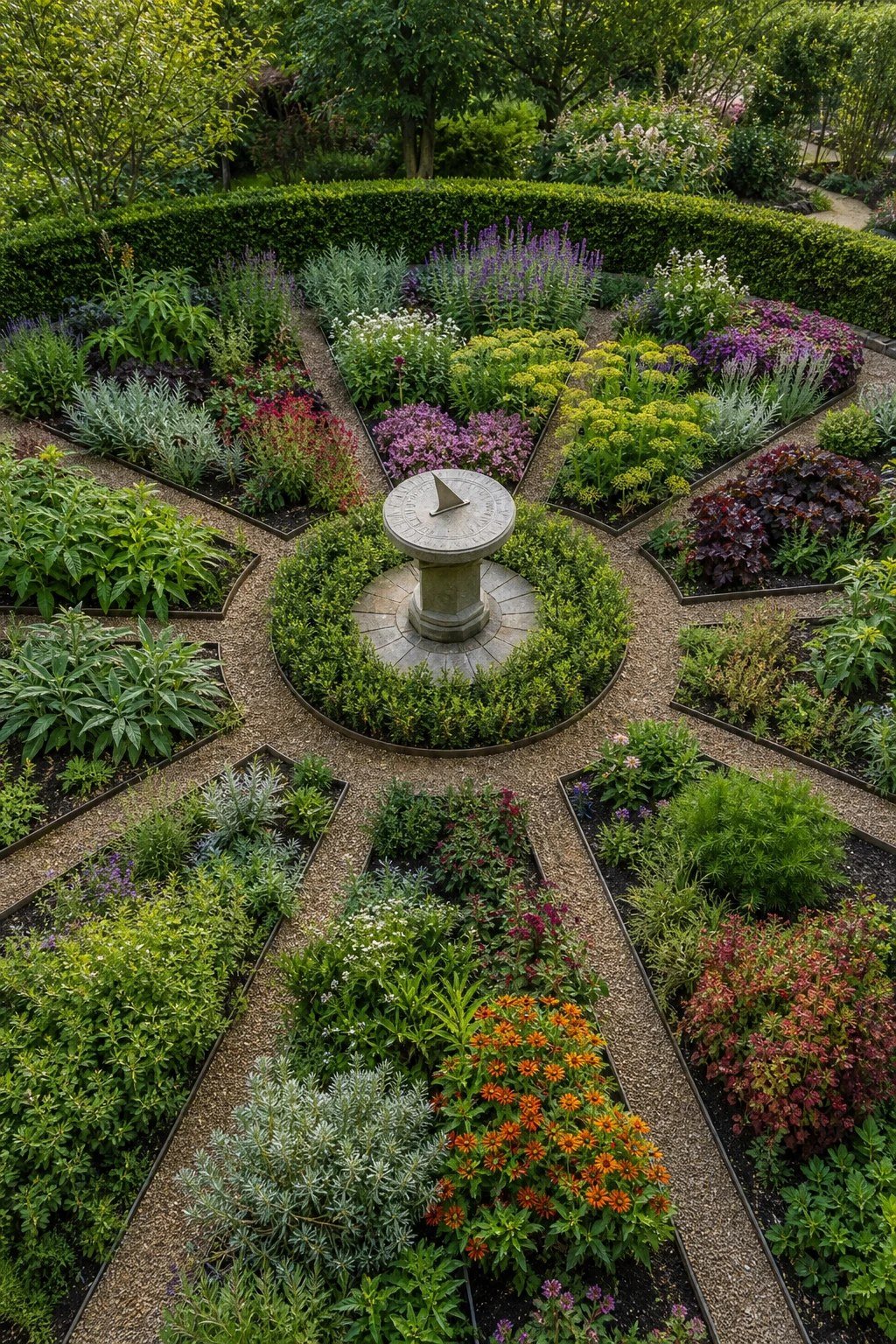
9. A Circular Garden With a Center Feature
 Save
Circles soften a square yard instantly. Lay out beds as rings or wedges around a center point, like a birdbath, a sundial or a small water feature. Wedge-shaped beds are easy to reach and the paths between them meet in the middle.
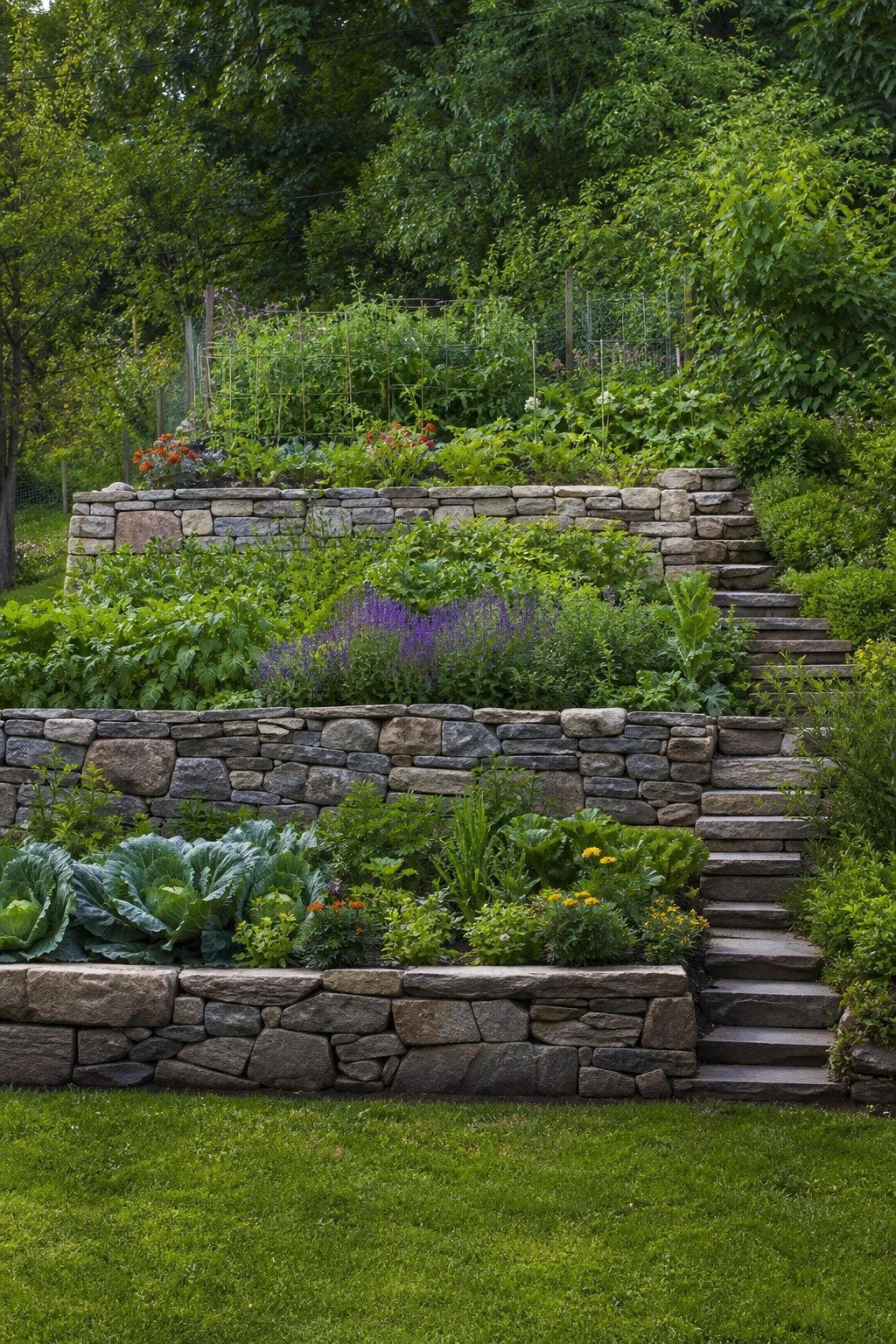
10. A Terraced Hillside Layout
 Save
If your yard slopes, terraces turn a hard-to-use hill into level beds. Build two or three low retaining walls from stone, timber or blocks, and put steps at one end. Each level drains well and is much easier to plant and weed.
Free printable
No spam, just cozy home ideas now and then. Unsubscribe any time.
Flower and Cottage Garden Layouts
11. A Cut Flower Garden in Long Rows
 Save
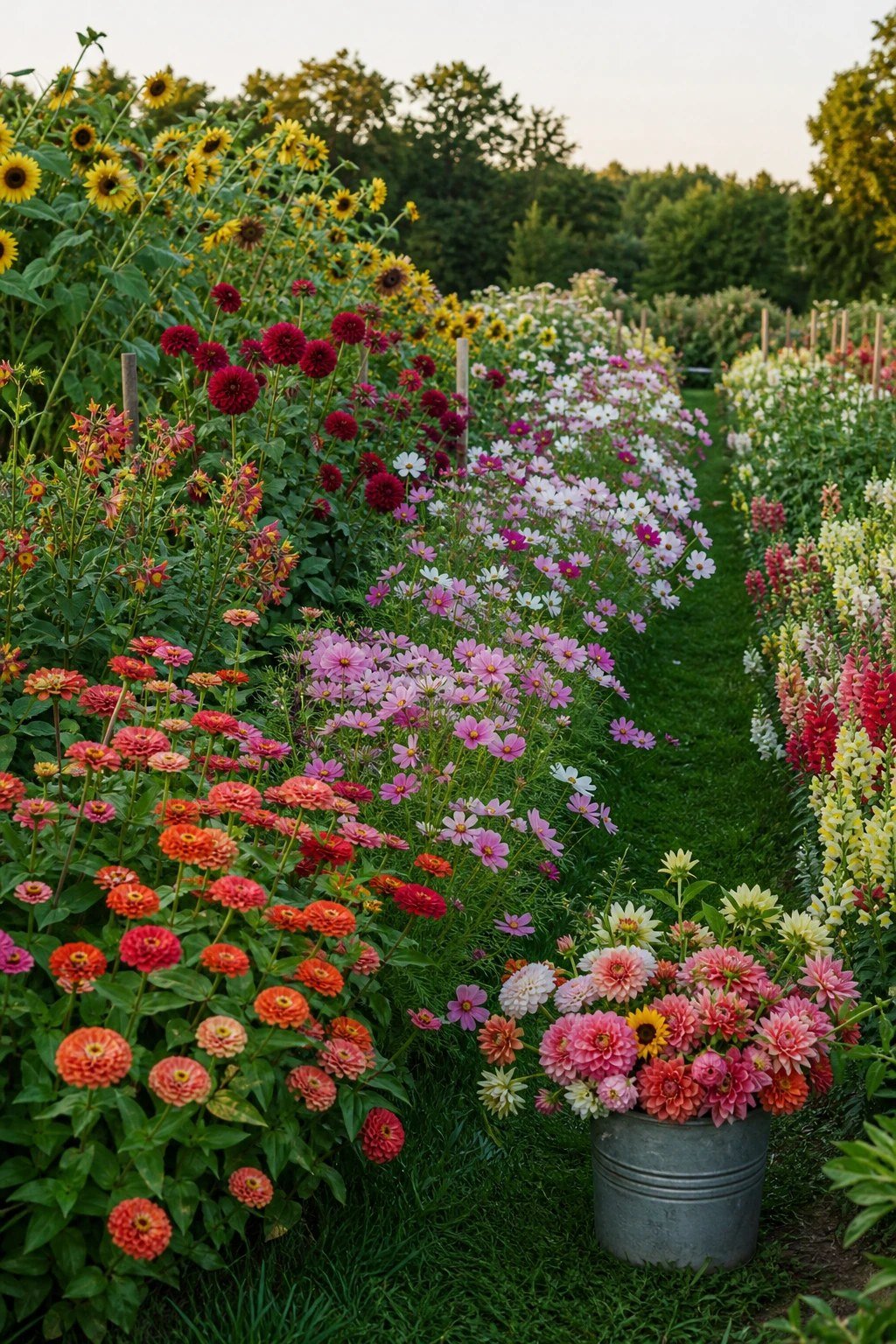
A cut flower garden works best in straight rows or long beds, like a small flower farm. Group by height with sunflowers and dahlias at the back and zinnias, cosmos and snapdragons in front, and leave room to walk down every row with a bucket.


12. A Cottage Garden Border
 Save
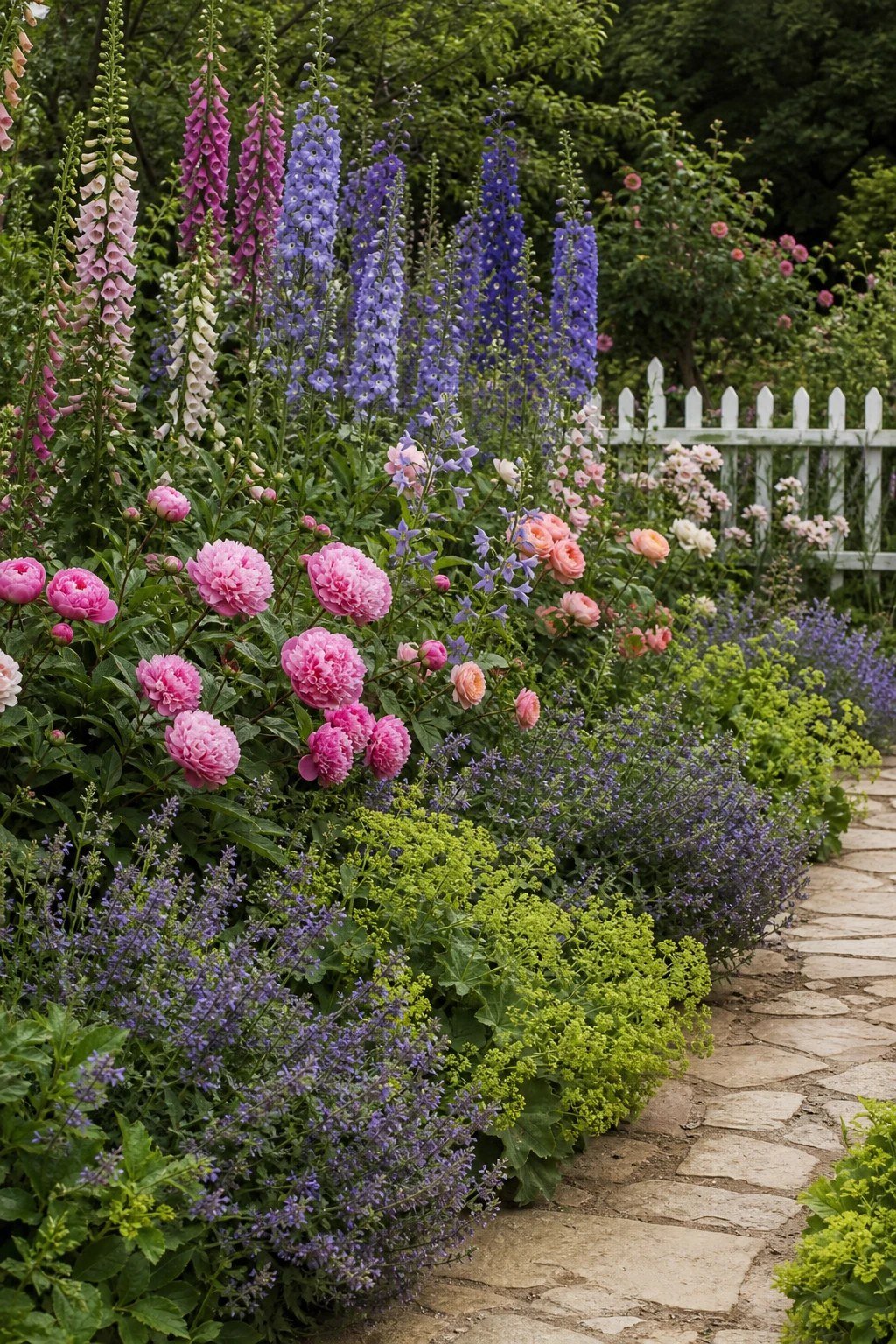
A cottage garden border looks relaxed but still has a plan: tall plants at the back, medium in the middle and low edging plants spilling over the path. Repeat the same three or four plants along the border so it feels full rather than random.
13. A Pollinator Garden in Drifts
 Save
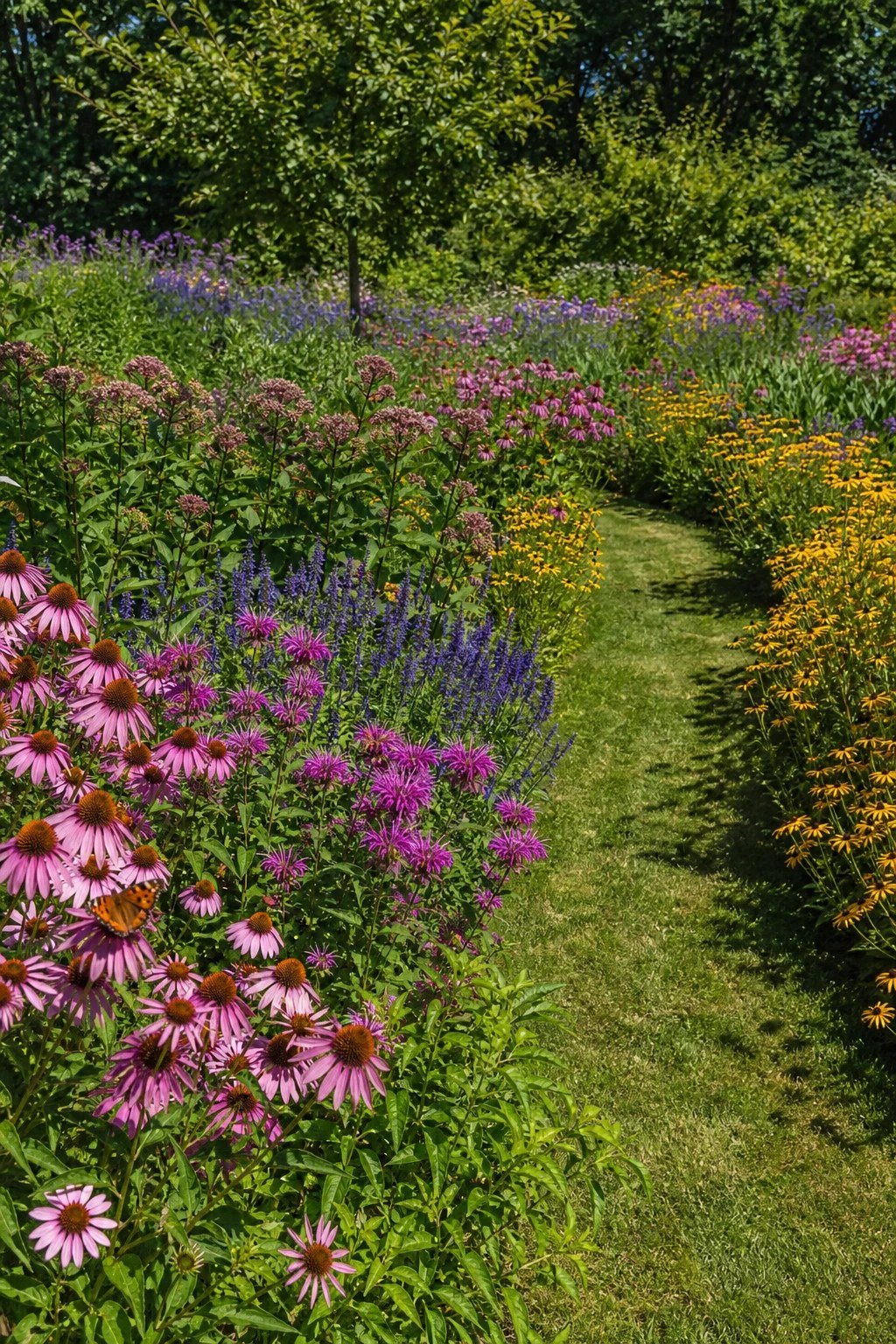
Plant pollinator flowers in big drifts of the same plant rather than one of everything. Bees and butterflies find large patches more easily. Coneflowers, bee balm, salvia, black-eyed Susans and milkweed are reliable choices across most of the US.
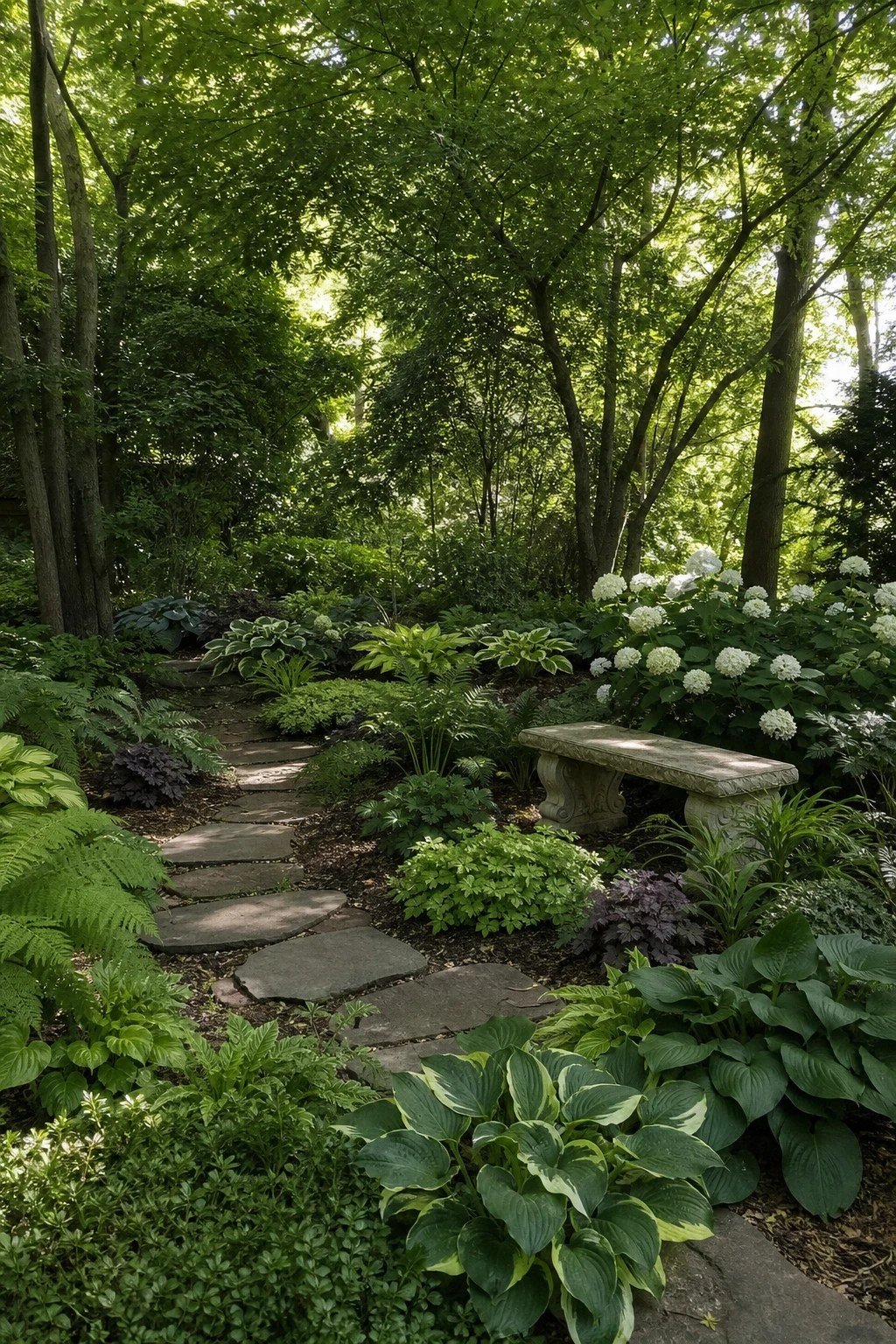
14. A Shade Garden Layout Under Trees
 Save
A shady corner can be the calmest part of the yard. Layer hostas, ferns, heuchera and hydrangeas under the trees, use a stepping stone path to wander through, and add a pale bench or pot to brighten the shadows.
How to Plan Your Garden Layout
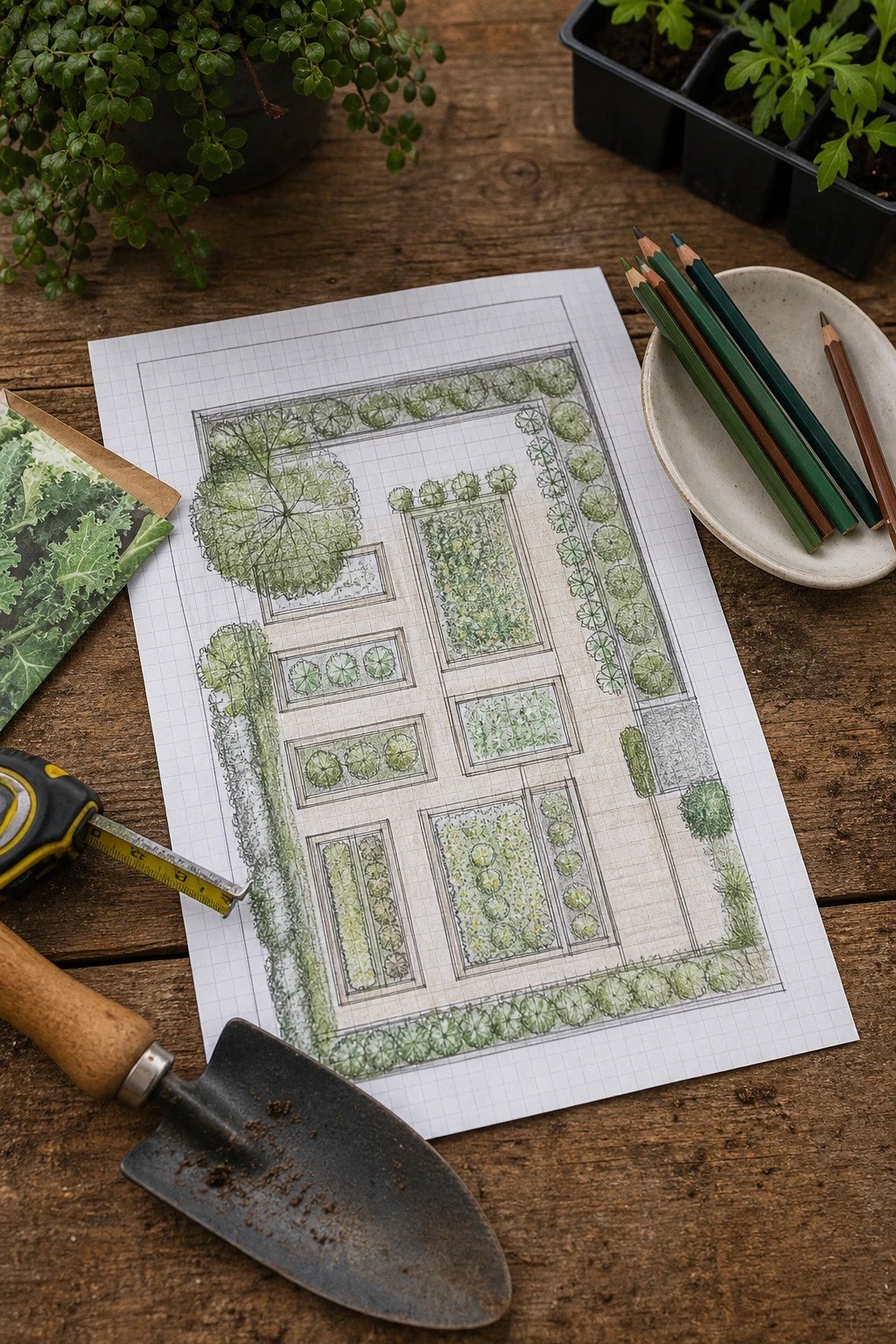
15. Sketch the Layout on Graph Paper First
 Save
Before you buy a single plant, draw your yard to scale on graph paper, one square for each foot. Mark north, the house, trees, the hose and where the sun falls. Paths and beds are much easier to move on paper than in the ground.

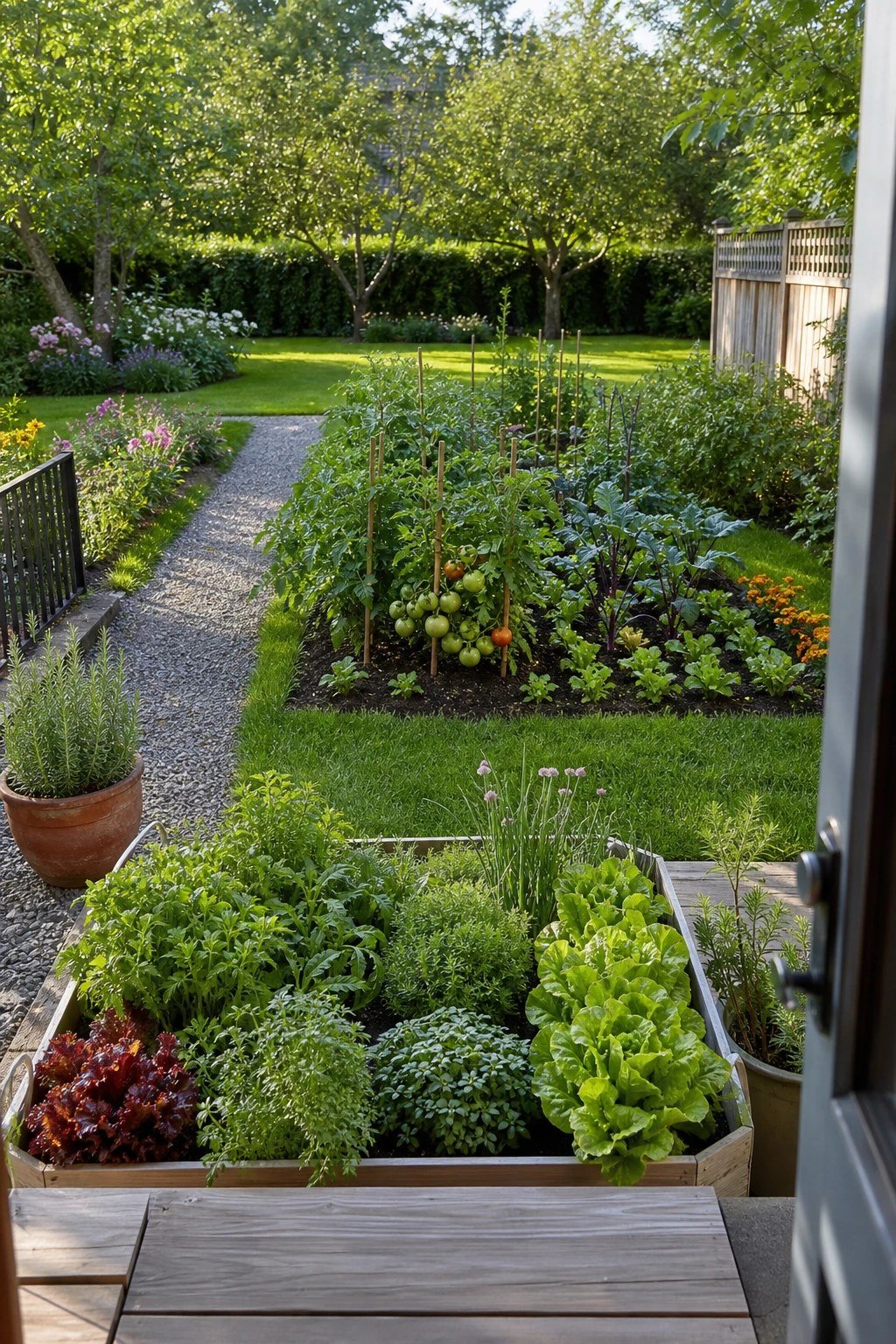
16. Zone It: Kitchen Garden Closest to the Door
 Save
Put the plants you use most closest to the house. Herbs and salad go by the kitchen door, vegetables in the next zone, and fruit trees, flowers and the compost pile farther out. You will pick and water what you walk past every day.
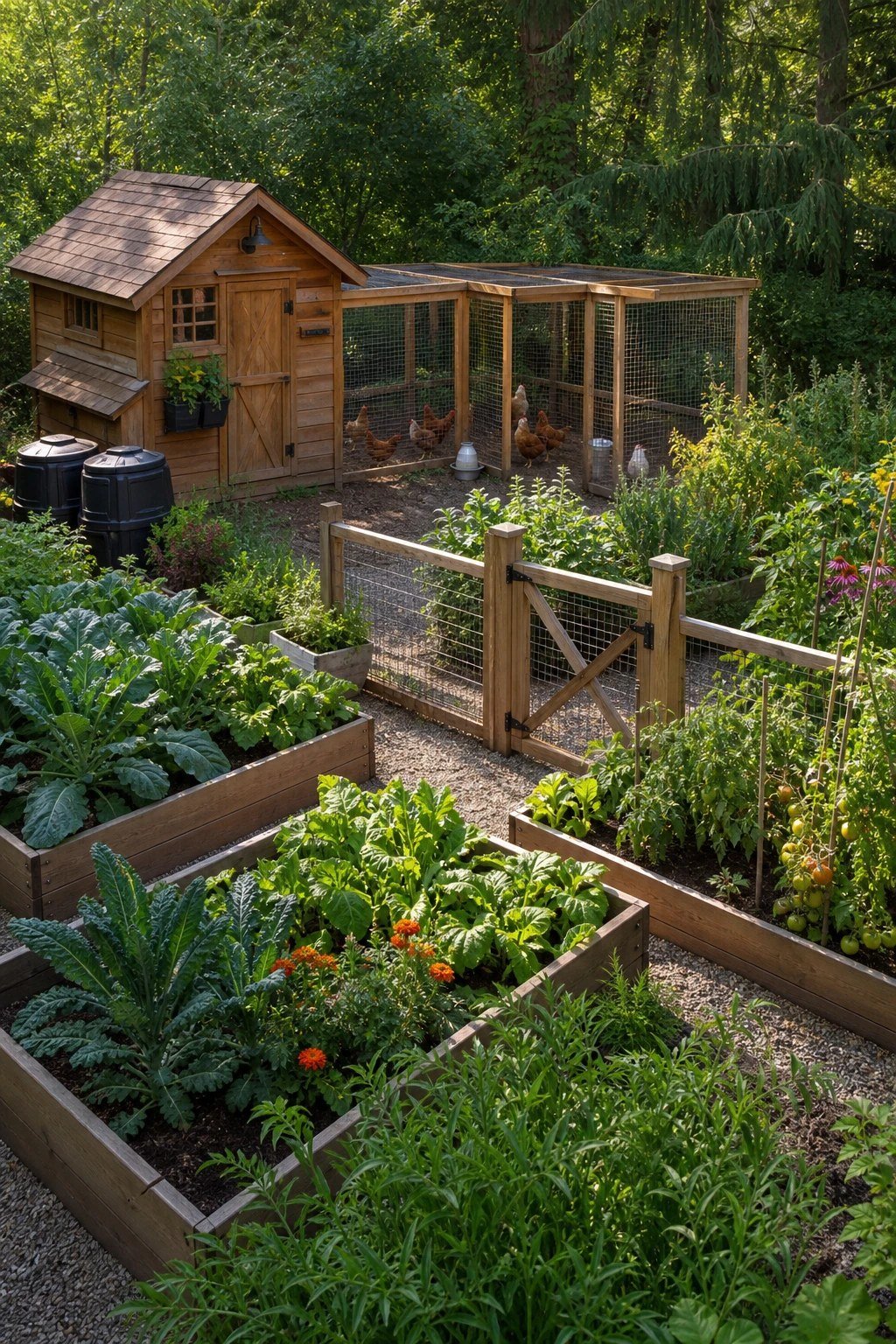
17. A Garden and Chicken Coop Layout
 Save
If you keep chickens, place the coop next to the vegetable garden but fenced off from it. Chickens can clear beds in fall, their bedding goes straight onto the compost, and a gate between the two makes daily chores quick.
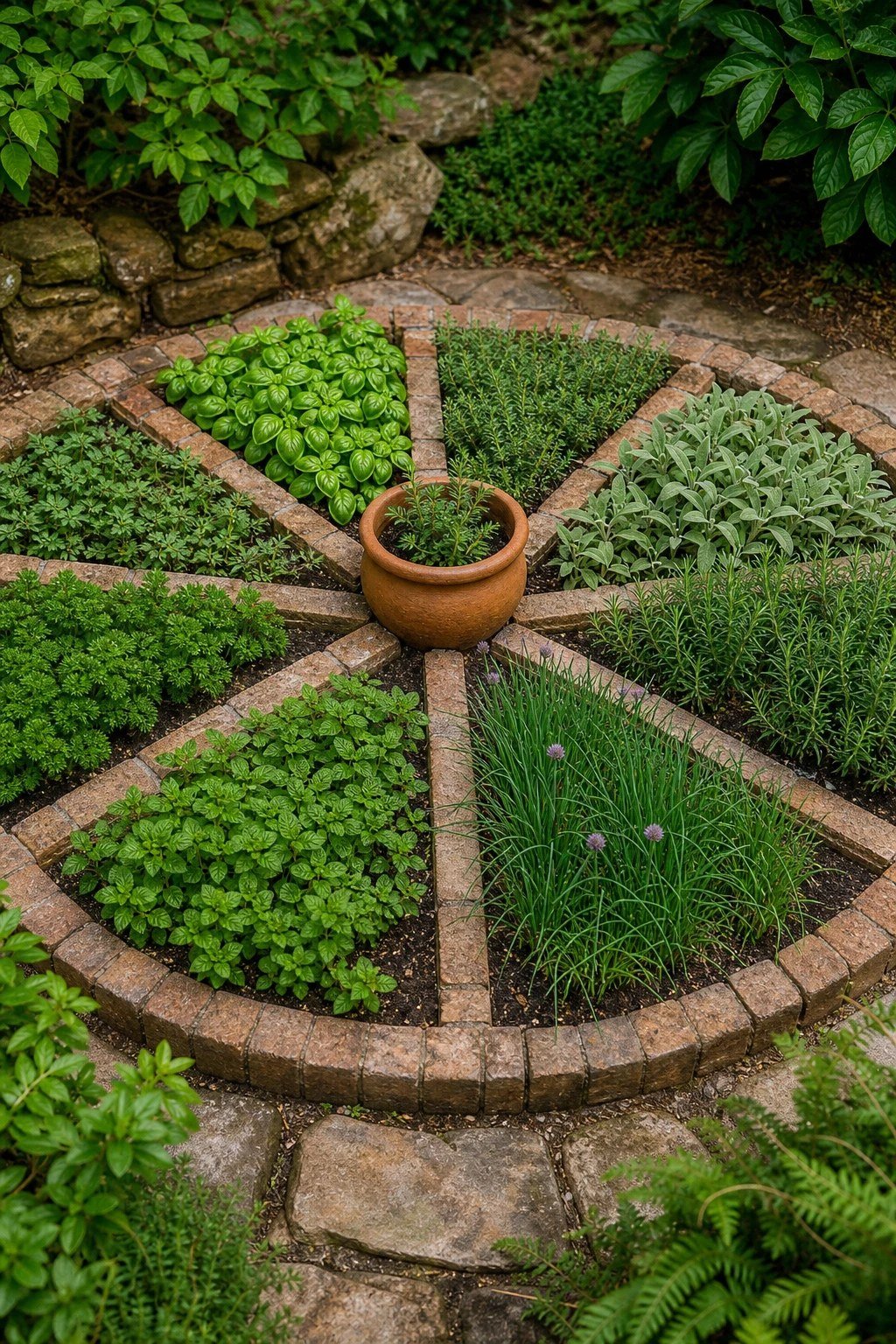
18. An Herb Garden Wheel
 Save
An herb wheel is a round bed split into wedges with stones or bricks, one herb per wedge. It fits in a small space near the kitchen, keeps spreading herbs like mint in check, and looks pretty from an upstairs window.
Keep Reading
Frequently Asked Questions
Measure the space, mark north and note where the sun falls through the day. Sketch it to scale on graph paper, draw the paths first, then fit beds no wider than 4 feet around them. Put the plants you use most closest to the house.
For most backyards, rectangular beds about 4 feet wide with 2 to 3 foot paths work best. Run rows north to south and put tall crops like corn, tomatoes and pole beans on the north side so they don’t shade shorter plants.
In an in-ground garden, leave about 18 to 36 inches between rows depending on the crop and whether you need to walk between them. Raised beds can be planted more closely because you never step on the soil.
North to south is best in most of the US. Both sides of each row get sun during the day and plants shade each other less.
Images in this post were created with AI to show each idea. This post contains affiliate links, so we may earn a small commission at no extra cost to you.