
Some links in this post are affiliate links. If you buy through one, I may earn a small commission at no extra cost to you. As an Amazon Associate I earn from qualifying purchases.
Meet the beginner-friendly path to lush, container-grown color that feels expensive but stays approachable. With a few thoughtful choices, your balcony, deck, or sidewalk can become a sanctuary that looks and feels like a boutique outdoor space. And yes — it’s absolutely within reach, even on a real-world budget.
💡 Most of the products that pull these looks together live in my Amazon shop, organised by category if you’d rather browse than scroll.
[SHOP LINK]
1. Pick a sunny stage: where your containers will shine
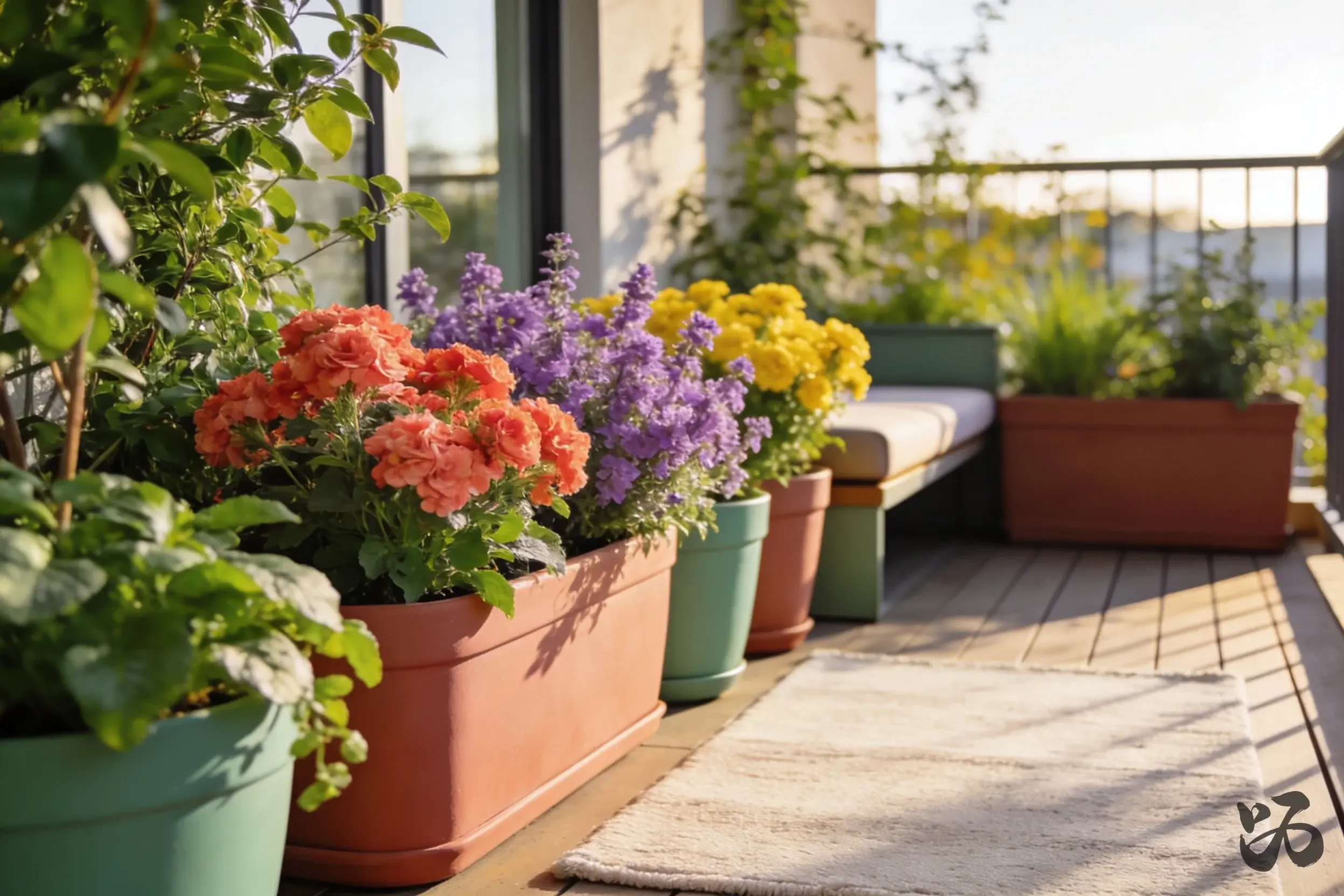
Your plants will follow sunlight, so choose a spot that delivers a reliable light show every day. Aim for at least six to eight hours of sun, preferably in the morning. The right light is the foundation of long-lasting color and healthy growth. Consider nearby water access, because a convenient watering routine makes all the difference in container life.
Design tip: treat your sunny nook like a mini outdoor room — it should feel intentional, not accidental. A soft outdoor rug, a slim seating option, and a pair of planters in a cohesive finish can instantly elevate the space.
2. Dream up your palette: what and how much to grow
Start with a list of edibles and ornamentals you love. A practical approach is to mix favorites with a couple of new experiments. Once you have your list, check a local planting guide to know what can be planted now and how much space each plant needs. This keeps your containers from feeling crowded and weak in the legs of a hot sunbeam.
Design note: choose plant shapes that complement each other — trailing herbs with upright focal specimens create rhythm, while a pop of color at a single height grounds the composition.

Free printable
No spam, just cozy home ideas now and then. Unsubscribe any time.
3. The right container, the right size: scale, drainage, and depth
Plants in containers reach their full potential when housed in a pot that fits their mature size. Size matters. Pair each plant with a pot that offers adequate room for roots to breathe and grow. Equally important: drainage holes. Without drainage, roots suffocate and disease follows.
Pro tip: elevate containers slightly off hard surfaces with pot feet so excess water can escape, and the roots aren’t sitting in a puddle. On soil or grass, gravity helps drainage, but on a deck or balcony, feet are essential.
Product box placeholder: [PRODUCT BOX: elevated, well-draining pots in a cohesive color family]
4. The soil that makes it look effortless: lightweight, living mix
Regular garden soil is too heavy for containers. Seek a light, fluffy potting mix designed for containers, often a raised-bed style blend. Look for a thoughtful combo of compost, coconut coir, and a little vermiculite or perlite. This trio delivers air, water, and nutrients where roots crave them most.
Fill each vessel all the way to the brim — more soil means more nutrients and moisture available to your plants. If you’re using an irrigation technique, this is the moment to plan for it alongside your soil choice.
Product box placeholder: [PRODUCT BOX: premium potting mix with compost and coconut coir]
5. Watering that respects the rhythm of containers
Container roots can’t roam in search of water, so you’re the lifeline. Water deeply, until you see moisture exit the drainage hole. Shallow watering breathes trouble into roots and invites stress. A simple rule of thumb: once you plant seeds or set transplants, they’ll need a touch more water as they establish, then settle into a consistent pattern as they mature.
Mulch 1–2 inches to cut evaporation and maintain moisture. A daily garden check-in helps you notice early signs of stress, such as droopy leaves or pale new growth, before they wheel you into a bigger issue.
Product box placeholder: [PRODUCT BOX: drip-friendly watering can and mulch-worthy topdress]
Watering cue
Get the look: a simple hand-watering wand, a matte-black watering can, and a moisture meter for peace of mind.
6. Feed the roots: when to nourish and how
Container plants lose nutrients faster because the soil volume is smaller and water leaches minerals away. Start with a nurturing, compost-rich potting mix for the initial weeks, then supplement with a water-soluble organic fertilizer. Options like fish emulsion or liquid seaweed, used as a soil drench, keep the rhythm steady without overwhelming the plant.
Keep your feeding schedule aligned with the plant’s growth stage and follow label directions for dilution and frequency. Subtle, consistent feeding supports sustained bloom and vigor without a heavy-handed look.
Product box placeholder: [PRODUCT BOX: organic liquid fertilizer and fish emulsion]
7. Daily design check-ins: cultivate a habit that protects your investment
Spend a few minutes each day with your containers. Look for water needs, check leaf undersides for pests, and notice new growth. Regular, calm attention catches problems when they’re small and easier to fix, keeping your display pristine and productive.
8. Harvest with intention: knowing when to pick and how it shapes flavor
Harvesting at the right moment rewards you with tenderness and flavor while encouraging more production. In many crops, picking early tends to prolong the harvest cycle, so you can enjoy a steady stream of fresh picks throughout the season. The reverse is true for woodier, fibrous leftovers that don’t taste as vibrant — snip and move on.
9. Learn as you go: journaling your container journey
Documenting what you plant, when you planted it, and how it performed is a quiet superpower for repeatable success. A simple notebook or a digital note keeps track of timing, varieties, and outcomes. Each season becomes a refined lesson in design and horticulture, so future containers look even more intentional and perform better.
10. Start small, dream big: the scalable path to luxury, on a budget
Container gardening is inherently scalable. Begin with a couple of containers, then expand as you refine your taste and habits. The key is to design with cohesion in mind: a consistent color story, a restrained mix of materials, and a thoughtful placement that reads as a curated space rather than a miscellaneous collection. The result is an outdoor look that feels fully custom and intimately yours, without the boutique price tag.
Product box placeholder: [PRODUCT BOX: cohesive planter set in a neutral palette]
[INTERNAL LINK: How to design an outdoor space that feels like a resort]
[INTERNAL LINK: Budget-friendly upgrades for a luxe front porch]
[INTERNAL LINK: Small-space composting for beginners]
Shopping cue: Get the look with low-profile planters, soft-textured cushions for seating, and warm-white lighting to bring evenings to life.
Frequently Asked Questions
What size should my first containers be?
Start with mid-sized pots that give plants room to grow without overwhelming a small balcony. For many herbs and vegetables, 12–16 inches in diameter is a comfortable starting point. If you’re pairing trailing plants with upright focal varieties, vary pot heights to create visual interest while maintaining balance.
How often should I water new containers?
New plantings need a touch more moisture as they establish. Check moisture levels daily for the first week or two, then adjust to a consistent pattern based on sun exposure and weather. A shallow finger test works well: if the top inch is dry, it’s time to water.
Do I need a fancy irrigation system?
Not necessarily. A simple overhead shower attachment and a careful observation routine can be enough to keep containers thriving. As you grow more confident, you can add slow-drip options or a clay Oya for hands-free moisture, if you’d like more automation without sacrificing aesthetics.
What should I plant first for a quick win?
Herbs (basils, parsley, oregano) and compact leafy greens are forgiving and fast. Pair them with a few colorful flowers or a compact tomato if your space allows. The mix should feel intentional and easy to maintain, not chaotic.
How do I avoid pests in container gardening?
Healthy plants resist pests better than stressed ones. Start with good soil, proper spacing, and daily checks. If trouble arises, address it early with targeted, non-intrusive organic solutions and by removing affected leaves to prevent spread.
Conclusion: luxury looks, practical roots
Container gardening is not just a hobby; it’s a design strategy for small spaces that want to feel expansive. With careful choices — sun-smart placement, well-sized containers, breathable soil, and a disciplined but gentle care routine — you can craft an outdoor space that looks and feels like a resort, without the resort price tag. Start small, stay intentional, and let each season teach you a little more about what your space can become. Your next courtyard, balcony, or doorstep is ready for that elevated, boutique vibe—on a budget.
[INTERNAL LINK: 5 mistakes to avoid when starting a container garden]
[INTERNAL LINK: How to mix textures and materials for an expensive-looking outdoor room]