
Some links in this post are affiliate links. If you buy through one, I may earn a small commission at no extra cost to you. As an Amazon Associate I earn from qualifying purchases.
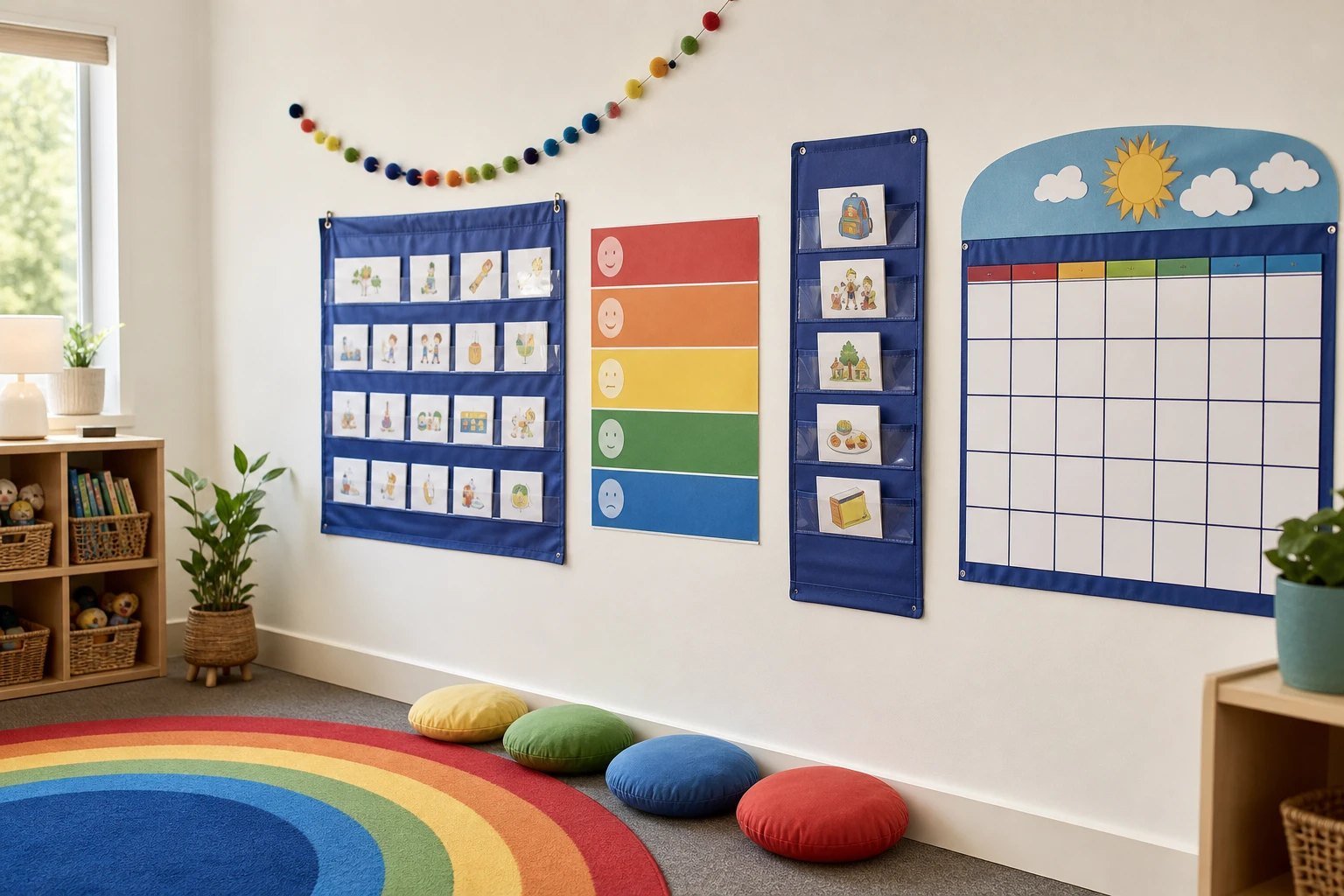
The short answer: the best classroom charts are the ones children use every day without being asked: a calendar and weather chart for morning meeting, a picture schedule, a voice level chart, a feelings check-in, a job chart and a few anchor charts for reading and math. Keep them at child height, use pictures as well as words, and laminate anything that moves.
Below are 25 creative charts for classroom walls, grouped by what they do, each with a short “make it” note. They work from kindergarten to grade 5 and from the first week of school to the last.
The supplies that make charts last all year (we earn a small commission if you buy, at no cost to you):
- A pocket chart: the base for schedules, jobs and centers.
- A thermal laminator and laminating pouches: cards survive a whole year of little hands.
- Post-it easel pads: sticky chart paper for anchor charts you make with the class.
- Mr. Sketch chart markers: bright colors that do not bleed through.
- VELCRO dots: for any chart where pieces move every day.
 Save
Free printable
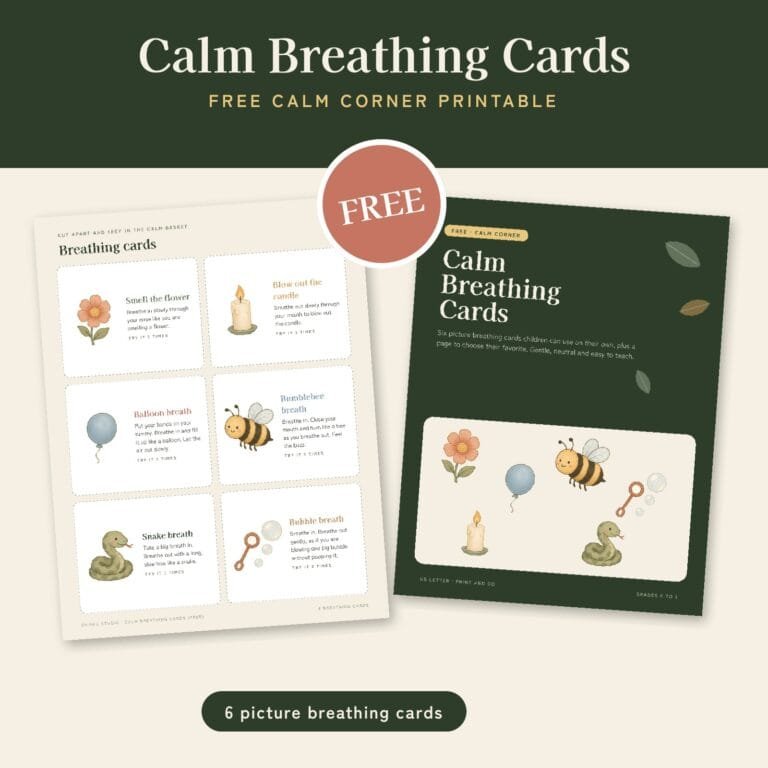
Free Calm Breathing Cards
6 picture breathing cards (smell the flower, bumblebee breath, snake breath and more) for your calm corner. Teach one a day.
Free download. You will also get a couple of follow-up emails with classroom ideas. Unsubscribe anytime.
What makes a classroom chart work
A good chart is used, not just looked at. Put it where children can reach it, add a picture next to every word so non-readers can join in, and give it a daily routine: someone moves the date, flips the job cards or checks in their feelings. If a chart has not been touched in two weeks, take it down or change it.
Morning meeting charts
1. A calendar and weather chart
 Save
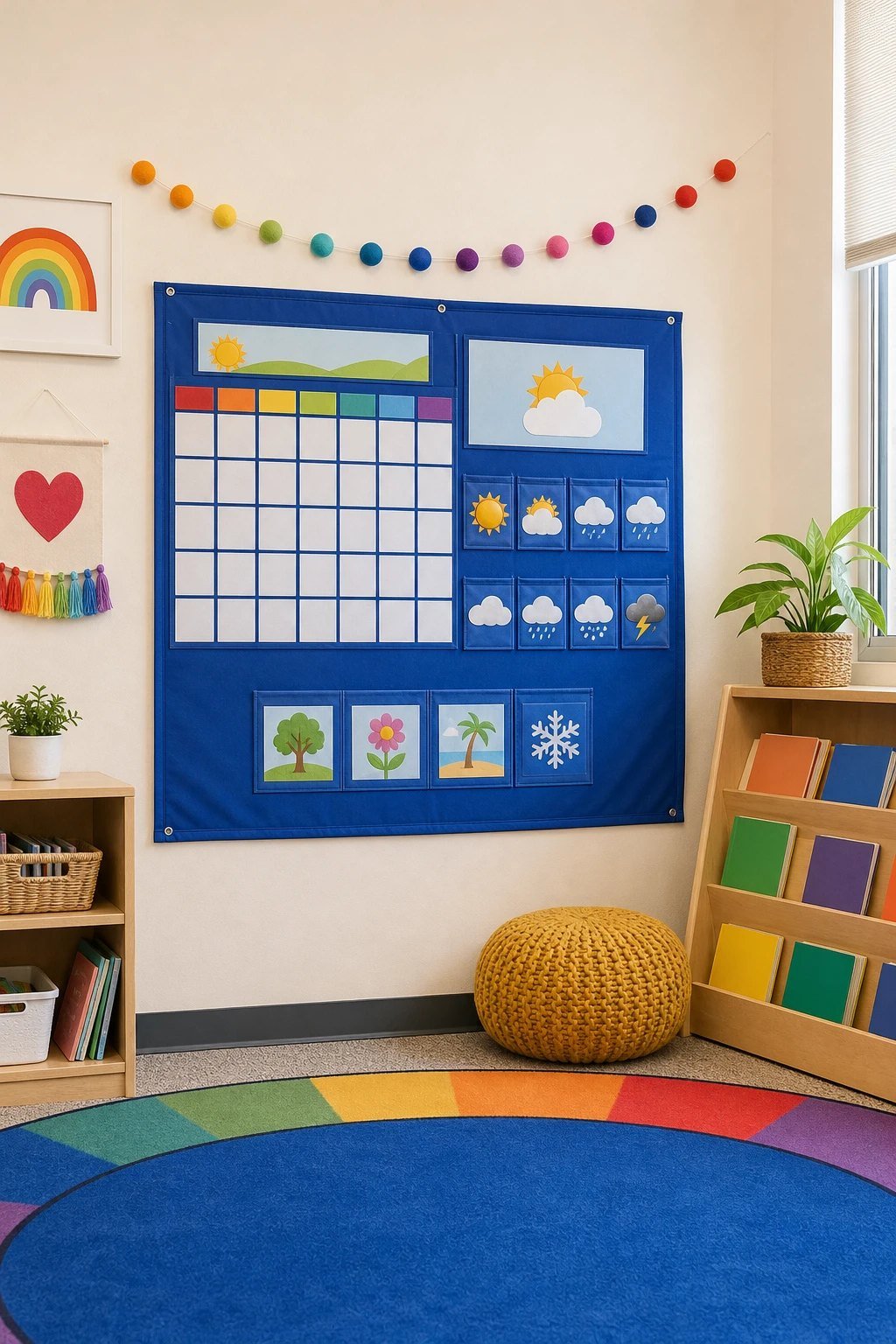
The classic morning meeting chart: today’s date, the day of the week and the weather. A weather helper changes it each morning.
Make it: a calendar and weather pocket chart at the front of the carpet.
2. A days of the week chart
 Save
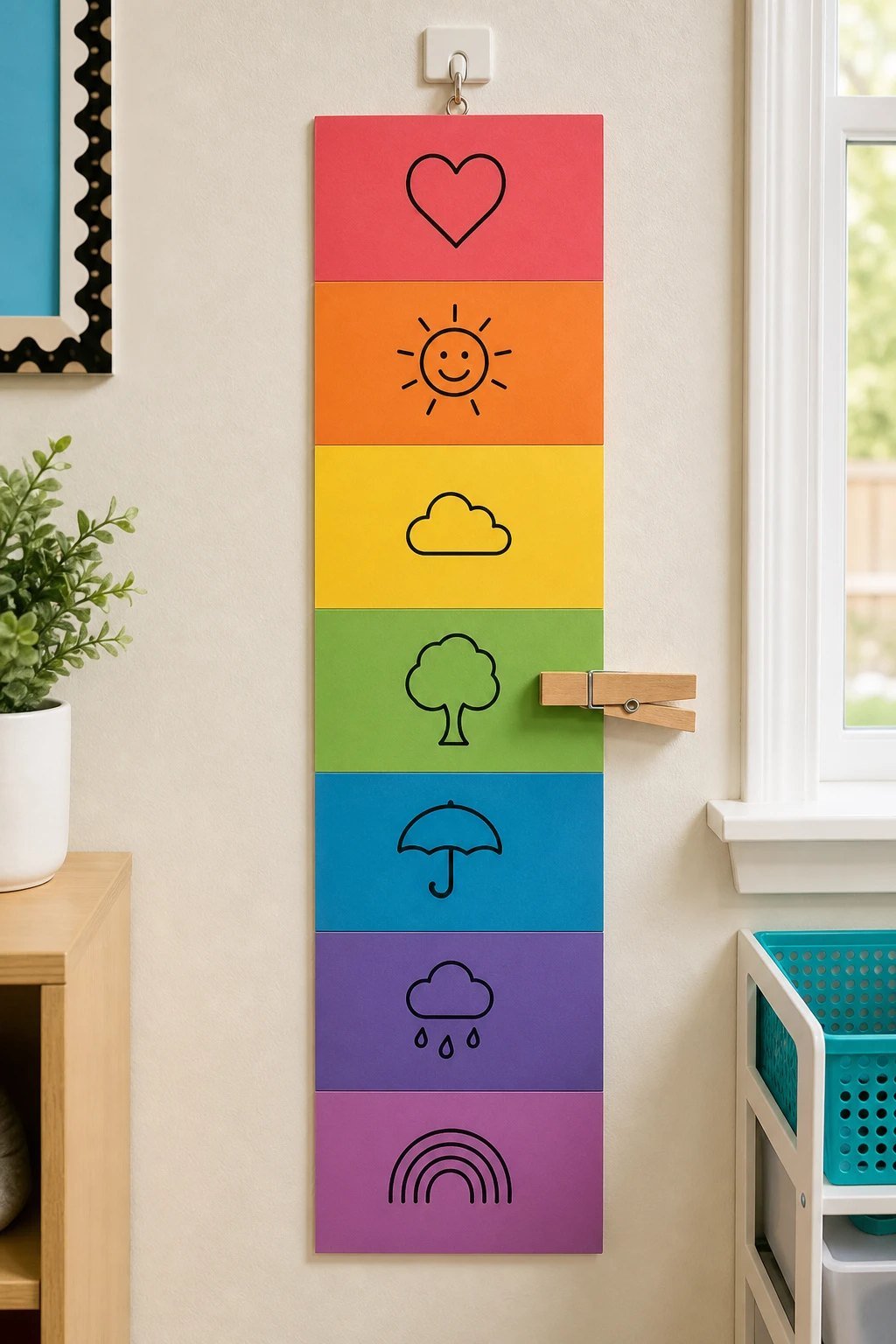
Seven bright strips with a clothespin that moves each morning. Younger grades learn the order of the week in no time.
Make it: sentence strips and large wooden clothespins.
3. A daily picture schedule
 Save
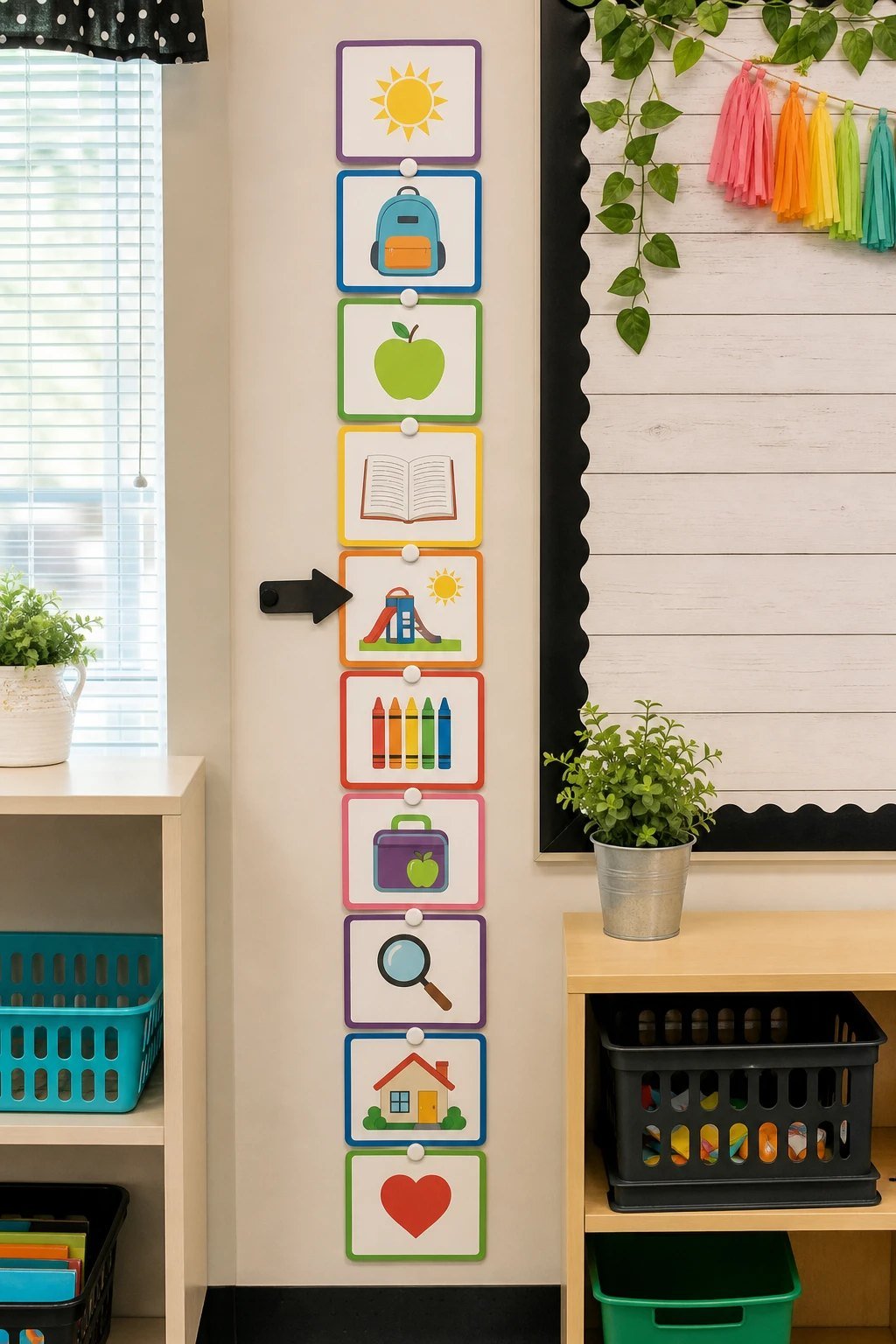
A vertical schedule with a picture for every part of the day calms transitions, because everyone can see what is next.
Make it: picture cards on a pocket chart or VELCRO strip.
4. A lunch choice and attendance chart
 Save
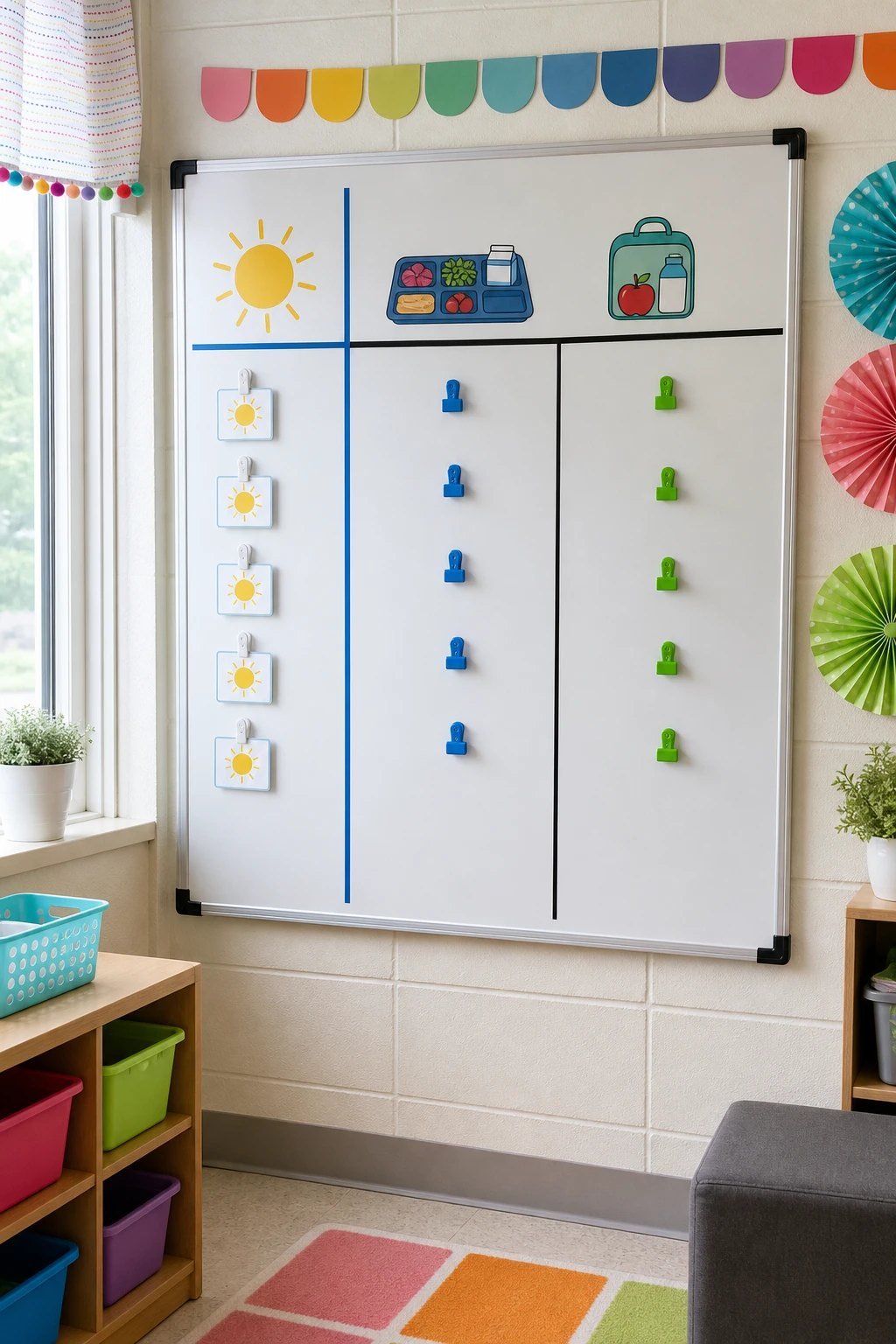
Children move their name card to show they are here and what they are having for lunch. Attendance is done before the bell.
Make it: magnetic clips on the whiteboard or a pocket chart.
Behavior and calm charts
5. A voice level chart
 Save
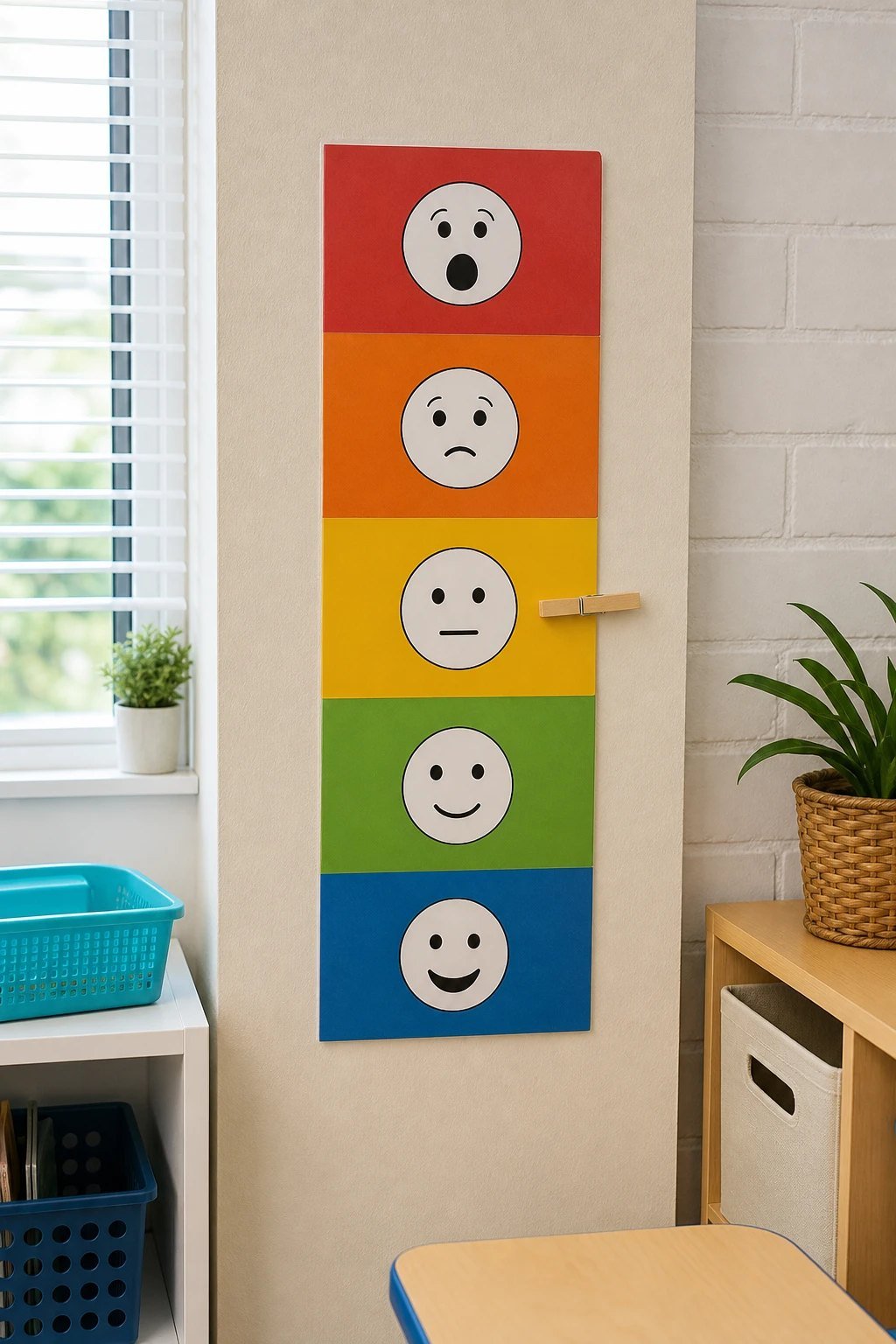
Five colors from silent to outside voice, with a clip showing what this activity needs. It saves you saying it all day.
Make it: a printed chart and one large clothespin.
6. A feelings check-in chart
 Save
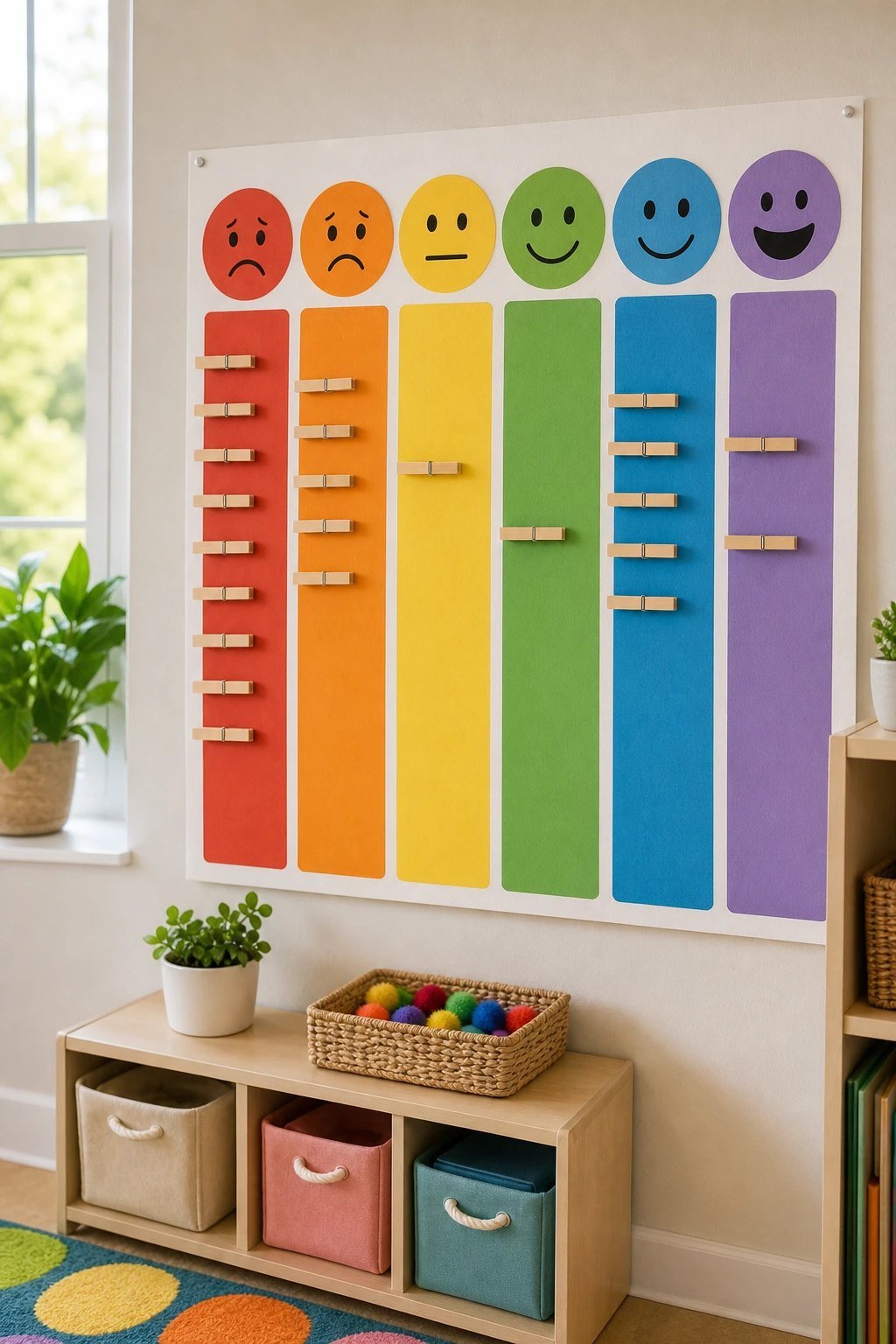
Children put their name by how they feel each morning. It tells you who needs a quiet word before the day starts.
Make it: feelings cards with VELCRO dots or clothespins.
Want this one ready to print? Our Calm Classroom Bundle has a feelings check-in chart and calm down corner posters made to hang on the same wall, in US Letter and A4.
7. A calm down choices chart
 Save
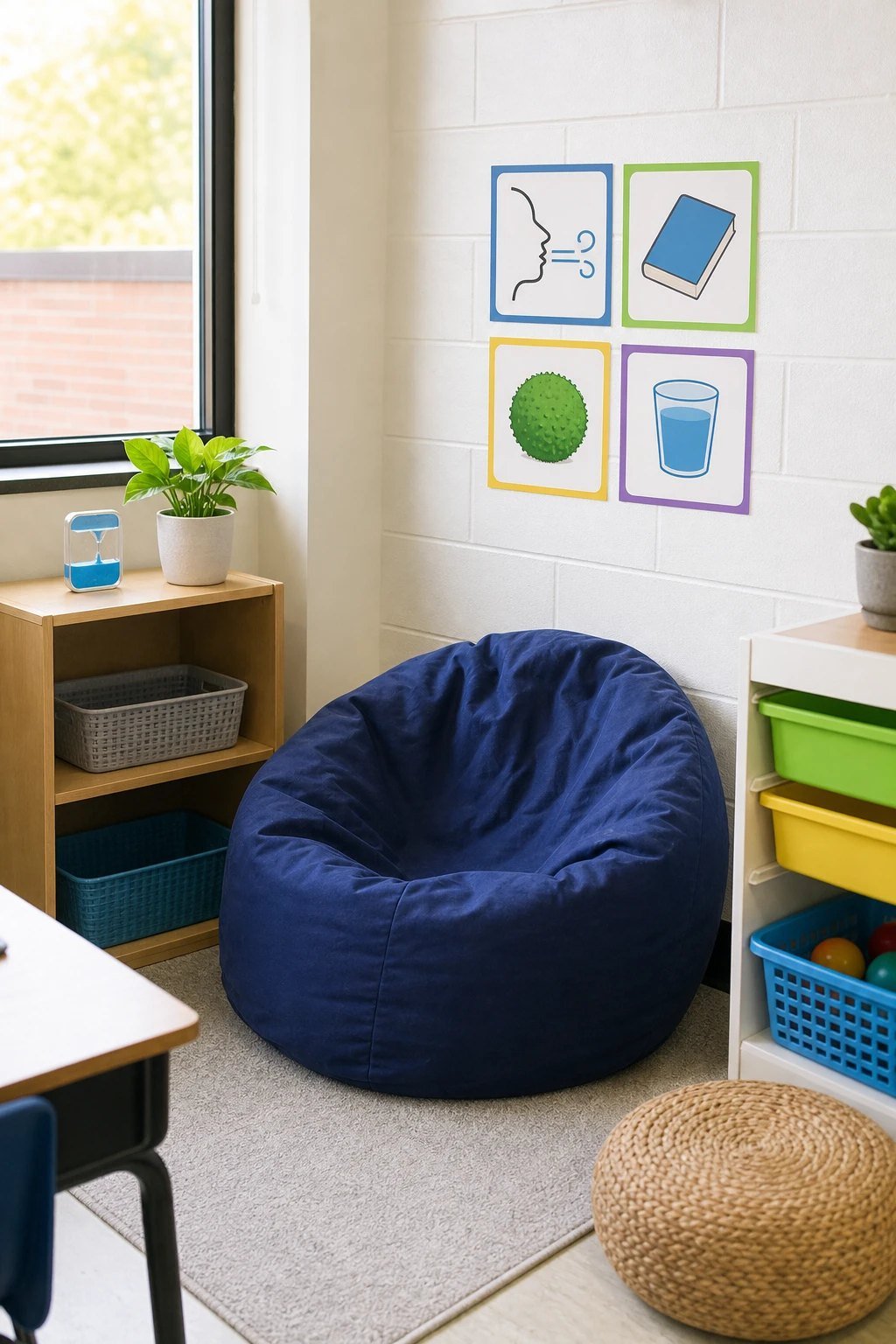
Picture cards for breathing, squeezing a stress ball, reading a book or getting a drink. Children choose instead of melting down.
Make it: laminated picture cards in the calm corner.
8. A belt or level up behavior chart
 Save
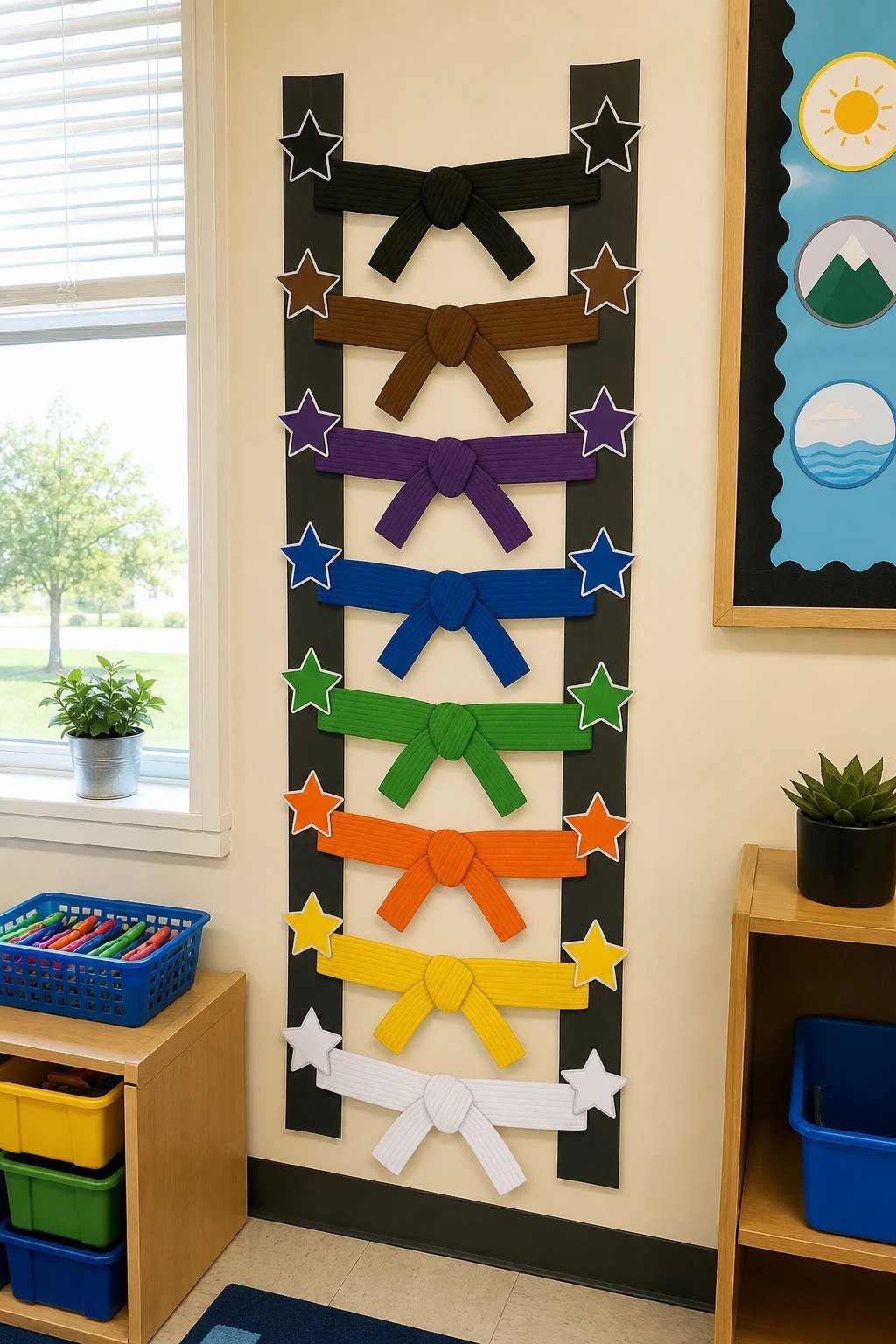
Children climb levels for one class value at a time and never move down. It feels like a game and keeps the focus on effort.
Make it: one strip per child and star stickers.
Want a ready-made version? Our Class Sensei Classroom Management Bundle has a karate belt behavior chart where children climb from White Belt to Black Belt, plus a job chart, a class mascot and birthday displays, in US Letter and A4.
9. A class reward jar chart
 Save
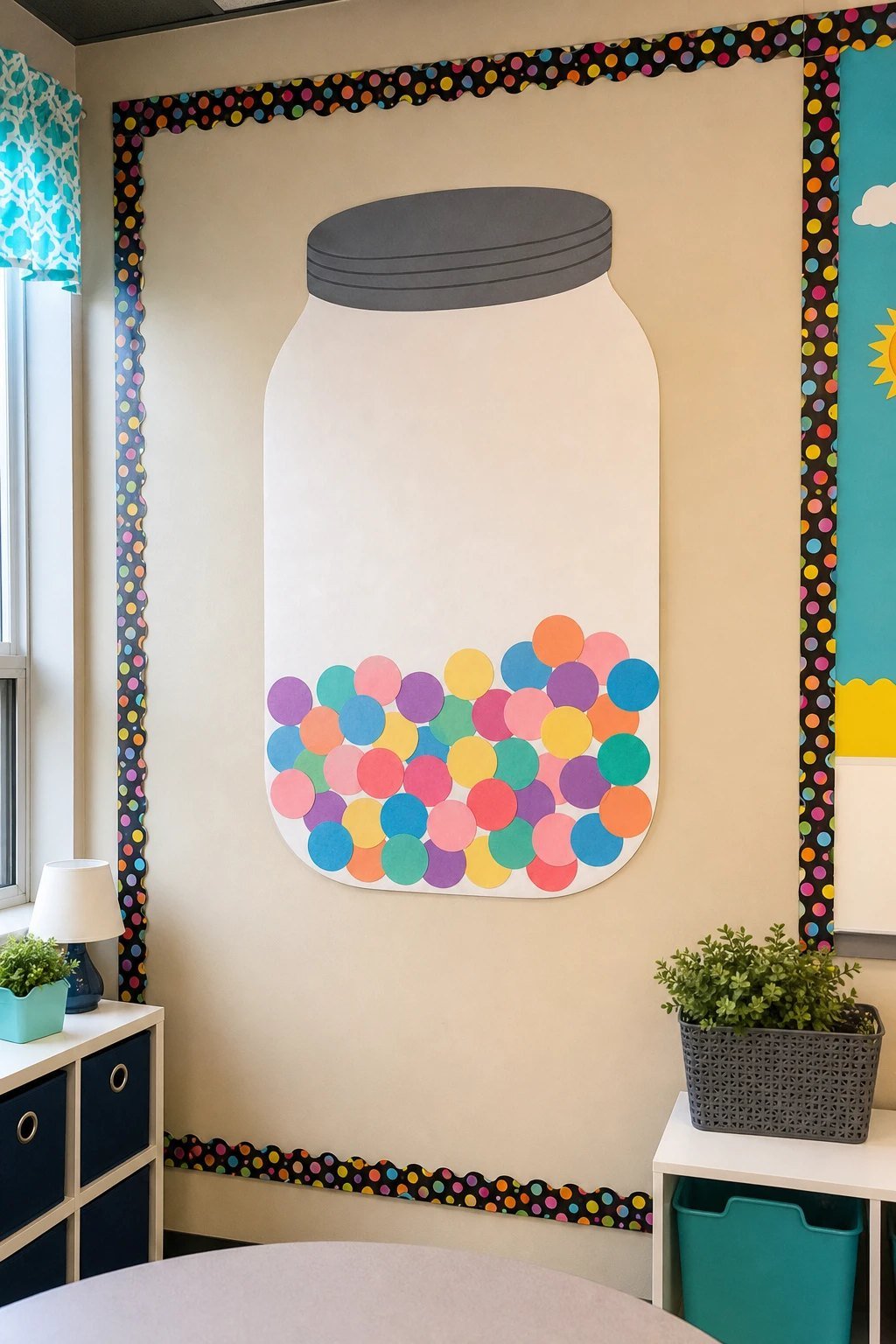
A paper jar on the wall that fills one pom pom at a time for the whole class. When it is full, everyone earns a reward.
Make it: a paper jar shape and colored circles.
Jobs and routines
10. A classroom job chart
 Save
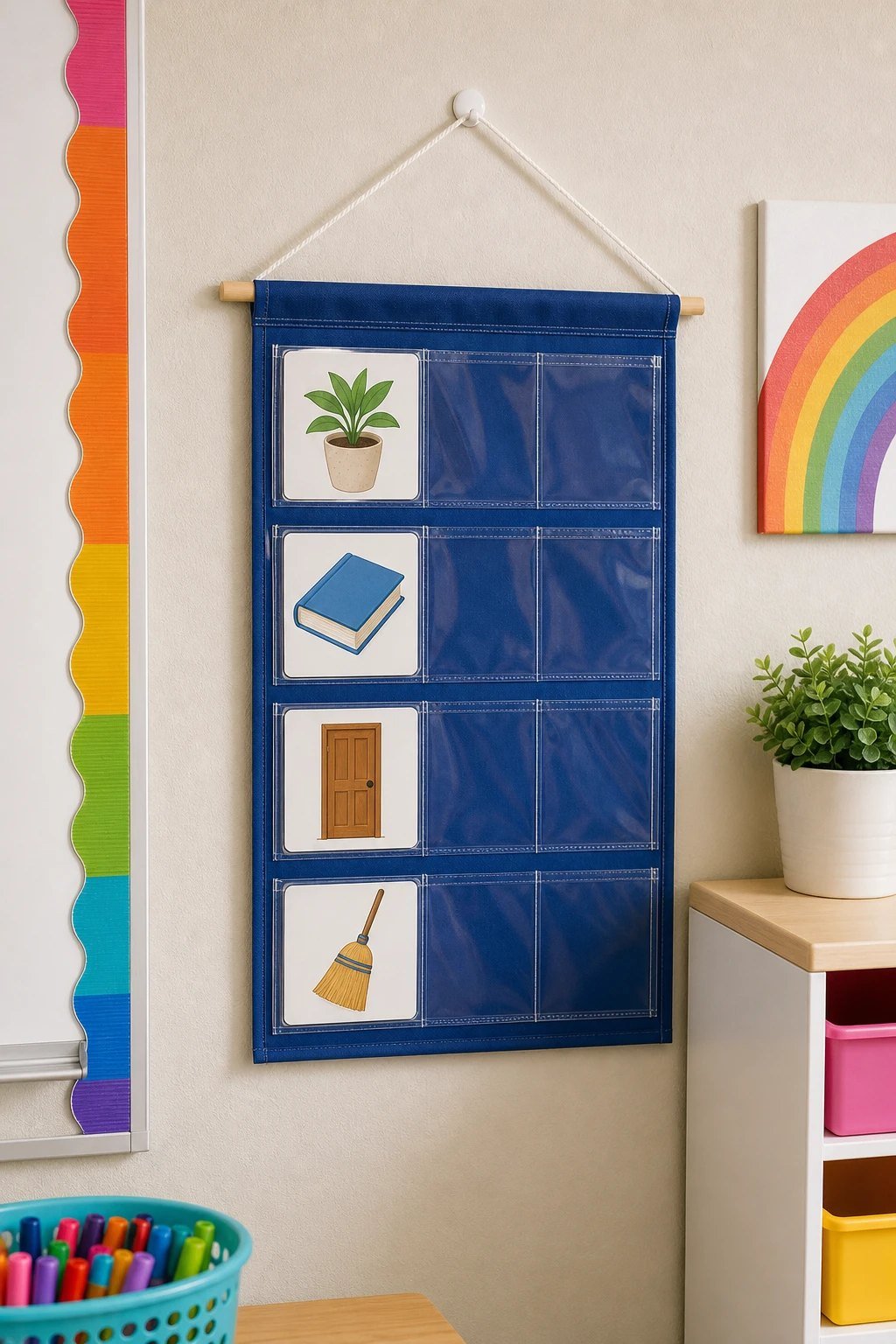
Every child has a job and the cards rotate on Monday. Line leader, plant helper, librarian, door holder: the room runs itself.
Make it: job cards in a pocket chart. More ideas in our classroom job chart ideas.
11. A line order chart
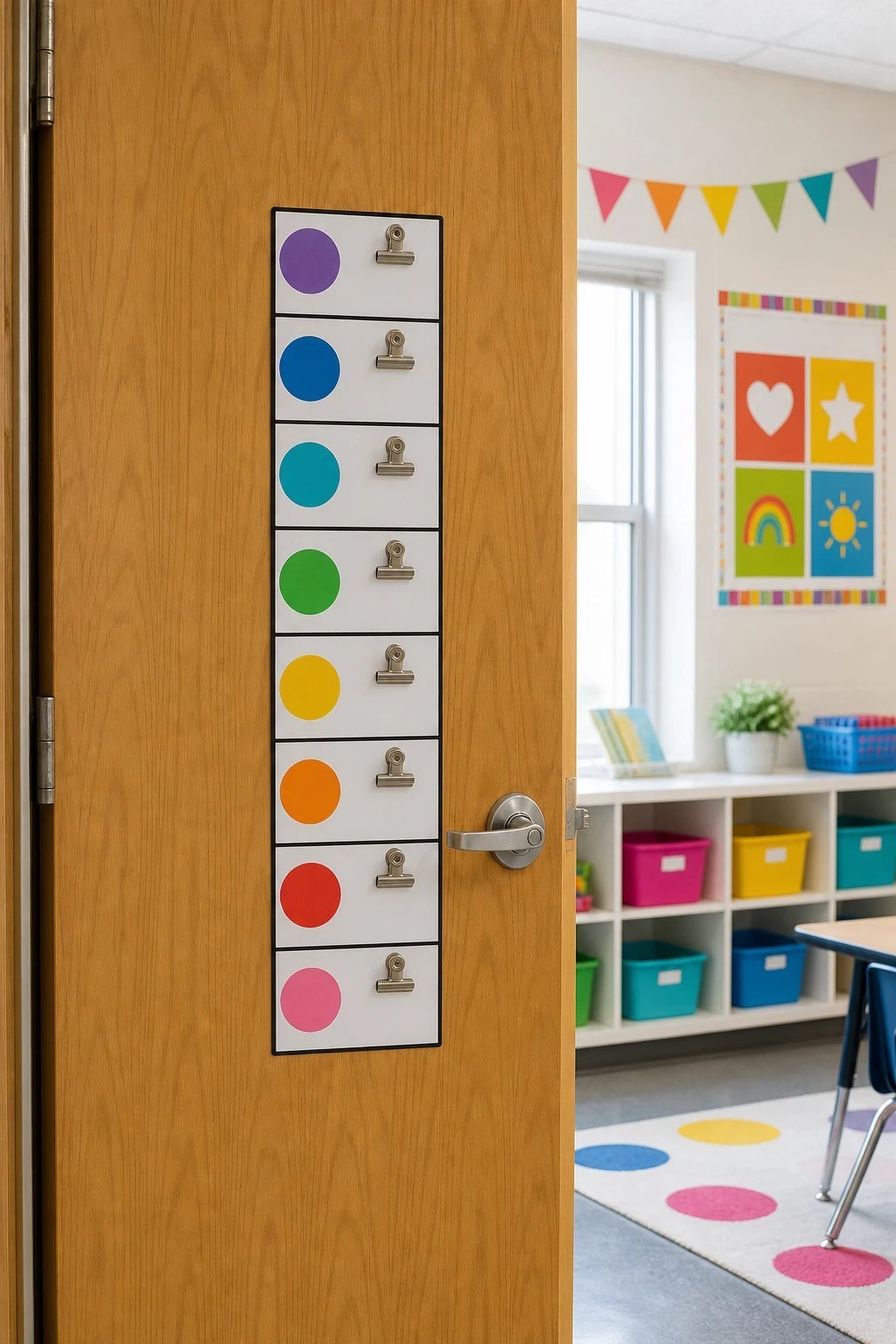 Save
Numbered spots for lining up stop the race to be first. Rotate the order weekly.
Make it: numbered cards and magnetic clips.
12. A hand signals chart
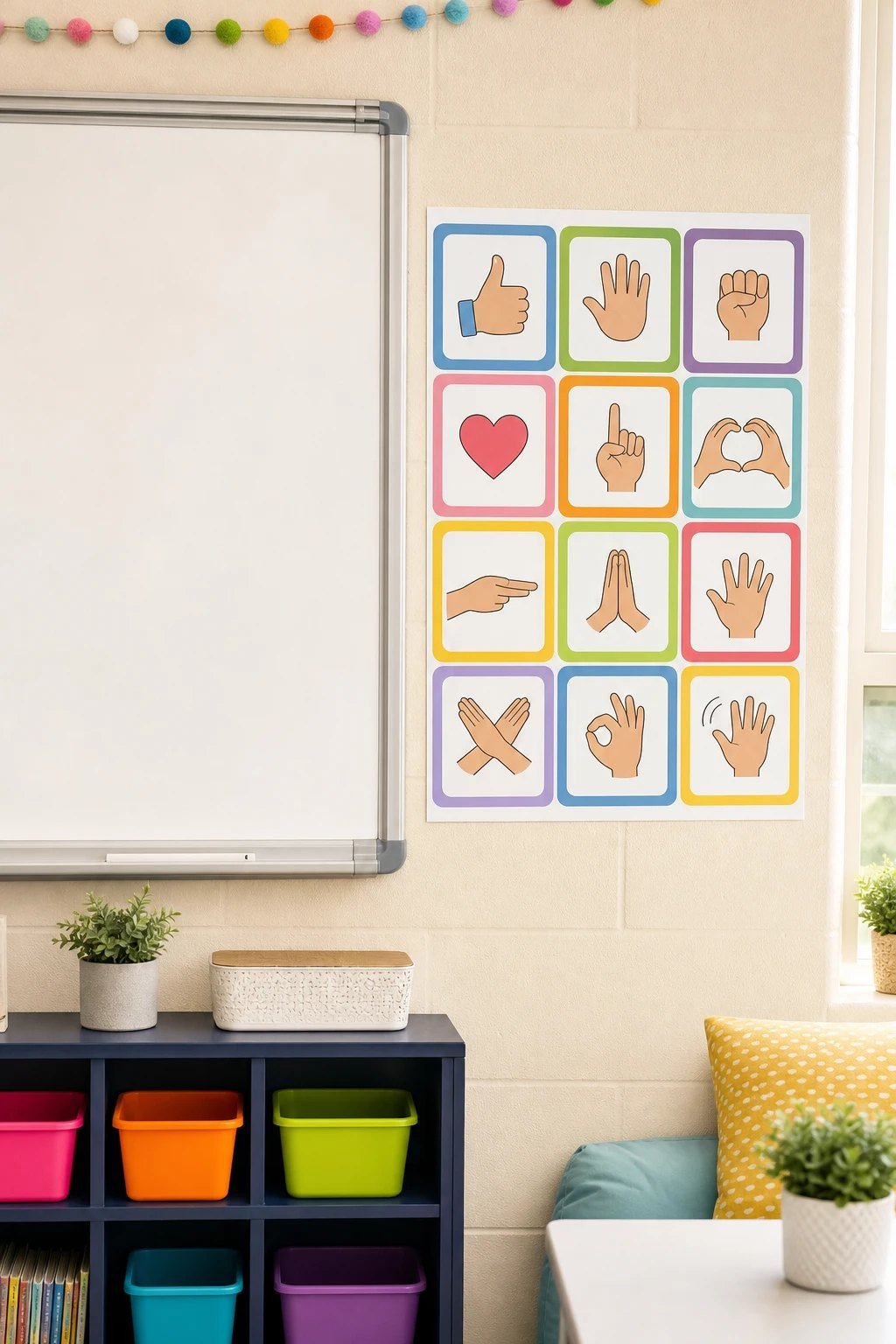 Save
One raised finger for the bathroom, two for a drink, crossed fingers for a question. No more interruptions mid-lesson.
Make it: one printed poster near the board.
13. A where are we chart
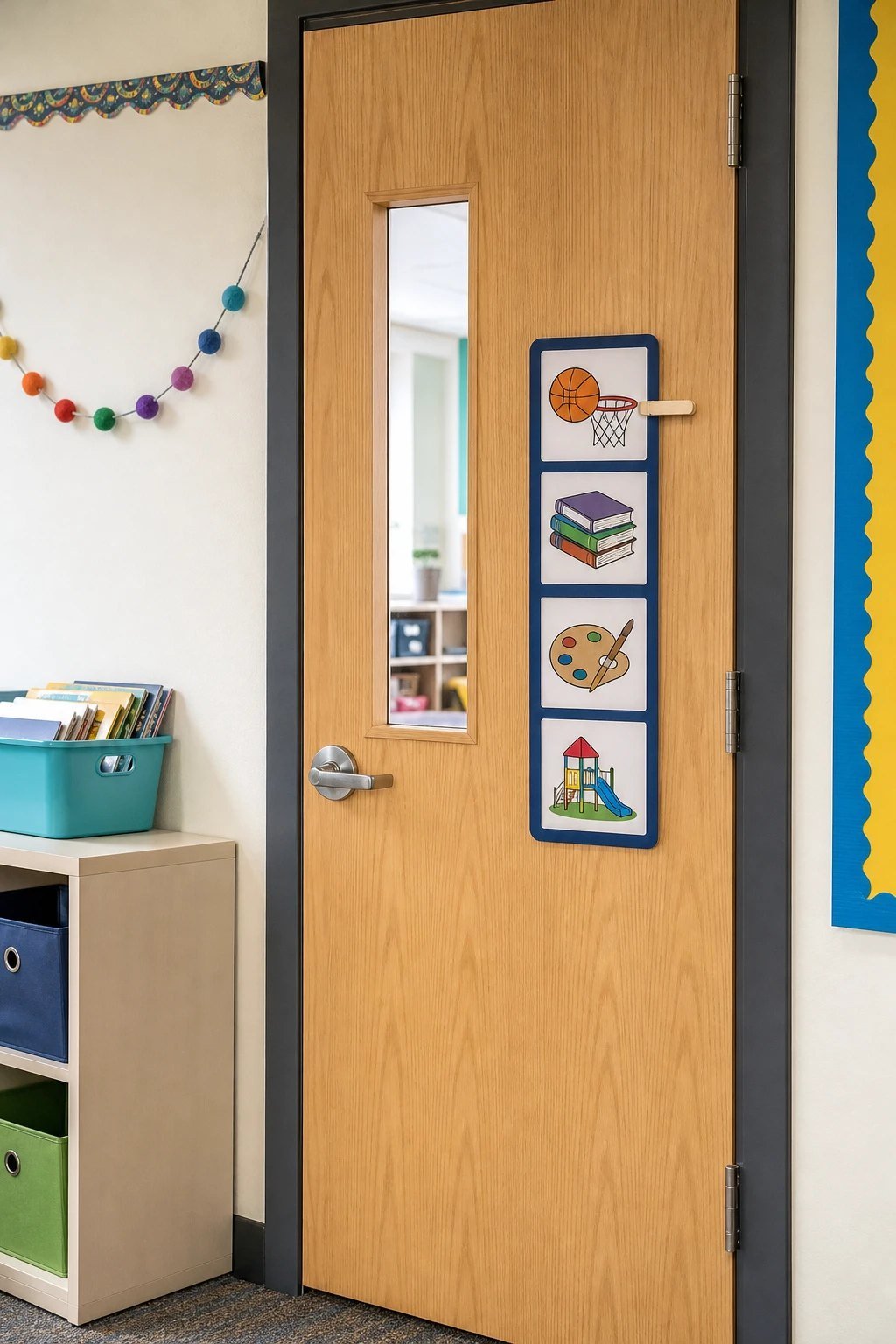 Save
A door chart with the specials, library, nurse and office. Visitors know where the class is, and so do the children.
Make it: picture cards and one clip on the door.
Birthdays and community
14. A birthday chart
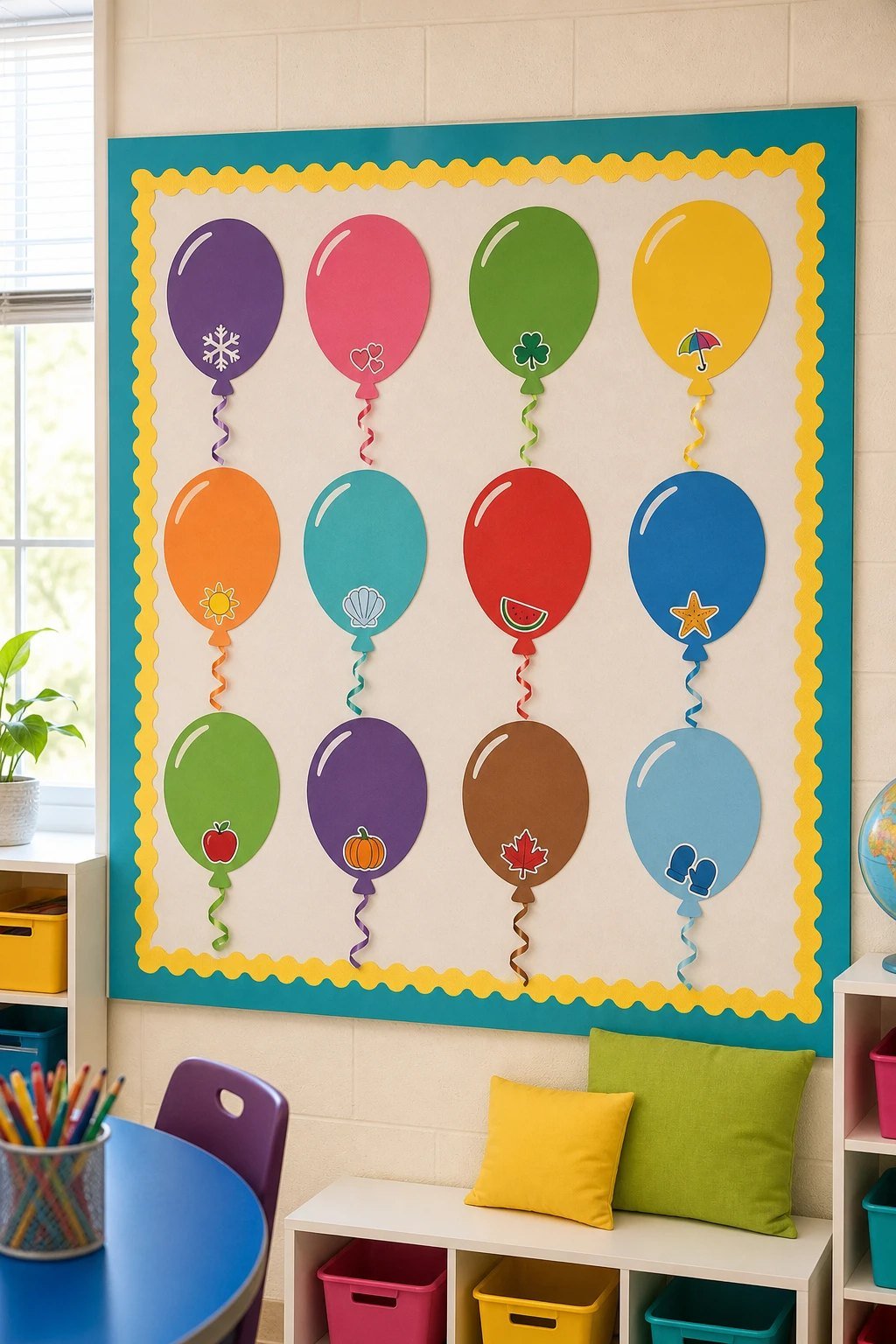 Save
Twelve months, every child’s name, and this month at the top. Nobody’s birthday gets missed.
Make it: month cards and name tags. More ideas in our birthday wall ideas for the classroom.
15. A class goals chart
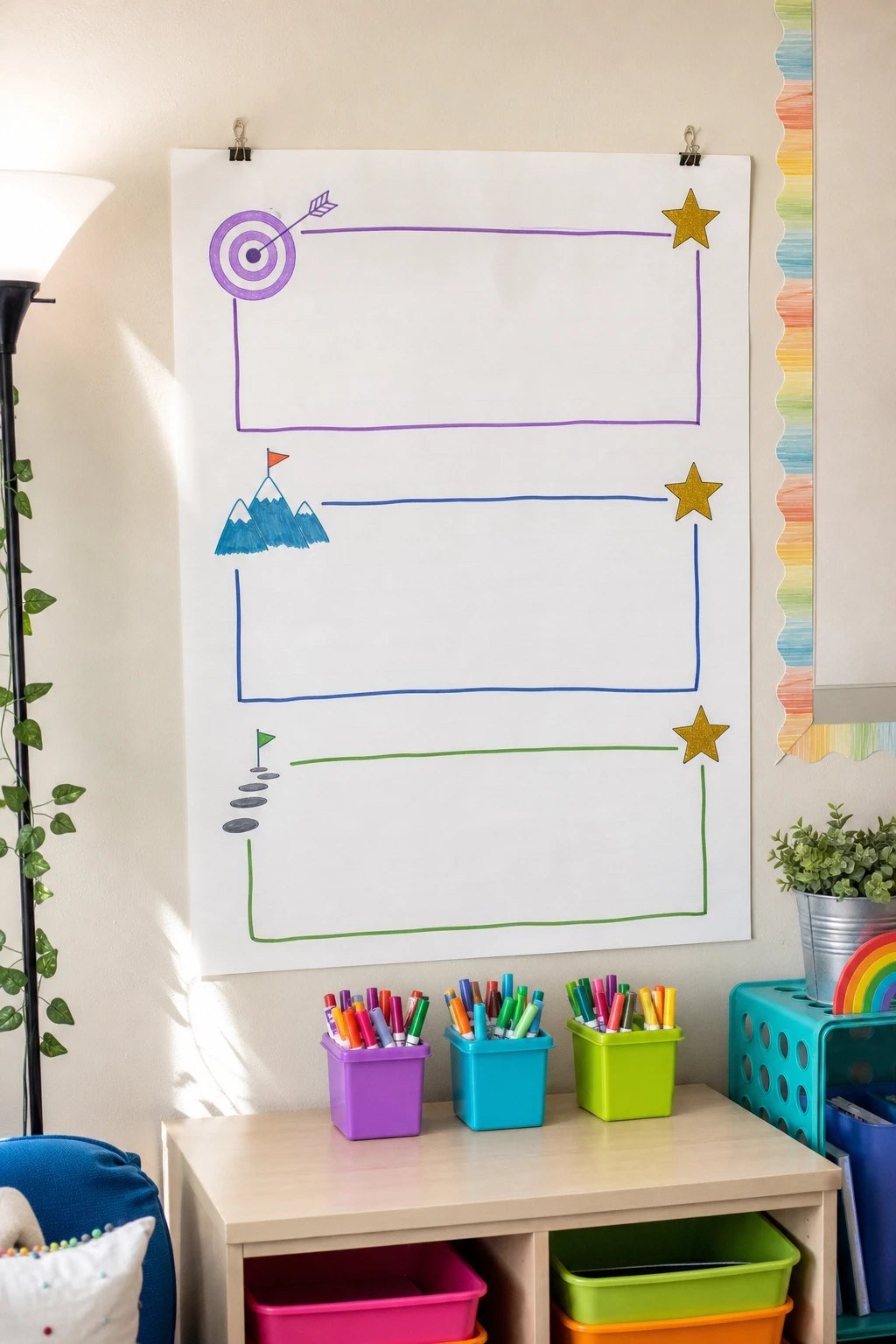 Save
Write two or three class goals together and track them with stars. Children care more about goals they helped write.
Make it: an easel pad sheet and star stickers.
16. A kindness chart
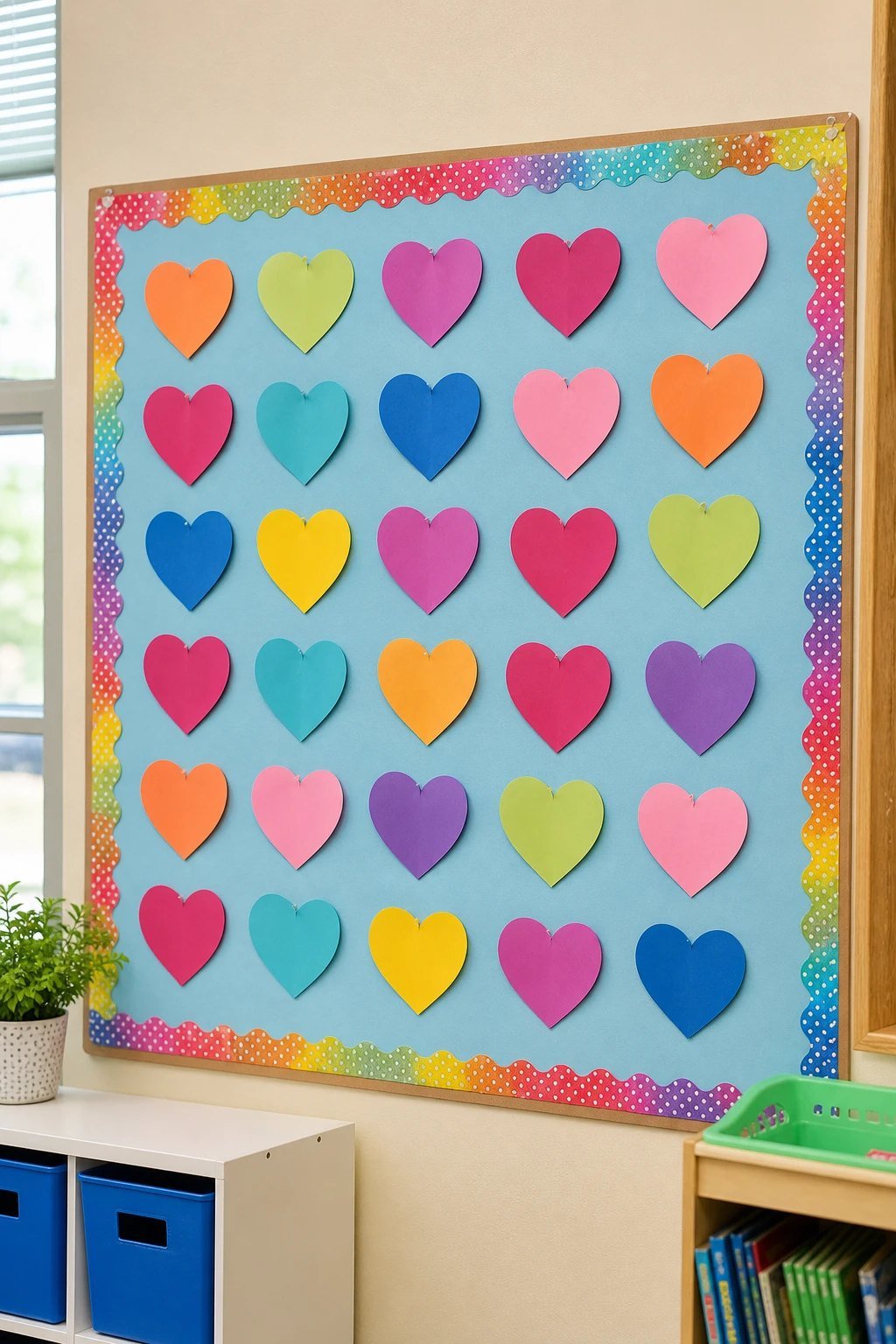 Save
Each time someone spots a kind act, add a heart. Watching it fill up is great for the whole class.
Make it: paper hearts and a scalloped border.
Reading and writing charts
17. A reading strategies anchor chart
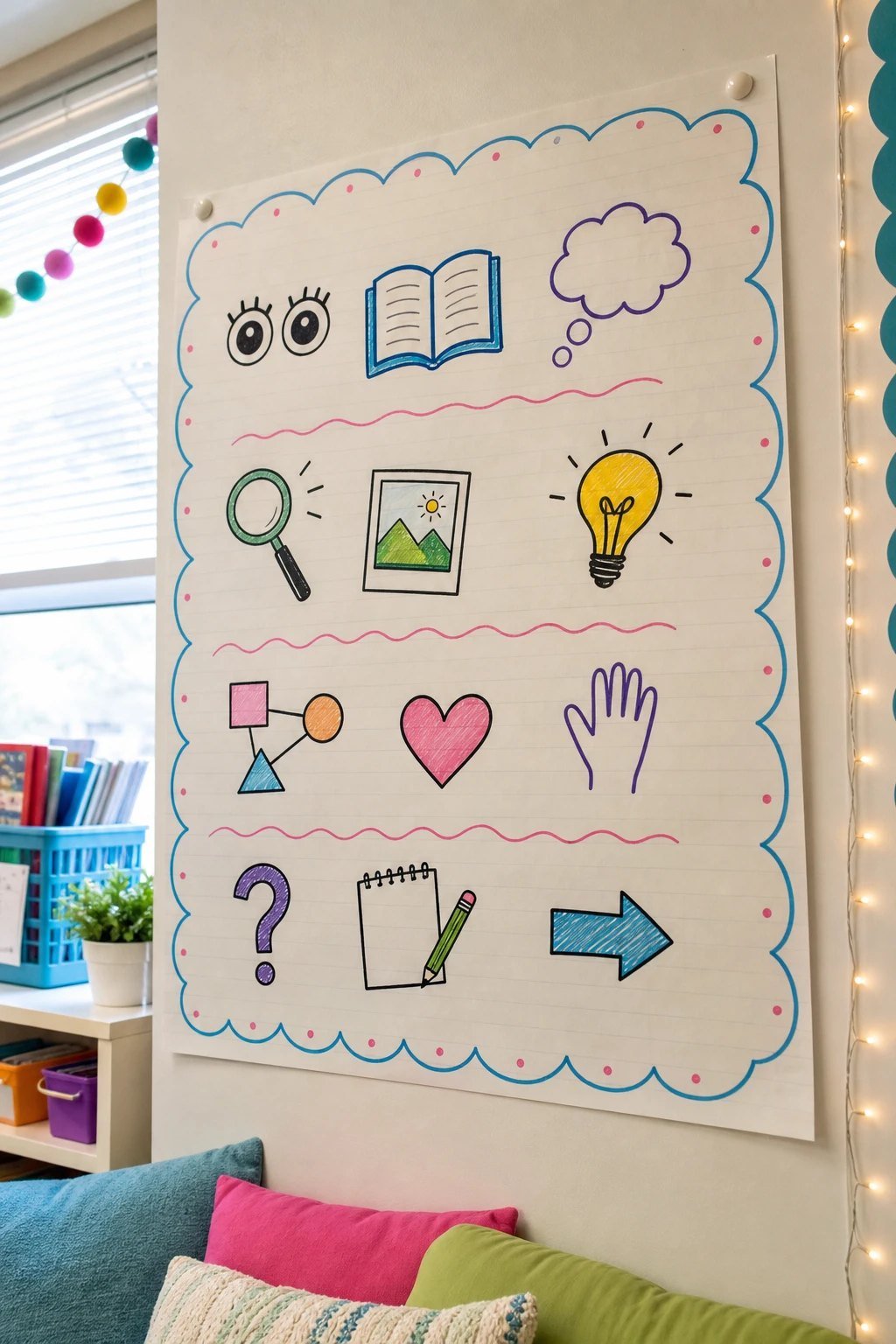 Save
Look at the picture, get your mouth ready, skip it and come back. A chart made with the class sticks better than any poster.
Make it: Post-it easel pad and Mr. Sketch markers.
18. A word wall
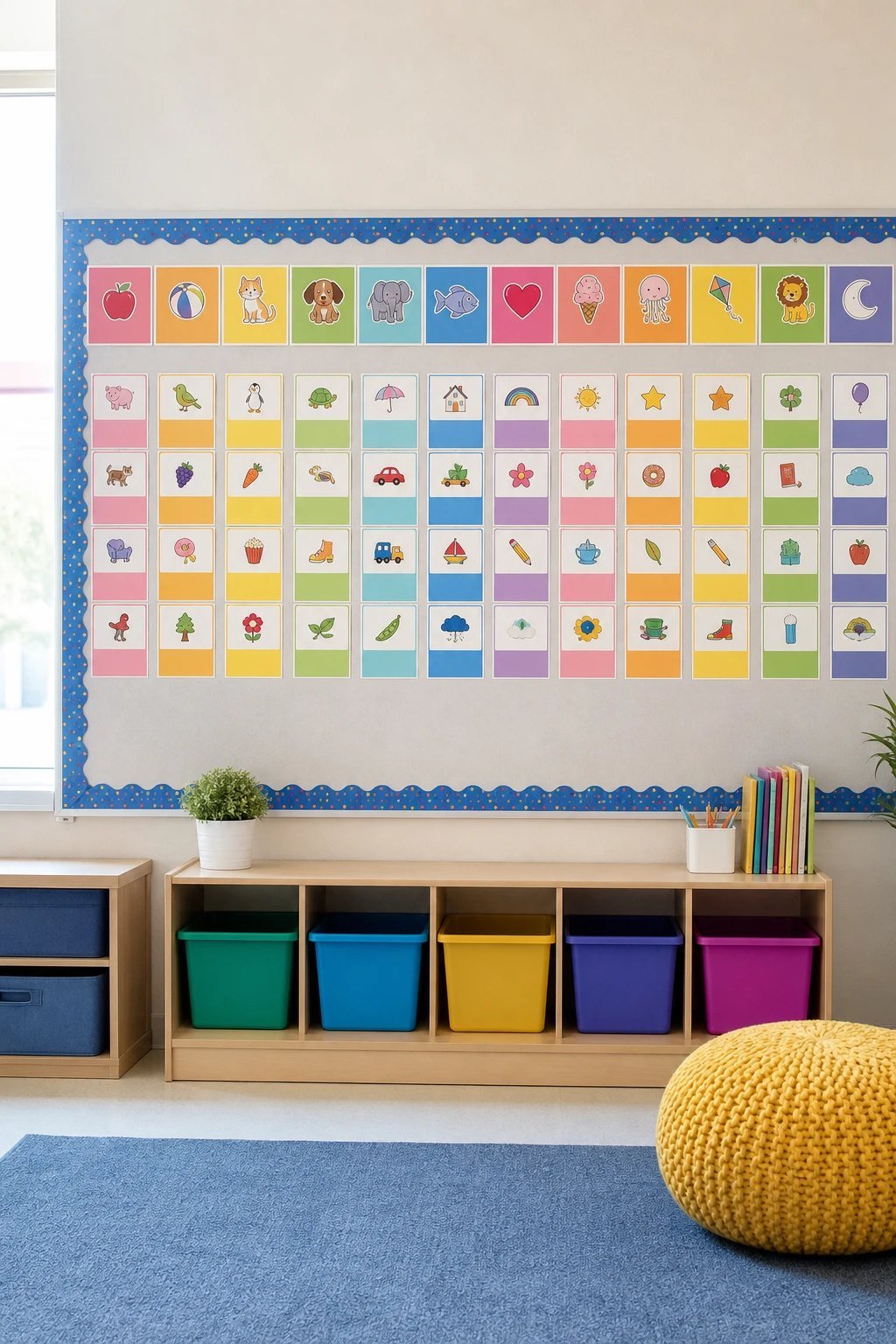 Save
Letters across the top, high frequency words below. Children walk over to check spelling instead of asking.
Make it: word cards on sentence strips.
19. A reading log chart
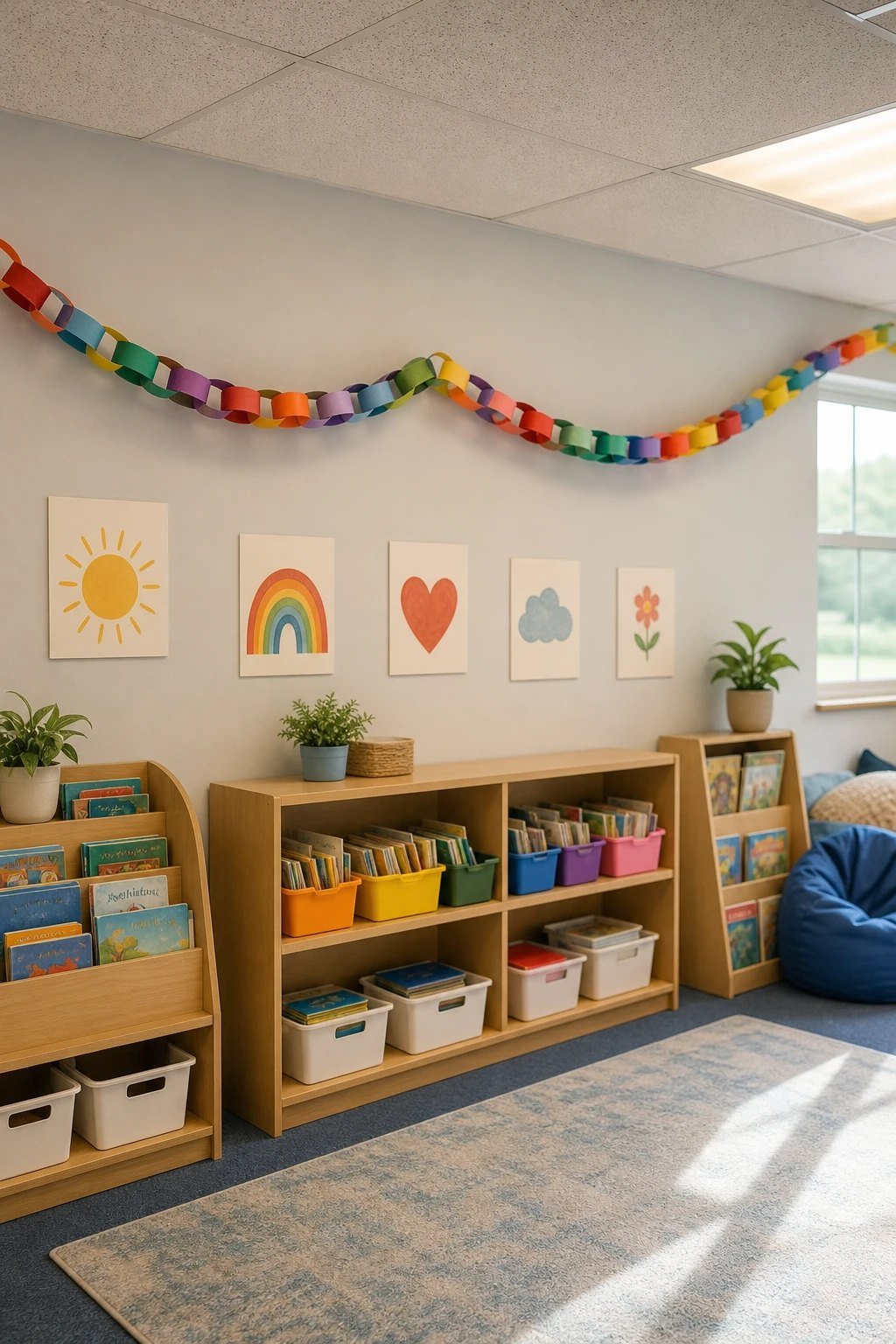 Save
Each book read adds a link to a paper chain or a sticker on a class chart. It turns reading into a team goal.
Make it: paper strips and a big wall space.
20. A writing process chart
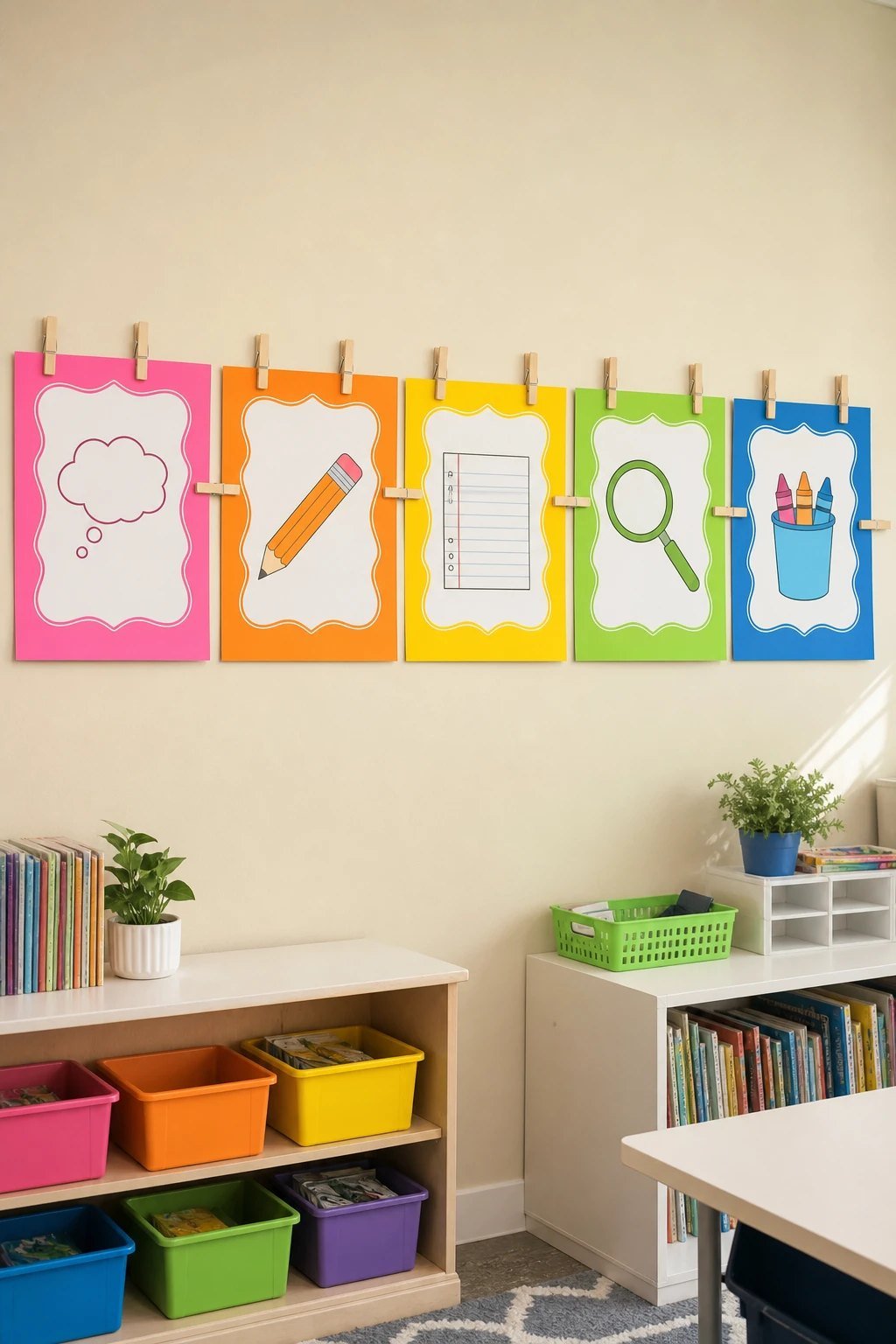 Save
Plan, draft, revise, edit, publish, with a clip for each child. You see where everyone is at a glance.
Make it: five colored sections and clothespins.
Math charts
21. A hundred chart
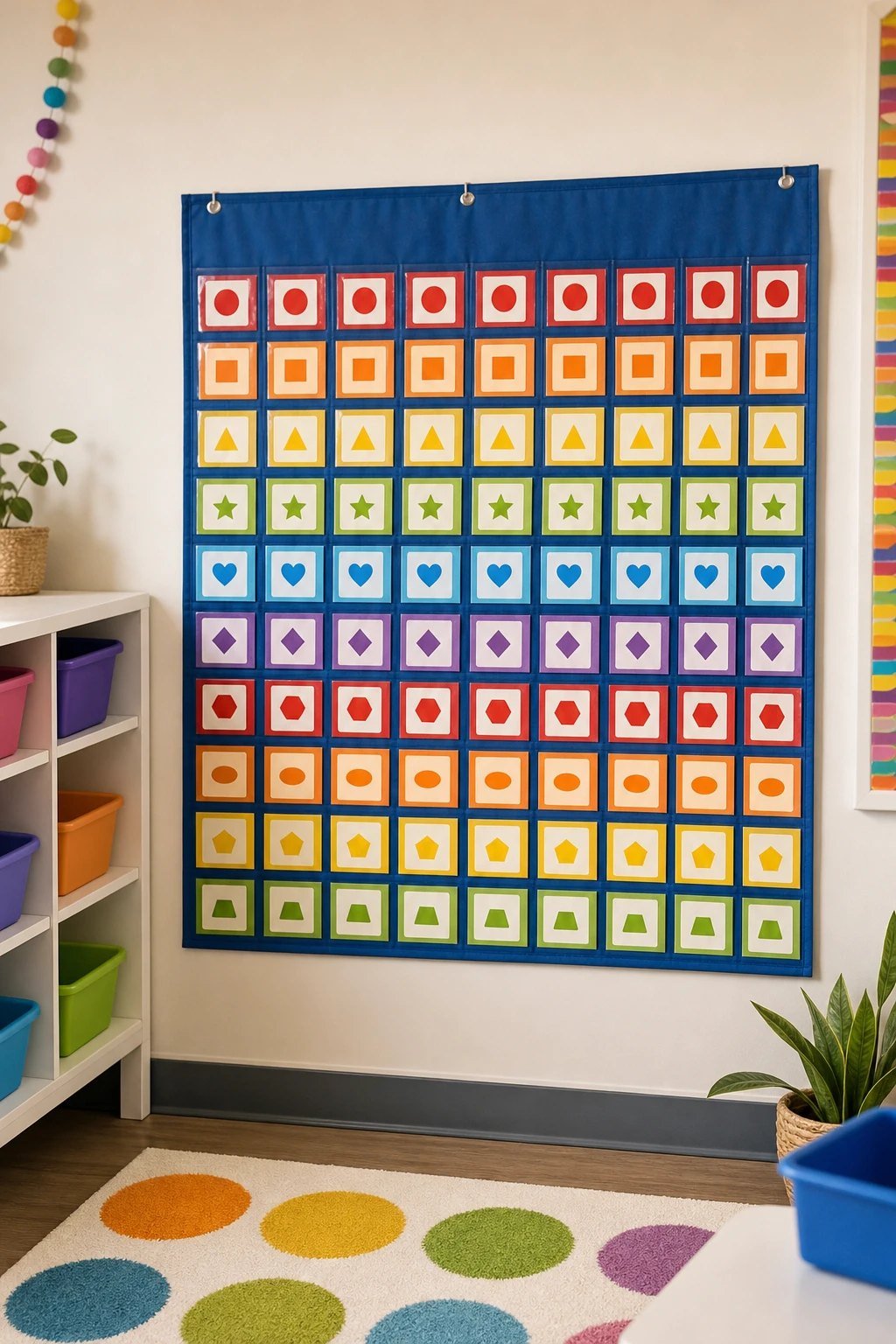 Save
A big hundred chart in a pocket chart is perfect for counting, skip counting and finding patterns.
Make it: a pocket chart with number cards.
22. A place value chart
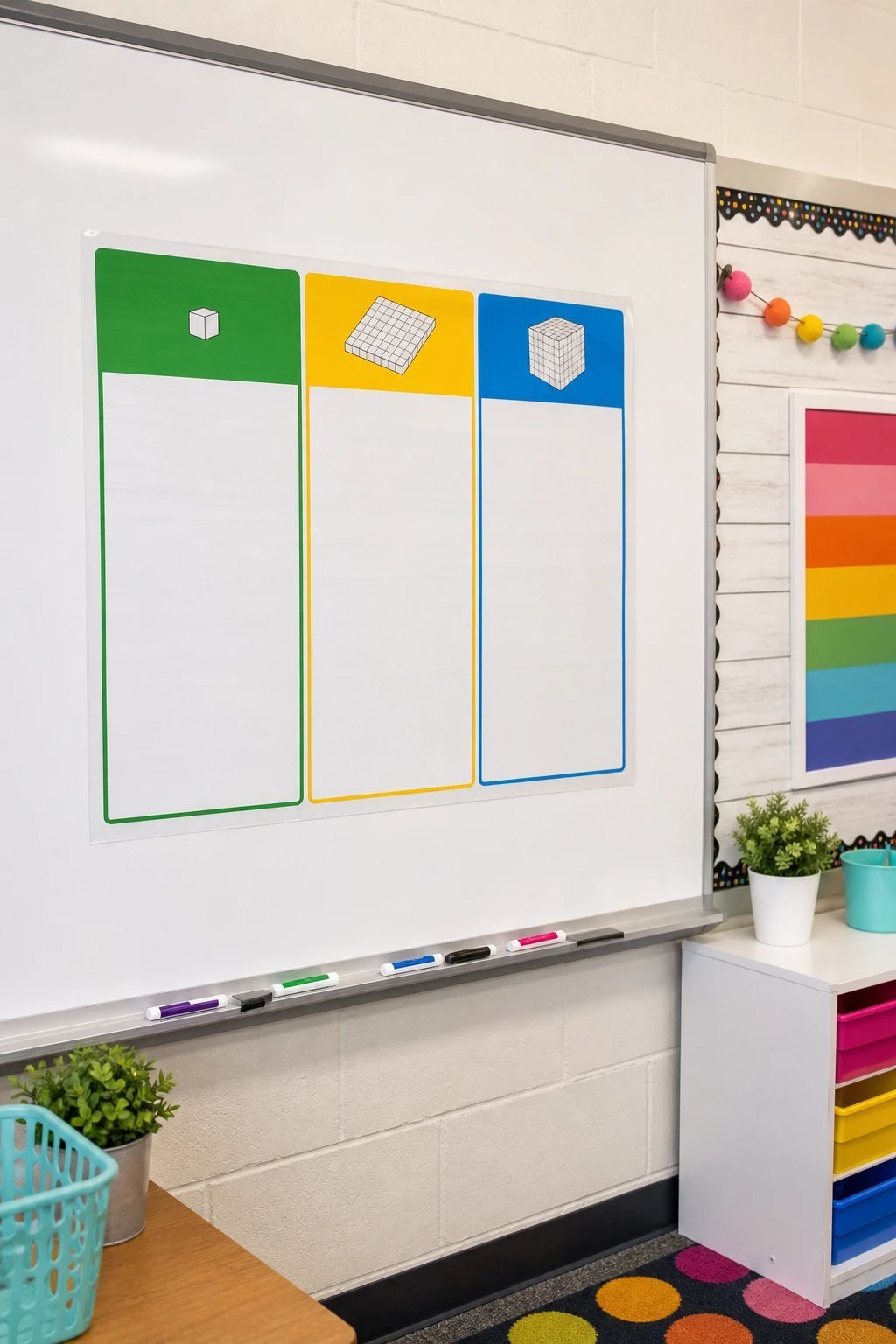 Save
Ones, tens and hundreds columns where children build numbers with cards. It makes big numbers make sense.
Make it: a laminated chart and dry erase markers.
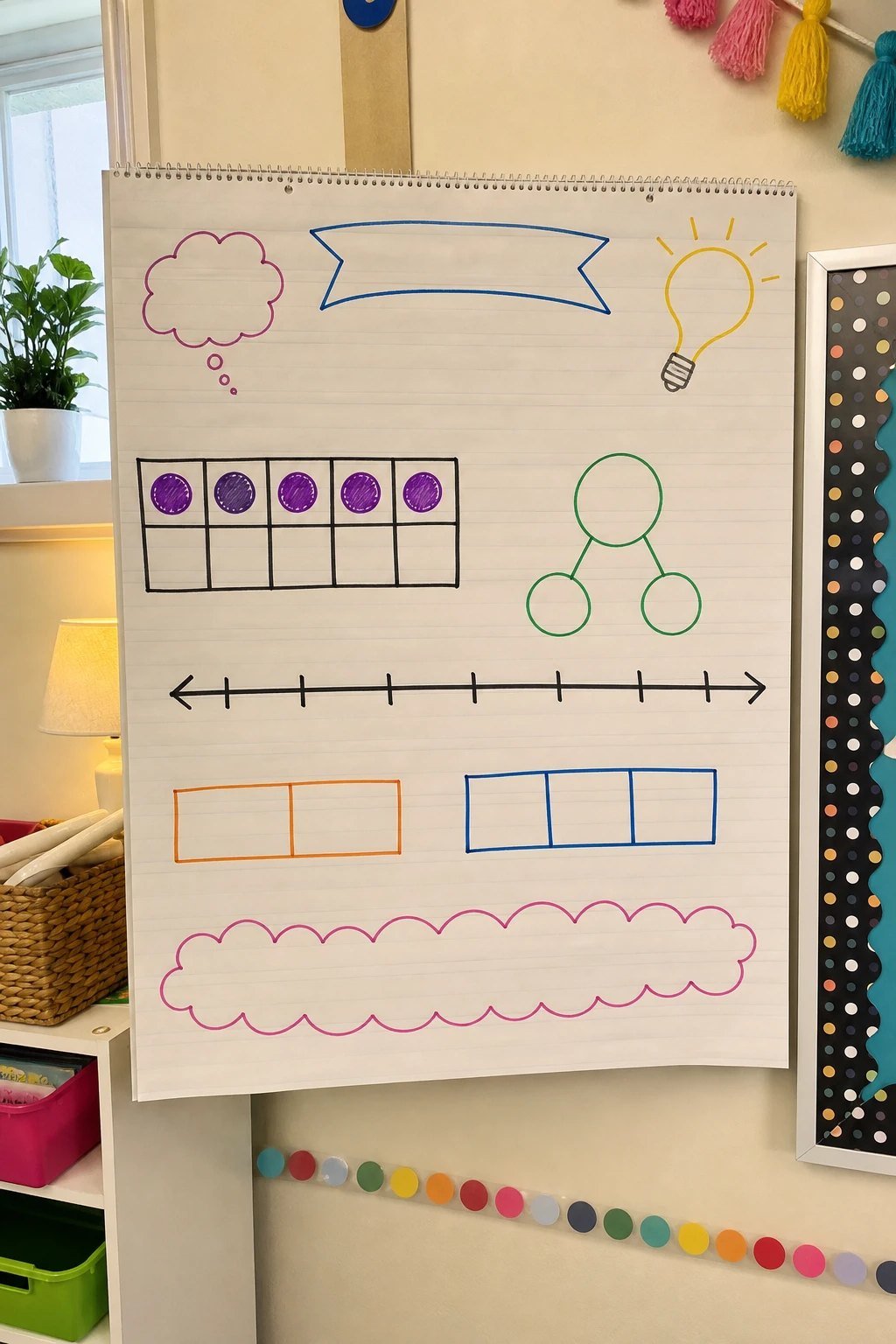
23. A math strategies anchor chart
 Save
Draw it, count on, make ten, use a number line. Add a new strategy each time the class learns one.
Make it: chart paper and bright markers.
Make your charts last
24. Laminate and reuse
 Save
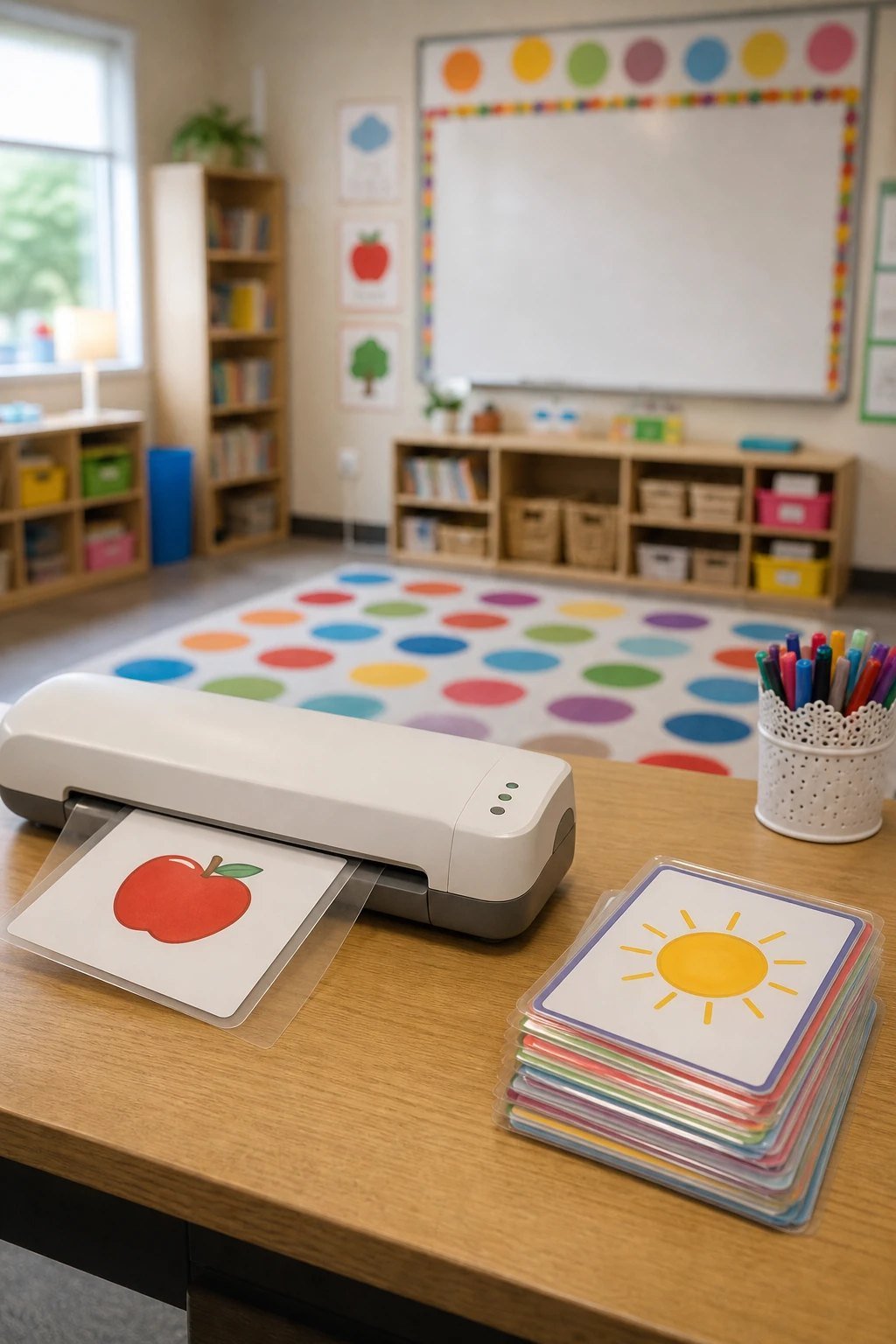
Laminate any chart that gets touched and use dry erase markers on it. Change the content, keep the chart.
Make it: a thermal laminator and dry erase pocket sleeves.
25. Hang charts without damaging walls
 Save
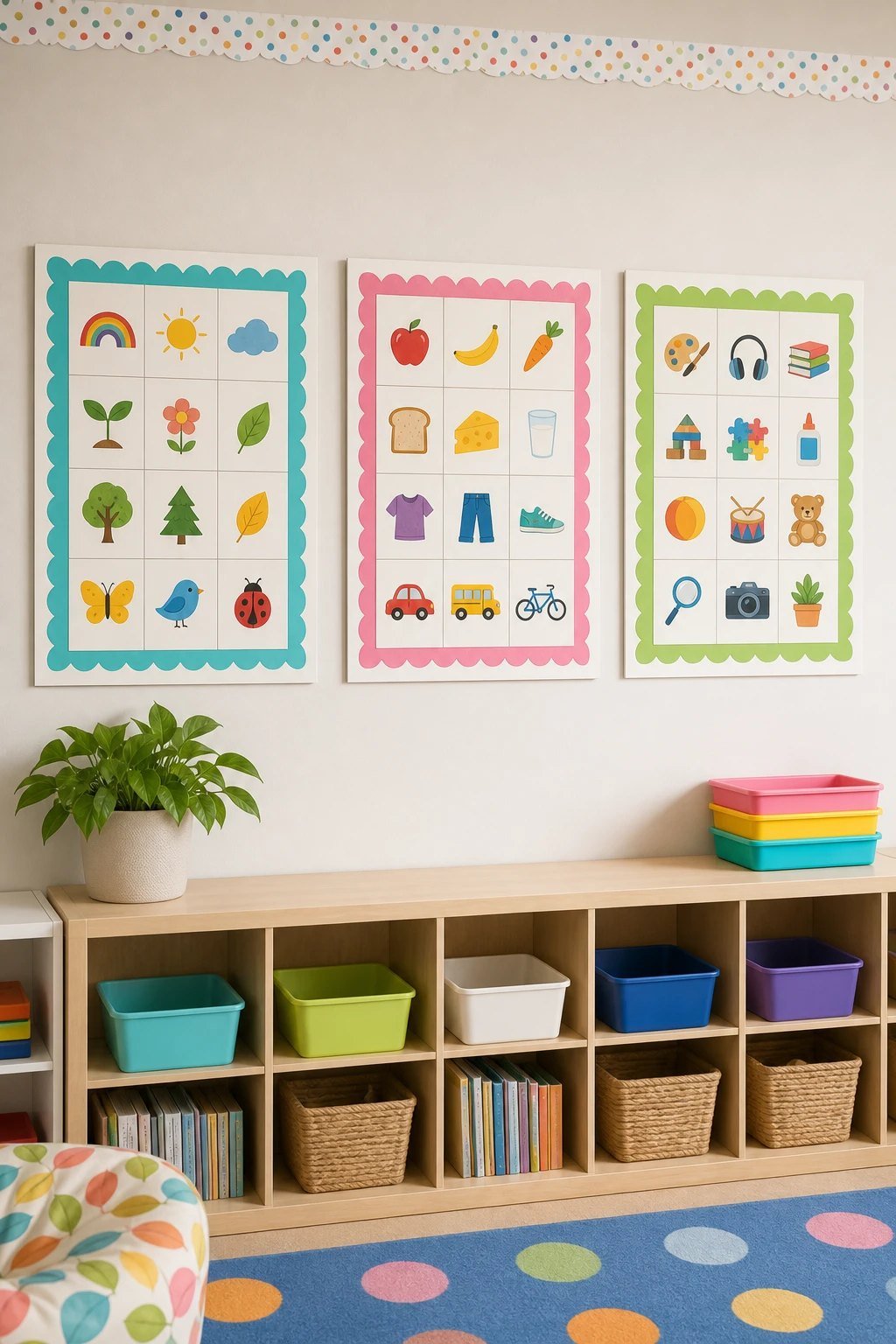
Adhesive strips and hooks hold charts on painted walls and cupboards, and come off cleanly in June.
Make it: Command strips and a scalloped border to frame each chart.
Where to put classroom charts
Charts children touch every day go at their eye level near where they are used: the calendar by the carpet, the job chart by the door, the feelings chart by the calm corner. Reference charts like anchor charts can go higher. Leave some blank wall too, so the room does not feel busy.
How many charts does a classroom need?
Start with five you will actually use: a schedule, a calendar, a voice level chart, a job chart and one anchor chart. Add more as routines need them, and take down any chart nobody has looked at for two weeks.
Classroom pocket charts on Amazon


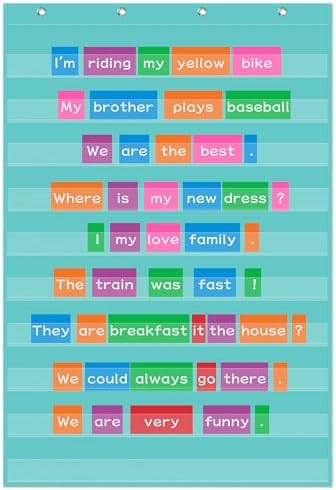
Classroom chart supplies on Amazon


Keep reading
- Classroom job chart ideas
- Classroom behavior chart ideas
- 25 classroom rules ideas
- 25 morning meeting activities
Frequently asked questions
A daily schedule, a calendar and weather chart, a voice level chart, a job chart and at least one anchor chart. Many teachers add a feelings check-in and a birthday chart.
Laminate anything children touch, use VELCRO dots or clothespins for moving pieces, hang charts with adhesive strips and frame them with a border so the edges stay neat.
A large chart made with the class during a lesson that shows a strategy or process, like reading strategies or the steps of writing. It stays up so children can refer back to it.
At child eye level near where they are used, such as the calendar by the carpet and the job chart by the door. Reference charts can go higher.
Put a simple picture next to every word, use color coding and practice the chart as part of a daily routine until it becomes automatic.
About the author: Shinku Studio makes classroom ideas and printables for busy K-5 teachers.